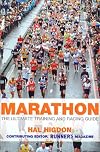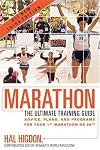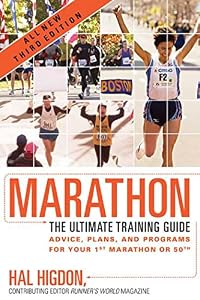
Marathon: The Ultimate Training Guide
by Hal Higdon
On This Page
Description
Especially in tough economic times, running offers an affordable and positive way to relieve stress and gain a sense of accomplishment. Marathons and-more than ever-half-marathons are the ultimate achievement for runners and have experienced an unprecedented boom in the last several years. New hunger for reliable information on marathon and half-marathon training, as well as new technologies that have revolutionized ordinary people's ability to train intelligently, means the time is right show more for a new edition of longtime Runner's World contributor Hal Higdon's classic guide to taking the guesswork out of preparing for a marathon, whether it's a reader's first or fiftieth. Since its original publication in 1993, Higdon's definitive manual has sold over a quarter of a million copies through all channels. The book is such a consistent seller for many reasons, but above and beyond all the others is this one- It works. At the core of the book remains Higdon's clear and essential information on training, injury prevention, and nutrition. With more than 25 percent new material, this fourth edition of a running classic will be a must-own for both longtime runners and those new to the sport. show lessTags
Recommendations

Member Reviews
I'll be honest - I read this in sporadic fits. I didn't sit down and read huge chapters all at once, but rather only a few pages at a time. Yes, Hal Higdon is a master at the marathon. Yes, he has run hundreds of races all over the world. Yes, he deserves all the accolades showered on him. But, but. But! It's a little off-putting when he's the one tooting his own horn. In the beginning his statistics on how many visitors his website gets, how many people download his marathon plans, and on and on got a little wearisome. His stories of besting other runners left a bad taste in my mouth (one incident in particular - a runner passed him during a marathon and was really excited to have "beaten" the great Higdon. Higdon couldn't let the show more runner bask in this feat and instead assured the man he wasn't racing this marathon but simply running it.) Having said all that, this is not a book that should be ignored. By all means, if you are planning to run a marathon, read this book. I'll say it again, read this book. It's a wealth of important information. Everything from nutrition to cross training is there (all the typical information)...and even some advice you might not expect, like a training plan for women designed to work around that time of the month. Yes ladies, there is a plan for your period. So, hubris aside, this is a great resource for every kind of runner. show less
Higdon's the man. He's run 111 marathons, including seven in seven months to celebrate his seventieth birthday! In addition to this near superhuman record, he's set up a online training program that's helped thousands of others to run their own marathons. When Hal writes, you're reading a running authority.
This book is as comprehensive a guide you could hope for. Everything from getting off the couch to what to do after you cross the finish line is covered in detail. Frequent inset boxes share information he's gleaned over the years from his website.
The book was a little too long. He could have said what he did in 250 pages with some tighter editing. That said, his slow-going conversational style is part of the charm.
Having just show more finished my first half-marathon (1:37:37) and preparing for a full next fall, I was glued to every page. This Ultimate Training Guide is a motivational gem. show less
This book is as comprehensive a guide you could hope for. Everything from getting off the couch to what to do after you cross the finish line is covered in detail. Frequent inset boxes share information he's gleaned over the years from his website.
The book was a little too long. He could have said what he did in 250 pages with some tighter editing. That said, his slow-going conversational style is part of the charm.
Having just show more finished my first half-marathon (1:37:37) and preparing for a full next fall, I was glued to every page. This Ultimate Training Guide is a motivational gem. show less
A good read on training for the marathon. It was a little too thick on the anecdotes for me, but I am sure some readers will enjoy that aspect. The pacing and training is different than the method I have used for my two marathons to date (combination of Henderson/Galloway). Walks have made a big difference in training and doing the actual race.
I also wonder about the chapter on nutrition. I have been using My Fitness Pal and losing about a pound a week during the training. The first thing I noticed was cutting down on my carbs (breads and pastas especially) helped a lot in keeping my calories in line. This is counter to Higdon's advice for a distance runner. I wonder what advice other runners, nutritionists and trainers subscribe to.
I also wonder about the chapter on nutrition. I have been using My Fitness Pal and losing about a pound a week during the training. The first thing I noticed was cutting down on my carbs (breads and pastas especially) helped a lot in keeping my calories in line. This is counter to Higdon's advice for a distance runner. I wonder what advice other runners, nutritionists and trainers subscribe to.
Although this book is a bit dated (e.g. marathon contact info included snail mail addresses only), I got a good bit out of it. Higdon reinforces many of his points with personal stories, or those of other runners or medical professionals. The book is a pretty quick read, and includes several charts as well as some training plans that look doable.
Things I took away from this book:
1) Having a base mileage of 30-40 miles is key--if you want to be able to finish a marathon. More mileage is better--55 miles/week if you want to finish well, but there's a limit beyond which more mileage helps. I can't find it at the moment, but it seems like that number was around 75 miles/week. Elite runners have been known to do 100 , but they're in a show more totally different category!
2) Concentration is important in a marathon--concentrating on your body and on your competitors can play a big role in how you finish the race. If concentrating for the whole marathon is too much, focusing on the second half is one option.
A lot of the other information was much like information I'd seen in other running books, but it was all interesting to read in the context of training for my first marathon (which I haven't picked yet!). show less
Things I took away from this book:
1) Having a base mileage of 30-40 miles is key--if you want to be able to finish a marathon. More mileage is better--55 miles/week if you want to finish well, but there's a limit beyond which more mileage helps. I can't find it at the moment, but it seems like that number was around 75 miles/week. Elite runners have been known to do 100 , but they're in a show more totally different category!
2) Concentration is important in a marathon--concentrating on your body and on your competitors can play a big role in how you finish the race. If concentrating for the whole marathon is too much, focusing on the second half is one option.
A lot of the other information was much like information I'd seen in other running books, but it was all interesting to read in the context of training for my first marathon (which I haven't picked yet!). show less
I'm running my first marathon on February and this book gave me basic knowledge of how to approach this goal and how to organize myself for it. It's an excellent book for first time marathoners, however it's like a lecture. Don't expect too much specific information, it's more on the anecdotal than practical. Also, if you're a first time marathoner who's reading this bool, go to the authors website and use one of it's marathon and half marathon training plans as they go perfect with the base information you'll get from the book.
This is my marathon-training Bible. Hal's training plans are great, and I swear by the Intermediate 2 plan. If you are honest with yourself, and follow the training plan that is right for you (and really follow it, not just sorta follow it), you will finish your marathon happy with your time. Most importantly, you won't get injured.
Very good introduction to marathon training. The plans themselves, and others like them ,are readily available online, but the book provides a lot of supporting information on all aspects of training for and running a marathon. A lot of valuable advice for this novice.
Members
- Recently Added By
Author Information

48 Works 972 Members
Hal Higdon has contributed to Runner's World for longer than any other writer and is the author of more than 36 books. He has run 111 marathons and holds a personal best of 2:21:55. He ran in the Olympic Trials eight times and won four World Masters Championships. Higdon has served as training consultant for the Chicago Marathon and Chicago Area show more Runners Association and also offers interactive training programs through Training Peaks. He lives in Long Beach, Indiana. show less
Classifications
- Genres
- Sports and Leisure, Nonfiction, General Nonfiction, Health & Wellness
- DDC/MDS
- 796.4252 — Arts & recreation Recreation, sports, and performing arts Sports Olympic sports Track events, running; General track and field Marathon
- LCC
- GV1065.17 .T73 .H55 — Geography, Anthropology and Recreation Recreation. Leisure Recreation. Leisure Sports Track and field athletics
- BISAC
Statistics
- Members
- 363
- Popularity
- 86,345
- Reviews
- 12
- Rating
- (3.66)
- Languages
- English, Spanish
- Media
- Paper, Ebook
- ISBNs
- 6
- ASINs
- 4