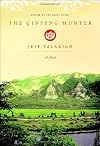
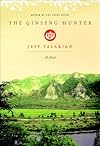
The Ginseng Hunter: A Novel
by Jeff Talarigo
On This Page
Description
Set at the turn of the 21st century in China, this novel follows the daily life of a Chinese ginseng hunter. He is little aware of the world outside until shadowy figures hiding in the fields, bodies floating in the river, and rumors of thievery and murder begin to intrude on his cherished solitude. On one of his monthly trips to Yanji, where he buys supplies and visits a brothel, he meets a young North Korean prostitute. Through her vivid tales, the tragedy occurring across the river show more unfolds, and over the course of the year the hunter unnervingly discovers that the fates of the young woman and four others rest in his hands.--From publisher description. show lessTags
Recommendations




Member Reviews
Rating: 3* of five
The Book Report: A short, poetic novel of the Cultural Revolution era as seen from the viewpoint of a man whose life has been defined by following his family's tradition of gathering ginseng root in the wild. He narrates for us the events of that uneventful life, with a wistful, elegiac tone. The book illuminates a life and a folkway that this half-Korean, half-Chinese man is so deeply enmeshed into that the metaphors he uses in his head to explain the world to himself are all tied, in the end, to the natural world of his ginseng hunting.
Intertwined with his first-person narrative is a third-person narrative of a much younger North Korean woman, a prostitute with a daughter to support in a country where there is next show more to nothing material available to its citizens. She meets the ginseng hunter in the course of business, as he traverses the border between the two countries freely. He pursues a peculiar, sort-kinda relationship with her, and as the North Korean regime turns more insane than ever, lives are lost (to put it mildly) and the ginseng hunter's petite amie is at serious risk.
The novel's resolution of these strands...unworldly man must decide the fate of worldly woman...is succinct and played out like Chinese opera: Gesturally, accompanied by the bare minimum of speech needed, and set against the most gorgeous, lavish scenery imaginable.
My Review: I want to kill the lousy, incompetent, damnfool idiot editor and copy editor of this book. Dead. I'll be merciful and say it can be quick. But the truly lovely récit that is in this awkward short novel, the beautiful sparkling gem that could have been cut from the rock here, is lost.
What earthly use was there, I wondered as I cruised through this, in putting in the third-person narrative of the prostitute's dreary life? Did it do anything for the arc of the story? Not that I could see, it didn't. It jarred against the ginseng hunter's flowing narrative of his world and its widening circles in an unnecessary way. If the récit form had been followed, the young woman's dreadful plight, and his decision as to how he'd resolve it, would have been just as powerful. The ginseng hunter is the heart and soul and point of the book, or if he's not, the young prostitute is too poorly developed to play her role effectively.
But that's the book the editor created, and I assume she (specifically named in the author's acknowledgments) intended to create. That it isn't the book I'd've made out of the material at hand is just too damn bad for me, eh what?
Fair enough point. But in reading a book, is the reader not expected, indeed almost required, to participate in the creation of the story as the writer and the editor (and the copy editor, more on that anon) unfold it before him (in my case)? That is, in the act of reading, isn't the reader's job to allow the words to create emotional responses, to call up sense memories, to paint on the mind's canvas images of things known and unknown? And therefore, isn't it also incumbent on the reader to look carefully at those images, analyze those sense memories, and determine which ones are successfully evoked and which are wanting? Then comes the “why” of it...why did this not work for me? What was the author aiming at, and did I get there with him?
As my answers to all the above are “yes,” I'm willing to use my review, my opinion, informed by a long lifetime of reading and a career in publishing's outer groves, to offer informed conclusions as to what went right and what went wrong in a given text.
What went right in this story was all the ginseng hunter's viewpoint, and what went wrong was the awkward intersection between the prostitute's viewpoint and the ginseng hunter's viewpoint. Less can indeed be more, but more was needed to stitch these two narratives together and make a successful novel out of them. Less of what was given would have turned this into a beautiful récit. As it was, the beautiful bits earned the book three stars, which is more than I'd normally give a Frankenbook.
Lastly, I want to comment in terms most censorious upon the job done by the copy editor. By page 23, I was so angry that I followed my punkin pie around the house reading howlers and snarling about them, and then called a friend of mine and made HER listen to me rant about them. A person hired to copy edit a book who allows the non-word “clinged” to be typeset, printed, bound, and offered for sale in the United States of America should be subject to legal sanctions. I'll stop there, because I can feel my blood pressure rising, but there are other errors, not mere infelicities, that caused me severe pain. Copyediting is a serious job. How words are presented on a page is a very important part of how a book is perceived by readers. The purpose of the job is to make the author's words transparent vehicles for communicating the ideas they carry. It is jolting, jarring, to have to stop and say to one's self, “wha...? what was that again?” in the process of reading. That is what poor, or no, copyediting leads to, and why editors and copy editors are such crucial (if invisible to most readers) parts of the reading process.
Rant over. For today. Read the book, the ideas are wonderful and even mediocre presentation of them can't make them unpleasant enough to avoid. show less
The Book Report: A short, poetic novel of the Cultural Revolution era as seen from the viewpoint of a man whose life has been defined by following his family's tradition of gathering ginseng root in the wild. He narrates for us the events of that uneventful life, with a wistful, elegiac tone. The book illuminates a life and a folkway that this half-Korean, half-Chinese man is so deeply enmeshed into that the metaphors he uses in his head to explain the world to himself are all tied, in the end, to the natural world of his ginseng hunting.
Intertwined with his first-person narrative is a third-person narrative of a much younger North Korean woman, a prostitute with a daughter to support in a country where there is next show more to nothing material available to its citizens. She meets the ginseng hunter in the course of business, as he traverses the border between the two countries freely. He pursues a peculiar, sort-kinda relationship with her, and as the North Korean regime turns more insane than ever, lives are lost (to put it mildly) and the ginseng hunter's petite amie is at serious risk.
The novel's resolution of these strands...unworldly man must decide the fate of worldly woman...is succinct and played out like Chinese opera: Gesturally, accompanied by the bare minimum of speech needed, and set against the most gorgeous, lavish scenery imaginable.
My Review: I want to kill the lousy, incompetent, damnfool idiot editor and copy editor of this book. Dead. I'll be merciful and say it can be quick. But the truly lovely récit that is in this awkward short novel, the beautiful sparkling gem that could have been cut from the rock here, is lost.
What earthly use was there, I wondered as I cruised through this, in putting in the third-person narrative of the prostitute's dreary life? Did it do anything for the arc of the story? Not that I could see, it didn't. It jarred against the ginseng hunter's flowing narrative of his world and its widening circles in an unnecessary way. If the récit form had been followed, the young woman's dreadful plight, and his decision as to how he'd resolve it, would have been just as powerful. The ginseng hunter is the heart and soul and point of the book, or if he's not, the young prostitute is too poorly developed to play her role effectively.
But that's the book the editor created, and I assume she (specifically named in the author's acknowledgments) intended to create. That it isn't the book I'd've made out of the material at hand is just too damn bad for me, eh what?
Fair enough point. But in reading a book, is the reader not expected, indeed almost required, to participate in the creation of the story as the writer and the editor (and the copy editor, more on that anon) unfold it before him (in my case)? That is, in the act of reading, isn't the reader's job to allow the words to create emotional responses, to call up sense memories, to paint on the mind's canvas images of things known and unknown? And therefore, isn't it also incumbent on the reader to look carefully at those images, analyze those sense memories, and determine which ones are successfully evoked and which are wanting? Then comes the “why” of it...why did this not work for me? What was the author aiming at, and did I get there with him?
As my answers to all the above are “yes,” I'm willing to use my review, my opinion, informed by a long lifetime of reading and a career in publishing's outer groves, to offer informed conclusions as to what went right and what went wrong in a given text.
What went right in this story was all the ginseng hunter's viewpoint, and what went wrong was the awkward intersection between the prostitute's viewpoint and the ginseng hunter's viewpoint. Less can indeed be more, but more was needed to stitch these two narratives together and make a successful novel out of them. Less of what was given would have turned this into a beautiful récit. As it was, the beautiful bits earned the book three stars, which is more than I'd normally give a Frankenbook.
Lastly, I want to comment in terms most censorious upon the job done by the copy editor. By page 23, I was so angry that I followed my punkin pie around the house reading howlers and snarling about them, and then called a friend of mine and made HER listen to me rant about them. A person hired to copy edit a book who allows the non-word “clinged” to be typeset, printed, bound, and offered for sale in the United States of America should be subject to legal sanctions. I'll stop there, because I can feel my blood pressure rising, but there are other errors, not mere infelicities, that caused me severe pain. Copyediting is a serious job. How words are presented on a page is a very important part of how a book is perceived by readers. The purpose of the job is to make the author's words transparent vehicles for communicating the ideas they carry. It is jolting, jarring, to have to stop and say to one's self, “wha...? what was that again?” in the process of reading. That is what poor, or no, copyediting leads to, and why editors and copy editors are such crucial (if invisible to most readers) parts of the reading process.
Rant over. For today. Read the book, the ideas are wonderful and even mediocre presentation of them can't make them unpleasant enough to avoid. show less
Apparently, Jeff Talarigo is an stupendously successful up-and-coming young fiction writer with one best-seller under his belt. News to me, really. I just picked this one up because I was bored and my mom had it out of the library. She told me that I had to at least read the first chapter, about the art of hunting ginseng in the forests of north eastern China.
I did read that first chapter, then suddenly found I had read the whole book through.
The Ginseng Hunter is a simple, beautiful little book telling the story of one man and his life on the boarder of North Korea, carrying on the family trade on the turn of this century, in the wake of Maoist missteps and Kim Jong Ill's atrocities. He is a man living not just on the edge of two show more countries, but on the edge of two distant times and worlds. Talarigo has spent an incredible amount of time and energy discovering the truths of life in this region, both peaceful and painful, and reveals them to us, the readers, in a personal, heart wrenching fashion. Called into question are the morals of survival and the responsibilities a body must have to themselves and their world. He can do great things with words, simply and clearly, with great meaning in even the small gesture, the word, the glance.
Ultimately, it is just a well-made novel, and well worth the time you will spend with it. It is a tiny door to another culture, another way of living, and dying, a natural history and a human tragedy. show less
I did read that first chapter, then suddenly found I had read the whole book through.
The Ginseng Hunter is a simple, beautiful little book telling the story of one man and his life on the boarder of North Korea, carrying on the family trade on the turn of this century, in the wake of Maoist missteps and Kim Jong Ill's atrocities. He is a man living not just on the edge of two show more countries, but on the edge of two distant times and worlds. Talarigo has spent an incredible amount of time and energy discovering the truths of life in this region, both peaceful and painful, and reveals them to us, the readers, in a personal, heart wrenching fashion. Called into question are the morals of survival and the responsibilities a body must have to themselves and their world. He can do great things with words, simply and clearly, with great meaning in even the small gesture, the word, the glance.
Ultimately, it is just a well-made novel, and well worth the time you will spend with it. It is a tiny door to another culture, another way of living, and dying, a natural history and a human tragedy. show less
Just read this book for the second time. I must have been completely distracted through mt first reading because I caught the essence of the story without picking up on the more subtle aspects. It is a beautiful book about a Chinese ginseng hunter who lives near the Tumen River, a boarder between China and North Korea. There is a line in the book that states: "When it comes to rivers, those that serve as boundaries are the most burdened of all." Such phenomenal language fills every sentence of this book.
Some people may see the unnamed narrator as indifferent or possibly inexpressive, but Western readers should take into account the way the man has been raised and the fact that he is more closely related to the forest that he might be to show more the human race. In that way, the story is an awakening for the narrator; a return to human connection that he seemed to have cut off so long ago. With that in mind, I take away the thought that you can not avoid life or the lives of others no matter how much simpler we think life might be.
I will also mention (not to brag) that I am a MFA Creative writing student of Mr. Talarigo's. Does that make me biased? Maybe. But it honestly it makes me feel that I am being guided by a truly talented person whose work I not only respect, but thoroughly enjoy. show less
Some people may see the unnamed narrator as indifferent or possibly inexpressive, but Western readers should take into account the way the man has been raised and the fact that he is more closely related to the forest that he might be to show more the human race. In that way, the story is an awakening for the narrator; a return to human connection that he seemed to have cut off so long ago. With that in mind, I take away the thought that you can not avoid life or the lives of others no matter how much simpler we think life might be.
I will also mention (not to brag) that I am a MFA Creative writing student of Mr. Talarigo's. Does that make me biased? Maybe. But it honestly it makes me feel that I am being guided by a truly talented person whose work I not only respect, but thoroughly enjoy. show less
This tiny book (176 small pages) packs a big emotional punch as it addresses several complex issues. Talarigo, author of The Pearl Diver, creates subtleties of character and setting in evocative descriptions that leave memorable images. The reader comes away from this book with feelings and impressions rather than stark details. The story takes place on the “fragile border” between China and North Korea. An unnamed ginseng hunter spends his days – his life – connecting with nature as he forages for the valued root. His life is predictable and solitary. Once a month he travels to the city of Yanji to sell his roots and to visit the same brothel frequented by his father before him. Each visit is also fairly predictable and easily show more forgotten, until the visit when he meets a North Korean escapee. Now he finds that she lingers in his mind as he conducts his daily hunts. Bit by bit he learns of her furtive existence, fearful both of capture and “reeducation” by North Korea, and of the harm years of propaganda have taught her will be done to her by the Chinese. In other chapters we learn bits and pieces of the story of a young mother and her daughter living a terribly harsh life in North Korea as starvation overtakes them and soldiers will beat you if your photo of The Great Leader appears soiled. Is this the same woman? Is her daughter now the young girl gathering firewood for the North Korean soldiers at the Tumen River, the border near the ginseng hunter’s hut? After meeting the woman, the ginseng hunter’s life is no longer simple and peaceful. His eyes have been opened to the political oppression all around him. At first he is incapable of making the profound decisions that confront him, but by the end of this compelling story he has gained a moral fiber which, both in delicacy and toughness, is comparable to the elusive ginseng that has, until now, dictated his whole existence. show less
I was very thrilled to see Jeff Talarigo’s second novel “The Ginseng Hunter” come into the store. His first novel, “The Pearl Diver” was a wonderful discovery. It reminded me of Michael Ondaatje’s novels with its fluid time-schemes, vivid, poetic descriptions, and rich characterizations. So, I snatched up “The Ginseng Hunter” with a great deal of excitement. It did not let me down.
The unnamed main character of “The Ginseng Hunter” lives alone on a small farm close to the Chinese and North Korean border. He spends his spring and summer in the mountains looking for ginseng roots and tending his farm that will produce everything he needs to survive the long, bitter winter. It is a pattern he has held to most of his show more life. However, as North Korea, under the leadership of Kim Jong Il (The Dear Leader) slips deeper into poverty and famine, he finds that the countryside has become a highway for desperate Koreans slipping across the border to find food and money. At first he is weary of them but, after meeting a Korean woman who was sold into prostitution, and falling in love with her, he realizes he must do something to help.
Talarigo’s writing is confident and delicate. He has the ability to imbue small gestures, and terse dialogue, with much more meaning than such spare lines seem capable of carrying. Perhaps that is why his two novels are so short. Such intricate work would lose its impact over any great length. That is not a knock against this wonderful book. In our media saturated world long, dense, literary novels are not going to reach much further past the book junky audience. A short tome, one like Mr. Talarigo’s, is ideal for crossing the boundary between bookish types and non-bookish types. There is a lot here to be enjoyed, and a lot to recommended. show less
The unnamed main character of “The Ginseng Hunter” lives alone on a small farm close to the Chinese and North Korean border. He spends his spring and summer in the mountains looking for ginseng roots and tending his farm that will produce everything he needs to survive the long, bitter winter. It is a pattern he has held to most of his show more life. However, as North Korea, under the leadership of Kim Jong Il (The Dear Leader) slips deeper into poverty and famine, he finds that the countryside has become a highway for desperate Koreans slipping across the border to find food and money. At first he is weary of them but, after meeting a Korean woman who was sold into prostitution, and falling in love with her, he realizes he must do something to help.
Talarigo’s writing is confident and delicate. He has the ability to imbue small gestures, and terse dialogue, with much more meaning than such spare lines seem capable of carrying. Perhaps that is why his two novels are so short. Such intricate work would lose its impact over any great length. That is not a knock against this wonderful book. In our media saturated world long, dense, literary novels are not going to reach much further past the book junky audience. A short tome, one like Mr. Talarigo’s, is ideal for crossing the boundary between bookish types and non-bookish types. There is a lot here to be enjoyed, and a lot to recommended. show less
A man in China, near the border of North Korea, a ginseng hunter lives a life of nearly absolute solitude. One day each month he travels into the nearest city to sell his ginseng, buy supplies if needed, and spends a night with one of Miss Wong's prostitutes. Living such a reclusive lifestyle he lives blissfully unaware of current events, but that quickly changes when he witnesses dead bodies floating in the river near his home and a North Korean prostitute informs him of the horrors happening in her country. Our narrator's secluded world comes crashing down as he is forced to come to terms with what is happening all around him.
I loved this book, as I seem to love every book written in this style. Sparse, aimless, not about what's going show more to happen next but what's happening right now. There isn't much of a plot, and so there isn't much of an ending, but this method as always lead to memorable books for me. This one fails to disprove that theory, as I loved it just as much as every other similar book I have ever read. show less
I loved this book, as I seem to love every book written in this style. Sparse, aimless, not about what's going show more to happen next but what's happening right now. There isn't much of a plot, and so there isn't much of an ending, but this method as always lead to memorable books for me. This one fails to disprove that theory, as I loved it just as much as every other similar book I have ever read. show less
The protagonist of this novel (novella, really) is an unnamed Chinese man in his late forties or early fifties who ekes out a living tending a small farm and harvesting wild ginseng on the China-North Korea border. He lives in solitude aside from monthly pilgrimages to the town of Yanji (which is populated largely by ethnically-Korean Chinese) to buy supplies and purchase sex at a local brothel. Here he meets the novel's unnamed love interest, a Korean economic refugee who excites his curiosity because she is inexperienced and looks fifteen.
Although the novel is 170-odd pages long, neither the protagonist nor the love interest are fleshed out much beyond these bare bones descriptions, largely because they function as mouthpieces through show more which Talarigo instructs readers in Modern North Korea 101. Unfortunately, his knowledge of the country does not extend beyond news reportage in the New York Times and memoirs such as The Aquariums of Pyongyang and This is Paradise!, and will thus be old news to anyone at all familiar with the DPRK. This state of affairs is not aided by Talarigo's hamfisted attempts at profundity. Is this what we have come to? the protagonist laments on page 88, buying and selling destitute human beings?
He's responding to the brothel owner's suggestion that he purchase the love interest, seemingly oblivious to the fact that he has been purchasing destitute human beings for the past thirty years during his monthly trips to the brothel--a contradiction which Talarigo never addresses. From this point the story meanders on for another hundred pages or so until Talarigo stops writing. Japanese novelists can make this sort of aimless narrative compelling; Talarigo, not so much.
There are some passages--such as when the protagonist is harvesting ginseng--where Talarigo's talent shines through. It's too bad that these passages are outnumbered by the exposition dumps and attempts at Deep and Meaningful Prose. The Ginseng Hunter might be a decent read for anyone completely unfamiliar with North Korea, but it's likely to leave others cold. Although it might be harder to track down, I ultimately have to recommend Yi Mun-yol's An Appointment with My Brother to anyone wishing to read a short novella that compellingly captures the mess that is modern day North Korea. show less
Although the novel is 170-odd pages long, neither the protagonist nor the love interest are fleshed out much beyond these bare bones descriptions, largely because they function as mouthpieces through show more which Talarigo instructs readers in Modern North Korea 101. Unfortunately, his knowledge of the country does not extend beyond news reportage in the New York Times and memoirs such as The Aquariums of Pyongyang and This is Paradise!, and will thus be old news to anyone at all familiar with the DPRK. This state of affairs is not aided by Talarigo's hamfisted attempts at profundity. Is this what we have come to? the protagonist laments on page 88, buying and selling destitute human beings?
He's responding to the brothel owner's suggestion that he purchase the love interest, seemingly oblivious to the fact that he has been purchasing destitute human beings for the past thirty years during his monthly trips to the brothel--a contradiction which Talarigo never addresses. From this point the story meanders on for another hundred pages or so until Talarigo stops writing. Japanese novelists can make this sort of aimless narrative compelling; Talarigo, not so much.
There are some passages--such as when the protagonist is harvesting ginseng--where Talarigo's talent shines through. It's too bad that these passages are outnumbered by the exposition dumps and attempts at Deep and Meaningful Prose. The Ginseng Hunter might be a decent read for anyone completely unfamiliar with North Korea, but it's likely to leave others cold. Although it might be harder to track down, I ultimately have to recommend Yi Mun-yol's An Appointment with My Brother to anyone wishing to read a short novella that compellingly captures the mess that is modern day North Korea. show less
Members
- Recently Added By
Lists

2008-2012 Notable Books for Adults
127 works; 10 members

Books Read in 2012
816 works; 34 members

Asia
178 works; 7 members
Author Information

4 Works 521 Members
Some Editions
Awards and Honors
Distinctions
Series
Belongs to Publisher Series
Sammlung Luchterhand (62136)
Common Knowledge
- Canonical title*
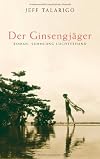
- Der Ginsengjäger
- Original title
- The ginseng hunter
- Original publication date
- 2008
- Important places
- China; North Korea
- Epigraph
- But we all have moments when we must listen in tears to the silence of the swarming path inside ourselves. -- Kim Myong-In
- Dedication
- For those who have made it across,
And for those who haven't.
And for my family of women,
And for Aya and Bella, so much a part of it. - First words
- The river begins in a single country, and then crosses into another.
- Last words*
- (Click to show. Warning: May contain spoilers.)Erst wenn alles gepflanzt ist, werde ich wieder in die Berge und von neuem auf Ginsengjagd gehen.
*Some information comes from Common Knowledge in other languages. Click "Edit" for more information.
Classifications
Statistics
- Members
- 193
- Popularity
- 167,262
- Reviews
- 15
- Rating
- (3.71)
- Languages
- English, French, German
- Media
- Paper, Audiobook, Ebook
- ISBNs
- 8
- ASINs
- 2