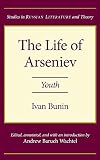
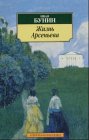
The Well of Days
by Ivan Bunin
On This Page
Description
Ivan Bunin was the first Russian writer of the twentieth century to be award the Nobel Prize in literature. Like many other Russian writers, he emigrated after the Revolution and never returned to his homeland; The Life of Arseniev is the major work of his émigré period. In ways similar to Nabokov's Speak, Memory, Bunin's novel powerfully evokes the atmosphere of Russia in the decades before the Revolution and illuminates those Russian literary and cultural traditions eradicated in the show more Soviet era. This first full English-language edition updates earlier translations, taking as its source the version Bunin revised in 1952, and including an introduction and annotations by Andrew Baruch Wachtel. show lessTags
Recommendations






























Member Reviews
Efter ett boktips av Horace Engdahl blev jag nyfiken på boken. Tyvärr nådde den inte riktigt upp till mina förväntningar. Delvis beroende på att jag förmodligen hade lite för höga förväntningar, men delvis också på att den saknade det där lilla extra i detaljer och beskrivningar, i personbeskrivningar och platser, som jag har kommit att nära nog förvänta mig av ryska författare.
Stundtals påminde den mig lite grann om Proust, men tyvärr inte med samma kvalitet. Väl värd att läsa dock.
Stundtals påminde den mig lite grann om Proust, men tyvärr inte med samma kvalitet. Väl värd att läsa dock.
Jul 25, 2014Swedish
BG-2
Sep 15, 2020Catalan
Ratings
Members
- Recently Added By
Lists

All Things Russia
459 works; 11 members
Author Information

249+ Works 1,980 Members
Ivan A. Bunin was little known in the United States until he received the Nobel Prize for literature, the first Russian writer to do so. By then he had decades of extensive literary activity behind him. In the intensely group-oriented literary milieu of turn-of-the-century Russia, Bunin largely remained a loner, working within the realist show more tradition in prose but enriching it with a powerful lyric element. He traveled abroad a great deal and used exotic locales as settings for many of his works. An outspoken opponent of the Bolsheviks, he emigrated to Paris and ironically, years after his death, he became celebrated in the Soviet Union as a major writer. Bunin's themes are diverse, ranging from a changing Russia to the universal human experience. Born into an impoverished rural-gentry family, he often wrote about the decline and passing of a way of life. Sometimes his depiction of provincial Russia is elegiac; at other times it is violent and tragic, as in the novella Dry Valley (1911]). A number of his works, such as the remarkable short story "The Gentleman from San Francisco" (1915), may be read as allegories of human encounter with the transcendent. In later years, Bunin grew increasingly preoccupied with problems of sexual attraction and death, evidenced in his last collection of stories, Dark Avenues (1930). In 1933 he was awarded the Nobel Prize for Literature. Bunin died in 1953. (Bowker Author Biography) show less
Awards and Honors
Common Knowledge
- Canonical title
- The Well of Days
Classifications
- Genres
- Fiction and Literature, General Fiction
- DDC/MDS
- 891.733 — Literature & rhetoric Asian Literature East Indo-European and Celtic literatures Russian and East Slavic languages Russian fiction 1800–1917
- LCC
- PG3453 .B9 .Z213 — Language and Literature Slavic languages and literatures. Baltic languages. Albanian language Slavic. Baltic. Albanian Russian literature Individual authors and works 1870-1917
- BISAC
Statistics
- Members
- 102
- Popularity
- 315,819
- Reviews
- 2
- Rating
- (3.73)
- Languages
- 9 — Dutch, English, Estonian, French, German, Italian, Russian, Spanish, Swedish
- Media
- Paper
- ISBNs
- 23
- ASINs
- 2