On This Page
Description
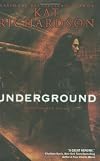
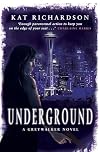
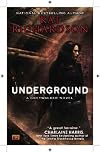
In the cold of winter, Pioneer Square's homeless are being butchered, and zombies have been seen roaming the streets of the underground city buried beneath modern Seattle. Greywalker H arper Blaine is asked to investigate by her friend Quinton, who fears he may be implicated in the deaths. They soon discover that someone has unleashed a monster of ancient legend- and H arper must deal with both the living and the dead to find the creature and put a stop to it...unless it stops her first..
Tags
Recommendations




























Member Reviews
I just finished "Underground". This is Kat Richardson's third novel of her 'Greywalker' series and I love it! Her heroine reminds me a bit of Laurell K. Hamilton's Anita Blake...without the sexcapades...or the guilt...or the constant killing. Ok, maybe not Anita Blake. Richardson's heroine is a strong character who wrestles with her choices while always trying to do the right thing...even when it's not the most comfortable thing.
Harper died...for about two minutes. When she came 'back', she came back with the ability to see what she calls the Grey, that realm between the worlds where time and space aren't quite the same. She also has the ability to 'slide into' the Grey...where she can see ghosts and the past overlaid on the present, show more and magic and energies have color and weight...very hard to describe, but very well done! In the first book "Greywalker", Harper tries to find out why the world is now so different to her, and how she can come to grips with what's happened to her. The second book "Poltergeist" had Harper learning a bit more about her abilities and the 'rules' of the Grey and it's also where Harper finds out there are more creatures 'living' in both worlds than she ever knew! Each book has a mystery and Harper earns her living as a private investigator, so by now we know that when a 'case' gets dropped in Harper's lap, there's going to be something a big, or a lot, strange about it.
This time something is killing the homeless in Seattle's Underground. When her friend Quinn worries that he may be connected to the case, he asks Harper for her help. What these two find out while investigating isn't pretty, but it IS pretty darn dangerous. Harper also has to deal with a few vampires, a witch or two, some necromancers, ghosts galore, creatures from Native American folklore, and her boyfriend who knows nothing about Harper's 'other' life...and doesn't want to.
This series has sucked me in but good. As soon as I pick up the new book I'm out of touch with this world until I finish. Harper is someone I'd like to have a beer with...as long as she assured me there weren't any unseen things hanging about! If you like fantasy, give Harper a shot. The first two books are in paperback, but this one is only available in hardcover. I have all three on my 'keeper' shelf! show less
Harper died...for about two minutes. When she came 'back', she came back with the ability to see what she calls the Grey, that realm between the worlds where time and space aren't quite the same. She also has the ability to 'slide into' the Grey...where she can see ghosts and the past overlaid on the present, show more and magic and energies have color and weight...very hard to describe, but very well done! In the first book "Greywalker", Harper tries to find out why the world is now so different to her, and how she can come to grips with what's happened to her. The second book "Poltergeist" had Harper learning a bit more about her abilities and the 'rules' of the Grey and it's also where Harper finds out there are more creatures 'living' in both worlds than she ever knew! Each book has a mystery and Harper earns her living as a private investigator, so by now we know that when a 'case' gets dropped in Harper's lap, there's going to be something a big, or a lot, strange about it.
This time something is killing the homeless in Seattle's Underground. When her friend Quinn worries that he may be connected to the case, he asks Harper for her help. What these two find out while investigating isn't pretty, but it IS pretty darn dangerous. Harper also has to deal with a few vampires, a witch or two, some necromancers, ghosts galore, creatures from Native American folklore, and her boyfriend who knows nothing about Harper's 'other' life...and doesn't want to.
This series has sucked me in but good. As soon as I pick up the new book I'm out of touch with this world until I finish. Harper is someone I'd like to have a beer with...as long as she assured me there weren't any unseen things hanging about! If you like fantasy, give Harper a shot. The first two books are in paperback, but this one is only available in hardcover. I have all three on my 'keeper' shelf! show less
Richardson continues to offer excellent and creative urban fantasy. This installment delves further into Seattle's strange-yet-factual history, including using part of the underground part of the old city as its setting for Native American monsters and zombies.
When the downtown burned in 1889, the decision was made to raise the streets above the high tide mark and construct the new buildings out of non-flammable materials. For a while, sidewalks were on the old city level as the new streets were filled in and constructed. This is where much of the homeless population lives in this book, and they are being eaten and occasionally reanimated as ambulatory corpses. Fun for all involved.
We also get more information on Quinton, who continues show more to be an excellent character successfully breaking conventional molds of masculinity by trusting Harper to handle herself. And she does, without pulling a TSTL (too stupid to live).
I have an admitted soft spot for Ben's role in this novel, as his linguistic knowledge is put to crucial use. But then, most humanities scholars I know want to believe that what we do is important and practical. We make good cases for it, in fact; but I do like seeing things like fluency in multiple languages being a tool for fighting evil.
As in earlier books, Richardson continues to explore the effects of power in human hands, drawing on the UF genre convention that mundane every day humans are perfectly capable of being far more monstrous than the more visible monsters (shall we say differently human?).
I still like her incorporation, or reliance on, general physics for her principles of magic use. Like the Dresden Files, there are rules that govern magic as a force that also limit how fast something can heat up, or how the force to move something is generated; equal and opposite reaction and all that. I feel like Richardson draws more heavily on physics than Butcher does, however, and find myself interested in her innovation of and deviance from those physics.
In all, an excellent book that fully lives up to the promise of the first two. It is macabre, gothic, funny, smart and creatively epic. Still loving Richardson. show less
When the downtown burned in 1889, the decision was made to raise the streets above the high tide mark and construct the new buildings out of non-flammable materials. For a while, sidewalks were on the old city level as the new streets were filled in and constructed. This is where much of the homeless population lives in this book, and they are being eaten and occasionally reanimated as ambulatory corpses. Fun for all involved.
We also get more information on Quinton, who continues show more to be an excellent character successfully breaking conventional molds of masculinity by trusting Harper to handle herself. And she does, without pulling a TSTL (too stupid to live).
I have an admitted soft spot for Ben's role in this novel, as his linguistic knowledge is put to crucial use. But then, most humanities scholars I know want to believe that what we do is important and practical. We make good cases for it, in fact; but I do like seeing things like fluency in multiple languages being a tool for fighting evil.
As in earlier books, Richardson continues to explore the effects of power in human hands, drawing on the UF genre convention that mundane every day humans are perfectly capable of being far more monstrous than the more visible monsters (shall we say differently human?).
I still like her incorporation, or reliance on, general physics for her principles of magic use. Like the Dresden Files, there are rules that govern magic as a force that also limit how fast something can heat up, or how the force to move something is generated; equal and opposite reaction and all that. I feel like Richardson draws more heavily on physics than Butcher does, however, and find myself interested in her innovation of and deviance from those physics.
In all, an excellent book that fully lives up to the promise of the first two. It is macabre, gothic, funny, smart and creatively epic. Still loving Richardson. show less
Underground is the third in Kat Richardson’s Greywalker series, which features Harper Blaine as a Seattle private investigator who can see the “Grey” – the borderland between reality and magic, life and death, past and present. Harper gained this ability when she died for two minutes in an attack by the subject of an investigation.
Underground starts so slowly that I feared that Richardson had lost her way. It’s difficult to imagine that a hard-working private investigator with plenty of work would dive into a case with no client, especially one that, like this one, poses considerable risk of physical harm to an already physically overstressed body. Yet not once in the course of the book does Harper even mention that a paying show more client or two is paying second fiddle to her quest to find a monster in the depths of Seattle in order to save the lives of the homeless. It’s a noble quest, no question, but wouldn’t one have a second thought or two about leaving this particular investigation to the authorities?
Despite the practical problems, though, the book really gets going about halfway through. Richardson has clearly done her homework about underground Seattle, Seattle history, and Native American mythology, and her research is evident on every page. I love a book that can teach me something about a monster with the unlikely (and oddly funny) name of Sisiutl, and how this Native American myth ties in with other traditions around the world. And I enjoyed learning about how Seattle had to be raised – the whole darn city, apparently – in order to avoid the effects of the tides. The sidewalks remained below for a considerable time, leaving pedestrians with the choice of climbing ladders to get to where they needed to be – and often leading to deadly falls if one slipped in the rain. Richardson isn’t the type of writer who feels the need to give you every fact she picks up in the course of her research; she uses her information with a good deal of art, only once resorting to a straightforward infodump by having her protagonist join a tour of underground Seattle.
Harper’s romantic entanglements get more interesting here, too. I appreciated the reality of her relationship with Will, painful as it was for Harper, and got a kick out of everything new we learn about Quinton, her security expert. Richardson clearly knows how to put together a series: there are a few subtle set-ups for the next book in the course of these relationships, as well as in Harper’s ongoing friendship with Ben and Mara Danziger and their pet ghost, Albert. It’s a good cast of characters, and one that should provide Richardson with plenty of fodder for additional entries in her series.
What especiallymakes this novel sing in its second half is its incredible sense of place. This seems to be true of some of the best urban fantasy out there these days: Seanan McGuire writes about San Francisco and environs in her October Daye series, while M.L.N. Hanover wrote convincingly of post-Katrina New Orleans in Darker Angels. Richardson tops them both with her detailed writing about Seattle’s past and present and its many different sorts of inhabitants. I’m already eager to read the next in the series, Vanished, which will take Harper Blaine to England, a place redolent with history. show less
Underground starts so slowly that I feared that Richardson had lost her way. It’s difficult to imagine that a hard-working private investigator with plenty of work would dive into a case with no client, especially one that, like this one, poses considerable risk of physical harm to an already physically overstressed body. Yet not once in the course of the book does Harper even mention that a paying show more client or two is paying second fiddle to her quest to find a monster in the depths of Seattle in order to save the lives of the homeless. It’s a noble quest, no question, but wouldn’t one have a second thought or two about leaving this particular investigation to the authorities?
Despite the practical problems, though, the book really gets going about halfway through. Richardson has clearly done her homework about underground Seattle, Seattle history, and Native American mythology, and her research is evident on every page. I love a book that can teach me something about a monster with the unlikely (and oddly funny) name of Sisiutl, and how this Native American myth ties in with other traditions around the world. And I enjoyed learning about how Seattle had to be raised – the whole darn city, apparently – in order to avoid the effects of the tides. The sidewalks remained below for a considerable time, leaving pedestrians with the choice of climbing ladders to get to where they needed to be – and often leading to deadly falls if one slipped in the rain. Richardson isn’t the type of writer who feels the need to give you every fact she picks up in the course of her research; she uses her information with a good deal of art, only once resorting to a straightforward infodump by having her protagonist join a tour of underground Seattle.
Harper’s romantic entanglements get more interesting here, too. I appreciated the reality of her relationship with Will, painful as it was for Harper, and got a kick out of everything new we learn about Quinton, her security expert. Richardson clearly knows how to put together a series: there are a few subtle set-ups for the next book in the course of these relationships, as well as in Harper’s ongoing friendship with Ben and Mara Danziger and their pet ghost, Albert. It’s a good cast of characters, and one that should provide Richardson with plenty of fodder for additional entries in her series.
What especiallymakes this novel sing in its second half is its incredible sense of place. This seems to be true of some of the best urban fantasy out there these days: Seanan McGuire writes about San Francisco and environs in her October Daye series, while M.L.N. Hanover wrote convincingly of post-Katrina New Orleans in Darker Angels. Richardson tops them both with her detailed writing about Seattle’s past and present and its many different sorts of inhabitants. I’m already eager to read the next in the series, Vanished, which will take Harper Blaine to England, a place redolent with history. show less
Richardson continues to offer excellent and creative urban fantasy. This installment delves further into Seattle's strange-yet-factual history, including using part of the underground part of the old city as its setting for Native American monsters and zombies.
When the downtown burned in 1889, the decision was made to raise the streets above the high tide mark and construct the new buildings out of non-flammable materials. For a while, sidewalks were on the old city level as the new streets were filled in and constructed. This is where much of the homeless population lives in this book, and they are being eaten and occasionally reanimated as ambulatory corpses. Fun for all involved.
We also get more information on Quinton, who continues show more to be an excellent character successfully breaking conventional molds of masculinity by trusting Harper to handle herself. And she does, without pulling a TSTL (too stupid to live).
I have an admitted soft spot for Ben's role in this novel, as his linguistic knowledge is put to crucial use. But then, most humanities scholars I know want to believe that what we do is important and practical. We make good cases for it, in fact; but I do like seeing things like fluency in multiple languages being a tool for fighting evil.
As in earlier books, Richardson continues to explore the effects of power in human hands, drawing on the UF genre convention that mundane every day humans are perfectly capable of being far more monstrous than the more visible monsters (shall we say differently human?).
I still like her incorporation, or reliance on, general physics for her principles of magic use. Like the Dresden Files, there are rules that govern magic as a force that also limit how fast something can heat up, or how the force to move something is generated; equal and opposite reaction and all that. I feel like Richardson draws more heavily on physics than Butcher does, however, and find myself interested in her innovation of and deviance from those physics.
In all, an excellent book that fully lives up to the promise of the first two. It is macabre, gothic, funny, smart and creatively epic. Still loving Richardson. show less
When the downtown burned in 1889, the decision was made to raise the streets above the high tide mark and construct the new buildings out of non-flammable materials. For a while, sidewalks were on the old city level as the new streets were filled in and constructed. This is where much of the homeless population lives in this book, and they are being eaten and occasionally reanimated as ambulatory corpses. Fun for all involved.
We also get more information on Quinton, who continues show more to be an excellent character successfully breaking conventional molds of masculinity by trusting Harper to handle herself. And she does, without pulling a TSTL (too stupid to live).
I have an admitted soft spot for Ben's role in this novel, as his linguistic knowledge is put to crucial use. But then, most humanities scholars I know want to believe that what we do is important and practical. We make good cases for it, in fact; but I do like seeing things like fluency in multiple languages being a tool for fighting evil.
As in earlier books, Richardson continues to explore the effects of power in human hands, drawing on the UF genre convention that mundane every day humans are perfectly capable of being far more monstrous than the more visible monsters (shall we say differently human?).
I still like her incorporation, or reliance on, general physics for her principles of magic use. Like the Dresden Files, there are rules that govern magic as a force that also limit how fast something can heat up, or how the force to move something is generated; equal and opposite reaction and all that. I feel like Richardson draws more heavily on physics than Butcher does, however, and find myself interested in her innovation of and deviance from those physics.
In all, an excellent book that fully lives up to the promise of the first two. It is macabre, gothic, funny, smart and creatively epic. Still loving Richardson. show less
Harper Blaine is the stereotypical hard-boiled detective, and in the opening chapter of the first book Greywalker she is viciously assaulted by someone she's been investigating and is clinically dead for about seven minutes. When she recovers, nothing is the same. She sees things that aren't there, she's propelled into some sort of misty, dark otherwhere, she's seeing the things that go bump in the night. In effect, that misty borderland between the natural and the supernatural is called the Grey and she now has a permanent passport to travel there. There's no going back to regular life.
All of these stories are essentially fast-paced action movies on paper. While all of the characters are distinctive, all are without depth, including show more the protagonist herself. This isn't really a series about personal growth, simply the growth of supernatural superpowers. Which is a shame, because so many of these characters have potential. And the romantic subplots--are there to add the mandatory sprinkling of spice, not depth.
*SPOILERS* Underground involves zombies. At the beginning of the book, Will is back in Seattle trying to make a go of it with Harper, but when she deconstructs the undead he freaks. End romance, exit stage right. Harper cries. Enter Quinton for instant rebound, better than ever. And now we learn that Quinton is homeless by choice, and that whatever is creating the zombies is preying on the homeless living in the historic underground part of Seattle. Why would someone so smart and capable as Quinton be homeless under the government radar? Because the government is looking for him, silly. Enter the NSA. Of course, Quinton is just like Mel Gibson in conspiracy theory, but not schizophrenic. So the sex is great, he totally understands her freaky situation, BUT THEY CAN NEVER BE TOGETHER because the government will never stop looking, even if he fakes his own death. Oh yeah, cause of zombies--local Native American legend. Once again, it's nice that she's not relying strictly on European models and that she recognizes that there was a long human history in the area before European settlement and the establishment of a city.
So what do I like about the stories? She does her homework and does a good job with the scenery and exposition to give readers a feel for the locales. She has a fair sprinkling of different cultures and racial groups--detective Solis is a Colombian by birth, then there's the Jamaican Mason family, the various Native Americans who show up in Underground. Harper owns a ferret. She does a great job portraying ferrets as pets, and it is certainly a nice change from all of the cat owners in mysteries.
What don't I like? The characters are shuffled in and out of stories with no real pacing or development, just sudden left turns and departures. Each story is entirely crisis management, there's no sense that Harper has anything approaching a normal routine, even if the normal has been redefined. Never any visits with friends or plans for a restful weekend or calls from annoying relatives. So the characters are essentially cardboard cutouts that are moved around the board as needed without any sort of convincing motivation or sense of inevitability.
And most commonly, Harper's reactions to the Grey and to vampires and to whatever else is nausea. But boy, she keeps trooping right along with the nausea and other physical discomforts. As someone who's gone through chemotherapy, it's kind of disturbing to have nausea tossed in there as the most common physical symptom Harper contends with, and yet she just shrugs it off. Shit, there's whole suites of pharmaceuticals and endless brochures and books of advice for how to cope with nausea, which can be quite debilitating, and continue to get vital nutrients and survive. I don't think the author has any grasp of it, really, and every time I read about the nausea in the story it makes my guts twinge.
Similarly, her interactions with the vampires. She has profound physical reactions to them, admits they scare the pants off her, but then she just blithely handles them. Once again, doesn't convince me. And as a friend pointed out, they have such prosaic names: Edward, Carlos, Alice, Gwen, and so on.
So if you want quick entertainment that will occupy you for a few hours, with characters you aren't really going to become attached to, this is the series. It's kinda like the John Grisham of urban fantasy. Kat Richardson is certainly better than some others I've read in this style. I'm not going to go out and buy any of these books though, and I'm returning the ones I borrowed. show less
All of these stories are essentially fast-paced action movies on paper. While all of the characters are distinctive, all are without depth, including show more the protagonist herself. This isn't really a series about personal growth, simply the growth of supernatural superpowers. Which is a shame, because so many of these characters have potential. And the romantic subplots--are there to add the mandatory sprinkling of spice, not depth.
*SPOILERS* Underground involves zombies. At the beginning of the book, Will is back in Seattle trying to make a go of it with Harper, but when she deconstructs the undead he freaks. End romance, exit stage right. Harper cries. Enter Quinton for instant rebound, better than ever. And now we learn that Quinton is homeless by choice, and that whatever is creating the zombies is preying on the homeless living in the historic underground part of Seattle. Why would someone so smart and capable as Quinton be homeless under the government radar? Because the government is looking for him, silly. Enter the NSA. Of course, Quinton is just like Mel Gibson in conspiracy theory, but not schizophrenic. So the sex is great, he totally understands her freaky situation, BUT THEY CAN NEVER BE TOGETHER because the government will never stop looking, even if he fakes his own death. Oh yeah, cause of zombies--local Native American legend. Once again, it's nice that she's not relying strictly on European models and that she recognizes that there was a long human history in the area before European settlement and the establishment of a city.
So what do I like about the stories? She does her homework and does a good job with the scenery and exposition to give readers a feel for the locales. She has a fair sprinkling of different cultures and racial groups--detective Solis is a Colombian by birth, then there's the Jamaican Mason family, the various Native Americans who show up in Underground. Harper owns a ferret. She does a great job portraying ferrets as pets, and it is certainly a nice change from all of the cat owners in mysteries.
What don't I like? The characters are shuffled in and out of stories with no real pacing or development, just sudden left turns and departures. Each story is entirely crisis management, there's no sense that Harper has anything approaching a normal routine, even if the normal has been redefined. Never any visits with friends or plans for a restful weekend or calls from annoying relatives. So the characters are essentially cardboard cutouts that are moved around the board as needed without any sort of convincing motivation or sense of inevitability.
And most commonly, Harper's reactions to the Grey and to vampires and to whatever else is nausea. But boy, she keeps trooping right along with the nausea and other physical discomforts. As someone who's gone through chemotherapy, it's kind of disturbing to have nausea tossed in there as the most common physical symptom Harper contends with, and yet she just shrugs it off. Shit, there's whole suites of pharmaceuticals and endless brochures and books of advice for how to cope with nausea, which can be quite debilitating, and continue to get vital nutrients and survive. I don't think the author has any grasp of it, really, and every time I read about the nausea in the story it makes my guts twinge.
Similarly, her interactions with the vampires. She has profound physical reactions to them, admits they scare the pants off her, but then she just blithely handles them. Once again, doesn't convince me. And as a friend pointed out, they have such prosaic names: Edward, Carlos, Alice, Gwen, and so on.
So if you want quick entertainment that will occupy you for a few hours, with characters you aren't really going to become attached to, this is the series. It's kinda like the John Grisham of urban fantasy. Kat Richardson is certainly better than some others I've read in this style. I'm not going to go out and buy any of these books though, and I'm returning the ones I borrowed. show less
Blaine died for two minutes and came back with the ability to see into a dimension called the "Grey". In it she can see ghost, vampires, lines of power and things that go bump in the night. Being a PI means that some of these 'things' ask her for help or let he help where others cannot. Around Pioneer Square in Seattle parts of bodies and bodies without parts begin showing up. The problem is that the parts that are missing look like they've been chewed off and there's little blood. Also some new types of Zombies are showing up in the area. Got that. Shocking revelations, intense suspense, unique paranormal characters, and a mystery that keeps you guessing gives this urban fantasy more than its share of fun thrills.
Third book in the “Greywalker” paranormal fantasy series set in Seattle, WA. Featuring Harper Blaine, a woman who becomes a Greywalker after having died for two minutes. She is able to go into the Grey—the murky area between life and death, seeing ghosts other spirit-folk. This story features a series of grisly killings of Seattle’s homeless community, where folks are showing up dead with body parts missing and having been quite literally chewed up. The murders, while being investigated, are not a high priority given the victims’ status, and are being written off as “attacked by dogs” and such.
Harper gets involved with the case when Quinton, her friend who does her tech work, designed her security system, etc. asks her to show more investigate as he knew some of the people who have died—and others who have simply disappeared recently. He knows about Harper’s abilities and thinks she’s the perfect person to look into things, and as she has no pressing cases, she does. Plunging to the world of the homeless, the Seattle Underground, and learning much about a local Native American myth, Harper and Quinton make some startling discoveries. This is the book where I think the author finally comes into her stride. Don’t get me wrong—I liked the first two books just fine, but I didn’t really feel “connected” to Harper and there was an elusive ‘something missing’ from them. Whatever that was, it’s now been found! This story sucked me in right away and I literally read this book in two sittings. I felt as though I finally got to really get into Harper’s head, and the story wasn’t just about her, it *was* her. Excellent—glad my intuition led me to reading this as it was a great way to start the new year! show less
Harper gets involved with the case when Quinton, her friend who does her tech work, designed her security system, etc. asks her to show more investigate as he knew some of the people who have died—and others who have simply disappeared recently. He knows about Harper’s abilities and thinks she’s the perfect person to look into things, and as she has no pressing cases, she does. Plunging to the world of the homeless, the Seattle Underground, and learning much about a local Native American myth, Harper and Quinton make some startling discoveries. This is the book where I think the author finally comes into her stride. Don’t get me wrong—I liked the first two books just fine, but I didn’t really feel “connected” to Harper and there was an elusive ‘something missing’ from them. Whatever that was, it’s now been found! This story sucked me in right away and I literally read this book in two sittings. I felt as though I finally got to really get into Harper’s head, and the story wasn’t just about her, it *was* her. Excellent—glad my intuition led me to reading this as it was a great way to start the new year! show less
Members
- Recently Added By
Lists

Best Urban Fantasy
632 works; 78 members

The Best Vampires, Werebeasts, Witches Books
192 works; 12 members

Read in 2014
334 works; 11 members

Paranormal investigators and space detectives
274 works; 9 members

Books Read in 2025
4,090 works; 97 members
Author Information

25+ Works 7,427 Members
Kat Richardson received a degree in magazine journalism from California State University, Long Beach. Before becoming a fiction author, she worked as a writer and editor in the computer industry and as a course writer for the Gemological Institute of America. She is best known for the Greywalker series. (Bowker Author Biography)
Series

Common Knowledge
- Canonical title
- Underground
- Original publication date
- 2008-08-05
- People/Characters
- Harper Blaine; Quinton; Detective Solis; Ben Danziger; Mara Danziger; Cameron Shadley (show all 9); Racquel Shadley; Teresita Danziger; Aldrin Shadley
- Important places
- Seattle, Washington, USA; Washington, USA
- Dedication
- For Jim, for everything. And in memory of Jay Mezo: "Everything's better with bacon!"
- First words
- If ghosts and monsters had someone else to harass, my life would have been a lot quieter, like it was before I died.
- Last words
- (Click to show. Warning: May contain spoilers.)I watched the Grey-gleaming thing trundle across my floor and wondered what fresh hell might be contained at its core.
- Publisher's editor
- Sowards, Anne
- Blurbers
- Harris, Charlaine
- Disambiguation notice
- Not related to London's Underground tube system. (Well, there a few scenes set in underground, just not in London.)
Classifications
Statistics
- Members
- 815
- Popularity
- 33,668
- Reviews
- 28
- Rating
- (3.80)
- Languages
- English, German
- Media
- Paper, Audiobook, Ebook
- ISBNs
- 12
- ASINs
- 5