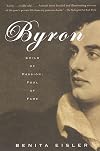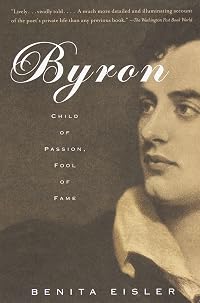
Byron: Child of Passion, Fool of Fame
by Benita Eisler
On This Page
Description
A biography of Lord Byron, the 19th century poet, concentrating on his romantic life. The book describes his amours with both men and women, including incest with his half-sister. The author analyzes the extent to which the love affairs influenced his writing.Tags
Recommendations














Member Recommendations
Member Reviews
Better than I expected it to be, though inclined to accept as fact what in strict terms must be considered speculation, and straining too hard to make Byron "relevant" (calling him the first rap artist!)--is that really necessary? Read "Don Juan"--of COURSE he's relevant.
Not an easy read, but once immersed in the author's style, it holds the reader's interest and proves more than one ever wanted to know about the Mad, Bad, Lord Byron.
Ratings
Members
- Recently Added By
Published Reviews
ThingScore 100
Byron's beautifully turned verses were like pamphlets or wall posters, lampooning the nobs and inciting contempt for their rule. Eisler, whose book will I think be the one to beat for many decades to come, is especially artful and dexterous in matching the poetry to he life and the ideas. She is alive to the essential connection between the sexual outlaw and the professional revolutionary.
added by SnootyBaronet
Lists

Books Read in 1999
29 works; 1 member
Author Information

9+ Works 902 Members
Awards and Honors
Awards
Common Knowledge
- Original publication date
- 1999
- People/Characters
- Lord Byron; Claire Clairmont; Augusta Leigh; Lady Caroline Lamb
- Epigraph
- Censure no more shall brand my humble name
The child of passion and the fool of fame
Cancelled lines from
“Childish Recollections” (1806) - Dedication
- FOR GLORIA LOOMIS
- First words
- ON MONDAY, May 17, 1824, near noon, six men gathered in the high-ceilinged drawing room at 50 Albemarle Street, off Piccadilly, in a house that served as both home and office to the publisher John Murray.
- Quotations
- Whig society was the creation of its hostesses: beautiful, clever, and seductive women whose power drive found its outlet in political and sexual machinations, often combined. Alcove and boudoir were their Parliament.
- Last words
- (Click to show. Warning: May contain spoilers.)He spares us no example of life’s suffering, including the reminder of its brevity: All we have is the “summer of a dormouse.” Then, with laughter, he diverts us from our common fate.
Classifications
Statistics
- Members
- 269
- Popularity
- 120,605
- Reviews
- 2
- Rating
- (4.18)
- Languages
- English, German
- Media
- Paper, Ebook
- ISBNs
- 8
- ASINs
- 1