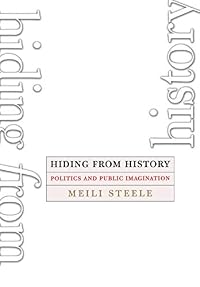
Hiding from History: Politics and Public Imagination
by Meili Steele
On This Page
Description
In Hiding from History, Meili Steele challenges an assumption at the heart of current debates in political, literary, historical, and cultural theory: that it is impossible to reason through history. Steele believes that two influential schools of contemporary thought "hide from history": liberal philosophies of public reason as espoused by such figures as Jürgen Habermas, Martha Nussbaum, and John Rawls and structuralism/poststructuralism as practiced by Judith Butler, Hayden White, and show more Michel Foucault. For Steele, public reasoning cannot be easily divorced from either the historical imagination in general or the specific legacies that shape, and often haunt, political communities.Steele introduces the concept of public imagination-concepts, images, stories, symbols, and practices of a culture-to show how the imaginative social space that citizens inhabit can be a place for political discourse and debate. Steele engages with a wide range of thinkers and their works, as well as historical events: debates over the display of the Confederate flag in public places; Ralph Ellison's exchange with Hannah Arendt over school desegregation in Little Rock; the controversy surrounding Daniel Goldhagen's book, Hitler's Willing Executioners; and arguments about the concept of a "clash of civilizations" as expressed by Samuel Huntington, Ashis Nandy, Edward Said, and Amartya Sen. Championing history and literature's capacity to articulate the politics of public imagination, Hiding from History boldly outlines new territory for literary and political theory. show lessTags
Members
- Recently Added By
Author Information
2 Works 11 Members
Meili Steele is Professor of English and Comparative Literature at the University of South Carolina.
Classifications
Statistics
- Members
- 5
- Popularity
- 3,419,733
- Languages
- English
- Media
- Paper, Ebook
- ISBNs
- 2