The File on H.
by Ismaïl Kadaré
On This Page
Description
A political comedy on two American academics who are recording story-singers in Albania. The two are on a project to show that story-singers were the source of Homer's epics, but this is much too highbrow for the district governor, convinced the pair are spies. By an Albanian writer, author of The Concert.Tags
Recommendations






Member Reviews
Night had fallen, and Shtjefen lit the tall oil-lamp, the one used for important occasions such as this. There was a special atmosphere at the inn this evening, something like a party feeling. Only the rhapsode, who was aware of being the hero of the night, stayed aside, and looked calmly at the tape-recorder. Bill kept glancing at him, trying to imagine what feelings the sight of this ultramodern device aroused in the rhapsode — bewilderment, or apprehension, or guilt about betraying his predecessors, the singers of yore? In the end he reckoned that the calmness of the rhapsode must have been masking inner turmoil. It would be the first time that the sound of his voice and of his labuta would not be lost in space, just as sounds show more always had been, but instead would be collected inside this metal box, like rainwater in a cistern or like . . . He suddenly feared that the rhapsode might change his mind.
Written around 1980 but set in the 1930s, this is a satire on Albanian politics and Albanian-Serbian rivalry. It tells the story of Bill and Max, two Irish scholars who come to Albania in search of the last remaining rhapsodes (travelling minstrels). While in Albania, they hope to work out whether Homer was single author of the Iliad or someone who created a standardised version of an existing epic into a single version by writing one of the variants down. They also want to find out if epic-composition is still a living art-form by recording the same rhapsodes singing the same songs on different occasions to see whether the songs change at all, and looking for evidence that new epics are still being created.
The governor of the nearby town has been asked to keep an eye on Bill and Max, as they are suspected of being spies, and he sets his favourite informer on the case. He sends back wonderfully-written letters from the inn where Bill and Max are staying although he is handicapped by being unable to speak English, so he can't tell what Bill and Max are saying when they are alone together, although they do speak a strange archaic version of Albanian when talking to the locals.
The historical setting of this story allows the author to get away with satirising the communist government in the guise of satirising the monarchist government of the 1930s. I loved the governor's reactions to his informer's ornate writing style, the governor's wife's fantasies about the Irishmen, and the reactions of the Albanians to the newly-invented tape recorder used by the scholars, all of which made this an interesting read. show less
Written around 1980 but set in the 1930s, this is a satire on Albanian politics and Albanian-Serbian rivalry. It tells the story of Bill and Max, two Irish scholars who come to Albania in search of the last remaining rhapsodes (travelling minstrels). While in Albania, they hope to work out whether Homer was single author of the Iliad or someone who created a standardised version of an existing epic into a single version by writing one of the variants down. They also want to find out if epic-composition is still a living art-form by recording the same rhapsodes singing the same songs on different occasions to see whether the songs change at all, and looking for evidence that new epics are still being created.
The governor of the nearby town has been asked to keep an eye on Bill and Max, as they are suspected of being spies, and he sets his favourite informer on the case. He sends back wonderfully-written letters from the inn where Bill and Max are staying although he is handicapped by being unable to speak English, so he can't tell what Bill and Max are saying when they are alone together, although they do speak a strange archaic version of Albanian when talking to the locals.
The historical setting of this story allows the author to get away with satirising the communist government in the guise of satirising the monarchist government of the 1930s. I loved the governor's reactions to his informer's ornate writing style, the governor's wife's fantasies about the Irishmen, and the reactions of the Albanians to the newly-invented tape recorder used by the scholars, all of which made this an interesting read. show less
40. The File On H. by Ismail Kadare
published: 1981 in Albanian
translation: Translated from Albanian to French by [[Jusuf Vrioni]] (1989). Translated from French to English by [[David Bellos] (1998).
format: 202-page hardcover
acquired: June read: Aug 17-30 time reading: 4:56, 1.5 mpp
rating: 4
genre/style: Novel theme: none
locations: northern Albania
about the author: born 1936 in Gjirokastër, Albania
Preface: I‘ve wanted to read Kadare for a while, care of LT. He keeps cropping up with appealing reviews (like DieFledermaus, who reviewed this book below in 2012). I picked this book up because of the connection to Homer (The "H." in the title). An off-site conversation about the oral tradition behind Homer led me to read it with a small show more group on Litsy.
It's a quick read. It looks at Albanian culture through two Irish Homeric scholars from Harvard who have come to record Albanian traditional saga singers, bringing along the first widely available tape recorder (first available in 1930). This happens to be exactly what Milman Parry and Albert Lord actually did, becoming famous for their theories of the oral tradition behind the Iliad and the Odyssey. But Parry and Lord notably recorded Serbian singers in Yugoslavia, not Albanian singers.
Kadare is having fun. He doesn't lead us to the Homeric ideas; but instead begins very oddly with an entertaining satire of repressive 1930's Albania (presumably directly applicable to 1981 Albania). And everything he does tell us is oddly indirect. But it all works. We touch on Homeric origins in only way we can, reaching as we do into the unknown, and extending only with our imagination.
I found this a terrific little playful novel.
Recommended for the spontaneous.
2022
https://www.librarything.com/topic/342768#7923213 show less
published: 1981 in Albanian
translation: Translated from Albanian to French by [[Jusuf Vrioni]] (1989). Translated from French to English by [[David Bellos] (1998).
format: 202-page hardcover
acquired: June read: Aug 17-30 time reading: 4:56, 1.5 mpp
rating: 4
genre/style: Novel theme: none
locations: northern Albania
about the author: born 1936 in Gjirokastër, Albania
Preface: I‘ve wanted to read Kadare for a while, care of LT. He keeps cropping up with appealing reviews (like DieFledermaus, who reviewed this book below in 2012). I picked this book up because of the connection to Homer (The "H." in the title). An off-site conversation about the oral tradition behind Homer led me to read it with a small show more group on Litsy.
It's a quick read. It looks at Albanian culture through two Irish Homeric scholars from Harvard who have come to record Albanian traditional saga singers, bringing along the first widely available tape recorder (first available in 1930). This happens to be exactly what Milman Parry and Albert Lord actually did, becoming famous for their theories of the oral tradition behind the Iliad and the Odyssey. But Parry and Lord notably recorded Serbian singers in Yugoslavia, not Albanian singers.
Kadare is having fun. He doesn't lead us to the Homeric ideas; but instead begins very oddly with an entertaining satire of repressive 1930's Albania (presumably directly applicable to 1981 Albania). And everything he does tell us is oddly indirect. But it all works. We touch on Homeric origins in only way we can, reaching as we do into the unknown, and extending only with our imagination.
I found this a terrific little playful novel.
Recommended for the spontaneous.
2022
https://www.librarything.com/topic/342768#7923213 show less
I first read this book in my early twenties. A friend gave it to me as a present. At the time was studying Homer, and I dreamed with the times when oral storytelling was still alive. I used to think how wonderful it was when people would gather around the fireplace and hear old folktales. I thought storytelling was something from the past, and this book gave me access to a world that was very dear to my heart, but I would never get the chance to get to know.
Meanwhile I moved to the UK and found out about story circles, where storytellers gather together in a circle and tell stories. I became a storyteller myself, and telling stories became part of my identity. There are stories that I have been telling for years, and they do change show more with time, just as it is described in the book. It was wonderful to re-read this book 15 years later, and recognise techniques that I myself use, as well as my storytelling friends. I still love epic poetry and Homer, and this book made me want to read epic poems from Albania.
I loves Kadare's writing, his insight, his descriptions and his humour. When reading this book I still feel like I am being transported to another world, and I can almost feel it as it was so vividly portrayed. I think this book now became an old friend, and from time to time I will pay it a visit. show less
Meanwhile I moved to the UK and found out about story circles, where storytellers gather together in a circle and tell stories. I became a storyteller myself, and telling stories became part of my identity. There are stories that I have been telling for years, and they do change show more with time, just as it is described in the book. It was wonderful to re-read this book 15 years later, and recognise techniques that I myself use, as well as my storytelling friends. I still love epic poetry and Homer, and this book made me want to read epic poems from Albania.
I loves Kadare's writing, his insight, his descriptions and his humour. When reading this book I still feel like I am being transported to another world, and I can almost feel it as it was so vividly portrayed. I think this book now became an old friend, and from time to time I will pay it a visit. show less
Up until the ending this was in the running for my favorite Kadare, with a tone that starts out humorous and slowly grows more and more oppressive, and with parallel story threads that resonate with each other quite wonderfully. The final pages of this book, however, take the story in an unexpected direction, and in general the ending feels rushed. Another fifty pages or so, and a better payoff to a few of the major story lines, and I would consider this book one of Kadare's best. Even as it stands it's still good, it just didn't quite reach the heights that I was expecting it to.
Arriving in an Albanian backwater, Bill and Max are scholars from Ireland by way of Harvard, and they're on a mission to record the epic poetry still sung by show more traveling bards in the inns and tiny mountain towns of the Albanian countryside. By doing this they hope to decipher how oral epics transform or keep shape over time, which will in turn allow them to extrapolate how Homer himself operated. The Albanian government considers this reason for the scholars' visit to be patently absurd, an obvious cover story for foreign spies. In addition, others see the scholars' visit as an exciting escape from the boredom of a small Albanian town, while others guess that the work of the scholars will somehow play a role in the longstanding ethnic conflict between Albanians and Serbs.
The work the scholars are conducting, combined with the intrigue surrounding their visit, provide interesting themes for Kadare to explore. As they study the travelers who perform the epics the two scholars realize that, even though they are in their twilight, the epics are still changing, with different people telling the same legend in a myriad of different ways, and even the same performer shaping the story differently, perhaps as a subconscious response to what experiences he has undergone. Similarly, the people who are observing Bill and Max create their own stories about what the pair are up to, letting their own beliefs and expectations change the narrative they invent. To some the scholars are spies, and every word they say about Homer is their attempt to pull the wool over the eyes of the locals. To others the scholars are adventurers and potential romantic partners. To yet others the pair are committing blasphemous acts and threatening to rob Albania of one of its greatest assets. All these stories are true, at least to the people coming up with them. The recurring theme of how a story evolves and why is an interesting one, and Kadare gives us a situation where the theme could be explored in great dramatic ways.
I was expecting that the story would end with the Albanian government bringing in Bill and Max and accusing them of being spies, thus confronting the scholars with the idea that a story isn't a concrete thing, but one that can be completely different based on a person's expectations and biases. Thus I guessed that the denouement would feature the scholars realizing the hopelessness of their endeavor to solve the mystery of how Homer's epics evolved- whether Homer was a man or a committee, you can't figure out exactly why he gave us the Iliad and the Odyssey in the form that he did, as stories aren't created and don't change in some scientifically calculable way. Sometimes they just arise and morph in ways you couldn't possibly guess. Instead, the ending featured the scholars' equipment being destroyed, indeed because of someone else's story of what Bill and Max were doing. Despite giving up on their project, however, Bill and Max prepare to leave convinced that the key to solving how epics are formed was almost within their grasp. This of course is similarly an invented story, not a clear truth. The very last pages, however, seem to depict Bill having a revelation of sorts, mimicking the performance of the bards he had been studying and perhaps signifying that in fact he has grasped how an epic functions through personal experience in a way that he could never have understood through purely academic analysis. This isn't entirely clear here, though, as the book ends quickly and Bill's actions are left ambiguous. Still an interesting ending, to be sure, but I'm not sure if the climax was the best possible culmination of the themes explored up to that point.
My quibbling about the ending is really the only significant complaint I had with the book. Otherwise I thought nearly everything was great, highlighting some of Kadare's best qualities as a writer and revealing some skills that I didn't even know he had. For instance, the beginning of this book is genuinely funny, in a way that I hadn't seen Kadare pull off in previous books. The absurd bureaucracy of Albania, presented seriously in The Palace of Dreams and The Pyramid, here is satirized, especially with regards to the system of informers used to gather information. The book doesn't stay humorous throughout, however, as the scholars' stay in a lonely inn, trying to grasp the evolution of epics as delivered by ritualistic, almost mystic storytellers, and being constantly observed by the state and other parties as well, gradually turns the tone into an oppressive one. Additionally, with Bill going blind and every question in their research answered raising two more in its place, not to mention the distrust the other travelers feel about the recording device, there's underlying tension throughout. Kadare is also a master at depicting the setting of Albania, the ancient inn at the foot of the accursed mountains where the last remaining storytellers cross paths is a unique and evocative place for the bulk of the story to unfold. We don't learn a huge amount about many of the characters, but they are distinct, with individual personalities and motivations. For a book this short the characters are quite well drawn, even though we don't spend quite enough time with them for them to feel like real people. Kadare's writing is excellent here as well. Though not nearly as much of a focus here as it was in Broken April, Albanian culture is still touched upon in passing in The File on H, and it's yet another aspect of the book I enjoyed.
Really everything about this book I enjoyed, except the ending felt rushed, and generally I thought Kadare could have crafted an ending that gave more of a payoff to the theme of the creation and evolution of a story that permeated the book. I'd say that despite this complaint I'd still heartily recommend The File on H, and it's a good place to start if you haven't read any Kadare before. show less
Arriving in an Albanian backwater, Bill and Max are scholars from Ireland by way of Harvard, and they're on a mission to record the epic poetry still sung by show more traveling bards in the inns and tiny mountain towns of the Albanian countryside. By doing this they hope to decipher how oral epics transform or keep shape over time, which will in turn allow them to extrapolate how Homer himself operated. The Albanian government considers this reason for the scholars' visit to be patently absurd, an obvious cover story for foreign spies. In addition, others see the scholars' visit as an exciting escape from the boredom of a small Albanian town, while others guess that the work of the scholars will somehow play a role in the longstanding ethnic conflict between Albanians and Serbs.
The work the scholars are conducting, combined with the intrigue surrounding their visit, provide interesting themes for Kadare to explore. As they study the travelers who perform the epics the two scholars realize that, even though they are in their twilight, the epics are still changing, with different people telling the same legend in a myriad of different ways, and even the same performer shaping the story differently, perhaps as a subconscious response to what experiences he has undergone. Similarly, the people who are observing Bill and Max create their own stories about what the pair are up to, letting their own beliefs and expectations change the narrative they invent. To some the scholars are spies, and every word they say about Homer is their attempt to pull the wool over the eyes of the locals. To others the scholars are adventurers and potential romantic partners. To yet others the pair are committing blasphemous acts and threatening to rob Albania of one of its greatest assets. All these stories are true, at least to the people coming up with them. The recurring theme of how a story evolves and why is an interesting one, and Kadare gives us a situation where the theme could be explored in great dramatic ways.
My quibbling about the ending is really the only significant complaint I had with the book. Otherwise I thought nearly everything was great, highlighting some of Kadare's best qualities as a writer and revealing some skills that I didn't even know he had. For instance, the beginning of this book is genuinely funny, in a way that I hadn't seen Kadare pull off in previous books. The absurd bureaucracy of Albania, presented seriously in The Palace of Dreams and The Pyramid, here is satirized, especially with regards to the system of informers used to gather information. The book doesn't stay humorous throughout, however, as the scholars' stay in a lonely inn, trying to grasp the evolution of epics as delivered by ritualistic, almost mystic storytellers, and being constantly observed by the state and other parties as well, gradually turns the tone into an oppressive one. Additionally, with Bill going blind and every question in their research answered raising two more in its place, not to mention the distrust the other travelers feel about the recording device, there's underlying tension throughout. Kadare is also a master at depicting the setting of Albania, the ancient inn at the foot of the accursed mountains where the last remaining storytellers cross paths is a unique and evocative place for the bulk of the story to unfold. We don't learn a huge amount about many of the characters, but they are distinct, with individual personalities and motivations. For a book this short the characters are quite well drawn, even though we don't spend quite enough time with them for them to feel like real people. Kadare's writing is excellent here as well. Though not nearly as much of a focus here as it was in Broken April, Albanian culture is still touched upon in passing in The File on H, and it's yet another aspect of the book I enjoyed.
Really everything about this book I enjoyed, except the ending felt rushed, and generally I thought Kadare could have crafted an ending that gave more of a payoff to the theme of the creation and evolution of a story that permeated the book. I'd say that despite this complaint I'd still heartily recommend The File on H, and it's a good place to start if you haven't read any Kadare before. show less
This novel is set in Albania in the mid-30s, when that country was under King Zog, and lest anyone think Kadare does not have his tongue firmly in his cheek, think only for a moment on the basic premiss: two Irish-American scholars travel from the USA to the mountainous wilds of Albania, a tape recorder (a completely new invention) in hand, to record ballads sung by wandering minstrels , in an effort to prove links to Homer, or at least to explore the mechanics of the transposition of the oral to the written word. The two intrepid explorers are very excited when they record the same balladeer singing the same song on two occasions (one week apart) and they discover two lines changed in a thousand!
This is a wonderful satire of the show more mindless and unimaginative and artificial, and yet potentially very dangerous, world that is created by authoritarian, closed, paranoid, ignorant regimes. Kadare sets this story in the time of King Zog, but there can be no doubt that he has in mind the mindlessness of the communist regime. The Irish-Americans are, of course, assumed to be spies and this colours the reaction of almost everyone they meet, often with humourous consequences. The local governor reads their journals and, through leaps of logic, or illogic, sees proof of espionage in every passage, however innocuous. The governor’s wife is so starved for outside excitement and stimulation that she fantasizes about having an affair with one of the visitors and then is terrified lest one of them should say anything about it (though it never happened) and this would be reported by the Albanian spy (who glories in the name, Dull) who tracks every word they utter by hiding in the ceiling of their room in the very poor and rustic inn where they reside (and wonder if the scrapings in the ceiling indicate mice?)…of course all to little avail as Dull speaks not a word of English, and he tenders his resignation because he admits that he dozed-off for a minute in the ceiling and was thus guilty of dereliction of duty. Despite the veneer of authoritarian control and conformity, the passions and desires and fears and superstitions and greed of people bubble just beneath the surface and burst out in various instances. This, in fact, is why all such regimes eventually perish or undergo fundamental transformation: because they cannot create a “New Man”, they cannot re-fashion human nature and non-conformist ideas and independent thought will ever rise up. show less
This is a wonderful satire of the show more mindless and unimaginative and artificial, and yet potentially very dangerous, world that is created by authoritarian, closed, paranoid, ignorant regimes. Kadare sets this story in the time of King Zog, but there can be no doubt that he has in mind the mindlessness of the communist regime. The Irish-Americans are, of course, assumed to be spies and this colours the reaction of almost everyone they meet, often with humourous consequences. The local governor reads their journals and, through leaps of logic, or illogic, sees proof of espionage in every passage, however innocuous. The governor’s wife is so starved for outside excitement and stimulation that she fantasizes about having an affair with one of the visitors and then is terrified lest one of them should say anything about it (though it never happened) and this would be reported by the Albanian spy (who glories in the name, Dull) who tracks every word they utter by hiding in the ceiling of their room in the very poor and rustic inn where they reside (and wonder if the scrapings in the ceiling indicate mice?)…of course all to little avail as Dull speaks not a word of English, and he tenders his resignation because he admits that he dozed-off for a minute in the ceiling and was thus guilty of dereliction of duty. Despite the veneer of authoritarian control and conformity, the passions and desires and fears and superstitions and greed of people bubble just beneath the surface and burst out in various instances. This, in fact, is why all such regimes eventually perish or undergo fundamental transformation: because they cannot create a “New Man”, they cannot re-fashion human nature and non-conformist ideas and independent thought will ever rise up. show less
http://nhw.livejournal.com/743751.html
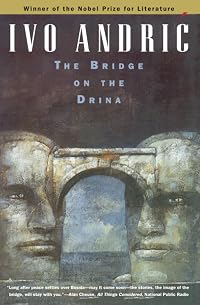
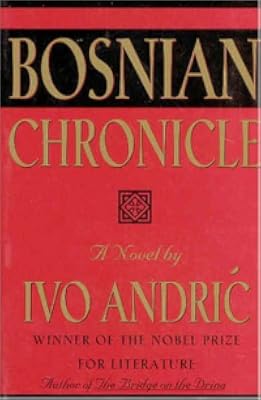
It is short but very deep: the tale of two ethnographers visiting Albania in the 1930s during the rule of King Zog, to record ancient epic poetry (the H in the title stands for Homer). The two ethnographers are supposed to be Irish, but might as well be Japanese for the purposes of the story: the novel is about Albania, not about Ireland. (Perhaps it was in part a response to Andrić's foreigners encountering Bosnia in The Days of the Consuls?)
But it's also about the construction of truth, how stories are told, especially when the state tries to regulate knowledge and information. Although the patriotic version of Albanian history - 1878, 1913 - is the only one told here, one senses that Kadarë show more himself doesn't completely buy it, and subverts it in the way he tells the story. In the meantime people escape as best they can, the rather ethereal epic poetry souight by the Irishmen in contrast with the erotic dreams of the governor's wife. A really good book, strongly recommended. show less
It is short but very deep: the tale of two ethnographers visiting Albania in the 1930s during the rule of King Zog, to record ancient epic poetry (the H in the title stands for Homer). The two ethnographers are supposed to be Irish, but might as well be Japanese for the purposes of the story: the novel is about Albania, not about Ireland. (Perhaps it was in part a response to Andrić's foreigners encountering Bosnia in The Days of the Consuls?)
But it's also about the construction of truth, how stories are told, especially when the state tries to regulate knowledge and information. Although the patriotic version of Albanian history - 1878, 1913 - is the only one told here, one senses that Kadarë show more himself doesn't completely buy it, and subverts it in the way he tells the story. In the meantime people escape as best they can, the rather ethereal epic poetry souight by the Irishmen in contrast with the erotic dreams of the governor's wife. A really good book, strongly recommended. show less
This was a fun read, but a little uneven, and missed some of its potential.
It tells the story of a small Albanian town. Two Irishmen, bearing newfangled tape recorders, come to study native epic traditions. The Albanian government suspects them of being spies, so the mayor of the anonymous town keeps the Irishmen under surveillance. Meanwhile, the mayor's wife fantasizes about having an affair with the foreigners. The Irishmen - fictional versions of the famous Lord and Parry- stay in a hotel outside the town, excitedly doing their research, but inadvertently ending up in the ages-old conflict between the Albanians and the Serbs.
There are some delightful and hilarious characters - the mayor is a delight, and the spy who writes verbose show more reports on the Irishmen's activities is hilarious. The sexual frustration and innuendo throughout the book is tasteful and funny.
However, the book gets bogged down in the details of the Irishmen's research. I'm familiar with the work of Lord and Parry, so maybe I found this part less interesting than I could have, but for a long time (especially in such a short book) the narrative grinds to a halt as we read the research diaries of the Irishmen - the detail is interesting, but doesn't drive the plot at all.
The end of the book happens a little abruptly - it feels like Kadare got tired or writing at what should have been the halfway point and just suddenly stopped the book. Part of the point is that ancient cultural conflicts can be destructive, but he could have made the point in a more satisfying way. show less
It tells the story of a small Albanian town. Two Irishmen, bearing newfangled tape recorders, come to study native epic traditions. The Albanian government suspects them of being spies, so the mayor of the anonymous town keeps the Irishmen under surveillance. Meanwhile, the mayor's wife fantasizes about having an affair with the foreigners. The Irishmen - fictional versions of the famous Lord and Parry- stay in a hotel outside the town, excitedly doing their research, but inadvertently ending up in the ages-old conflict between the Albanians and the Serbs.
There are some delightful and hilarious characters - the mayor is a delight, and the spy who writes verbose show more reports on the Irishmen's activities is hilarious. The sexual frustration and innuendo throughout the book is tasteful and funny.
However, the book gets bogged down in the details of the Irishmen's research. I'm familiar with the work of Lord and Parry, so maybe I found this part less interesting than I could have, but for a long time (especially in such a short book) the narrative grinds to a halt as we read the research diaries of the Irishmen - the detail is interesting, but doesn't drive the plot at all.
The end of the book happens a little abruptly - it feels like Kadare got tired or writing at what should have been the halfway point and just suddenly stopped the book. Part of the point is that ancient cultural conflicts can be destructive, but he could have made the point in a more satisfying way. show less
Members
- Recently Added By
Lists

Novels featuring language professionals
98 works; 12 members

Books Read in 2014
2,343 works; 89 members

501 Must-Read Books
529 works; 72 members
Author Information

179+ Works 7,866 Members
Ismail Kadare is the most prominent of contemporary Albanian writers. He has written poetry, short stories, literary criticism, and seven novels. His works have been translated and published in more than two dozen countries. An internationally known figure, he has visited and lectured in many countries. He was also a representative to Albania's show more People's Assembly. In 1990 Kadare left Albania for Paris where he became openly dissident. (Bowker Author Biography) show less
Some Editions
Awards and Honors
Series
Belongs to Publisher Series
Work Relationships
Was inspired by
Common Knowledge
- Canonical title
- The File on H.
- Original title
- Dosja H
- Alternate titles
- H for Homer
- Original publication date
- 1981
- People/Characters*
- Max Roth; Willy Norton
- First words
- The diplomatic bag from the Royal Albanian Legation in Washington, DC, arrived on a gloomy winter's day, of the kind that nature bestows with a particular prodigality on the capital cities of small and backward states.
- Last words
- (Click to show. Warning: May contain spoilers.)It was only a shell encasing something else.
- Original language
- Albanian
*Some information comes from Common Knowledge in other languages. Click "Edit" for more information.
Classifications
- Genres
- General Fiction, Fiction and Literature
- DDC/MDS
- 891.9913 — Literature & rhetoric Literatures of other languages East Indo-European and Celtic literatures Baltic and other Indo-European languages Other Indo-European languages Albanian Albanian fiction
- LCC
- PG9621 .K3 .D66713 — Language and Literature Slavic languages and literatures. Baltic languages. Albanian language Slavic. Baltic. Albanian Albanian
- BISAC
Statistics
- Members
- 368
- Popularity
- 84,746
- Reviews
- 13
- Rating
- (3.88)
- Languages
- 10 — Albanian, Dutch, English, French, Greek, Norwegian (Bokmål), Norwegian, Portuguese, Spanish, Swedish
- Media
- Paper, Ebook
- ISBNs
- 19
- ASINs
- 2