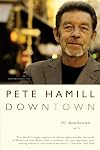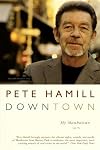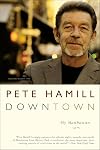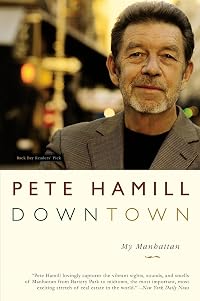
Downtown: My Manhattan
by Pete Hamill
On This Page
Description
In this "beautifully written, sharply observed, and heartfelt" guide to his hometown (New York Times), legendary New York City journalist Pete Hamill leads us on an unforgettable journey through the city he loves.Walking the Manhattan streets he loves, from Times Square to the island's southern tip, Pete Hamill combines a moving memoir of his own days and nights in new York with a lively and revealing history of the city's most enduring places and people.
"Pete Hamill lovingly captures the show more vibrant sights, sounds, and smells of Manhattan from Battery Park to midtown, the most important, most exciting stretch of real estate in the world." —New York Daily News
. show less
Tags
Recommendations







Member Reviews
I cannot count the number of times I’ve started and stopped reading this book. Not because I didn’t enjoy reading it, but because I never seemed to have the time to commit to it. I can’t even blame it all on library book expiration — at one point I’d mooched two copies off BookMooch and managed to give away/donate both before I read it. I started thinking about it as well as Philip Lopate’s Waterfront during last summer’s Loop, but never got my hands on a copy. Recently I got back into it and decided this was the time. I would re request a copy for the library as often as I needed to. Luckily, it only took one renewal and I absolutely love this book. I find myself wishing for a sequel.
I like Hamill’s idea about owning a show more city (and its neighborhoods) in different ways. It’s something I never really thought of, but it’s absolutely true. I argue about the boundaries of the Upper East Side in the same way he does about “Downtown”. Your perception depends on your attitude, your hobbies, your favorites and your age. Hamill is significantly older than I am so his view of his neighborhoods were different to mine even when they overlapped. There’s also the question of timing — this book was published in 2004 which doesn’t seem that long ago, but is significant in the development and change of NYC.
Perhaps the key change was the view of 9/11: in Hamill’s writing, the city was still dealing with the hole in Lower Manhattan. While I was reading, they placed the spire atop the new Freedom Tower. Healed? No. But in a much different place than the early 2000s.
The other issue that time hurt? His bibliography. So many titles I want to read. So few available for Kindle and some out of print entirely.
Two lines from the book’s beginning and end tell Hamill – and New York’s — stories in a nutshell:
I live here still. With any luck at all, I will die here. I have the native son’s irrational love of the place. For any native the home place is infused with a mixture of memory, myth, lore, and history, bound together in an erratic, subjective way. That’s as true of the natives of New York as of the natives of Oxford, Mississippi. … …. The wanderer in Manhattan must go forth with a certain innocence, because New York is best seen with innocent eyes.
This is an amazing look at New York -- it's the history, but it's also the present. It's our city -- what it is, was and will be if we don't break some of the cycles that are clearly present. Hamill's background in newspaper and fiction have taught him how to tell a story -- and that's what this book is. A wonderful story of New York.
More here: http://www.travellingcari.com/2013/05/13/my-manhattan/#more-742 show less
I like Hamill’s idea about owning a show more city (and its neighborhoods) in different ways. It’s something I never really thought of, but it’s absolutely true. I argue about the boundaries of the Upper East Side in the same way he does about “Downtown”. Your perception depends on your attitude, your hobbies, your favorites and your age. Hamill is significantly older than I am so his view of his neighborhoods were different to mine even when they overlapped. There’s also the question of timing — this book was published in 2004 which doesn’t seem that long ago, but is significant in the development and change of NYC.
Perhaps the key change was the view of 9/11: in Hamill’s writing, the city was still dealing with the hole in Lower Manhattan. While I was reading, they placed the spire atop the new Freedom Tower. Healed? No. But in a much different place than the early 2000s.
The other issue that time hurt? His bibliography. So many titles I want to read. So few available for Kindle and some out of print entirely.
Two lines from the book’s beginning and end tell Hamill – and New York’s — stories in a nutshell:
I live here still. With any luck at all, I will die here. I have the native son’s irrational love of the place. For any native the home place is infused with a mixture of memory, myth, lore, and history, bound together in an erratic, subjective way. That’s as true of the natives of New York as of the natives of Oxford, Mississippi. … …. The wanderer in Manhattan must go forth with a certain innocence, because New York is best seen with innocent eyes.
This is an amazing look at New York -- it's the history, but it's also the present. It's our city -- what it is, was and will be if we don't break some of the cycles that are clearly present. Hamill's background in newspaper and fiction have taught him how to tell a story -- and that's what this book is. A wonderful story of New York.
More here: http://www.travellingcari.com/2013/05/13/my-manhattan/#more-742 show less
While it’s true that Pete Hamill’s Downtown is a love letter to New York, and Manhattan specifically, and it starts off charmingly enough, it quickly becomes unfocused. Downtown meanders from one piece of history to the next on a whim, until your eyes glaze over because it’s so dull and entrenched in a pattern. In essence, the problem for this reader with the book is that it is like picking up a newspaper, and discovering it to be one long, rambling column on the same subject.
Downtown turned out to be an information dump that can overwhelm the average reader, but it’s not always the information we want to know. Do I need to know that Pete wouldn’t have voted for Alexander Hamilton if he’d lived back then, or that despite show more rumors of infidelity, Hamilton’s wife chose to be buried next to him? Pete, of course, makes no mention of Jackie Kennedy being buried next to liberal Irish Catholic JFK, whose rovings have been well-documented by now. Do I need to know that newspaperman James Bennett Jr. — whom Pete obviously admires as a newspaper owner — took a whiz in front of his bride-to-be and guests, possibly in a fireplace or on a piano, and was ostracized from New York society, fleeing to Europe, and that Hamill finds this “unintentionally funny” and, more importantly, worthy of including here?
But this is what you get here, and soon after the charm wears off, we forget that we're on a walking tour of this section of New York, and just become numbed by the repetitive pattern. It is very nostalgic at first, as Pete shows you how it used to be, and talks about the different mindset of New Yorkers, who live with constant change — what the city is all about. Terms like “velocity” and “alloy” are used ad nauseam. There comes to be a “sameness” as you turn the pages, flitting from one place to another, one story to another. It’s an endless column, from page one to the back pages with too much information thrown at the reader to remember much after the fourth or fifth or twentieth mention of something.
It’s also laced with Pete’s political views, even though it’s not about politics. Hamill does show some evenhandedness when dealing with the low ebb in New York, and it’s sort of rebirth, crediting both sides, especially Giuliana, for a lot of its resurgence, and the drop in crime. But then he turns around and credits the Million Man March — which was a million in the same way that this last presidential inaugural had the greatest attendance ever — led by Farrakhan, of all people, which was only about black men (not women), with changing the culture of the African American population of New York. That march was on Washington, not New York, and one has to surmise from all we know, that it was the focused crackdown on cleaning up the city by both Republican and Democrat Mayors, which led to the drop in black on black crime.
Pete can write a heck of a column, and I don’t always have to agree with him to enjoy his writing. But I wasn’t expecting his views to creep into this one so much. In fiction, it would have been fine. Unlike some — far too many, in my opinion — I don’t have to agree with every thought of the protagonist or others in narratives by Ross Macdonald, Robert B. Parker, John D. MacDonald, Chandler or Hammett, to enjoy a particular book and rate it high. It’s the ride that matters, and the story, the writing. But this wasn’t fiction, it was non-fiction, more a love letter to New York. Each time Hamill strayed from that — and he couldn’t seem to help himself from doing so — it pulled me out of the charm of the walking tour through what he calls, Downtown.
And then there were the information dumps. While engagingly told, the reader gets overwhelmed after a while, and then annoyed at the flitting from one piece of history to another. Unlike M.M. Kaye’s Sun in the Morning, which I read recently, which were scattered reminiscences of her childhood in India, there seemed to be no structure here, no cohesion or central theme. I came away thinking Pete’s probably a pretty good guy, and he obviously loves New York — which begs the question why he’s chosen to live so many other places, since New York is in his veins. Sadly, however, the lack of structure, the meandering, the lacing of Pete’s own views within this rambling love letter, prevented me from enjoying it more.
Perhaps nothing sums up this book better than 9-11. With all the minutia that the author spends time on, we get only two-and-a-half pages, I believe, on an event which changed both New York, and the world, forever. They are heartfelt, but Pete quickly jumps to something else. And that’s indicative of the entire book. I can imagine New Yorkers liking this much more than the average reader. For the information within, and the writing, I'm giving it three stars. For New York’s actual history, unbiased and structured to where the reader can perhaps get a sense of the city beyond velocity and alloy, some of the suggested reading Pete lists at the back of the book might be much more informative. show less
Downtown turned out to be an information dump that can overwhelm the average reader, but it’s not always the information we want to know. Do I need to know that Pete wouldn’t have voted for Alexander Hamilton if he’d lived back then, or that despite show more rumors of infidelity, Hamilton’s wife chose to be buried next to him? Pete, of course, makes no mention of Jackie Kennedy being buried next to liberal Irish Catholic JFK, whose rovings have been well-documented by now. Do I need to know that newspaperman James Bennett Jr. — whom Pete obviously admires as a newspaper owner — took a whiz in front of his bride-to-be and guests, possibly in a fireplace or on a piano, and was ostracized from New York society, fleeing to Europe, and that Hamill finds this “unintentionally funny” and, more importantly, worthy of including here?
But this is what you get here, and soon after the charm wears off, we forget that we're on a walking tour of this section of New York, and just become numbed by the repetitive pattern. It is very nostalgic at first, as Pete shows you how it used to be, and talks about the different mindset of New Yorkers, who live with constant change — what the city is all about. Terms like “velocity” and “alloy” are used ad nauseam. There comes to be a “sameness” as you turn the pages, flitting from one place to another, one story to another. It’s an endless column, from page one to the back pages with too much information thrown at the reader to remember much after the fourth or fifth or twentieth mention of something.
It’s also laced with Pete’s political views, even though it’s not about politics. Hamill does show some evenhandedness when dealing with the low ebb in New York, and it’s sort of rebirth, crediting both sides, especially Giuliana, for a lot of its resurgence, and the drop in crime. But then he turns around and credits the Million Man March — which was a million in the same way that this last presidential inaugural had the greatest attendance ever — led by Farrakhan, of all people, which was only about black men (not women), with changing the culture of the African American population of New York. That march was on Washington, not New York, and one has to surmise from all we know, that it was the focused crackdown on cleaning up the city by both Republican and Democrat Mayors, which led to the drop in black on black crime.
Pete can write a heck of a column, and I don’t always have to agree with him to enjoy his writing. But I wasn’t expecting his views to creep into this one so much. In fiction, it would have been fine. Unlike some — far too many, in my opinion — I don’t have to agree with every thought of the protagonist or others in narratives by Ross Macdonald, Robert B. Parker, John D. MacDonald, Chandler or Hammett, to enjoy a particular book and rate it high. It’s the ride that matters, and the story, the writing. But this wasn’t fiction, it was non-fiction, more a love letter to New York. Each time Hamill strayed from that — and he couldn’t seem to help himself from doing so — it pulled me out of the charm of the walking tour through what he calls, Downtown.
And then there were the information dumps. While engagingly told, the reader gets overwhelmed after a while, and then annoyed at the flitting from one piece of history to another. Unlike M.M. Kaye’s Sun in the Morning, which I read recently, which were scattered reminiscences of her childhood in India, there seemed to be no structure here, no cohesion or central theme. I came away thinking Pete’s probably a pretty good guy, and he obviously loves New York — which begs the question why he’s chosen to live so many other places, since New York is in his veins. Sadly, however, the lack of structure, the meandering, the lacing of Pete’s own views within this rambling love letter, prevented me from enjoying it more.
Perhaps nothing sums up this book better than 9-11. With all the minutia that the author spends time on, we get only two-and-a-half pages, I believe, on an event which changed both New York, and the world, forever. They are heartfelt, but Pete quickly jumps to something else. And that’s indicative of the entire book. I can imagine New Yorkers liking this much more than the average reader. For the information within, and the writing, I'm giving it three stars. For New York’s actual history, unbiased and structured to where the reader can perhaps get a sense of the city beyond velocity and alloy, some of the suggested reading Pete lists at the back of the book might be much more informative. show less
Pete Hamill is one of my favorite writers because whether he's writing fiction or nonfiction, everything he writes is so richly textured with details, you feel as if you were there with him or his characters. His love for New York City is palpable in this book, something that has defined him as much as his work on newspapers or his Irish heritage (both of which he discusses in this work).
I found his discussion of Union Square in the aftermath of 9/11 particularly poignant and his accounts of that day, with his sadness and fear, resonate as we continue to rebuild his and our beloved city
I found his discussion of Union Square in the aftermath of 9/11 particularly poignant and his accounts of that day, with his sadness and fear, resonate as we continue to rebuild his and our beloved city
Good read if you are taking a trip to Manhattan. Hamill takes you from the tip of Manhattan up to about Times Square, with plenty of history of the city along the way, describing lots of buildings that are still there, as well as those that are gone, with lots of personal history as well. Good stuff, and a good source of places to stop and visit, some that you may miss otherwise. As the book goes on, it seems to be more of a list than the details that were present early, with lots of name dropping. Still, the personal history and those names were pretty fascinating. A good, fast read.
Pete Hamill knows and loves NYC, and in Downtown: My Manhattan, where the subtitle is important, he focuses on the area most nostalgic for him, more or less from 42nd Street south, but with some good writing about upper Broadway in the days of the Thalia movie theater. His writing is perhaps too dramatic and sentimental for some readers, but he's a popular newspaper writer, and the quantity of information and anecdotes makes it quite all right.
He draws a distinction between nostalgia and sentimentality, though: New Yorkers, he maintains, are constantly filled with mild nostalgia because things change so quickly that even someone five years in a given location will remember a different neighborhood than a newcomer finds. Constant change show more inures residents to it, but still a lingering wistfulness, for what one remembers used to be, lingers. It's in this delicately balanced tone that he describes his New York.
And it is truly his New York, as unlike most Manhattanites, he was born and brought up in Brooklyn and then crossed over to the lower east side, for cheap living in his youth, now the East Village and not cheap at all, and currently he resides in the most fashionable (and expensive, but probably not when he arrived) section of the city, Tribeca or TriBeCa, as the real estate people have renamed the triangular area below Canal Street, above the financial district.
The view in 2004 when the book was published of course is haunted by the tremendous shock – and the many changes – that the attacks on the World Trade Towers brought, especially to those living in nearby Tribeca. This was change on a monumental scale, physical and emotional and procedural, even for those of us living further away, and the experience necessarily colors his account.
Highly recommended – though perhaps especially for those who already know and like NYC, as there's just a single map, and not a very detailed one at that. But there are lots of maps available on the web, and the stories are great: Union Square has nothing to do with either the Civil War or trade unions, but marked the place Broadway merged with the Bowery: who knew? show less
This is a tough one. I liked the book while recognizing it truly is a bit of a mishmash of memoir, history, travel guide, and whatever else Hamill felt like including. I think I liked it mostly because I love New York. He does spend time noting notable buildings, as it were, and there is plenty about the role and importance of immigrants in the life of the great city. He must have been psychic regarding the need for that one. I am reluctant to totally recommend it because in parts I just wanted to get to the end, but at the end I was glad I read it.
well written, highly personal, compelling
Members
- Recently Added By
Author Information

42+ Works 6,860 Members
Some Editions
Common Knowledge
- Original publication date
- 2004
- Important places
- Manhattan, New York, New York, USA
- Blurbers
- Danbom, Dan
Classifications
- Genres
- Nonfiction, Biography & Memoir, Travel, General Nonfiction, History
- DDC/MDS
- 974.710092 — History & geography History of North America Northeastern United States (New England and Middle Atlantic states) New York New York (N.Y.)
- LCC
- F128.3 .H25 — Local History of the United States, Canada and Latin America United States local history New York
- BISAC
Statistics
- Members
- 466
- Popularity
- 65,325
- Reviews
- 14
- Rating
- (3.98)
- Languages
- Chinese, English
- Media
- Paper, Audiobook, Ebook
- ISBNs
- 13
- ASINs
- 3