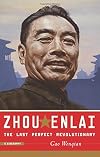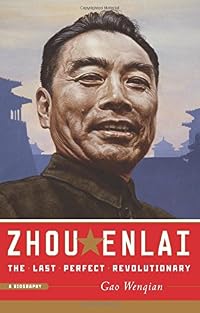
Zhou Enlai: The Last Perfect Revolutionary
by Gao Wenqian
On This Page
Description
When Gao Wenqian first published this groundbreaking, provocative biography in Hong Kong, it was immediately banned in the People's Republic. Using classified documents spirited out of the China, he offers an objective human portrait of the real Zhou Enlai, the premier of the People's Republic of China from 1949 until his death in 1976. Often touted as "the last perfect revolutionary," Zhou is "a modern saint" who offered protection to his people during the Cultural Revolution, and an icon show more who allows modern Chinese to find an admirable figure in what was a traumatic and bloody era. But his greatest gift was to survive, at almost any price, thanks to his acute understanding of where political power resided at any one time. show lessTags
Recommendations





Member Reviews
Zhou Enlai has fascinated me for a long time. A survivor of every political and military conflict twentieth century China had to offer, he obviously was a consummate strategist, which implies a concomitant ruthlessness. Yet somehow in the western press, he had escaped the odium so often reserved for other ranking Chinese leaders. Instead, the west portrayed him as somewhat patrician, a Confucian style throwback amongst the Maoist thugs. While I did think of him as a positive force in Chinese politics, I wanted a more balanced assessment, which proved difficult to find in English. Once again LT provided the answer and I found this book.
Gao Wenqian the author, was a true insider. He was the official biographer of Zhou Enlai for the show more Chinese Communist Party Central Research Office for Documentation, spending ten years researching Zhou and the Great Proletarian Cultural Revolution. After the events of Tiananmen Square in 1989, Gao decided it was time to leave China. This process took several years. During that time, aided by helpful westerners, he smuggled out file cards with his research notes. Gao wound up at Harvard for a time, where he wrote this book.
Originally published in Chinese in 2003, it was immediately banned in China. The Chinese edition dealt with the last ten years of Zhou's life, 1966-1976, a period which coincides with the Cultural Revolution and the beginnings of its aftermath. It discussed Zhou in relation to those events. In 2007, the book was translated into English.
At first I found the book disappointing. There was a lot of background on the history leading up to the founding of the People's Republic of China and its early history; information that has been covered at length elsewhere. It wasn't particularly specific to Zhou, although it was interesting to get the Chinese perspective. Reading the translators' note later, I discovered this section was an addition to the English language version for those who might not be familiar with this history.
Then Gao got to the start of the Cultural Revolution and the book got really interesting. By the time he got to Lin Biao, I couldn't put it down. Like other authors, Gao suggests that Chairman Mao lived in fear of a Khrushchev succeeding him and destroying his legacy, a reference to Khrushchev's 1956 denunciation of Stalin. In 1966, Mao's designated successor was Liu Shaoqi. Following the disasters of the Great Leap Forward and the years of famine, Mao was on shaky ground. Fearing potential overthrow by the Leninist Liu, who favoured strong control from the top versus Mao's more populist style, Mao decided to purge Liu and other revisionists in the party. Gao argues that Mao unleashed the Cultural Revolution and his wife Jiang Qing in order to do this. To Mao, Liu was "the Chinese Khrushchev".
Gao says that Mao " adopted a circuitous strategy of 'uniting with Lin Biao, grabbing on to Zhou Enlai, rectifying Deng Xiaoping, and attacking Liu Shaoqi'. This way, Mao set out to confuse Liu Shaoqi, while leaving potential allies like Zhou Enlai in political stalemate. What did this do to Zhou? It told him who the current intended targets were, and furthermore warned him that he could easily be one in the future.
Zhou's last ten yearas were spent trying to maintain his position while fighting off attacks from the left, and trying to ameliorate some of the devastation caused by the revolution, which at times was perilously close to all out civil war. This involved active participation in some of its policies, passive acquiescence in others, and abject self criticism when required. Every move was governed by his interpretation of Mao's wishes.
Does this mean that Zhou Enlai was without principles? Gao says that although early in his career Zhou outranked and outshone Mao, the need for Mao's military abilities convinced Zhou to subordinate himself to Mao. Without winning the battles against the Japanese and the Nationalists, the People's Republic of China could not come into being. Once the People's Republic was established, with Mao as Chairman and Zhou as Premier, Zhou decided never to challenge Mao for the leadership. Mao needed Zhou for his pragmatic administrative skills and his brilliant abilities at foreign relations, but feared him for just these reasons. Zhou realized the only way to keep his position was to appear to wholeheartedly support Mao.
Zhou suffered through struggle sessions, through dangerous political attacks, was denied medical treatment for cancer, but was never purged. In death he has not had his legacy revised and rewritten, although this almost happened in the months immediately following his death. Gao feels that what saved Zhou from this fate was Mao's death just eight months after Zhou's. Those who succeeded Zhou, in particular Deng Xiaoping, had benefitted from Zhou's quiet help over the years and had no reason to denigrate him.
In his introduction to the book, Andrew Nathan says Gao gives Zhou credit for softening the impact of Mao's policies, for protecting a number of people, for keeping the country going, for trying to restart the economy, and for achievements in foreign affairs. Yet he also makes clear that without Zhou's support Mao could not have kept the disaster going as long as he did. Mao needed Zhou. Although Zhou may not have had the power to overthrow Zhou, he could have withdrawn his support (paying, to be sure, the ultimate personal price) and Mao would have been unable to go on as long as he did. By working to mitigate the effects of Mao's rampage rather than to oppose them, he became Mao's enabler.
Should the man be condemned for supporting Mao or praised for moderating his programmes? This fascinating book presents a detailed examination of the dynamics between the two men, reenforcing the idea of Zhou as a Confucian, in service to the master, desperate to maintain harmony and reduce conflict by all means. Whether he succeeded, whether he was justified, the reader can determine. Gao sums up Zhou Enlai was neither the god current Chinese official have put on a pedestal, nor the unequivocally evil person whom anti-CCP types have portrayed... Zhou Enlai was an enormously complex man, hard to define and even harder to understand without a full appreciation of the difficulties... that beset China during his lifetime. show less
Gao Wenqian the author, was a true insider. He was the official biographer of Zhou Enlai for the show more Chinese Communist Party Central Research Office for Documentation, spending ten years researching Zhou and the Great Proletarian Cultural Revolution. After the events of Tiananmen Square in 1989, Gao decided it was time to leave China. This process took several years. During that time, aided by helpful westerners, he smuggled out file cards with his research notes. Gao wound up at Harvard for a time, where he wrote this book.
Originally published in Chinese in 2003, it was immediately banned in China. The Chinese edition dealt with the last ten years of Zhou's life, 1966-1976, a period which coincides with the Cultural Revolution and the beginnings of its aftermath. It discussed Zhou in relation to those events. In 2007, the book was translated into English.
At first I found the book disappointing. There was a lot of background on the history leading up to the founding of the People's Republic of China and its early history; information that has been covered at length elsewhere. It wasn't particularly specific to Zhou, although it was interesting to get the Chinese perspective. Reading the translators' note later, I discovered this section was an addition to the English language version for those who might not be familiar with this history.
Then Gao got to the start of the Cultural Revolution and the book got really interesting. By the time he got to Lin Biao, I couldn't put it down. Like other authors, Gao suggests that Chairman Mao lived in fear of a Khrushchev succeeding him and destroying his legacy, a reference to Khrushchev's 1956 denunciation of Stalin. In 1966, Mao's designated successor was Liu Shaoqi. Following the disasters of the Great Leap Forward and the years of famine, Mao was on shaky ground. Fearing potential overthrow by the Leninist Liu, who favoured strong control from the top versus Mao's more populist style, Mao decided to purge Liu and other revisionists in the party. Gao argues that Mao unleashed the Cultural Revolution and his wife Jiang Qing in order to do this. To Mao, Liu was "the Chinese Khrushchev".
Gao says that Mao " adopted a circuitous strategy of 'uniting with Lin Biao, grabbing on to Zhou Enlai, rectifying Deng Xiaoping, and attacking Liu Shaoqi'. This way, Mao set out to confuse Liu Shaoqi, while leaving potential allies like Zhou Enlai in political stalemate. What did this do to Zhou? It told him who the current intended targets were, and furthermore warned him that he could easily be one in the future.
Zhou's last ten yearas were spent trying to maintain his position while fighting off attacks from the left, and trying to ameliorate some of the devastation caused by the revolution, which at times was perilously close to all out civil war. This involved active participation in some of its policies, passive acquiescence in others, and abject self criticism when required. Every move was governed by his interpretation of Mao's wishes.
Does this mean that Zhou Enlai was without principles? Gao says that although early in his career Zhou outranked and outshone Mao, the need for Mao's military abilities convinced Zhou to subordinate himself to Mao. Without winning the battles against the Japanese and the Nationalists, the People's Republic of China could not come into being. Once the People's Republic was established, with Mao as Chairman and Zhou as Premier, Zhou decided never to challenge Mao for the leadership. Mao needed Zhou for his pragmatic administrative skills and his brilliant abilities at foreign relations, but feared him for just these reasons. Zhou realized the only way to keep his position was to appear to wholeheartedly support Mao.
Zhou suffered through struggle sessions, through dangerous political attacks, was denied medical treatment for cancer, but was never purged. In death he has not had his legacy revised and rewritten, although this almost happened in the months immediately following his death. Gao feels that what saved Zhou from this fate was Mao's death just eight months after Zhou's. Those who succeeded Zhou, in particular Deng Xiaoping, had benefitted from Zhou's quiet help over the years and had no reason to denigrate him.
In his introduction to the book, Andrew Nathan says Gao gives Zhou credit for softening the impact of Mao's policies, for protecting a number of people, for keeping the country going, for trying to restart the economy, and for achievements in foreign affairs. Yet he also makes clear that without Zhou's support Mao could not have kept the disaster going as long as he did. Mao needed Zhou. Although Zhou may not have had the power to overthrow Zhou, he could have withdrawn his support (paying, to be sure, the ultimate personal price) and Mao would have been unable to go on as long as he did. By working to mitigate the effects of Mao's rampage rather than to oppose them, he became Mao's enabler.
Should the man be condemned for supporting Mao or praised for moderating his programmes? This fascinating book presents a detailed examination of the dynamics between the two men, reenforcing the idea of Zhou as a Confucian, in service to the master, desperate to maintain harmony and reduce conflict by all means. Whether he succeeded, whether he was justified, the reader can determine. Gao sums up Zhou Enlai was neither the god current Chinese official have put on a pedestal, nor the unequivocally evil person whom anti-CCP types have portrayed... Zhou Enlai was an enormously complex man, hard to define and even harder to understand without a full appreciation of the difficulties... that beset China during his lifetime. show less
The story of how this book came into being: a research writer, our author, working fourteen years for the Chinese Communist Party Central Research Office having the foresight and bravery to secretly send his note cards in small parcels outside China; is almost as intriguing as his subject matter, Zhou Enlai. Zhou Enlai is shown to be a figure with extraordinary interpersonal skills who alone could run the day to day immense affairs of China. This is a story of his willing subornation to Chairman Mao that was both enabling and calming, were he could, The Cultural Revolution and other disruptions. He helped destroy longtime colleagues as they in turn felt compelled to do to him under the umbrella of Mao. With so much that is unsavory in show more this tale, one is left feeling the greatness of Zhou in getting China into being a modern state.
Quotes: (page 19) “There is a profound paradox in Zhou Enlai's final huge effort at self-effacement. 'Zhou Enlai Diplomacy' became a universal term among journalists and historians,who used to explain China's diplomatic victory.. Now Zho'us star shone by itself in the international firmament. The triumph of the Shanghai Communique the joint statement issued by the United States and the PRC at the end of Nixon's visit, put the final touch of brilliance to Zhou Enlai's star. It was also the kiss of death.”
(pages 68) “The quick run of military defeats that Zhou's forces suffered in Nanchang and elsewhere might have wrecked his standing with the CCP. One defeat had done so to Mao, who now operated like rogue elephant out in the remote regions of Jiangxi Province. In contrast, everyone in the CCP leadership recognized Zhou Enlai's organizational skills and his talent for interpersonal relations...From that time on, for the nest seven to eight years, Zhou served as Mao's superior in the Party hierarchy. That was the price Mao pad for disagreeing with the Comintern approach to seizing revolutionary power in China...Inevitably, this put Zhou Enlai in conflict with Mao Zedong, who insisted on going his own way. Zhou did not relish heated confrontation, least of all with Mao Zedong, but on occasion he felt compelled to impose higher orders on Mao.”
(page 180) ''Enlai signed off on the documents used to expel Liu Shaoqi from the Party,' Zhou's widow confided to the author Han Suyin nine years after her husband's death. 'Can we simply apologize for this? The whole affair caused Enlai so much pain. But he had no choice,' she told Han Suyin. 'He did it for the benefit of the whole picture.' Indeed, ten days after he had received his copy of the so called criminal materials, Zhou broke his silence on the matter and delivered his formal decision on Liu's case by drafting his own statement, dated September 25, 1968,and signing his own name on the official report next to those of Chen Boda, Kang Sheng, and Jiang Qing.”
(page 275) “Time was running out on Zhou Enlai. Faced with is imminent demise, Zhou's goal was nothing less than that of putting the Chinese nation and its future on a stable footing after the Cultural Revolution that had all but sundered the Chinese revolution at the hands of Chairman Mao and Jang Qing. To help achieve this enormous task was the estimable Deng Xoiaping.
Zhou Enlai had more or less taken up official residence in the People's Liberation Army Hospital Number 305 in central Bejing. In January 1975. Zhou left his bed to attend the First Session of the Fourth National Peoples's Congress in the company of Deng Xiaoping. In a decisive speech to the congress, Zhou Enlai outlined a dramatic new direction that with Deng's assistance he had charted for Chinese policy. For an entire decade, a political and ideological struggle had consumed the nation. Zhou now called for China to shift its focus to the difficult, but necessary, tasks of modernizing its agricultural its industry, its national defense, and its fields of science and technology, all of which were lagging behind the rest of the world. Zhou Enlai called this new directive the 'Four Modernizations.'” show less
Quotes: (page 19) “There is a profound paradox in Zhou Enlai's final huge effort at self-effacement. 'Zhou Enlai Diplomacy' became a universal term among journalists and historians,who used to explain China's diplomatic victory.. Now Zho'us star shone by itself in the international firmament. The triumph of the Shanghai Communique the joint statement issued by the United States and the PRC at the end of Nixon's visit, put the final touch of brilliance to Zhou Enlai's star. It was also the kiss of death.”
(pages 68) “The quick run of military defeats that Zhou's forces suffered in Nanchang and elsewhere might have wrecked his standing with the CCP. One defeat had done so to Mao, who now operated like rogue elephant out in the remote regions of Jiangxi Province. In contrast, everyone in the CCP leadership recognized Zhou Enlai's organizational skills and his talent for interpersonal relations...From that time on, for the nest seven to eight years, Zhou served as Mao's superior in the Party hierarchy. That was the price Mao pad for disagreeing with the Comintern approach to seizing revolutionary power in China...Inevitably, this put Zhou Enlai in conflict with Mao Zedong, who insisted on going his own way. Zhou did not relish heated confrontation, least of all with Mao Zedong, but on occasion he felt compelled to impose higher orders on Mao.”
(page 180) ''Enlai signed off on the documents used to expel Liu Shaoqi from the Party,' Zhou's widow confided to the author Han Suyin nine years after her husband's death. 'Can we simply apologize for this? The whole affair caused Enlai so much pain. But he had no choice,' she told Han Suyin. 'He did it for the benefit of the whole picture.' Indeed, ten days after he had received his copy of the so called criminal materials, Zhou broke his silence on the matter and delivered his formal decision on Liu's case by drafting his own statement, dated September 25, 1968,and signing his own name on the official report next to those of Chen Boda, Kang Sheng, and Jiang Qing.”
(page 275) “Time was running out on Zhou Enlai. Faced with is imminent demise, Zhou's goal was nothing less than that of putting the Chinese nation and its future on a stable footing after the Cultural Revolution that had all but sundered the Chinese revolution at the hands of Chairman Mao and Jang Qing. To help achieve this enormous task was the estimable Deng Xoiaping.
Zhou Enlai had more or less taken up official residence in the People's Liberation Army Hospital Number 305 in central Bejing. In January 1975. Zhou left his bed to attend the First Session of the Fourth National Peoples's Congress in the company of Deng Xiaoping. In a decisive speech to the congress, Zhou Enlai outlined a dramatic new direction that with Deng's assistance he had charted for Chinese policy. For an entire decade, a political and ideological struggle had consumed the nation. Zhou now called for China to shift its focus to the difficult, but necessary, tasks of modernizing its agricultural its industry, its national defense, and its fields of science and technology, all of which were lagging behind the rest of the world. Zhou Enlai called this new directive the 'Four Modernizations.'” show less
I knew little about Zhou Enlai other than what I had been told about him. After reading Gao's biography, I find him to be a much more complex actor in the Cultural Revolution than what I had previously known.
Ratings
Members
- Recently Added By
Author Information
1 Work 144 Members
Gao Wenqian is the former official biographer of Zhou Enlai at the Chinese Communist Party Central Research Office for Documentation. He currently works for Human Rights in China and lives with his wife in Queens, New York
All Editions
Common Knowledge
- Canonical title
- Zhou Enlai: The Last Perfect Revolutionary
- Original title
- Wannian Zhou Enlai
- Original publication date
- 2003
- People/Characters
- Zhou Enlai; Mao Zedong; Lin Biao; Liu Shaoqi; Deng Xiaoping; Zhu De (show all 7); Peng Dehuai
- Dedication
- To the memory of my mother, Fu Xiu, who had encouraged me to tell the truth to the Chinese people
- Original language
- Chinese
Classifications
- Genres
- Nonfiction, History, Biography & Memoir, General Nonfiction, Politics and Government
- DDC/MDS
- 951.05092 — History & geography History of Asia East Asia: China, Taiwan, Hong Kong, Korea History 1949- (People's Republic, 20th century)
- LCC
- DS778 .C593 .G366 — History of Europe, Asia, Africa and Oceania Asia History of Asia China History
- BISAC
Statistics
- Members
- 144
- Popularity
- 226,610
- Reviews
- 3
- Rating
- (3.86)
- Languages
- English, French, Portuguese
- Media
- Paper, Ebook
- ISBNs
- 7
- ASINs
- 2