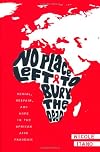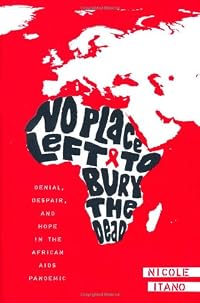
No Place Left to Bury the Dead: Denial, Despair and Hope in the African AIDS Pandemic
by Nicole Itano
On This Page
Description
EVERY DAY in Africa, approximately 7,000 men, women, and children are erased from the face of this planet by the devastating AIDS virus that -- even after more than two and a half decades -- continues to wreak havoc around the globe, especially in underdeveloped nations. No Place Left to Bury the Dead dares to go where media, governments, and ordinary individuals in the West seldom venture -- face-to-face with fellow humans suffering in the shadow of our collective ignorance and neglect. In show more this haunting investigation, acclaimed journalist Nicole Itano goes beyond traditional journalistic methods as she eats, sleeps, and lives with the women who struggle daily with the raging epidemic of AIDS. Working from the personal accounts of a few real women living with the disease, Itano traces their moments of discovery and diagnosis, their first symptoms, and the ways they cope with treatment and manage the news with their families. Itano's masterful blend of the personal, scientific, and historical turns statistics into stories and balances tragedy with hope as she outlines the scope of new treatment and prevention. In a time when celebrity and political heavy hitters such as Bono and Bill Clinton are rushing to find a remedy for Africa's increasing problem, No Place Left to Bury the Dead shows the world how the transformation of a few courageous women can heal entire communities and eradicate denial, and how books like these increase global awareness of one of the worst epidemics in human history. Like And the Band Played On and The Coming Plague, this book is a wake-up call that is urgently needed. show lessTags
Recommendations
























Member Reviews
Like "28: Stories of AIDS in Africa", "No Place Left to Bury the Dead", attempts to tell the story of HIV/AIDS by providing snapshots of people's lives. The book is divided into three separate parts, Denial, Despair and Hope, and follows three different families, in three different southern African countries, Lesotho, South Africa and Botswana." No Place" tells the story of the individuals, while giving facts and figures to create a brief history of the HIV/AIDS epidemic.
The book is often vivid and sad, and certainly gives a somewhat human face to the horrible problem. She also raises some interesting questions about the funding and mismanagement of the billions of dollars flowing into the continent, and sheds some light on theory that show more the stigma of death keeps people from discussing HIV/AIDS and getting tested.
Although I thought the story was relatively interesting, I did have some issues with the book. Firstly, I couldn't help feel that this book has already been published, albeit in a better version. 28 Stories discusses the stories of people affected with HIV/AIDS and gives facts and figures on the topic, but does it in a more complete manner. Nolan’s book covers the continent and gives a longer, more descriptive history, which helps give more authority to her book. While Itano's book only covers the southern most portion of the continent and tells the story of only three women, who have very similar stories, their main difference being where they were born and where they lived.
Secondly, I took some issue with Itano’s inability to keep her self out of the story. Often times, she borrowed the people money and gave them gifts. Although I understand the issue of taking someone’s tragic story and giving them nothing in return (Itano actually discusses this issue in the book), it rubbed me as if she was patting herself on her back for assisting these people. -- I know I sound jaded, but I wonder if the book would have lost anything if she simply would have left these facts out. At the very least the book lost its journalist edge, and felt more like a memoir every time she disclosed her sharing. show less
The book is often vivid and sad, and certainly gives a somewhat human face to the horrible problem. She also raises some interesting questions about the funding and mismanagement of the billions of dollars flowing into the continent, and sheds some light on theory that show more the stigma of death keeps people from discussing HIV/AIDS and getting tested.
Although I thought the story was relatively interesting, I did have some issues with the book. Firstly, I couldn't help feel that this book has already been published, albeit in a better version. 28 Stories discusses the stories of people affected with HIV/AIDS and gives facts and figures on the topic, but does it in a more complete manner. Nolan’s book covers the continent and gives a longer, more descriptive history, which helps give more authority to her book. While Itano's book only covers the southern most portion of the continent and tells the story of only three women, who have very similar stories, their main difference being where they were born and where they lived.
Secondly, I took some issue with Itano’s inability to keep her self out of the story. Often times, she borrowed the people money and gave them gifts. Although I understand the issue of taking someone’s tragic story and giving them nothing in return (Itano actually discusses this issue in the book), it rubbed me as if she was patting herself on her back for assisting these people. -- I know I sound jaded, but I wonder if the book would have lost anything if she simply would have left these facts out. At the very least the book lost its journalist edge, and felt more like a memoir every time she disclosed her sharing. show less
Ratings
Members
- Recently Added By
Author Information
1 Work 34 Members
Common Knowledge
- Important places*
- Lesotho
*Some information comes from Common Knowledge in other languages. Click "Edit" for more information.
Classifications
- Genres
- Nonfiction, General Nonfiction, Sexuality and Gender Studies, Health & Wellness
- DDC/MDS
- 362.196 — Society, Government, and Culture Social problems and social services Social Welfare People with physical illnesses Services to people with specific conditions Diseases
- LCC
- RA643.86 .S6 .I83 — Medicine Public aspects of medicine Public aspects of medicine Public health. Hygiene. Preventive medicine Disease (Communicable and noninfectious) and public
- BISAC
Statistics
- Members
- 33
- Popularity
- 835,054
- Reviews
- 1
- Rating
- (3.25)
- Languages
- English
- Media
- Paper, Ebook
- ISBNs
- 3
- ASINs
- 1