A fool and his money: life in a partitioned medieval town
by Ann Wroe
On This Page
Description
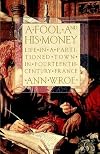
Few books have captured the atmosphere of daily medieval life as well or as movingly as A Fool and his Money. Rodez, in southern France, was divided for centuries by a fued between two masters. This partitioned town thus acquired two distinct cultures. The story focuses on the strange case of Peyre Marques, a merchant who forgets where he has buried his gold. To read A Fool and his Money is like opening a shutter on to a sunlit medieval street teeming with characters, talk and noise. all show more coloured with the vibrancy of truth. show lessTags
Recommendations










Member Reviews
This is the kind of three-dimensional micro-history that can be produced only by an author who is deeply immersed in the primary sources—in the case of A Fool and His Money, it's Ann Wroe's knowledge of the fourteenth-century archives of the southern French town of Rodez that brings this corner of the medieval world to life.
I really appreciated how much detail Wroe was able to wrest from an often-fragmentary source base, and the sympathetic eye with which she studied her cast of quarrelsome characters. (The thread running through the book is a court case involving a pot of gold, but this is not the kind of true crime narrative you can construct with more modern sources—this is more a portrait of a community and way of life using a show more possible theft as a hook.) So too did I appreciate her thumbnail sketch account of what it was like to work at the archives in Rodez in the early 70s—while almost 40 years and about 500 kilometres separated my postgraduate research experience from Wroe's, there were some hilarious points of commonality.
This is definitely the kind of book that would have benefited from a map, however—I'm not a visual thinker and haven't been to Rodez, so I found it very difficult to picture how the City and the Bourg related to one another spatially. show less
I really appreciated how much detail Wroe was able to wrest from an often-fragmentary source base, and the sympathetic eye with which she studied her cast of quarrelsome characters. (The thread running through the book is a court case involving a pot of gold, but this is not the kind of true crime narrative you can construct with more modern sources—this is more a portrait of a community and way of life using a show more possible theft as a hook.) So too did I appreciate her thumbnail sketch account of what it was like to work at the archives in Rodez in the early 70s—while almost 40 years and about 500 kilometres separated my postgraduate research experience from Wroe's, there were some hilarious points of commonality.
This is definitely the kind of book that would have benefited from a map, however—I'm not a visual thinker and haven't been to Rodez, so I found it very difficult to picture how the City and the Bourg related to one another spatially. show less
Wroe discovered [this] story by accident in the moldering court documents in the town archives. That she was in the town at all was unintentional. In fact, the generally accepted reason that there were so many surviving documents in the archives was that the town itself—an out of the way place in southern France called Rodez—was so unremarkable that nothing of import had ever happened there.
Perhaps not. But one thing that did happen there was that one day in early 1370 two workmen, attempting to repair a drainpipe that ran through a section of the town, were excavating the ground floor of a clothes-seller’s shop (for the pipe ran directly under it) and discovered a kettle filled with gold coins. Legal chaos ensued. The shopkeeper, show more Peyre Marques, insisted the gold was his, buried long ago for safekeeping although he had since forgot exactly where it had been placed. But other parties laid claim as well. The gold wasn’t in the shop, it was under the shop, and thus might actually belong to the man who owned the ground upon which the shop was built. And even that might be in dispute, for as often happens in very old towns, legal jurisdictions become entangled. Rodez was a “partitioned” town, partly under the authority of the archbishop, partly under the authority of the local duke. As it happened, the rather unclear line of demarcation ran right through the unfortunate Peyre’s shop.
Because there is nothing like a pile of money to bring out everyone’s self interest, the case of Peyre Marques and his pot of gold dragged on in the courts for quite a long time, and the records, depositions, transcripts, lawyers’ arguments and witness testimonies all survive, which is what allowed the author to use the case as a framework in which to recreate a vivid picture of life in a medieval walled town, and bring to life one of its more foolish, even pitiable citizens. Indeed, there is some evidence, as Wroe points out, that by the end of the lengthy case poor Peyre was showing signs of Alzheimer’s or dementia, although naturally such conclusions are only speculation. It is a story filled with honorable men and shady characters, with greed, corruption but also good intentions and well-meant advice. And the reader stands with Peyre through it all as the author literally builds the town of Rodez around him, almost stone by stone, until he feels like he could walk the streets and not get lost, shake the hand of the lawyer and plead his case to the overlord.
Although the one thing he cannot do is find out what happened to the gold. Despite the remarkably well-preserved documents of the case, the one thing that is missing is the judge’s final decision. History is laughing at us. full review show less
Perhaps not. But one thing that did happen there was that one day in early 1370 two workmen, attempting to repair a drainpipe that ran through a section of the town, were excavating the ground floor of a clothes-seller’s shop (for the pipe ran directly under it) and discovered a kettle filled with gold coins. Legal chaos ensued. The shopkeeper, show more Peyre Marques, insisted the gold was his, buried long ago for safekeeping although he had since forgot exactly where it had been placed. But other parties laid claim as well. The gold wasn’t in the shop, it was under the shop, and thus might actually belong to the man who owned the ground upon which the shop was built. And even that might be in dispute, for as often happens in very old towns, legal jurisdictions become entangled. Rodez was a “partitioned” town, partly under the authority of the archbishop, partly under the authority of the local duke. As it happened, the rather unclear line of demarcation ran right through the unfortunate Peyre’s shop.
Because there is nothing like a pile of money to bring out everyone’s self interest, the case of Peyre Marques and his pot of gold dragged on in the courts for quite a long time, and the records, depositions, transcripts, lawyers’ arguments and witness testimonies all survive, which is what allowed the author to use the case as a framework in which to recreate a vivid picture of life in a medieval walled town, and bring to life one of its more foolish, even pitiable citizens. Indeed, there is some evidence, as Wroe points out, that by the end of the lengthy case poor Peyre was showing signs of Alzheimer’s or dementia, although naturally such conclusions are only speculation. It is a story filled with honorable men and shady characters, with greed, corruption but also good intentions and well-meant advice. And the reader stands with Peyre through it all as the author literally builds the town of Rodez around him, almost stone by stone, until he feels like he could walk the streets and not get lost, shake the hand of the lawyer and plead his case to the overlord.
Although the one thing he cannot do is find out what happened to the gold. Despite the remarkably well-preserved documents of the case, the one thing that is missing is the judge’s final decision. History is laughing at us. full review show less
One of those microhistories that might have been good, but ends up being way more tangent than story, and doesn't even have the consolation of an interesting ending. Entirely skippable.
I cannot say much more than the previous comment! The book is about my hometown of Rodez - up to now, most families stayed the same since the middle-ages, and like then, everybody knows everyone. So once a treasure is discovered, nothing should be disclosed, by fear of losing said treasure to others; as in all Southern towns, people get excited on such matters, and the legal wrangles of the case are a (sad?) reflection of the political interest and the cupidity of the hierarchy at the time. In the end, it all comes back to the poor shop-owner's inability to win his case (in all probability). I wish the book would spend less pages trying to discuss about current employees of the archives (or the author's personnal views on turning up at show more Rodez) and get on with discussing this medieval case, which is, after all, the main subject of the book. It would then be a more academically sound publication. show less
Ratings
Members
- Recently Added By
Author Information

11+ Works 1,585 Members
Ann Wroe writes for The Economist, She is the author of six books including a biography of Pontius Pilate. She is a Fellow of the Royal Historical Society and the Royal Society of Literature.
Some Editions
Common Knowledge
- Canonical title
- A fool and his money: life in a partitioned medieval town
- Original publication date
- 1995
- People/Characters
- Huc del Cayro; Johan Gasc; Gerald Canac; Helias Porret; Peyre Marques; Alumbors Marques (show all 7); Huc Rostanh
- Important places
- Rodez, Occitanie, France
- Dedication
- To Pierre Vincent: priest, organist, friend, and son of Rouergue
- Publisher's editor
- Callil, Carmen; Seymour, Miranda; Foreman, A L
Classifications
- Genres
- History, Nonfiction, General Nonfiction
- DDC/MDS
- 944.74 — History & geography History of Europe France and Monaco Guienne; Gascony Aveyron
- LCC
- DC801 .R68 .W76 — History of Europe, Asia, Africa and Oceania France – Andorra – Monaco History of France Local history and description Other cities, towns, etc., A-Z
- BISAC
Statistics
- Members
- 207
- Popularity
- 156,879
- Reviews
- 4
- Rating
- (3.08)
- Languages
- Dutch, English
- Media
- Paper, Ebook
- ISBNs
- 7
- ASINs
- 3