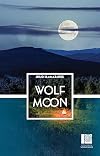
Wolf Moon
by Julio Llamazares
On This Page
Description
Having lost the Civil War in Spain, four republican rebels lead a fugitive existence deep in the Cantabrian mountains. Wounded and hungry the rebels are frequently drawn from the safety of the mountains into the villages they once inhabited, risking their lives and the lives of anyone helping them. Faced with the lonely mountains, its harsh winters and unforgiving summers, it is only a matter of time before the Fascists hunt them down. Llamazares's lyrical prose serves to animate the show more wilderness, making the landscape as much a witness to the brutality of the Franco regime as the persecuted villagers and republicans. show lessTags
Recommendations




























Member Reviews
Real Rating: 4.75* of five
The Publisher Says: A tense, lyrical novel of life on the run in Franco's Spain that offers a bold, timeless challenge against fascism and authoritarianism.
FOR FANS OF ROGUE MALE: A literary thriller full of action and dramatic landscapes, and the first novel to break the national pact of silence after Francisco Franco’s death.
1937. Having lost the Civil War in Spain, four republican soldiers lead a fugitive existence deep in the Cantabrian mountains. They are on the run, skirmishing with Franco's soldiers, knowing that surrender means execution. Wounded and hungry, the hold-outs are drawn from the safety of the mountains into the villages they once inhabited, not only risking their lives but also the lives show more of anyone caught helping them. Trapped in the lonely mountains, with their harsh winters and unforgiving summers, it is only a matter of time before the Fascists hunt them down.
Living in caves, barely surviving on scraps provided by the villagers they dare to make contact with, Ángel and his friends are tortured by heat, cold, damp, hunger and above all, fear—fear for themselves, and for those still willing to help them. And if they do survive, what kind of country will there be left to live in?
First published in 1985, Wolf Moon was the first novel to break with the Pacto de Olvido, a political and cultural amnesty in Spain, following Franco's death in 1975, which provided cover for the regime's supporters. Brimming with tension and violence, it is a testament to enduring loyalty: to a cause, to justice, and to brothers-in-arms.
I RECEIVED A DRC FROM THE PUBLISHER VIA EDELWEISS+. THANK YOU.
My Review: Fascism's end is a terrible, trying time: how does a society disfigured from within reckon with the reality that some subset of the population liked this evil, supported it, didn't want it to end while another (probably larger) subset did little or nothing to oppose the way things were? France after WWII, Spain after Franco...they chose to do only a little to reckon with the evils recently departed. It's always interesting to learn about the people who opposed the slide into fascism, as we do here, in the context of reckoning with the way it happened.
A novel about factual events published ten years after Franco's death, this story highlights the tragic terror of night falling across the rural beauty of Spain's Asturias region. Four young Republican soldiers spend nine years resisting Franco's fascist government, abetted by the peasants whose lives are materially worse under this government...until as the Falangistas figure out who's probably doing what to help the men, they're brutalized into acquiescence. That's the end of these Maquis, a name the Deep Space Nine fans are noticing with delight and yes this is where it came from.
Ángel, our narrator, is a schoolteacher. It's how the author gets away with putting in so much beautiful language:
It's evocative. It's lovely, at least it is to me, and it says exactly what you need to know at that point in the plot: they're hunted, they're cold, they frequently have trouble finding food. All without saying that, but talking evocatively about the sensations of it. It's a great technique for keeping a richly satisfying story under 200pp.
As this tale is based on the real experiences of several men it's not necessary for the author to pretend the ending is a surprise. As he was the very first to break the "pact of forgetting" after Franco's death, it was wise for him to stare the law down not try to waffle around it, cutting a bit, refocusing stuff...just put it out there, let the chips fall where they may. (It doesn't hurt that he was only 30ish when it came out, with only two poetry collections before this short novel.)
It's quite the debut, being sad, infuriating, outrageously knowing in that "we're all in on the joke" way that can fall flat, ruining a story's impact on your feelings; this iteration does not. It makes old-man-read-it-before here doff his hairpiece to this talented tyro. Many are the stories flattened and rendered anemic by a misjudged or badly executed tonal choice like this one.
It's a case of biblio-Stockholm Syndrome. Author Llamazares became the moon that lit me over his story's trails, and the brighter suns of later writers on the topic (eg, Javier Cercas' Soldiers of Salamis) merely cause me reader's sunburn.
Get one soonest, because this story will play out again in our lifetimes. show less
The Publisher Says: A tense, lyrical novel of life on the run in Franco's Spain that offers a bold, timeless challenge against fascism and authoritarianism.
FOR FANS OF ROGUE MALE: A literary thriller full of action and dramatic landscapes, and the first novel to break the national pact of silence after Francisco Franco’s death.
1937. Having lost the Civil War in Spain, four republican soldiers lead a fugitive existence deep in the Cantabrian mountains. They are on the run, skirmishing with Franco's soldiers, knowing that surrender means execution. Wounded and hungry, the hold-outs are drawn from the safety of the mountains into the villages they once inhabited, not only risking their lives but also the lives show more of anyone caught helping them. Trapped in the lonely mountains, with their harsh winters and unforgiving summers, it is only a matter of time before the Fascists hunt them down.
Living in caves, barely surviving on scraps provided by the villagers they dare to make contact with, Ángel and his friends are tortured by heat, cold, damp, hunger and above all, fear—fear for themselves, and for those still willing to help them. And if they do survive, what kind of country will there be left to live in?
First published in 1985, Wolf Moon was the first novel to break with the Pacto de Olvido, a political and cultural amnesty in Spain, following Franco's death in 1975, which provided cover for the regime's supporters. Brimming with tension and violence, it is a testament to enduring loyalty: to a cause, to justice, and to brothers-in-arms.
I RECEIVED A DRC FROM THE PUBLISHER VIA EDELWEISS+. THANK YOU.
My Review: Fascism's end is a terrible, trying time: how does a society disfigured from within reckon with the reality that some subset of the population liked this evil, supported it, didn't want it to end while another (probably larger) subset did little or nothing to oppose the way things were? France after WWII, Spain after Franco...they chose to do only a little to reckon with the evils recently departed. It's always interesting to learn about the people who opposed the slide into fascism, as we do here, in the context of reckoning with the way it happened.
A novel about factual events published ten years after Franco's death, this story highlights the tragic terror of night falling across the rural beauty of Spain's Asturias region. Four young Republican soldiers spend nine years resisting Franco's fascist government, abetted by the peasants whose lives are materially worse under this government...until as the Falangistas figure out who's probably doing what to help the men, they're brutalized into acquiescence. That's the end of these Maquis, a name the Deep Space Nine fans are noticing with delight and yes this is where it came from.
Ángel, our narrator, is a schoolteacher. It's how the author gets away with putting in so much beautiful language:
Since we got here I’ve scarcely felt the terrible moaning of the beast in the depths of my stomach, which bayed despairingly so many times in the final months of the war. It was even worse during the five days when we did not eat at all as we fled across the mountains, in the rain, from a more physical beast, more human and bloodthirsty, which pursued us implacably. It is as if the dampness and cold of the cave have penetrated my bones and my soul, imprisoning me here, lying beside the fire day and night with no interest in eating and talking or even peering through the mouth of the cave to look at the hard, overcast sky.
It's evocative. It's lovely, at least it is to me, and it says exactly what you need to know at that point in the plot: they're hunted, they're cold, they frequently have trouble finding food. All without saying that, but talking evocatively about the sensations of it. It's a great technique for keeping a richly satisfying story under 200pp.
As this tale is based on the real experiences of several men it's not necessary for the author to pretend the ending is a surprise. As he was the very first to break the "pact of forgetting" after Franco's death, it was wise for him to stare the law down not try to waffle around it, cutting a bit, refocusing stuff...just put it out there, let the chips fall where they may. (It doesn't hurt that he was only 30ish when it came out, with only two poetry collections before this short novel.)
It's quite the debut, being sad, infuriating, outrageously knowing in that "we're all in on the joke" way that can fall flat, ruining a story's impact on your feelings; this iteration does not. It makes old-man-read-it-before here doff his hairpiece to this talented tyro. Many are the stories flattened and rendered anemic by a misjudged or badly executed tonal choice like this one.
It's a case of biblio-Stockholm Syndrome. Author Llamazares became the moon that lit me over his story's trails, and the brighter suns of later writers on the topic (eg, Javier Cercas' Soldiers of Salamis) merely cause me reader's sunburn.
Get one soonest, because this story will play out again in our lifetimes. show less
über die Verrohung als Flüchtling im Untergrund bzw. als Einsiedler in den Bergen
Tres existencias clandestinas, sumidas en el exilio de la oscuridad y de la naturaleza salvaje, acechan desde el silencio del monte lo que un día fueron sus casas, sus mujeres y su vida. El miedo es la única compañía que no abandona a los fugitivos, un miedo que incita a compartir ese estado de tensión permanente que hace esperar y temer que el sonido de la bala enemiga rompa por fin la angustia del silencio. Al tiempo que nos permite asistir a una página olvidada de nuestra historia, la epopeya anónima de estos tres hombres nos demuestra que la condena a vivir como una alimaña no conlleva necesariamente la pérdida de la grandeza humana. Ramiro, Gildo y Ángel, tres soldados republicanos de León, huyen en plena noche de las show more represalias del frente victorioso que ha ocupado su tierra. Refugiados en el monte, siempre al abrigo de la oscuridad de las minas abandonadas, de las cuevas o de la noche, ven pasar los meses mientras tratan de encontrar la forma de sobrevivir y de escapar al infierno de la clandestinidad. De esta manera se manifiesta un instinto primario que puede llevar a un hombre acosado hacia la violencia. Además de aportar aire fresco al panorama de la nueva narrativa española delos ochenta, Julio Llamazares supo sorprender a la crítica con esta primera novela que, lejos de ser primeriza, ofrece «un lenguaje distinto, un interesante argumento, personajes con acción y, también, una visión del mundo» show less
Jan 20, 2016Spanish
Al principio eran cuatro, sobrevivientes del ejército republicano derrotado en Asturias en 1937. Cuatro hombres luchando contra un ejército, el nacional (es decir, el de Francisco Franco y demás fascistas), por conservar su libertad y su dignidad en las duras sierras que conocen como sus pueblos y gentes. Cae uno trás otro, en los largos años de persecución y de decepciones mientras hacen lo imposible por mantener su lucha, hasta que en 1946 queda uno solo, Ángel, antiguo maestro de escuela convertido en guerrillero, por cuyos ojos y oidos vivimos esta epopeya. Tras nueve años de optimismo y decepción, hambre, frío y soledad, este último maquis tiene que reconocer que los vencedores de Hitler y Mussolini no van a ocuparse de show more derrocar a Franco y que él solo en la montaña ya no puede aportar nada más a la ansiada revolución libertaria, que su lucha ha sido — por lo menos por ahora — futil. Esta lírica y poética novela (Llamazares es conocido por su poesía) nos permite vivir en la imaginación esa esperanza y decepción, ese amor por la patria chica en una geografía muy dura pero muy bella, esa inquebrantable solidaridad con su pueblo que permitió a muchos maquis perseverar aún más allá de la desesperación. Se lee rápido, porque la historia engancha y fluye, y da placer a los sentidos por los sonidos de las aves y los vientos, los colores de los cielos y montes, los tactos con rocas y espinas y, en algunos momentos deliciosos, con otra carne humana. Es un libro bello, y un bello homenaje a esos héroes de una batalla perdida pero no olvidada. show less
Mar 22, 2012Spanish
Apenas desarrolla los personajes, pero construye una narración eficaz con un lenguaje descriptivo muy fisiológico.
Jan 9, 2009Spanish
Me lo mandaron leer en clase, y me hizo casi aborrecer la lectura, cuando en realidad me encanta leer. Los profesores, al obligar a los alumnos a leer cosas sobre temas que ni siquiera les interesan, en vez de fomentar la lectura la perjudican, hacen que los alumnos no quieran leer.
Para mí, este relato sobre la guerra civil española es infumable, habrá a quien le guste pero en mi opinión es pesadísimo, muy malo, y de lectura bastante aburrida. También es cierto que no me gusta el tema bélico
Para mí, este relato sobre la guerra civil española es infumable, habrá a quien le guste pero en mi opinión es pesadísimo, muy malo, y de lectura bastante aburrida. También es cierto que no me gusta el tema bélico
Oct 19, 2010Spanish
Post Guerra civil española
Jan 22, 2022Spanish
Members
- Recently Added By
Author Information

43+ Works 1,174 Members
Some Editions
Series
Belongs to Publisher Series
Peter Owen World Series (Spain)
Common Knowledge
- Canonical title
- Wolf Moon
- Original title
- Luna de lobos
- Original publication date
- 1985
- People/Characters*
- Ángel; Ramiro; Gildo; Juan; Juana; Pedro
- Important places*
- La Llánava, León, España
- Important events
- Spanish Civil War (1936 | 1939)
- Original language
- Spanish
*Some information comes from Common Knowledge in other languages. Click "Edit" for more information.
Classifications
Statistics
- Members
- 172
- Popularity
- 189,794
- Reviews
- 7
- Rating
- (3.73)
- Languages
- 10 — Czech, Danish, Dutch, English, French, German, Italian, Japanese, Spanish, Swedish
- Media
- Paper, Ebook
- ISBNs
- 24
- ASINs
- 5