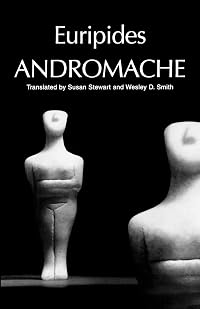
Andromache [in translation]
by Euripides
On This Page
Description
Based on the conviction that only translators who write poetry themselves can properly re-create the celebrated and timeless tragedies of Aeschylus, Sophocles, and Euripides, the Greek Tragedy in New Translations series offers new translations that go beyond the literal meaning of the Greek in order to evoke the poetry of the originals. Under the general editorship of Peter Burian and Alan Shapiro, each volume includes a critical introduction, commentary on the text, full stage directions, show more and a glossary of the mythical and geographical references in the play. In Andromache, Euripides challenges our concept of tragic character as he transforms our expectations of tragic structure. Through its subtly varied metrics, the play develops an increasingly complex plot and concludes with a simultaneous realization of realism and supernaturalism. The play takes place in the aftermath of the Trojan War. Andromache has become a concubine to Achilles' son, Neoptolemus, bearing him a child, Molossus. The captive Andromache is haunted by memories of her former life and by her love for Hector and their son Astyanax, both slain by the Greeks who are now her masters. As the play opens, Andromache and Molossus are threatened with death by Neoptolemus' young wife, Hermione, who has been unable to conceive a child and is fiercely jealous. The struggle between the two women is mirrored in the conflict between Peleus, who arrives to defend Andromache, and Menelaus, who arrives to help his daughter Hermione complete her bid for power. show lessTags
Recommendations




















Member Reviews
En la mitología griega Andrómaca es hija de Eetión, rey, en la Tróade, de Tebas Hipoplacios, fiel y amantísima esposa de Héctor y madre de Astiniacte o Escamandro. Cuando Héctor muere en la guerra de Troya, le lloró amargamente. Se convierte en esclava de Neoptolemo o Pirro, y matan a su hijo, para evitar así la descendencia masculina de los soberanos troyanos.
Aug 18, 2010Spanish
Ratings
Members
- Recently Added By
Lists

Western World's Greatest Books - Project Gutenberg
295 works; 15 members

Favourite Books
1,819 works; 316 members

Favourite Greek Books
97 works; 1 member

100 Books to Read in a Lifetime (That Are Older Than 200 Years)
415 works; 175 members

Harold Bloom - The Western Canon: A. The Theocratic Age
97 works; 13 members

Next Plays / 2025
352 works; 1 member

euripides ranked
23 works; 1 member
Author Information

1,344+ Works 34,145 Members
Euripides was born in Attica, Greece probably in 480 B.C. He was the youngest of the three principal fifth-century tragic poets. In his youth he cultivated gymnastic pursuits and studied philosophy and rhetoric. Soon after he received recognition for a play that he had written, Euripides left Athens for the court of Archelaus, king of Macedonia. show more Fragments of about fifty-five plays survive. Among his best-known plays are Alcestis, Medea and Philoctetes, Electra, Iphigenia in Tauris, The Trojan Women, and Iphigenia in Aulis Iphigenia. He died in Athens in 406 B.C. (Bowker Author Biography) show less
Awards and Honors
Notable Lists
Series
Belongs to Publisher Series
Work Relationships
Is contained in
5 Plays: Bacchae / Heracles / Children of Heracles / Phoenician Women / Suppliant Women by Euripides
Great Books of The Western World: Aeschylus, Sophocles, Euripides, Aristophanes by Robert Maynard Hutchins (indirect)
10 Plays: Alcestis / Andromache / Children of Heracles / Helen / Hippolytus / Ion / Medea / Rhesus / Suppliant Women / Trojan Women by Euripides
11 Plays: Alcestis / Andromache / Children of Heracles / Electra / Hecuba / Helen / Heracles / Hippolytus / Medea / Suppliant Women / Trojan Women by Euripide
9 Plays: Alcestis / Andromache / Bacchae / Children of Heracles / Electra / Hecuba / Helen / Heracles / Hyppolytus by Euripides
Euripides III: Hecuba, Andromache, The Trojan Women, Ion (The Complete Greek Tragedies) (Vol 5) by Euripides
Has as a student's study guide
Common Knowledge
- Canonical title
- Andromache [in translation]
- Original publication date
- 425 BCE
- People/Characters
- Andromache; Hermione; Menelaus; Molossus; Peleus; Orestes (show all 7); Thetis
- Canonical DDC/MDS
- 882.3
- Disambiguation notice
- This is Euripides' Andromache in translation. Do not combine with editions including a Greek text of the play.
Classifications
- Genre
- Fiction and Literature
- DDC/MDS
- 882.3 — Literature & rhetoric Classical & modern Greek literatures Classical Greek dramatic poetry and drama [formerly Euripides]
- LCC
- PA3973 .A6 — Language and Literature Greek language and literature. Latin language and literature Greek literature Individual authors Euripedes
- BISAC
Statistics
- Members
- 104
- Popularity
- 308,242
- Reviews
- 1
- Rating
- (3.17)
- Languages
- English, Greek, Portuguese, Spanish
- Media
- Paper, Ebook
- ISBNs
- 12
- ASINs
- 2