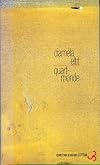
The Fourth World (Latin American Women Writers)
by Diamela Eltit
On This Page
Description
No one can be closer to another than a mother to her unborn child. No one, that is, except unborn twins jostling for space in the womb. In this concise and inventive novel, a twin brother and sister vie for attention from the reader much as they competed for room before their birth. Their prenatal intimacy and jealousy interlace until they can hardly recognize who is who. nbsp; The chaos originating at the very moment of the twins’ conception gains dramatic proportions when they enter the show more world male and female. From the moment of their births, everything changes. The lives of the family members begin to unwind as they are each consumed by illness, obsession, and insanity. The inevitable and violent dissolution of the family becomes a metaphor in which Diamela Eltit explores the social crises in Chile during the military dictatorship of General Cesare Augusto Pinochet. nbsp; Born in Santiago, Chile, in 1949, Diamela Eltit now makes her home in Mexico as Chile’s cultural attaché. The Fourth World, first published in 1988, is her third novel. While other Chilean writers fled the military dictatorship that began in 1973, Eltit found no alternative but to join resistance groups and actively protest the government until democracy was restored in 1989. In the intervening years she learned the dual importance of concealment and discovery in language and the vital connections among story, politics, and personal survival. show lessTags
Recommendations


































Member Reviews
Diamela Eltit writes:
When I turned twelve I had my first sexual encounter. Transmuted by the ancestral force of passion, I was on the verge of consummating the act, but I didn’t know then if I was being liberated to experience glory or to experience punishment, for all I wanted was to go further – I had to go much further – until I could fuse hesitation with acceleration, disorder with precision, in the sacred flesh.
It happened on a street. The sky was darkened with clouds. I was walking attentively along a narrow street when I sensed that someone was following me. My heart began to pound, yearning for the secret pleasure that emerged from some part of my brain.
I soon realized that I was not the one being followed, but the one show more following someone else, someone slender, walking unhurriedly, and seeming to glide along in an affected manner. The equivocal situation made me fear I was hallucinating, but the sound of the steps, the crisp air, and the uneven sidewalk confirmed that I was deeply immersed in a real situation.
I was astonished to realize that not only was I following an unknown person but also I didn’t know why I was doing it. Inexplicably, and in some crucial way, however, that moment pulled me away from the world I knew and pushed me into another in which that hieroglyphic person would make similarity and difference fade into one another.
At one particular moment I lost sight of the figure. Dejected and vexed by inertia, I began to double back, thinking nostalgically about my loss. I felt deprived of some absolute presence, more fundamental than my parents and more mysterious than the sum of my fluctuations.
Sadly, I started back. Of the four roads from which I could choose, each one was as equally possible as it was a mistake. I quickly realized that not only had I lost someone but also, in the search, I had become lost myself.
It would have been absurd to wager on which way I should return. One of those roads would take me home, but if I were to choose the wrong one, it would take me three times as long to get back. It seemed as if I were being punished for letting myself be guided by my impulses. Soon it was going to get dark and the city would become even more dangerous. I had been warned about it so many times that now it seemed like a dream to be exposed to it, just on the edge of twilight and shielded by anonymous, conventional dwellings.
Some curious faces observed me while I stood there, stubborn and rigid, trying to decide which way to go. Becoming desperate, I tried to reconstruct my original route, but each possibility seemed equally valid to me. As I got cold, I became more anxious, so I made a random choice. I had no memories or assumptions that would have convinced me that I should have headed south.
I was facing a long and lonely walk, intensified by fear every step of the way. There was nothing to distract me, except the darkness that was overtaking the sky ever so quickly.
Suddenly, when my miserable condition was too much for me to bear, I saw that same figure standing nearby. I froze, overwhelmed by irrepressible desire. Without thinking, I walked through the darkness, guided only by the scent of another person’s skin near me. I stopped.
I felt myself being pushed up against the stone wall, breathing in unison with the figure that was stroking me. Expert, soft hands ran all over my body and fingers pushed against me in order to remove my clothing. In that public exchange, those hands that traversed my body back and forth found their way to the most stimulated part of me.
Unable to feel the stone wall jabbing my back anymore, I sought a deeper reality once those caresses had prepared me for that moment. Feeling totally outside my body, I tried to touch the other person, but a pair of hands stopped me.
As if in apology, our mouths became fused with the passion of our saliva. My tongue became a sword, seeking not only to wound my rival but also to lick my ally.
Out mouths witnessed a combat of shifting liquids that became desperately and painfully prolonged. My breathing became nasally vulgar as the undulations, domination, and pricking left me out of breath. Unable to continue, I decided to consummate the act, but the figure fled, leaving me stinging against the stone wall.
Then the pain began. A sharp, genital pain, provoked by vigorous and demanding desire. Alone and shameless, I resigned myself to the personal glory that I had assiduously attained for the first time. Satisfaction was measured by the curve of desire and the dimension of abandonment. When the violence of the stones returned, I knew it was over.
The hours it took me to get home were agonizing, for I cursed and cursed the whole way, trying to destroy my sexual vitality. I saw myself as an outcast, I was unworthy of living with my family, and I felt as if my mind and body had been condensed into all the encrusted afflictions of the world.
At intervals, strong surges of well-being helped return me to a state of moderation, reducing the denigrated feeling I had about myself. The accursed sermon of reason incessantly accused me of a perfidious crime whose fine was permanent shame and horror.
I promised to make all kinds of sacrifices, even castration, in order to alleviate that burden; yet something had become hopelessly perverted in me and, deep inside, I had exposed myself to a cynical yet honest life.
I suffered intensely for several days but, little by little, even though I was feeling much anxiety, I concentrated on elucidating exactly what happened in that meeting on the street.
I couldn’t determine who or what seduced me that evening. Despite continually reconstructing that encounter I could never ascertain anything with any proof, even though I know I encountered youthful plentitude in the flesh of a young female beggar or a young male vagabond who, as night approached, performed a charitable act for me. show less
When I turned twelve I had my first sexual encounter. Transmuted by the ancestral force of passion, I was on the verge of consummating the act, but I didn’t know then if I was being liberated to experience glory or to experience punishment, for all I wanted was to go further – I had to go much further – until I could fuse hesitation with acceleration, disorder with precision, in the sacred flesh.
It happened on a street. The sky was darkened with clouds. I was walking attentively along a narrow street when I sensed that someone was following me. My heart began to pound, yearning for the secret pleasure that emerged from some part of my brain.
I soon realized that I was not the one being followed, but the one show more following someone else, someone slender, walking unhurriedly, and seeming to glide along in an affected manner. The equivocal situation made me fear I was hallucinating, but the sound of the steps, the crisp air, and the uneven sidewalk confirmed that I was deeply immersed in a real situation.
I was astonished to realize that not only was I following an unknown person but also I didn’t know why I was doing it. Inexplicably, and in some crucial way, however, that moment pulled me away from the world I knew and pushed me into another in which that hieroglyphic person would make similarity and difference fade into one another.
At one particular moment I lost sight of the figure. Dejected and vexed by inertia, I began to double back, thinking nostalgically about my loss. I felt deprived of some absolute presence, more fundamental than my parents and more mysterious than the sum of my fluctuations.
Sadly, I started back. Of the four roads from which I could choose, each one was as equally possible as it was a mistake. I quickly realized that not only had I lost someone but also, in the search, I had become lost myself.
It would have been absurd to wager on which way I should return. One of those roads would take me home, but if I were to choose the wrong one, it would take me three times as long to get back. It seemed as if I were being punished for letting myself be guided by my impulses. Soon it was going to get dark and the city would become even more dangerous. I had been warned about it so many times that now it seemed like a dream to be exposed to it, just on the edge of twilight and shielded by anonymous, conventional dwellings.
Some curious faces observed me while I stood there, stubborn and rigid, trying to decide which way to go. Becoming desperate, I tried to reconstruct my original route, but each possibility seemed equally valid to me. As I got cold, I became more anxious, so I made a random choice. I had no memories or assumptions that would have convinced me that I should have headed south.
I was facing a long and lonely walk, intensified by fear every step of the way. There was nothing to distract me, except the darkness that was overtaking the sky ever so quickly.
Suddenly, when my miserable condition was too much for me to bear, I saw that same figure standing nearby. I froze, overwhelmed by irrepressible desire. Without thinking, I walked through the darkness, guided only by the scent of another person’s skin near me. I stopped.
I felt myself being pushed up against the stone wall, breathing in unison with the figure that was stroking me. Expert, soft hands ran all over my body and fingers pushed against me in order to remove my clothing. In that public exchange, those hands that traversed my body back and forth found their way to the most stimulated part of me.
Unable to feel the stone wall jabbing my back anymore, I sought a deeper reality once those caresses had prepared me for that moment. Feeling totally outside my body, I tried to touch the other person, but a pair of hands stopped me.
As if in apology, our mouths became fused with the passion of our saliva. My tongue became a sword, seeking not only to wound my rival but also to lick my ally.
Out mouths witnessed a combat of shifting liquids that became desperately and painfully prolonged. My breathing became nasally vulgar as the undulations, domination, and pricking left me out of breath. Unable to continue, I decided to consummate the act, but the figure fled, leaving me stinging against the stone wall.
Then the pain began. A sharp, genital pain, provoked by vigorous and demanding desire. Alone and shameless, I resigned myself to the personal glory that I had assiduously attained for the first time. Satisfaction was measured by the curve of desire and the dimension of abandonment. When the violence of the stones returned, I knew it was over.
The hours it took me to get home were agonizing, for I cursed and cursed the whole way, trying to destroy my sexual vitality. I saw myself as an outcast, I was unworthy of living with my family, and I felt as if my mind and body had been condensed into all the encrusted afflictions of the world.
At intervals, strong surges of well-being helped return me to a state of moderation, reducing the denigrated feeling I had about myself. The accursed sermon of reason incessantly accused me of a perfidious crime whose fine was permanent shame and horror.
I promised to make all kinds of sacrifices, even castration, in order to alleviate that burden; yet something had become hopelessly perverted in me and, deep inside, I had exposed myself to a cynical yet honest life.
I suffered intensely for several days but, little by little, even though I was feeling much anxiety, I concentrated on elucidating exactly what happened in that meeting on the street.
I couldn’t determine who or what seduced me that evening. Despite continually reconstructing that encounter I could never ascertain anything with any proof, even though I know I encountered youthful plentitude in the flesh of a young female beggar or a young male vagabond who, as night approached, performed a charitable act for me. show less
This book is told from two viewpoints, one by the male member of a set of twins, and the other by the female twin. I read the prologue first, which explained a number of the metaphors and symbols used by Eltit, and while this made the book a more comprehensible read, I read it too quickly and relied on the framework to give me the shape rather than figuring it out myself.
Members
- Recently Added By
Author Information

27+ Works 323 Members
Awards and Honors
Notable Lists
Series
Belongs to Publisher Series
Classifications
Statistics
- Members
- 39
- Popularity
- 746,482
- Reviews
- 2
- Rating
- (4.00)
- Languages
- English, French, Spanish
- Media
- Paper, Ebook
- ISBNs
- 9