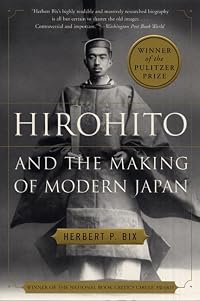
Hirohito and the Making of Modern Japan
by Herbert P. Bix
On This Page
Description
In this groundbreaking biography of the Japanese emperor Hirohito, Herbert P. Bix offers the first complete, unvarnished look at the enigmatic leader whose sixty-three-year reign ushered Japan into the modern world. Never before has the full life of this controversial figure been revealed with such clarity and vividness. Bix shows what it was like to be trained from birth for a lone position at the apex of the nation's political hierarchy and as a revered symbol of divine status. Influenced show more by an unusual combination of the Japanese imperial tradition and a modern scientific worldview, the young emperor gradually evolves into his preeminent role, aligning himself with the growing ultranationalist movement, perpetuating a cult of religious emperor worship, resisting attempts to curb his power, and all the while burnishing his image as a reluctant, passive monarch. Here we see Hirohito as he truly was: a man of strong will and real authority. Supported by a vast array of previously untapped primary documents, Hirohito and the Making of Modern Japan is perhaps most illuminating in lifting the veil on the mythology surrounding the emperor's impact on the world stage. Focusing closely on Hirohito's interactions with his advisers and successive Japanese governments, Bix sheds new light on the causes of the China War in 1937 and the start of the Asia-Pacific War in 1941. And while conventional wisdom has had it that the nation's increasing foreign aggression was driven and maintained not by the emperor but by an elite group of Japanese militarists, the reality, as witnessed here, is quite different. Bix documents in detail the strong, decisive role Hirohito played in wartime operations, from the takeover of Manchuria in 1931 through the attack on Pearl Harbor and ultimately the fateful decision in 1945 to accede to an unconditional surrender. In fact, the emperor stubbornly prolonged the war effort and then used the horrifying bombings of Hiroshima and Nagasaki, together with the Soviet entrance into the war, as his exit strategy from a no-win situation. From the moment of capitulation, we see how American and Japanese leaders moved to justify the retention of Hirohito as emperor by whitewashing his wartime role and reshaping the historical consciousness of the Japanese people. The key to this strategy was Hirohito's alliance with General MacArthur, who helped him maintain his stature and shed his militaristic image, while MacArthur used the emperor as a figurehead to assist him in converting Japan into a peaceful nation. Their partnership ensured that the emperor's image would loom large over the postwar years and later decades, as Japan began to make its way in the modern age and struggled -- as it still does -- to come to terms with its past. Until the very end of a career that embodied the conflicting aims of Japan's development as a nation, Hirohito remained preoccupied with politics and with his place in history. Hirohito and the Making of Modern Japan provides the definitive account of his rich life and legacy. Meticulously researched and utterly engaging, this book is proof that the history of twentieth-century Japan cannot be understood apart from the life of its most remarkable and enduring leader. show lessTags
Recommendations








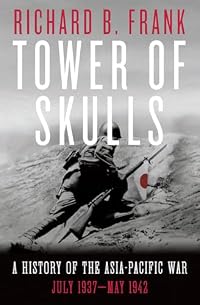
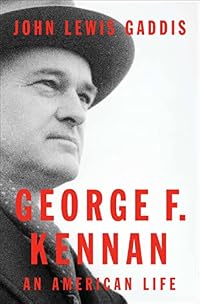
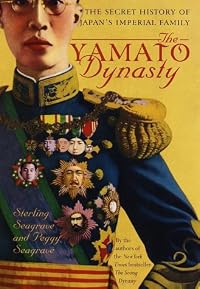
Member Recommendations
Japan's Holy War: The Ideology of Radical Shinto Ultranationalism (Asia-Pacific: Culture, Politics, and Society) by Walter Skya
Shrike58 Deals with the intellectual underpinnings of the period and the transformation of State Shinto from a conservative theory of authoritarian power into something very radical.
Member Reviews
This is really my first book on Japanese history... it was really way over my head! Lots of details, names, dates, places, etc. Most of it went in one ear and right out the other side. But still, Bix has a steady argument and provides enough bread crumbs that a novice like myself can track the big picture. To what extent this book is unbiased etc,. I have no idea.
The thrust of the book is that Hirohito played a powerful role in promoting Japanese militarism from 1931 to 1945, but after the surrender MacArthur found it useful to hide Hirohito's role and to paint him as peace loving etc.
This book was first published in 2000, before the real right wing, MAGA etc., movement gained such power in the USA. The parallels with the Japanese show more right wing are very chilling - glorifying mythical origins etc. Whitewashing history in textbooks to present a heroic picture of the nation.
I hope to read more Japanese history... it will be very interesting to see how my further study will affect my view of the accuracy of Bix's thesis! show less
The thrust of the book is that Hirohito played a powerful role in promoting Japanese militarism from 1931 to 1945, but after the surrender MacArthur found it useful to hide Hirohito's role and to paint him as peace loving etc.
This book was first published in 2000, before the real right wing, MAGA etc., movement gained such power in the USA. The parallels with the Japanese show more right wing are very chilling - glorifying mythical origins etc. Whitewashing history in textbooks to present a heroic picture of the nation.
I hope to read more Japanese history... it will be very interesting to see how my further study will affect my view of the accuracy of Bix's thesis! show less
Herbert P. Bix's biography of Hirohito excedes that of Edward Behr (HIROHITO: BEHIND THE MYTH, New York, 1989) in depth and nuance. Bix has spent an enormous amount of time among original Japanese-language sources. Behr consults Japanese-language sources infrequently, and when he does so it is through translation. Since Hirohito left virtually no writings that would have given substance to his views, Bix has had to look closely at the diaries left by those who worked with him, and other sources, and from this infer a character for Hirohito. It is this job of inference that is the foremost achievement of the book, and it is achieved largely through a mutual or overlapping confirmation of sources. Hirohito is at times directly quoted, but show more these moments are rare and usually come from his later years when he regularly sought to avoid accountability for his role. Bix largely confirms David Bergamini's conclusions of forty years ago (see JAPAN'S IMPERIAL CONSPIRACY, New York, 1971). But whereas Bergamini's narrative could be strident, and a bit racist at times, Bix's is dispassionate and subtle. If Bergamini's Hirohito weren't such a caricature of so-called Asian inscrutibility, he would be sinister. Bix's Hirohito, by contrast, is more the vacillating politician. I learned a lot from the book. Some highlights: (1) the degree to which Japan's military was completely out of control in the 1930-40s and led the nation into war; (2) Hirohito's maddening penchant for vacillation while so many died; and (3) the picture of across the board governmental dysfunction. Hirohito's original impulse was to maintain Japan's alliance with Britain and the U.S. He was only too aware of how much Japan depended on those countries for imports of oil and scrapmetal. So he was--at the start--essentially left to sanction his army's wild and murderous caprices after the fact, or risk looking inept. When he finally steps out of the shadows to put down the young army officers rebellion in 1936, executing 17 ringleaders, the reader feels that finally he is becoming more decisive. Bix wants to show us that Hirohito could have stopped it. That his rejection of the army's unsanctioned campaigns would have certainly made him less sympathetic among his people, but he could have been at least partially effective in slowing the rush toward catastrophe. Instead, with the army out of control, Hirohito had to get out front of the breaking wave and try to ride it. He was certainly aware of the futility of such an intervention. In the days before Pearl Harbor he is told that the chance of winning a war against Britain and the U.S. is 50-50 at best. Yet he sanctions the attack! By then the U.S. and Britain had begun trade sanctions against Japan for its military exploits in Manchuria. So while there was initial hesitation on Hirohito's part, once he became committed he gave it his all. He played an active role as commander in chief. That point Bix establishes beyond doubt. There's so much to learn about Japan from this book. I did not know prior to reading it the extent of the army's wild disobedience. Neither was I aware that the "throne," or Imperial House (kokutai), considered democracy every bit as dangerous and subversive as communism. Fascism though was widely embraced. The overwhelming sense Bix leaves me with is that World War II was a war Japan had to fight and had to lose. They had to fight it because there was no other acceptable course that the reactionary officer corps would have tolerated. They had to lose it so that they could develop further as a nation. In all World War II-related engagements Japan lost 2.1 million military personnel, or about 4% of its 1939 population. (This does not include those killed in the atomic and incendiary bombings by the U.S.) The U.S. by contrast, not counting Allied forces, lost 96,000 personnel during the Pacific War, or 0.07 percent of its 1939 population. Japan is now a highly pacifist state operating under a "peace constitution" that was largely written by MacArthur's American occupation. Highly recommended. show less
This is a book about World War II from Japan's perspective. This is an interesting story, but leaves the book with a misleading title.
The book is too long, given all the things that it doesn't cover. The book covers about a century of Japan's history (from the late 1800s to the late 1900s), but it gives almost no background on what else was going on in Japan during this era, or what influenced that era. Without being an expert on Japan's history, I felt like I was left with a lot of contextual gaps.
My point of comparison is Ron Chernow's "The House of Morgan." This too is a very long book that focuses on a similar length of time with an emphasis on a specific family. Chernow gives all the appropriate context, so that the book is more a show more history of the US during that era. It also is exceedingly readable, where Bix's text felt like more of a slog.
Ironically, I'm left feeling as though the US's decision to drop atomic bombs on Japan at the end of WWII was justified, which is a big surprise to me. World War II was preceded by adamant nationalism and imperialism across the globe. Japan was going to continue fighting WWII to the death, even though they effectively lost in 1944. The bombs helped to humble all parties involved. This is in no way a justification for nuclear war—nuclear war should never be an option. Instead, I'd like to call attention to the fact that global war places leaders in a position of needing to make impossible decisions.
The book opens with a bizarre tirade against the US military. Anger at the US military is justified; it's just confusing why the editors left it in a book that's supposedly a biography of a Japanese emperor.
Whereas I get the sense that it is the English throne's responsibility to serve the people of their nation, Japan flipped this dynamic on its head. It is the people's responsibility to serve the emperor, and the emperor serves his ancestors (a task which is often directly at odds with the needs of his nation).
Much of the book is about Hirohito's responsibility for WWII, and the lack of accountability he faced afterwards. This is understandable within a context of global politics, and the United States interest in not creating revolution in Japan. In other words, Hirohito was our dictator, and therefore he was one of the few Axis leaders left standing after WWII. show less
The book is too long, given all the things that it doesn't cover. The book covers about a century of Japan's history (from the late 1800s to the late 1900s), but it gives almost no background on what else was going on in Japan during this era, or what influenced that era. Without being an expert on Japan's history, I felt like I was left with a lot of contextual gaps.
My point of comparison is Ron Chernow's "The House of Morgan." This too is a very long book that focuses on a similar length of time with an emphasis on a specific family. Chernow gives all the appropriate context, so that the book is more a show more history of the US during that era. It also is exceedingly readable, where Bix's text felt like more of a slog.
Ironically, I'm left feeling as though the US's decision to drop atomic bombs on Japan at the end of WWII was justified, which is a big surprise to me. World War II was preceded by adamant nationalism and imperialism across the globe. Japan was going to continue fighting WWII to the death, even though they effectively lost in 1944. The bombs helped to humble all parties involved. This is in no way a justification for nuclear war—nuclear war should never be an option. Instead, I'd like to call attention to the fact that global war places leaders in a position of needing to make impossible decisions.
The book opens with a bizarre tirade against the US military. Anger at the US military is justified; it's just confusing why the editors left it in a book that's supposedly a biography of a Japanese emperor.
Whereas I get the sense that it is the English throne's responsibility to serve the people of their nation, Japan flipped this dynamic on its head. It is the people's responsibility to serve the emperor, and the emperor serves his ancestors (a task which is often directly at odds with the needs of his nation).
Much of the book is about Hirohito's responsibility for WWII, and the lack of accountability he faced afterwards. This is understandable within a context of global politics, and the United States interest in not creating revolution in Japan. In other words, Hirohito was our dictator, and therefore he was one of the few Axis leaders left standing after WWII. show less
There are several excellent (lengthy) reviews of this book so there is no need to repeat their content, only repeat the conclusion from a fellow Goodreads member: "The American historian, Herbert Bix's biography of Japan's most notorious emperor, Hirohito and the Making of Modern Japan (Harper Collins, 2000), is an 800-page tome indicting Hirohito in no uncertain terms for the war crimes for which he was never prosecuted." So I'll just add a personal note.
I read this book while on a recent trip to Japan (Tokyo, Yokohama, Kobe, Nagasaki) and the Ryukyu Islands (Okinawa). Nagasaki was the site of one of the atomic bomb sites of WWII, and Okinawa was the site of the war's only land battle on Japanese soil--one of the most horrific battles show more imaginable. I have also lived for nearly 30 years in two countries brutally occupied by Japan during the war (Hong Kong and Singapore) ... and have several good Japanese friends and lived in Tokyo for a few months while attending University. Together with thousands of Japanese school children and western visitors, I have visited the Atomic Bomb Museum in Nagasaki and history museums of Japan...and have struggled to understood the 'two Japans'. Reading of the role Hirohito and his court played, and the behaviour and beliefs they endorsed, help one understand not only that period in the world's history, but also how important solid moral leadership is--leadership that is based on respecting its citizens' rights to their lives and liberty rather than wealth or power or territory.
This is a very powerful, well-researched tome that can draw one at times too much into the details of who said what when, where and why. Don't let those pages distract you from one of the most important lessons we all need to remember. show less
I read this book while on a recent trip to Japan (Tokyo, Yokohama, Kobe, Nagasaki) and the Ryukyu Islands (Okinawa). Nagasaki was the site of one of the atomic bomb sites of WWII, and Okinawa was the site of the war's only land battle on Japanese soil--one of the most horrific battles show more imaginable. I have also lived for nearly 30 years in two countries brutally occupied by Japan during the war (Hong Kong and Singapore) ... and have several good Japanese friends and lived in Tokyo for a few months while attending University. Together with thousands of Japanese school children and western visitors, I have visited the Atomic Bomb Museum in Nagasaki and history museums of Japan...and have struggled to understood the 'two Japans'. Reading of the role Hirohito and his court played, and the behaviour and beliefs they endorsed, help one understand not only that period in the world's history, but also how important solid moral leadership is--leadership that is based on respecting its citizens' rights to their lives and liberty rather than wealth or power or territory.
This is a very powerful, well-researched tome that can draw one at times too much into the details of who said what when, where and why. Don't let those pages distract you from one of the most important lessons we all need to remember. show less
The author examines the way Hirohito was educated to be staunchly non-self-reflective, and to care for his subjects in an abstract, paternalistic way. After Nagasaki, many people on the world stage were highly motivated to cast Hirohito's war-time role in the best light. Bix examines why this was so, how Hirohito escaped a trial, who benefitted, and how it has caused problems in Japanese political discourse ever since. Bix often criticizes Hirohito's duplicitous tactics and self-effacing passivity, but I am not convinced that anyone raised with such a surreal upbringing could be more self-directed. The author's explanation of post-war US-Japanese politics is brief but enlightening. My only complaint: no glossary of terms included! show more Without Wikipedia, I would not have made it through the book. show less
This book, while it took a while to get going, really did provide a good, complete look at Hirohito. The author started with the emperor's education and grooming to be a real absolute monarch. This part felt a bit tedious to me, and probably could have stuck less at certain points that more concerned Meiji and Taisho, but it does a good job of setting up how he came to hold the beliefs he held.
The next part, where he takes over the throne and plays a big role in the application of power, is the part that comes as the biggest surprise, and is given the largest part of the book. It shows Hirohito's desire to increase his empire, but not explicitly come out and state it. He generally took a militarist line, and when the military acted up, show more tended not to overly censure them. In all arenas, he acted in a way to increase his power if he could; since he had less direct control over civilian affairs of state, and wanted to cater to the military movement that used him as a nationalist-fervor generating device, he ended up taking positions that led to full-scale military takeover of the government, helping to end the nascent Taisho democracy movement.
Further, it's clear that he didn't really care about military or social order, as long as ultimate success accrued to him and the empire. When officers acted on their own or countermanded orders, as long as they succeeded, they ended up being rewarded with imperials rescripts or higher positions. If they acted against his interests, however, or if they failed, then the fall could be very steep.
As the war expanded, eventually he went for expanded war against Japan's traditional allies, the US and Britain, largely because they were curtailing the efforts of Japan to expand the empire. While it seems that he was initially hesitant, he came to the point where he was largely happy starting the war, and remained so for the first several months, when things were going well. Bix argues convincingly that the unexpectedly rapid success, with everything going according to plan or better, led to overreaching on the part of Japan and Hirohito, who felt that they should keep expanding rather than consolidating the gains made. If they had turned to defense in early 1942, rather than looking to take a bit more and deal a decisive defeat to the US, the war could have ended up differently.
Bix points out that the only one ever in command of all the military information was Hirohito, and yet he was the one who refused to give up and to push for a decisive final battle up until the end, despite knowing that they had less and less chance of any success. He changed military orders to be more aggressive, thus sealing the doom of many battles. It's not that he had no working knowledge of tactics; it was more that he felt that, with great Japanese spirit, they could overcome the odds, as had happened in the Russo-Japanese War under Meiji.
Postwar, Hirohito moved to make himself seem indispensible in keeping the country together, collaborated with MacArthur and other Americans to make sure that he was not held culpable for the entry into the war or other military decisions, and tried to reframe himself as a symbol of peace. The extent to which the Tokyo trials of war criminals were engineered to leave him out, I was already rather aware of from Dower's Embracing Defeat, but this went into more detail. Bix claims that the trials felt incomplete because there was an emperor-sized hole at the top of the hierarchy that no one was willing to address, and I can see this.
Even after the 1947 constitution consigned him to a symbol of Japanese unity, Hirohito always longed for more power, and agitated behind the scenes for reform, or at the least for an unofficial advisory capacity, for much of his life. He also, even at the end of his life, sought to keep his name out of war responsibility, although he could not quite accomplish it. Still, he avoided it for much of his reign, which in itself is an accomplishment.
Bix's narrative is well-written, although a bit tedious at the beginning and a bit skimpy at the end. He jumps around a bit timewise in the narrative to make points sometimes, and that left me confused on some occasions, but overall, it came across cleanly, and it does really show the unifying theme of Hirohito's reign to have been a desire for political and diplomatic power for the monarchy; the more of it, the better. Anyone interested in modern Japanese history, this one is worth it. show less
The next part, where he takes over the throne and plays a big role in the application of power, is the part that comes as the biggest surprise, and is given the largest part of the book. It shows Hirohito's desire to increase his empire, but not explicitly come out and state it. He generally took a militarist line, and when the military acted up, show more tended not to overly censure them. In all arenas, he acted in a way to increase his power if he could; since he had less direct control over civilian affairs of state, and wanted to cater to the military movement that used him as a nationalist-fervor generating device, he ended up taking positions that led to full-scale military takeover of the government, helping to end the nascent Taisho democracy movement.
Further, it's clear that he didn't really care about military or social order, as long as ultimate success accrued to him and the empire. When officers acted on their own or countermanded orders, as long as they succeeded, they ended up being rewarded with imperials rescripts or higher positions. If they acted against his interests, however, or if they failed, then the fall could be very steep.
As the war expanded, eventually he went for expanded war against Japan's traditional allies, the US and Britain, largely because they were curtailing the efforts of Japan to expand the empire. While it seems that he was initially hesitant, he came to the point where he was largely happy starting the war, and remained so for the first several months, when things were going well. Bix argues convincingly that the unexpectedly rapid success, with everything going according to plan or better, led to overreaching on the part of Japan and Hirohito, who felt that they should keep expanding rather than consolidating the gains made. If they had turned to defense in early 1942, rather than looking to take a bit more and deal a decisive defeat to the US, the war could have ended up differently.
Bix points out that the only one ever in command of all the military information was Hirohito, and yet he was the one who refused to give up and to push for a decisive final battle up until the end, despite knowing that they had less and less chance of any success. He changed military orders to be more aggressive, thus sealing the doom of many battles. It's not that he had no working knowledge of tactics; it was more that he felt that, with great Japanese spirit, they could overcome the odds, as had happened in the Russo-Japanese War under Meiji.
Postwar, Hirohito moved to make himself seem indispensible in keeping the country together, collaborated with MacArthur and other Americans to make sure that he was not held culpable for the entry into the war or other military decisions, and tried to reframe himself as a symbol of peace. The extent to which the Tokyo trials of war criminals were engineered to leave him out, I was already rather aware of from Dower's Embracing Defeat, but this went into more detail. Bix claims that the trials felt incomplete because there was an emperor-sized hole at the top of the hierarchy that no one was willing to address, and I can see this.
Even after the 1947 constitution consigned him to a symbol of Japanese unity, Hirohito always longed for more power, and agitated behind the scenes for reform, or at the least for an unofficial advisory capacity, for much of his life. He also, even at the end of his life, sought to keep his name out of war responsibility, although he could not quite accomplish it. Still, he avoided it for much of his reign, which in itself is an accomplishment.
Bix's narrative is well-written, although a bit tedious at the beginning and a bit skimpy at the end. He jumps around a bit timewise in the narrative to make points sometimes, and that left me confused on some occasions, but overall, it came across cleanly, and it does really show the unifying theme of Hirohito's reign to have been a desire for political and diplomatic power for the monarchy; the more of it, the better. Anyone interested in modern Japanese history, this one is worth it. show less
While Bix sometimes wears his revisionist soul on his sleeve, this book justly blows away the concept that Hirohito was little more than a figurehead to the Japanese militarist factions. A must read if you care about the history of modern Japan, even if I feel it's a little overrated.
Members
- Recently Added By
Lists

Pulitzer Prize for General Non-Fiction
16 works; 3 members

r/AskHistorians' Recommended Books
1,068 works; 17 members

Dan Carlin's Supernova in the East Book List
61 works; 1 member
Author Information

2 Works 1,184 Members
Herbert P. Bix earned his Ph.D. in history and Far Eastern languages from Harvard University. For the past thirty years he has written extensively on modern and contemporary Japanese history in leading journals in the United States and Japan. He has taught Japanese history at a number of American and Japanese universities, most recently at show more Harvard, and is currently a professor in the Graduate School of Social Sciences at Hitotsubashi University in Tokyo show less
Awards and Honors
Awards
Distinctions
Notable Lists
Common Knowledge
- Original title
- Hirohito and the Making of Modern Japan
- Original publication date
- 2000 (1st edition, New York, HarperCollins) (1st edition, New York, HarperCollins)
- People/Characters
- Hirohito, Emperor of Japan; Douglas MacArthur; Tojo Hideki
- Important places
- Japan
- Important events
- Second Sino-Japanese War (1937-07-07 | 1945-09-09); World War II (1939 | 1945); World War II, Pacific Theater (1941-12-07 | 1945-09-02); Allied Occupation of Japan (1945 | 1952)
- Disambiguation notice
- 2000 edition: Hirohito and the making of modern Japan / Herbert P. Bix
Classifications
Statistics
- Members
- 1,177
- Popularity
- 21,182
- Reviews
- 16
- Rating
- (3.77)
- Languages
- Chinese, English
- Media
- Paper, Audiobook, Ebook
- ISBNs
- 12
- UPCs
- 1
- ASINs
- 5