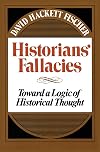
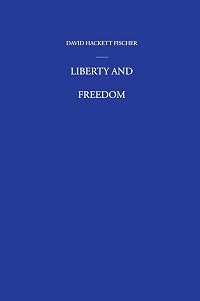
Historians' Fallacies: Toward a Logic of Historical Thought
by David Hackett Fischer
On This Page
Description
[This] book must be read three times: the first in anger, the second in laughter, the third in respect ... The wisdom is expressed with a certin ruthlessness. Scarcly a major historian escapes unscathed ... This is an important book, perhaps the most import to have appeared in recent years, in terms of helping an entire generation of scholars who profess to have lost confidence in being historians. A dose of the book is salutary, and its ultimate message is one of optimism, for it show more demonstrates that historians do have honest, important, and even pleasurable, tasks to do.-Back cover. show lessTags
Recommendations














Member Reviews
Dear Lord, if you ever get assigned this book in class you are in for it. Fischer may have had a legitimate purpose when he set out, but allow me to sum up the finished version: "Every other historian sucks at what they do except me, and here's why, using only words that have more than 5 syllables." When I was forced to read this in grad school I looked at the size and the small chunks assigned each week and figured this will be easy. Oh boy was I wrong. There were instances where I had to re-read multiple times, not just sentences or paragraphs but entire chapters. And needed a dictionary at hand for words he used that I'd not encountered before or since. I actually enjoyed the author's book about Paul Revere. The obvious difference in show more genre being a given, this thing is still night and day different in how written. He does make some valid points but to say that he makes the reader labor to get there is an understatement of epic proportions. show less
This book is an essential read for anyone considering a career as a historian, or even interested in the historical process and wanting to be able to look at historical writing more critically.
I'll agree with the commenter that said the book dragged in places--by the end you can definitely tell he had a length requirement to meet! Still, the first 75% of the book is incredibly useful, even if you just want to be able to shout "Fallacy!" during debates with friends. ;)
I'll agree with the commenter that said the book dragged in places--by the end you can definitely tell he had a length requirement to meet! Still, the first 75% of the book is incredibly useful, even if you just want to be able to shout "Fallacy!" during debates with friends. ;)
Originally published in 1970.
5/25/2019 2ND READING ATTEMPT - With my second attempt, I made it to chapter 6 of this book for my 52 Bookmark Reading Challenge prompt #24/52 - "Book you never finished"...Still never finished!
It was highly recommended by Dr. Shane Bernard, historian on Avery Island, Louisiana. He claimed it was the most valuable book he's ever read. Great! This was exactly THE kind of book I had been looking for to help me determine a good history book (the truth) verses a bad one (propaganda), since we are having all these problems with the cancel culture and woke leftists trying to cancel out and change history. But, I need to search for another by a different author who writes in a language I can actually understand. show more On page 285, the author writes regarding a fallacy of many historians, a form of error is…”committed by scholars who never use a little word when a big one will do.” Well, this author could learn from his own writing. You need a dictionary handy just to decipher what it is he’s even talking about. But if you are a scholar, I'm sure you would actually rate this as top-notch. The 1-star is due to my own inadequacy for understanding, not for the quality of this book.
7/22/2018 - 1ST READING ATTEMPT - What the hell did I just read? You seriously need a doctorates degree to read and understand this book! I read through the first chapter a month ago and found it to be way over my head. So I put it down. I actually had it ready to go in the Goodwill box but just couldn't see it go just yet.
I did learn something substantial in that first chapter: That all historians write about history in their own biases and beliefs. Good or bad, right or wrong, their job is to present history to their readers, preferably backing up their writing with empirical proofs, and not their point of views. It is subjective and individual. Wow! I never even thought of it like that before. I've always just simply read and accepted every word in every history book as fact.
Because of this insight, I decided to go ahead slowly and painstakingly try to read through it again and try to gleen at least one important piece of information from each chapter in hopes of learning how to critically read history books, news reports or any other nonfiction piece of work, and to determine if what I'm reading can be a "trusted" source. I found that I'm not smart enough to determine a truth from a lie. But, I did at least learn a little bit about how historians write and the many fallacies that could make or break their reputation as great historians. I was only able to read through half of chapter 6 before totally giving it up for good because I literally couldn't understand one single word they were writing about. It's back in the Goodwill box for the next brilliant mind... show less
5/25/2019 2ND READING ATTEMPT - With my second attempt, I made it to chapter 6 of this book for my 52 Bookmark Reading Challenge prompt #24/52 - "Book you never finished"...Still never finished!
It was highly recommended by Dr. Shane Bernard, historian on Avery Island, Louisiana. He claimed it was the most valuable book he's ever read. Great! This was exactly THE kind of book I had been looking for to help me determine a good history book (the truth) verses a bad one (propaganda), since we are having all these problems with the cancel culture and woke leftists trying to cancel out and change history. But, I need to search for another by a different author who writes in a language I can actually understand. show more On page 285, the author writes regarding a fallacy of many historians, a form of error is…”committed by scholars who never use a little word when a big one will do.” Well, this author could learn from his own writing. You need a dictionary handy just to decipher what it is he’s even talking about. But if you are a scholar, I'm sure you would actually rate this as top-notch. The 1-star is due to my own inadequacy for understanding, not for the quality of this book.
7/22/2018 - 1ST READING ATTEMPT - What the hell did I just read? You seriously need a doctorates degree to read and understand this book! I read through the first chapter a month ago and found it to be way over my head. So I put it down. I actually had it ready to go in the Goodwill box but just couldn't see it go just yet.
I did learn something substantial in that first chapter: That all historians write about history in their own biases and beliefs. Good or bad, right or wrong, their job is to present history to their readers, preferably backing up their writing with empirical proofs, and not their point of views. It is subjective and individual. Wow! I never even thought of it like that before. I've always just simply read and accepted every word in every history book as fact.
Because of this insight, I decided to go ahead slowly and painstakingly try to read through it again and try to gleen at least one important piece of information from each chapter in hopes of learning how to critically read history books, news reports or any other nonfiction piece of work, and to determine if what I'm reading can be a "trusted" source. I found that I'm not smart enough to determine a truth from a lie. But, I did at least learn a little bit about how historians write and the many fallacies that could make or break their reputation as great historians. I was only able to read through half of chapter 6 before totally giving it up for good because I literally couldn't understand one single word they were writing about. It's back in the Goodwill box for the next brilliant mind... show less
David Fischer’s book Historians' Fallacies: toward a logic of historical thought is one of the most helpful method focused historiographies I have read. It is also one of the most daring. Fischer, then a young PhD, gives examples of failures in reasoning pulled from the published writings of his more experienced fellows. I see myself rereading this book until his list of errors of logic are firmly lodged in my mind and I can recognize them in my own work as well as I do when he explains his examples.
If I had a complaint it would be that the book has not been updated in forty years. Most of the works he pulled his examples from are lost in the past. I am sure that, even after the publication of this book, logical fallacies have crept show more into current works.
On the other hand reading Fischer speak of America’s Viet Nam policy in the present tense reminded me of my youth and made me check the books publication date. Thanks to reading the book I know that just because Star Trek’s Mr. Spock was popularizing logical thought just a few years before the books publication Spock is not necessarily the reason it was written. show less
If I had a complaint it would be that the book has not been updated in forty years. Most of the works he pulled his examples from are lost in the past. I am sure that, even after the publication of this book, logical fallacies have crept show more into current works.
On the other hand reading Fischer speak of America’s Viet Nam policy in the present tense reminded me of my youth and made me check the books publication date. Thanks to reading the book I know that just because Star Trek’s Mr. Spock was popularizing logical thought just a few years before the books publication Spock is not necessarily the reason it was written. show less
A bit slow in places, but it details the logical fallacies that even the best historians make whether they know it or not.
Dense, very academic. Read it for coursework but worth the effort.
An essential work for any historian or social scientist. This book may not be what you need to learn how to write, but it is certainly about how not to do it.
Members
- Recently Added By
Lists

Traditional Aristotelian Logic Reading List
16 works; 1 member
Author Information

15+ Works 8,899 Members
David Hackett Fischer is University Professor and Warren Professor of History at Brandeis University in Massachusetts. He is the author of numerous books, including Washington's Crossing, which won the Pulitzer Prize in history.
Common Knowledge
- Canonical title
- Historians' Fallacies: Toward a Logic of Historical Thought
- Original publication date
- 1970
Classifications
Statistics
- Members
- 867
- Popularity
- 31,499
- Reviews
- 9
- Rating
- (3.86)
- Languages
- English
- Media
- Paper, Ebook
- ISBNs
- 4
- ASINs
- 7