On This Page
Description
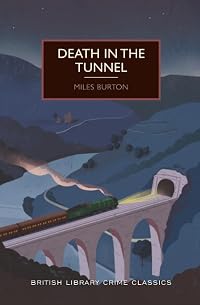
On a dark November evening, Sir Wilfred Saxonby is travelling alone in the 5 o'clock train from Cannon Street, in a locked compartment. The train slows and stops inside a tunnel; and by the time it emerges again minutes later, Sir Wilfred has been shot dead, his heart pierced by a single bullet. Suicide seems to be the answer, even though no reason can be found. Inspector Arnold of Scotland Yard thinks again when he learns that a mysterious red light in the tunnel caused the train to slow show more down. Finding himself stumped by the puzzle, Arnold consults his friend Desmond Merrion, a wealthy amateur expert in criminology. To Merrion it seems that the dead man fell victim to a complex conspiracy—but the investigators are puzzled about the conspirators' motives, as well as their identities. Can there be a connection with Sir Wilfred's seemingly untroubled family life, his highly successful business, or his high-handed and unforgiving personality? And what is the significance of the wallet found on the corpse, and the bank notes that it contained?. show less
Tags
Recommendations





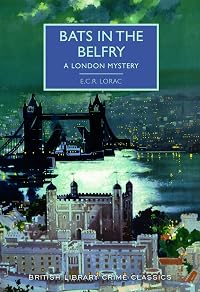

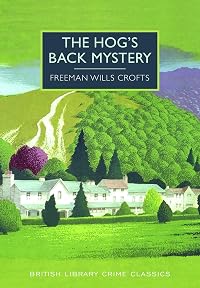
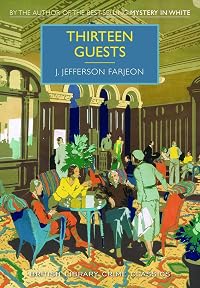
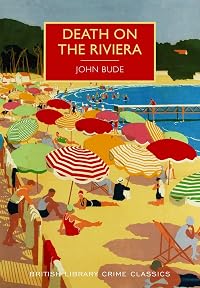

















Member Reviews
It’s a locked-room mystery on the rails: Sir Wilfred Saxonby is found dead on the 5:00 p.m. from Cannon Street, shot presumably while the train was screeching through the Blackdown Tunnel. All signs initially point to suicide, but once Inspector Arnold and his friend Desmond Merrion start digging, the case becomes a lot more complex than either of them would have believed.
I found this a surprising amount of fun and finished it at a rapid pace. I liked the extensive discussions of the train infrastructure, and Merrion wasn’t too annoying with his leaps of logic—he was ready to admit when he was wrong and where his theory was missing some key points, rather than just assuming he was better than Inspector Arnold. (I had similar views show more of his character when reading the first book in the series, The Secret of High Eldersham.)
I would recommend this to enthusiasts of Golden Age mysteries who like their mysteries with trains in them. show less
I found this a surprising amount of fun and finished it at a rapid pace. I liked the extensive discussions of the train infrastructure, and Merrion wasn’t too annoying with his leaps of logic—he was ready to admit when he was wrong and where his theory was missing some key points, rather than just assuming he was better than Inspector Arnold. (I had similar views show more of his character when reading the first book in the series, The Secret of High Eldersham.)
I would recommend this to enthusiasts of Golden Age mysteries who like their mysteries with trains in them. show less
I love that Poisoned Pen Press and another publisher or two are seeking out and bringing back Golden Age mysteries, really solid books written in the thirties and often only rarely seen since. I'd never come across Miles Burton ("one of the pen-names used by Cecil John Street") before, and how marvelous is it to find a new-to-me author with a decent bibliography I get to read?
Pretty marvelous, is how marvelous.
Now, Miles Burton was no Dorothy L. Sayers or Josephine Tey, an author I'll follow anywhere. But he was pretty darn good. The crime in this book is a sort of a twist on a locked-room mystery: a death that takes place on a train as it goes through a tunnel. It looks like a suicide. Suicide makes sense. Murder makes no sense at show more all. But our detective, Inspector Arnold, and his buddy Desmond Merrion ("a wealthy amateur expert in criminology"), don't like it as a suicide.
Merrion is, perhaps, a few too many miles ahead of the professional, and the professional just a tad too content with following along behind – but even so it's a good story, nicely told. One thing In particular that I like is the almost twenty-first century level of caution in the investigators statements. No one seems willing to say "This is the gun used to shoot the victim" or "this is the bullet that killed him"; it is all about the evidence. It's so common for a mystery to set up a really corking situation, only to fizzle in the solution – and that doesn't happen here. The plotting was clever, if a bit confusing at a time ("who's that, now?"), and the solution satisfying. I look forward to more.
The usual disclaimer: I received this book via Netgalley for review – my thanks to them and the publisher. show less
Pretty marvelous, is how marvelous.
Now, Miles Burton was no Dorothy L. Sayers or Josephine Tey, an author I'll follow anywhere. But he was pretty darn good. The crime in this book is a sort of a twist on a locked-room mystery: a death that takes place on a train as it goes through a tunnel. It looks like a suicide. Suicide makes sense. Murder makes no sense at show more all. But our detective, Inspector Arnold, and his buddy Desmond Merrion ("a wealthy amateur expert in criminology"), don't like it as a suicide.
Merrion is, perhaps, a few too many miles ahead of the professional, and the professional just a tad too content with following along behind – but even so it's a good story, nicely told. One thing In particular that I like is the almost twenty-first century level of caution in the investigators statements. No one seems willing to say "This is the gun used to shoot the victim" or "this is the bullet that killed him"; it is all about the evidence. It's so common for a mystery to set up a really corking situation, only to fizzle in the solution – and that doesn't happen here. The plotting was clever, if a bit confusing at a time ("who's that, now?"), and the solution satisfying. I look forward to more.
The usual disclaimer: I received this book via Netgalley for review – my thanks to them and the publisher. show less
This writer published various crime novels in the 1930s when he was in vogue to the 1960s when his work was regarded as increasingly old fashioned. Unlike Agatha Christie's work - he was apparently a friend of hers - there's no real characterisation or psychology which I think explains her longevity whereas he has become a forgotten writer, revived in this series of reprints. However, that wasn't the real problem I had with this.
It starts off as a classic locked room mystery with a man found shot dead in a railway carriage. The door leading to the tracks was unlocked though and the train slowed in a tunnel due to lights indicating a workman signalling red then green. So in theory someone could have stepped aboard - except that signalmen show more in boxes at both ends had a good view and swear that no one could have got past them. It looks like suicide but there are a few unanswered questions, and Inspector Arnold is called upon. He involves his amateur sleuth friend, Desmond Merrion, and they embark on a series of cross-country investigations following up various leads and considering the theories which Merrion comes up with. The policeman is a plodder and becomes fixated on one individual being the culprit although Merrion tries to steer him away from that multiple times.
It's never a good thing for me when I spot things before the protagonist(s) and that was certainly the case with the mystery of the tunnel, which I instantly picked up on when another character mentioned a way someone could have got in or out - but the two detectives failed to pick up on it for quite a while until the penny dropped with Merrion. However, the real issue is that the crime was pre-planned with various elements put in place or things checked regarding the timing of the shooting, and yet the eventual denouement showed that the murder wasn't even necessary. I won't go into spoilers but given that a particular person could have got their hands on the loot and then absconded, with or without first sharing it with one of the others, I couldn't see why anyone needed to commit murder in the first place. I can't therefore give the book any more than a 2 star rating. show less
It starts off as a classic locked room mystery with a man found shot dead in a railway carriage. The door leading to the tracks was unlocked though and the train slowed in a tunnel due to lights indicating a workman signalling red then green. So in theory someone could have stepped aboard - except that signalmen show more in boxes at both ends had a good view and swear that no one could have got past them. It looks like suicide but there are a few unanswered questions, and Inspector Arnold is called upon. He involves his amateur sleuth friend, Desmond Merrion, and they embark on a series of cross-country investigations following up various leads and considering the theories which Merrion comes up with. The policeman is a plodder and becomes fixated on one individual being the culprit although Merrion tries to steer him away from that multiple times.
It's never a good thing for me when I spot things before the protagonist(s) and that was certainly the case with the mystery of the tunnel, which I instantly picked up on when another character mentioned a way someone could have got in or out - but the two detectives failed to pick up on it for quite a while until the penny dropped with Merrion. However, the real issue is that the crime was pre-planned with various elements put in place or things checked regarding the timing of the shooting, and yet the eventual denouement showed that the murder wasn't even necessary. I won't go into spoilers but given that a particular person could have got their hands on the loot and then absconded, with or without first sharing it with one of the others, I couldn't see why anyone needed to commit murder in the first place. I can't therefore give the book any more than a 2 star rating. show less
Originally published in 1936, Death in the Tunnel is one of the mystery novels that was re-issued as part of the British Library Crime Classics series. I was really looking forward to this, not just because it satisfied a task in this year’s holiday scavenger hunt, but also because I was hoping to discover more great writers from the golden age of mystery writing.
Sadly, for me Death in the Tunnel fell short of that mark. The story started out great with a mysterious death on a train that seemed to occur just as the train passed through a tunnel, yet there were no witnesses, no motives, no suspects, and according to the chief investigator it looked like suicide. (Tho, why there would be such an elaborate investigation if this was a show more suicide is a question that is not really answered…)
Anyway, the leading detective starts to interview people close to the dead man and at some point draws another investigator into the case. Without spoiling too much of the plot, I’ll come straight to the problem I had with the story – the two investigators are utterly useless idiots, who come up with one random theory after another and seem to be stumbling along in the proverbial dark until the very, very end of the book.
Seriously, I had to roll my eyes a lot at their assumptions so many times because they just were the least logical conclusions ever – and yet, we were supposed to believe that this was great detecting when it seemed they created most of the red herrings themselves instead of actually sifting through the relevant information.
Death in the Tunnel is one of those books that would make for a pleasant beach read or something to pass the time while waiting at the dentist’s, but I found it really tiresome as an antidote to a craving for a delicious mystery. show less
Sadly, for me Death in the Tunnel fell short of that mark. The story started out great with a mysterious death on a train that seemed to occur just as the train passed through a tunnel, yet there were no witnesses, no motives, no suspects, and according to the chief investigator it looked like suicide. (Tho, why there would be such an elaborate investigation if this was a show more suicide is a question that is not really answered…)
Anyway, the leading detective starts to interview people close to the dead man and at some point draws another investigator into the case. Without spoiling too much of the plot, I’ll come straight to the problem I had with the story – the two investigators are utterly useless idiots, who come up with one random theory after another and seem to be stumbling along in the proverbial dark until the very, very end of the book.
Seriously, I had to roll my eyes a lot at their assumptions so many times because they just were the least logical conclusions ever – and yet, we were supposed to believe that this was great detecting when it seemed they created most of the red herrings themselves instead of actually sifting through the relevant information.
Death in the Tunnel is one of those books that would make for a pleasant beach read or something to pass the time while waiting at the dentist’s, but I found it really tiresome as an antidote to a craving for a delicious mystery. show less
Interesting premise but a very slow read and on the repetitious side. Man taking the train is murdered in his compartment on the train apparently during a suspicious stop in a tunnel. Detectives do a plodding investigation and seem to have the same conversations over and over again. I guessed who the murderer was early on and pushed myself to finish the book. I bought it because I loved the cover and had read two other British Classics in this series.
A pleasant enough read but not one I can really recommend. Most of the 'action' takes place in the conversations of Inspector Arnold and his pal, Desmond Merrion. There is an awful lot of chat. The plot is complicated relying on many details which aren't evident until the two protagonists tell you about them. There is an interesting, and crucial, introduction of what, in 1936, was cutting-edge technology but enough said about that.
One of those books which make me wish for the time back to read something better. Too many books, too little time!
One of those books which make me wish for the time back to read something better. Too many books, too little time!
I have nothing but praise for these very entertaining re published novels from British Library archives.
They invoke a time long gone when life was not as hectic as today.
Very highly recommended.
I was given a digital copy of this book by the publisher Poisoned Pen Press via Netgalley in return for an honest unbiased review.
They invoke a time long gone when life was not as hectic as today.
Very highly recommended.
I was given a digital copy of this book by the publisher Poisoned Pen Press via Netgalley in return for an honest unbiased review.
Members
- Recently Added By
Author Information

165+ Works 2,077 Members
Series


Belongs to Publisher Series
British Library Crime Classics (Novel)
The Albatross Crime Club (No. 155)
Doubleday Crime Club (1936.05)
Work Relationships
Common Knowledge
- Canonical title
- Death In The Tunnel
- Original title
- Death In The Tunnel
- Alternate titles
- Dark Is The Tunnel
- Original publication date
- 1936
- People/Characters
- Inspector Arnold; Desmond Merrion
- First words
- The 5.0 pm train from Cannon Street runs fast as far as Stourford, where it is due at 6.7.
- Last words
- (Click to show. Warning: May contain spoilers.)Both were duly hanged.
Classifications
Statistics
- Members
- 190
- Popularity
- 171,798
- Reviews
- 8
- Rating
- (3.13)
- Languages
- English, Italian
- Media
- Paper, Audiobook, Ebook
- ISBNs
- 10
- ASINs
- 4