On This Page
Description
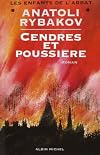
"In his long-awaited novel Dust and Ashes, Anatoli Rybakov boldly brings to life the seminal event of the modern era - World War II - from the Russian perspective. As Stalin and Hitler clash, Red Army tanks advance, and the struggle that changed the course of the twentieth century plays out on the battlefields, Rybakov brings his epic story of the Soviet experience to its spectacular conclusion." "Heralded by critics as a twentieth-century Tolstoy, Anatoli Rybakov won international acclaim show more in 1988 as the first Soviet novelist to describe - with shocking candor and poignancy - life under Stalin's brutal dictatorship. Suppressed by the Soviet Union for over twenty years, his Children of the Arbat presented a masterful psychological portrait of Stalin and his impact on a circle of young friends living in Moscow's intellectual and artistic center, the Arbat. Rybakov continued his story of "the children of the revolution" in Fear, which recounted a once-hopeful generation's descent into terror during the era of Stalin's purges." "Dust and Ashes, the trilogy's final volume, is the epic's most dramatic. Spanning the years 1937 to 1943, Rybakov picks up the narrative as Stalin's egomania undermines the Red Army - just when the Russian people face the Nazi onslaught. Rybakov returns to the Arbat circle and follows his central figure; Sasha Pankratov, who emerges from despairing exile to join the army's tank corps. Thrust into the most savage and crucial fighting, Sasha is both participant and witness to cruelty and bravery amid senseless slaughter. And - at the height of the battle - he reunites with his lost love, Varya."--BOOK JACKET.Title Summary field provided by Blackwell North America, Inc. All Rights Reserved show lessTags
Recommendations


















Member Reviews
Like Rybakov's last novel, Fear, in Dust and Ashes the author takes the time to catch his readers up to the saga thus far. Yuri is a member of the secret police, Vika is married and living in Paris, her brother Vadim is also an NKVD informant. Maxim is in the Red Army as a commander. Nina is a Communist while her sister, Varya, rejects Communism and remains true to her friends. Sasha has been freed from exile but he is not allowed back in Moscow or any other major Russian city. Dust and Ashes begins in 1937. When we left Sasha and Varya, their romance had cooled after Sasha learned of Varya's previous marriage to a gambler. Sasha struggles to make ends meet in various small towns, first as a truck driver and then as a ballroom dance show more instructor. World War II is almost a central character alongside Sasha Pankratov and Joseph Stalin. This is the era of endless interrogations (when you would rather have chat). Promotions could mean a reshuffling of the personnel deck or a literal death sentence. It is stunning the way Rybakov can seamlessly interject facts into a fictional account of the Great Purge. Details like the assassination of Trotsky. Two battles rage in Dust and Ashes - the delicate dance of Tyrants (Hitler and Stalin) and the Battle for Romance (Sasha and Varya). Who will win? Sometimes, when the target is not persuaded, the only motivation can come from fear. Confessional: the final pages of Dust and Ashes had me holding my breath. I did not want to believe it was the end. Surely there would be another sequel, a fifth installment to the saga. But in actuality, really what more about be said? show less
The Anatoli Rybakov tertralogy in Dutch, the language I read them in consists of:
1. Kinderen van de Arbat
2. 1935 en volgende jaren
3. Angst
4. Stof en as
In English translation they are a trilogy: Children of the Arbat, Fear, Dust and Ashes.
Important are the Russian publication dates: 1987 for Deti Arbata, 1989 for Sovetski Pisatel, 1990 for Strach, and 1994 for Prach i pepel.
Considering via Amazon its number of pages I think the English language publisher combined the second and the third novel to one: Fear.
The first novel was already written and illegally distributed in the 1960s (Samizdat), during Khrushchev’s Thaw. But Rybakov strictly vetoed its translation during that time; being a very principled man he wanted a Russian show more publication first. At last, during Gorbachev’s Glasnost in the 1980’s the novel appeared in the USSR and so became one of the earliest publications of previously forbidden anti-Stalin literature. The next volumes which were written during the 1980s and 90s followed. Rybakov died four years after the publication of the last novel, in December 1998.
In these novels we are made partaker of the trials and tribulations of a group of classmates, their families and friends during 1933-43. This is the decade that witnessed the second Five Year Plan, the murder of Sergey Kirov, the Great Purge (Moscow Trials, camps, labor colonies: 700.000 persons murdered, 1.3 million deported), and the first years of the Great Patriotic War (23.600.000 dead).
As I cannot do it more concise I copy a fragment from Rybakov’s necrology by, I presume, congenial spirits:
“The novels chart the experiences of a group of childhood friends who grew up in Moscow's Arbat district from the time just prior to the arrest of the principal character, Alexander Pankratov (nicknamed Sasha and loosely based on the author), in late 1933 until the tragic wartime denouement ten years later.
In the Arbat trilogy Rybakov reveals his particular genius: an ability to combine a powerful sense of drama with a high degree of political and historical understanding. The work is neither a history with a thin veneer of fiction nor a story in which great historical events serve as mere background. (...) The author has a deep insight into his characters, particularly the way in which the social experiences through which they pass shape their intellectual, political and moral development. This infuses the characters--and Rybakov's writings as a whole--with realness and life.
Initially idealistic and somewhat iconoclastic, Sasha's outlook changes following his arrest to one of wariness and apprehension, not only about his own fate, but that of Soviet society as a whole. The lives of Sasha and his former companions are molded by the terrible experiences of the 1930s: the Kirov assassination, the mass arrests, the frame-up, torture and murder of Old Bolshevik leaders and socialist opponents of the ruling bureaucracy. The chronicle of Sasha's disillusionment and alienation, of the accommodation of a number of his former acquaintances to the official regime, and the relative isolation of those who behave courageously and decently, including his mother and an intellectual neighbor, convincingly accounts for his transformation. At the same time it reveals important truths about the period in which Sasha matures.
The trilogy presents a chilling portrait of Stalin, also a principal figure in the story. His brutal character is shown to be the outcome of a complex interaction between his background, his personal traits--malice, vindictiveness, short-sightedness--and his political role as the dictator who prepared the show trials. After reading the novels' episodes involving Stalin, one instinctively feels that Rybakov has captured him well. The events described may not always have overt political significance--such as Stalin's encounters with his dentist, who is terrified of offending him--but they reveal aspects of the dictator's essence. When Stalin calmly reviews "confessions" soiled with the blood of their signatories, one gets a sense of his ruthlessness in dealing with those who were connected with the October 1917 revolution."
(http://www.wsws.org/en/articles/1999/01/ryb-j05.html )
In fact the portrayal of Stalin with his lust for power, his paranoia and his way of obstructing the defense of the country (by way of purging the army on the eve of the German invasion: thousands of generals and other commanders were murdered) is breathtaking and goes with the Stalin Simon Sebag Montefiore gave us in his two biographies of the man (in 2003 and 2007!). In Rybakov we encounter great knowledge, great empathy.
But the WSWS fragment does omit an important story line: the tragic love story that develops between Sasja and Varja (as sad as Lara’s and the doctor’s story in Doctor Zhivago (the film, the book I never read).
It also omits the evolution of Varja, the other protagonist (a very clever 'against the grain' adolescent with a great heart) which is in my opinion also beautifully and psychological convincingly done in the second, third and fourth novel . How I love Rybakov for his portraying of women! Here again great empathy, which is a thing the comrades do not always share...
Reading this tetralogy I was in 1930/40 Russia with some Russians and their dilemma's which was fascinating. I enjoyed these rich books immensely and heartily recommend them.
------------------------------------
P.S.: A fragment from a link about Marina Goldovskaya’s documentary “Anatoly Rybakov - The Russian Story”, about the present importance of these books:
“Two main parts of (the documentary) are titled after the writer’s major novels, Children of the Arbat and Heavy Sand, and explore the continuing relevance of these works for contemporary Russia.
In contrast to Germany and its former allies, which went through an effective de-Nazification campaign, the Soviet Union experienced two aborted attempts to re-evaluate its totalitarian past and to dismantle Stalinist ideology and institutions: the Thaw and perestroika. However, as the filmmaker claims, in the Soviet Union the efforts of de-Stalinization and broader de-Sovietization were only half-hearted and never completed. The myth of the great Stalinist Empire and the heroic myth of the Great Patriotic War still obscure from Russians’ communal memory the uncomfortable narratives about Stalinist purges, the Holocaust, and Soviet-era anti-Semitism. Goldovskaia’s film cuts from footage of Stalin-era parades to present-day rallies in Moscow by fascists and nationalists, suggesting that the unfinished de-Sovietization breeds a new type of totalitarian mentality.
The section about Rybakov’s Heavy Sand explores Soviet-style Holocaust denial. The communal myth of Soviet martyrdom and victory in World War II is used to replace memories of the Holocaust. Goldovskaia links this Soviet experience of purposeful and state-endorsed manipulation of the historical past with the revival of anti-Semitism in present-day Russia. Anatoly Rybakov is, indeed, “the Russian story,” since it explains graphically how Russia’s way of dealing with its totalitarian past is different from the Western treatment of a similar social disease. The filmmaker’s message is clearly articulated by her observational cinema style: the agenda of de-Sovietization, including the acknowledgment of the Holocaust, has to become part of Russians’ collective memory before the country can exorcise its totalitarian demons.”
http://www.kinokultura.com/2006/14r-rybakov.shtml ) show less
1. Kinderen van de Arbat
2. 1935 en volgende jaren
3. Angst
4. Stof en as
In English translation they are a trilogy: Children of the Arbat, Fear, Dust and Ashes.
Important are the Russian publication dates: 1987 for Deti Arbata, 1989 for Sovetski Pisatel, 1990 for Strach, and 1994 for Prach i pepel.
Considering via Amazon its number of pages I think the English language publisher combined the second and the third novel to one: Fear.
The first novel was already written and illegally distributed in the 1960s (Samizdat), during Khrushchev’s Thaw. But Rybakov strictly vetoed its translation during that time; being a very principled man he wanted a Russian show more publication first. At last, during Gorbachev’s Glasnost in the 1980’s the novel appeared in the USSR and so became one of the earliest publications of previously forbidden anti-Stalin literature. The next volumes which were written during the 1980s and 90s followed. Rybakov died four years after the publication of the last novel, in December 1998.
In these novels we are made partaker of the trials and tribulations of a group of classmates, their families and friends during 1933-43. This is the decade that witnessed the second Five Year Plan, the murder of Sergey Kirov, the Great Purge (Moscow Trials, camps, labor colonies: 700.000 persons murdered, 1.3 million deported), and the first years of the Great Patriotic War (23.600.000 dead).
As I cannot do it more concise I copy a fragment from Rybakov’s necrology by, I presume, congenial spirits:
“The novels chart the experiences of a group of childhood friends who grew up in Moscow's Arbat district from the time just prior to the arrest of the principal character, Alexander Pankratov (nicknamed Sasha and loosely based on the author), in late 1933 until the tragic wartime denouement ten years later.
In the Arbat trilogy Rybakov reveals his particular genius: an ability to combine a powerful sense of drama with a high degree of political and historical understanding. The work is neither a history with a thin veneer of fiction nor a story in which great historical events serve as mere background. (...) The author has a deep insight into his characters, particularly the way in which the social experiences through which they pass shape their intellectual, political and moral development. This infuses the characters--and Rybakov's writings as a whole--with realness and life.
Initially idealistic and somewhat iconoclastic, Sasha's outlook changes following his arrest to one of wariness and apprehension, not only about his own fate, but that of Soviet society as a whole. The lives of Sasha and his former companions are molded by the terrible experiences of the 1930s: the Kirov assassination, the mass arrests, the frame-up, torture and murder of Old Bolshevik leaders and socialist opponents of the ruling bureaucracy. The chronicle of Sasha's disillusionment and alienation, of the accommodation of a number of his former acquaintances to the official regime, and the relative isolation of those who behave courageously and decently, including his mother and an intellectual neighbor, convincingly accounts for his transformation. At the same time it reveals important truths about the period in which Sasha matures.
The trilogy presents a chilling portrait of Stalin, also a principal figure in the story. His brutal character is shown to be the outcome of a complex interaction between his background, his personal traits--malice, vindictiveness, short-sightedness--and his political role as the dictator who prepared the show trials. After reading the novels' episodes involving Stalin, one instinctively feels that Rybakov has captured him well. The events described may not always have overt political significance--such as Stalin's encounters with his dentist, who is terrified of offending him--but they reveal aspects of the dictator's essence. When Stalin calmly reviews "confessions" soiled with the blood of their signatories, one gets a sense of his ruthlessness in dealing with those who were connected with the October 1917 revolution."
(http://www.wsws.org/en/articles/1999/01/ryb-j05.html )
In fact the portrayal of Stalin with his lust for power, his paranoia and his way of obstructing the defense of the country (by way of purging the army on the eve of the German invasion: thousands of generals and other commanders were murdered) is breathtaking and goes with the Stalin Simon Sebag Montefiore gave us in his two biographies of the man (in 2003 and 2007!). In Rybakov we encounter great knowledge, great empathy.
But the WSWS fragment does omit an important story line: the tragic love story that develops between Sasja and Varja (as sad as Lara’s and the doctor’s story in Doctor Zhivago (the film, the book I never read).
It also omits the evolution of Varja, the other protagonist (a very clever 'against the grain' adolescent with a great heart) which is in my opinion also beautifully and psychological convincingly done in the second, third and fourth novel . How I love Rybakov for his portraying of women! Here again great empathy, which is a thing the comrades do not always share...
Reading this tetralogy I was in 1930/40 Russia with some Russians and their dilemma's which was fascinating. I enjoyed these rich books immensely and heartily recommend them.
------------------------------------
P.S.: A fragment from a link about Marina Goldovskaya’s documentary “Anatoly Rybakov - The Russian Story”, about the present importance of these books:
“Two main parts of (the documentary) are titled after the writer’s major novels, Children of the Arbat and Heavy Sand, and explore the continuing relevance of these works for contemporary Russia.
In contrast to Germany and its former allies, which went through an effective de-Nazification campaign, the Soviet Union experienced two aborted attempts to re-evaluate its totalitarian past and to dismantle Stalinist ideology and institutions: the Thaw and perestroika. However, as the filmmaker claims, in the Soviet Union the efforts of de-Stalinization and broader de-Sovietization were only half-hearted and never completed. The myth of the great Stalinist Empire and the heroic myth of the Great Patriotic War still obscure from Russians’ communal memory the uncomfortable narratives about Stalinist purges, the Holocaust, and Soviet-era anti-Semitism. Goldovskaia’s film cuts from footage of Stalin-era parades to present-day rallies in Moscow by fascists and nationalists, suggesting that the unfinished de-Sovietization breeds a new type of totalitarian mentality.
The section about Rybakov’s Heavy Sand explores Soviet-style Holocaust denial. The communal myth of Soviet martyrdom and victory in World War II is used to replace memories of the Holocaust. Goldovskaia links this Soviet experience of purposeful and state-endorsed manipulation of the historical past with the revival of anti-Semitism in present-day Russia. Anatoly Rybakov is, indeed, “the Russian story,” since it explains graphically how Russia’s way of dealing with its totalitarian past is different from the Western treatment of a similar social disease. The filmmaker’s message is clearly articulated by her observational cinema style: the agenda of de-Sovietization, including the acknowledgment of the Holocaust, has to become part of Russians’ collective memory before the country can exorcise its totalitarian demons.”
http://www.kinokultura.com/2006/14r-rybakov.shtml ) show less
Ratings
Members
- Recently Added By
Lists

Russian Literature
184 works; 35 members
Author Information

34+ Works 1,382 Members
All Editions
Series

Common Knowledge
- Canonical title
- Dust and ashes
- Original title
- Прах и пепел; Prakh i pepel
- Original publication date
- 1996 (English translation) (English translation); 1994
- Important places*
- Rusland
- Epigraph*
- Погиб и кормщик и пловец!
Лишь я, таинственный певец,
На берег выброшен грозою,
Я гимны прежние пою
И ризу вла... (show all)жную свою
Сушу на солнце под скалою.
А. Пушкин - First words*
- - Повезло тебе, дорогуша!
- Last words*
- (Click to show. Warning: May contain spoilers.)- Молодые еще были, - сказал старый солдат.
*Some information comes from Common Knowledge in other languages. Click "Edit" for more information.
Classifications
- Genres
- Fiction and Literature, General Fiction
- DDC/MDS
- 891.7344 — Literature & rhetoric Literatures of other languages East Indo-European and Celtic literatures Russian and East Slavic languages Russian fiction USSR 1917–1991 Late 20th century 1917–1991
- LCC
- PG3476 .R87 .P713 — Language and Literature Slavic languages and literatures. Baltic languages. Albanian language Slavic. Baltic. Albanian Russian literature Individual authors and works 1917-1960
- BISAC
Statistics
- Members
- 108
- Popularity
- 298,994
- Reviews
- 2
- Rating
- (4.18)
- Languages
- 6 — Dutch, English, Finnish, French, Russian, Spanish
- Media
- Paper, Ebook
- ISBNs
- 10
- ASINs
- 1