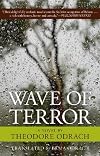
Wave of Terror
by Theodore Odrach
On This Page
Description
This novel is a major literary discovery, and Odrach is drawing favorable comparisons with such eminent writers as Chekhov and Solzhenitsyn. Odrach wrote in Ukrainian, while living an exile''s life in Toronto. This remarkable book is a microcosm of Soviet history, and Odrach provides a first-hand account of events during the Stalinist era that newsreels never covered. It has special value as a sensitive and realistic portrait of the times, while capturing the internal drama of the characters show more with psychological concision. Odrach creates a powerful and moving picture, and manages to show what li show lessTags
Recommendations














Member Reviews
Wave of Terror is set in 1939, in a backwater town of the Pinsk Region marshland where, like everywhere, Stalin's regime is spreading fear like the plague. Only this one is filled with communist propaganda and transforms it's victims into mindless servants who are worked to death to fuel a war they know or care little about.
This one is quite different from other similar books I have read. Of course it focuses on the fear and confusion involved during such trying times, but it focuses less on the fear and more on the confusion. Kulik, the main character, is a school headmaster who under law must force his teacher to teach in Belorussian despite not being able to speak it themselves, let alone the children. The poor are offered the show more possessions of the rich as a showing of generosity yet they accept such gifts while watching the previous owners carted off to be tortured (I mean 'interrogated') in prisons and camps. Some peasants try to conform to the ideas of communism to the displeasure of others, and some are simply paranoid that everyone around them is an informer out to find them guilty of a crime they didn't commit.
The author's ability to capture the mass disarray and frenzied panic of the people is what sets this book apart. The author lived through this, so it makes sense. This isn't some historical fiction novel written by someone who wasn't there, who read about the subject and who chose to emphasize the horrors of Stalin's heinous acts. Instead it is the bewilderment of the peasants that is the heart of this novel, because the writer lived through it himself. It shows, and it makes for an incredibly engaging read. show less
This one is quite different from other similar books I have read. Of course it focuses on the fear and confusion involved during such trying times, but it focuses less on the fear and more on the confusion. Kulik, the main character, is a school headmaster who under law must force his teacher to teach in Belorussian despite not being able to speak it themselves, let alone the children. The poor are offered the show more possessions of the rich as a showing of generosity yet they accept such gifts while watching the previous owners carted off to be tortured (I mean 'interrogated') in prisons and camps. Some peasants try to conform to the ideas of communism to the displeasure of others, and some are simply paranoid that everyone around them is an informer out to find them guilty of a crime they didn't commit.
The author's ability to capture the mass disarray and frenzied panic of the people is what sets this book apart. The author lived through this, so it makes sense. This isn't some historical fiction novel written by someone who wasn't there, who read about the subject and who chose to emphasize the horrors of Stalin's heinous acts. Instead it is the bewilderment of the peasants that is the heart of this novel, because the writer lived through it himself. It shows, and it makes for an incredibly engaging read. show less
This review was written for LibraryThing Member Giveaways.
Wave of Terror is a novel detailing the Soviet absorption of the Pinsk region of what is now Belorussia. Written by Ukranian author Theodore Odrach, the work was a project undertaken by Odrach’s daughter, Erma, who accumulated his writings, organized them and translated them into English after his death.
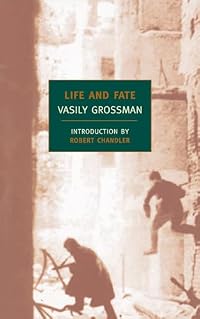
The book begs obvious comparison to Vasily Grossman’s magnificent Life and Fate, and to its credit, is not found wanting. Set in the year 1940, the novel examines the lives of poor, Ukranian peasants (moujiks), recently liberated from their Polish overlords, only to be enslaved by the even more onerous and heavy handed Soviet bureaucrats.
The story is told through the eyes of Ivan Kulik, headmaster of a small, provincial school in show more the hamlet of Hlaby. Despite being predominantly Ukranian, the region has been nonsensically attached to the Belorussian SSR and teachers instructed to conduct classes in either the Belorussian or Russian language, despite the fact that the school children do not understand either. Pointing out this absurdity is enough to brand Kulik as a Ukranian nationalist and subject him to great danger.
Throughout the novel, characters are commonly swept up, tortured, deported and murdered for little or no reason. Odrach does a magnificent job of capturing the terror and hopelessness engendered by the wave of Communist oppression which swept through the newly conquered Soviet republics. The petty, local dictatorships and mind numbingly absurd bureaucratic dictates would be hard to imagine were they not historically accurate. The never ending suspicion and paranoia resulting from the known presence of hidden informants and the frequent disappearances of friends and colleagues, is well illustrated by the following passage:
"The truth of the matter was, Ivashkevich was a government agent, an informer, with one purpose- to get him, Kulik, on even the flimsiest of suspicions. Yes, he understood it all now; he was being pursued, and by someone in the school, and now more than ever he had to watch his every step."
And this gem of logic:
“We’re all one and the same, and I’ll prove it to you. Take, for example, the merchants of Pinsk. Just last week, weren’t they all rounded up and interrogated, then imprisoned equally? The Poles, the Ukranians, the Jews- no one group got discriminated against. Hah! So there you have it, we are all equal!”
This is an outstanding novel, written by a little known author, whose work would have likely never been recognized were it not for the labors of his daughter, who compiled and translated it. Much of the book is clearly patterned after the life and experiences of the author which gives it added significance.
Highly recommended. show less
The book begs obvious comparison to Vasily Grossman’s magnificent Life and Fate, and to its credit, is not found wanting. Set in the year 1940, the novel examines the lives of poor, Ukranian peasants (moujiks), recently liberated from their Polish overlords, only to be enslaved by the even more onerous and heavy handed Soviet bureaucrats.
The story is told through the eyes of Ivan Kulik, headmaster of a small, provincial school in show more the hamlet of Hlaby. Despite being predominantly Ukranian, the region has been nonsensically attached to the Belorussian SSR and teachers instructed to conduct classes in either the Belorussian or Russian language, despite the fact that the school children do not understand either. Pointing out this absurdity is enough to brand Kulik as a Ukranian nationalist and subject him to great danger.
Throughout the novel, characters are commonly swept up, tortured, deported and murdered for little or no reason. Odrach does a magnificent job of capturing the terror and hopelessness engendered by the wave of Communist oppression which swept through the newly conquered Soviet republics. The petty, local dictatorships and mind numbingly absurd bureaucratic dictates would be hard to imagine were they not historically accurate. The never ending suspicion and paranoia resulting from the known presence of hidden informants and the frequent disappearances of friends and colleagues, is well illustrated by the following passage:
"The truth of the matter was, Ivashkevich was a government agent, an informer, with one purpose- to get him, Kulik, on even the flimsiest of suspicions. Yes, he understood it all now; he was being pursued, and by someone in the school, and now more than ever he had to watch his every step."
And this gem of logic:
“We’re all one and the same, and I’ll prove it to you. Take, for example, the merchants of Pinsk. Just last week, weren’t they all rounded up and interrogated, then imprisoned equally? The Poles, the Ukranians, the Jews- no one group got discriminated against. Hah! So there you have it, we are all equal!”
This is an outstanding novel, written by a little known author, whose work would have likely never been recognized were it not for the labors of his daughter, who compiled and translated it. Much of the book is clearly patterned after the life and experiences of the author which gives it added significance.
Highly recommended. show less
Talk about a timely book! This novel is based on Theodore Odrach’s own life when Stalin’s Red Army came in to power in Belarus. Given that Belarus is very much in the news this week, with the controversy over recent elections and the beating and deportation of several journalists, it seems that a glimpse at its history is appropriate.
I know of several people who have read Wave of Terror recently, and all were moved by it because of how revealing the novel is about resilience, fear, and courage. Briefly, it deals with the experiences of a school teacher in the rural region of the Pinsk marshes-one who finds himself trying to walk the tightrope of pleasing the new regime without losing his moral balance. He is an endearing character, show more much like Ivan in Vasily Grossman’s Everything Flows. However, while the Grossman novel features Ivan looking back on his experiences, in this we see Kulik and what he is thinking as he experiences the significant events that turn the small region upside down, yet again. As an educated man, he is a threat to the Stalinist leaders, who give him simple advice to follow:
“I know you’re a historian with a degree…which is not to your credit. To put it simply, you have an education from a bourgeois institution where you were taught not only by non-socialist professors but also by pretentious, self-serving priests. You were educated in a hostile and unproductive environment. Take my advice and study the five volumes of Soviet history. Become a master of Marxist methodology…Give added attention to the Communist Manifesto, and learn how the capitalist classes of all nations will be overthrown and eliminated by a worldwide working-class revolution.”
The pressure to succumb to the indoctrination is great; if he doesn’t conform he will be shipped away to Siberia. Anyone can endanger him, as just the simplest lie about him from a student or associate will be enough to remove him, because the regime rewards those who inform. With a starving community and hostility around, every word he speaks endangers him, and yet “even silence could bring disaster”. The story of how he moves through this virtual minefield is both surprising and inspiring.
What is especially revealing about the novel’s voice is its coverage of the subject of languages. Having read a few Stalin-era books lately, I hadn’t quite caught on to how language itself is a tool of indoctrination. In Kulik’s rural village, the villagers normally spoke Ukrainian. Having been previously invaded by Poland however, they had been impelled to only speak Polish before reverting back to Ukrainian. Then the regime change insisted that they all speak Belorussian, but made clear it was a stepping stone to the entire area speaking Russian. Without access to their native tongue, the people had much of their culture stripped away, long before the Red Army came in and further eliminated cultural distinctions. Germany eventually occupied Belarus as well, which adds yet another linguistic layer to their history.
The language issue is significant because even now in Belarus, as its citizens are divided because those who wish to retain the Belorussian language and cultural identity (in order to prevent further “Russification” of their region) are outnumbered by those who wish to embrace the Russian language for simplification and economic benefit. The loss of one’s native language means the loss of unique phrases, idioms, and subtle historical details. The poet Valzhyna Mort is one writer who is fighting for the language, which she describes in parts of her book Factory of Tears.
Wave of Terror also answered a question that had been gnawing at me. Why did the people let the Red Army take over? Why didn’t they resist more? In the narrative, a key element made a great impact on me: the people were hungry and without basic necessities. In this state of desperation, any change was embraced, even if it meant turning on lifelong friends or family, and even if the promised changes never materialized. Stalin’s leaders offered food to hungry people, and although they didn’t get much, they were easily manipulated. It’s the same sort of manipulation that Hitler used to great effect, as well as the Roman Caesars who were able to draw crowds to the gladiator fights with the promise of food. Without the essentials of daily life, oppression can easily take root, because the ordinary person has so little to lose.
Lastly, despite all the fear and suffering endured, it was interesting to read of what doesn’t change. Old married couples still fought and young people still sought romance. People still danced and enjoyed a drink and found pleasure in the simplest of foods. Perhaps this was the key to survival-maintaining their humanity and dignity when others lost their own. show less
I know of several people who have read Wave of Terror recently, and all were moved by it because of how revealing the novel is about resilience, fear, and courage. Briefly, it deals with the experiences of a school teacher in the rural region of the Pinsk marshes-one who finds himself trying to walk the tightrope of pleasing the new regime without losing his moral balance. He is an endearing character, show more much like Ivan in Vasily Grossman’s Everything Flows. However, while the Grossman novel features Ivan looking back on his experiences, in this we see Kulik and what he is thinking as he experiences the significant events that turn the small region upside down, yet again. As an educated man, he is a threat to the Stalinist leaders, who give him simple advice to follow:
“I know you’re a historian with a degree…which is not to your credit. To put it simply, you have an education from a bourgeois institution where you were taught not only by non-socialist professors but also by pretentious, self-serving priests. You were educated in a hostile and unproductive environment. Take my advice and study the five volumes of Soviet history. Become a master of Marxist methodology…Give added attention to the Communist Manifesto, and learn how the capitalist classes of all nations will be overthrown and eliminated by a worldwide working-class revolution.”
The pressure to succumb to the indoctrination is great; if he doesn’t conform he will be shipped away to Siberia. Anyone can endanger him, as just the simplest lie about him from a student or associate will be enough to remove him, because the regime rewards those who inform. With a starving community and hostility around, every word he speaks endangers him, and yet “even silence could bring disaster”. The story of how he moves through this virtual minefield is both surprising and inspiring.
What is especially revealing about the novel’s voice is its coverage of the subject of languages. Having read a few Stalin-era books lately, I hadn’t quite caught on to how language itself is a tool of indoctrination. In Kulik’s rural village, the villagers normally spoke Ukrainian. Having been previously invaded by Poland however, they had been impelled to only speak Polish before reverting back to Ukrainian. Then the regime change insisted that they all speak Belorussian, but made clear it was a stepping stone to the entire area speaking Russian. Without access to their native tongue, the people had much of their culture stripped away, long before the Red Army came in and further eliminated cultural distinctions. Germany eventually occupied Belarus as well, which adds yet another linguistic layer to their history.
The language issue is significant because even now in Belarus, as its citizens are divided because those who wish to retain the Belorussian language and cultural identity (in order to prevent further “Russification” of their region) are outnumbered by those who wish to embrace the Russian language for simplification and economic benefit. The loss of one’s native language means the loss of unique phrases, idioms, and subtle historical details. The poet Valzhyna Mort is one writer who is fighting for the language, which she describes in parts of her book Factory of Tears.
Wave of Terror also answered a question that had been gnawing at me. Why did the people let the Red Army take over? Why didn’t they resist more? In the narrative, a key element made a great impact on me: the people were hungry and without basic necessities. In this state of desperation, any change was embraced, even if it meant turning on lifelong friends or family, and even if the promised changes never materialized. Stalin’s leaders offered food to hungry people, and although they didn’t get much, they were easily manipulated. It’s the same sort of manipulation that Hitler used to great effect, as well as the Roman Caesars who were able to draw crowds to the gladiator fights with the promise of food. Without the essentials of daily life, oppression can easily take root, because the ordinary person has so little to lose.
Lastly, despite all the fear and suffering endured, it was interesting to read of what doesn’t change. Old married couples still fought and young people still sought romance. People still danced and enjoyed a drink and found pleasure in the simplest of foods. Perhaps this was the key to survival-maintaining their humanity and dignity when others lost their own. show less
In September 1939, reaping the reward for its pact with Hitler, the Soviet Union occupied eastern Poland. Many of the region's inhabitants were Slavs who had chafed under Polish domination. Soon they learned that there were worse masters.
Theodore Odrach lived through this takeover. Wave of Terror distills his observations and experiences into a novel that might be described as a meld of Solzhenitsyn and Chekhov. The terrible events to which the English title alludes take place in the background. Immediately before the reader's eyes are commonplace human beings perplexed by an arbitrary and capricious new regime as they gradually become aware of its enormity.
The central character, Ivan Kulik, is a young, well educated school teacher show more assigned to a post in the Pripyet Marshes. Though quite apolitical, he comes under suspicion as a Ukrainian nationalist after insisting that his pupils be taught in Ukrainian, the language they know, rather than the Belorussian of the Soviet republic to which they have been annexed. As the weeks pass, his life transforms into a series of mysteries and puzzles. Is he in danger of imminent arrest, or are his fears unfounded? Which of his friends, neighbors and colleagues are informers? Who really holds power in the village of Hlaby? Is a fellow teacher's beautiful cousin a delicate damsel in distress or the mistress of an NKVD brute? Is her brother living happily in a distant city, or is he immured in one of Stalin's dungeons? Is the local education minister's secretary a secret overseer reporting to Moscow or a covert dissident?
Of particular interest is a theme that could come straight from Solzhenitsyn: the ascendancy of the lie. Again and again, characters start to exchange frank opinions, then fearfully draw back, mouthing praises of Joseph Vissarionovich and the Communist Party. Even the initially outspoken villagers finally succumb. Freedom can be found only in the depths of the marshes, out of the sight and reach of the authorities.
In Chekovian style, Kulik is not an active hero. His plans unravel. His questions remain unanswered. His relationships go nowhere. Only in the last pages of the book is he compelled to act. Most of the incidents are low-key (though not all; they include an interrogation by the secret police and an attempted rape). Some scenes, such as the encounter between a female communist functionary's rival lovers, are overtly comic. The appeal of the novel lies, however, in the characters and milieu, not in action.
Wave of Terror was originally published in Ukrainian under the less portentous title Voshchad, which, I am told, denotes the transition between darkness and dawn. Given the kind of day that is to follow, that title is full of irony and suits the novel well. The translation, by the author's daughter, is fluent, though blemished by clichés.
The author's intention was to continue Ivan Kulik's story through World War II and into the post-war era, but the sequels were never written. The work that we have is, nonetheless, complete in its own right, a compelling picture of a little known place and time. show less
Theodore Odrach lived through this takeover. Wave of Terror distills his observations and experiences into a novel that might be described as a meld of Solzhenitsyn and Chekhov. The terrible events to which the English title alludes take place in the background. Immediately before the reader's eyes are commonplace human beings perplexed by an arbitrary and capricious new regime as they gradually become aware of its enormity.
The central character, Ivan Kulik, is a young, well educated school teacher show more assigned to a post in the Pripyet Marshes. Though quite apolitical, he comes under suspicion as a Ukrainian nationalist after insisting that his pupils be taught in Ukrainian, the language they know, rather than the Belorussian of the Soviet republic to which they have been annexed. As the weeks pass, his life transforms into a series of mysteries and puzzles. Is he in danger of imminent arrest, or are his fears unfounded? Which of his friends, neighbors and colleagues are informers? Who really holds power in the village of Hlaby? Is a fellow teacher's beautiful cousin a delicate damsel in distress or the mistress of an NKVD brute? Is her brother living happily in a distant city, or is he immured in one of Stalin's dungeons? Is the local education minister's secretary a secret overseer reporting to Moscow or a covert dissident?
Of particular interest is a theme that could come straight from Solzhenitsyn: the ascendancy of the lie. Again and again, characters start to exchange frank opinions, then fearfully draw back, mouthing praises of Joseph Vissarionovich and the Communist Party. Even the initially outspoken villagers finally succumb. Freedom can be found only in the depths of the marshes, out of the sight and reach of the authorities.
In Chekovian style, Kulik is not an active hero. His plans unravel. His questions remain unanswered. His relationships go nowhere. Only in the last pages of the book is he compelled to act. Most of the incidents are low-key (though not all; they include an interrogation by the secret police and an attempted rape). Some scenes, such as the encounter between a female communist functionary's rival lovers, are overtly comic. The appeal of the novel lies, however, in the characters and milieu, not in action.
Wave of Terror was originally published in Ukrainian under the less portentous title Voshchad, which, I am told, denotes the transition between darkness and dawn. Given the kind of day that is to follow, that title is full of irony and suits the novel well. The translation, by the author's daughter, is fluent, though blemished by clichés.
The author's intention was to continue Ivan Kulik's story through World War II and into the post-war era, but the sequels were never written. The work that we have is, nonetheless, complete in its own right, a compelling picture of a little known place and time. show less
This is a tale of life in the Ukrainian-Belorussian borderland of 1939, under the new, but already festering regime of Joseph Stalin. Ivan Kulik has been recently appointed the headmaster of a school in a small provincial village, seemingly far from the reach of the new government. The author loses no time in bringing his characters to life. In deceptively simple prose, we are introduced to the villagers and gently drawn into their lives, only to find the darkness within. We are rewarded with deep insights into the minds of the characters, as the Stalinist regime, backed by the terror of the NKVD, the secret police, invades every aspect of the villagers lives. We are shown deep insights into a mind which, when always under oppression, show more may leap through all sorts of negative scenarios. Oppression and repression feed on fear, strengthening and enabling them. Mr Odrach, having lived through much of what he writes, shows us the mind can be a dark and dangerous place. In his writing, the fear of a violent, sudden death is a constant companion. The NKVD dealt out death sentences or torture, not only for overt acts of rebellion, but for merely wrong thoughts or words or the whispered rumors of these by one's neighbors. The mere thought that no one can be trusted to be a true friend and not an informer, can have a devastating effect on one's piece of mind. The book shows us that fear can make self preservation kick in, making us give up everything and everyone. Hope, friendship, love, all can be lost in the effort to save ourselves. Can we truly be free when we know that those left behind are still enslaved? This is a very enlightening and at the same time entertaining book written by an author who lived much of what he writes about. show less
Wave of Terror is an unfinished novel depicting the struggles and mind set of post-revolutionary communist expansion. Beautifully translated by the author's youngest daughter, this book eloquently describes the physical and psychological stress the people of eastern Europe endured as they were geographically trapped between despots. Despite knowing that the novel was an unfinished piece, I became so wrapped up in the characters and story that the abrupt end came as a shock; the enthralling story could have easily continued for another 300 pages, and I would have been thrilled to read all of it. Theodore Odrach's masterful depiction of the emotional strain and nuance endured by his characters is a rare treat, adding depth and substance show more to such memorable actors.
Disclosure of Material Connection: I received this book free from the author through the LibraryThing Member Giveaway program. I was not required to write a positive review. The opinions I have expressed are my own. I am disclosing this in accordance with the Federal Trade Commission's 16 CFR, Part 255 [...] : "Guides Concerning the Use of Endorsements and Testimonials in Advertising." show less
Disclosure of Material Connection: I received this book free from the author through the LibraryThing Member Giveaway program. I was not required to write a positive review. The opinions I have expressed are my own. I am disclosing this in accordance with the Federal Trade Commission's 16 CFR, Part 255 [...] : "Guides Concerning the Use of Endorsements and Testimonials in Advertising." show less
This review was written for LibraryThing Member Giveaways.
A depiction of the establishment of the Union of Soviet Socialist Republics by the brutal Stalinists in 1939 is filled with trenchant observations of real people behaving realistically during times of real crisis. Theodore Odrach depicts the lives of rural peasants with sensitivity and an awareness both of their independent spirit and of their shared values.
The novel is best at portraying the people and their behavior as they struggle to adapt and survive under changing and unjust conditions. Particularly well done is Ivan's infatuation with the lovely Marusia, and her uncaring response as she tries hard to adjust to the new Russian social environment that Ivan disdains.
I enjoyed this book. I found it an engaging read and recommend it show more to anyone who enjoys reading about history.
I recieved this book for free and am not bound to give a positive review of the book nor was I paid for my review of the book. show less
The novel is best at portraying the people and their behavior as they struggle to adapt and survive under changing and unjust conditions. Particularly well done is Ivan's infatuation with the lovely Marusia, and her uncaring response as she tries hard to adjust to the new Russian social environment that Ivan disdains.
I enjoyed this book. I found it an engaging read and recommend it show more to anyone who enjoys reading about history.
I recieved this book for free and am not bound to give a positive review of the book nor was I paid for my review of the book. show less
This review was written for LibraryThing Member Giveaways.
Members
- Recently Added By
Published Reviews
"Theodore Odrach is that rare thing, a political novelist who is also an artist of the first rank."
added by odrach
"Wave of Terror is news that stays news and should be on the shelves of libraries where patrons care about the world beyond their immediate ambit."
added by odrach
"Odrach has almost a journalistic eye for the story he wants to tell. I felt he was in the same league as Alexander Solzhenitsyn ..."
added by odrach
Lists

Around the World in 80 Books
79 works; 4 members
Author Information

6+ Works 98 Members
Awards and Honors
Notable Lists
Common Knowledge
- Canonical title
- Wave of Terror
- Original publication date
- 2008
- People/Characters
- Ivan Kulik; Sergei; Marusia Bohdanovich; Sobakin
- Important places
- Belarus; Pinsk Marshes; USSR
- Important events
- Soviet invasion of Belarus (1939); World War II (1939 | 1945)
- Dedication
- To Klara, the author's wife, and his granddaughters Tania, Claire and Christina
- First words
- On the edge of the village of Hlaby stood a large school surrounded by an old run-down fence and facing a road filled with puddles from a heavy rain.
- Quotations
- Dounia says, "I will go to the (Party) meetings and tell how nice and harworking you all are. I will say to the regime: please build for the people of Pinsk big factories, develop their farms, and expand their cities. And don... (show all)'t worry, people, I will also say to the authorities: burn their churches and chase their priests out of the seminaries. Destroy the last vestiges of oppression and set them free. Yes, I will say all this, and just for you."
- Last words
- (Click to show. Warning: May contain spoilers.)He had to keep moving, staying one step ahead of the secret police. Listening to the sound of the water, his spirit lifted. He was filled with hope. He believed that his life was not over.
- Publisher's editor
- Miller, Anita
Classifications
- Genres
- Fiction and Literature, General Fiction, Historical Fiction
- DDC/MDS
- 891.79334 — Literature & rhetoric Asian Literature East Indo-European and Celtic literatures Russian and East Slavic languages Ukrainian and other East Slavic languages Ukrainian fiction 1917–1991 Late 20th century 1945–1991
- LCC
- PG3979 .O3 .V6713 — Language and Literature Slavic languages and literatures. Baltic languages. Albanian language Slavic. Baltic. Albanian Slavic Ukrainian
- BISAC
Statistics
- Members
- 91
- Popularity
- 351,531
- Reviews
- 12
- Rating
- (4.26)
- Languages
- English
- Media
- Paper, Ebook
- ISBNs
- 3