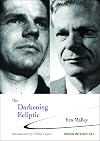
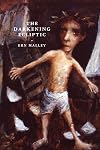
The darkening ecliptic
by Ern Malley
On This Page
Description
In 1944 the Australian literary world was rocked by a hoax which was to become a worldwide scandal. Ern Malley, deceased motor mechanic and poet, was the invention of two Sydney poets, James McAuley and Harold Stewart, who were intent on proving that modern poetry was a sham. The work of Malley comprised lines and words selected randomly, everywhere from Shakespeare to an American report on the drainage of the breeding grounds of mosquitoes. Max Harris published the poetry in the literary show more magazine Angry Penguins but when the deception was revealed he was mercilessly lampooned, tried and convicted of publishing 'indecent advertisements'. This definitive edition contains all of the poems, a new introduction by artist Albert Tucker, and historical background by Max Harris, John Reed and Colin Wilson; augmented by the unique contribution of drawings and etchings by Garry Shead. show lessTags
Recommendations


















Member Reviews
There were two great literary hoaxes in 20th century Australia. The second, surrounding award-winning novel The Hand That Signed the Paper, asked questions about who has the right to tell stories of the past, and the difference between fiction and non-fiction. The first, the 'Ern Malley' scandal, was about the very nature of art itself.
In 1944, the left-wing poetry journal Angry Penguins published a series of 17 poems by a complete unknown, the recently deceased 25-year-old Ern Malley, a motor mechanic who had left his poems in his sister's care upon his early death. The series, with the overarching title The Darkening Ecliptic, appealed greatly to the modernist sensibilities of editor Max Harris and his collaborators such as the show more painter Sidney Nolan (whose ironic portrait of Malley adorns this volume). Australian writers were in the midst of the great war raging in the Western world of traditional poetry and literature up against the radical, modernist styles that often discombobulated popular audiences.
Shortly after the Autumn 1944 edition of Angry Penguins was published, the media smelled a rat. Soon, it was revealed that Harris had been conned. Two conservative writers - James McAuley and Harold Stewart - had created the figure of 'Ern Malley'. The letters from his sister were counterfeit, and the poems were a concoction of quotations (everything from Shakespeare to instruction manuals) and half-nonsense; indeed, the writers claimed to have written all 17 poems in one day.
The publication was an embarrassment for left-wing authors, suggesting as it did that they had been fooled so easily - McAuley and Stewart saw this as proof that the entire artform was a con job, pretentious and uncontrolled. Harris soon found himself embroiled in a trial on charges of publishing obscenities, since the conservative culture of 1940s Australia routinely charged publishers for material that had sexual content.
Over the coming decades, the 'Ern Malley' poems have continued to be anthologised. This edition includes a reflection by Harris himself, which is especially valuable. Were the poems valueless? Or did their success proof a triumph of surrealism, perhaps even evidence that works can have meaning beyond what their creators intended? (McAuley and Stewart would still say: no.) The debate rages.
I will say two things. First, some of the Malley poems have a yearning, ethereal beauty, regardless of what his creators intended. Think of the final lines of the most famous of the poems, Durer: Innsbruck, 1495:
I had read in books that art is not easy
But no one warned the the mind repeats
In its ignorance the vision of others. I am still
The black swan of trespass on alien waters.
Second, though, I'm certainly not convinced that just because a pastiche was able to fool an editor, that an entire way of thinking can be proven false. No doubt the same could have been done with more classical poetry styles, such as those favoured by the hoaxers. Indeed, some would argue that much of more formal art is exactly that - styles that quickly become tired pastiches of themselves.
75 years on, I don't expect we will see many more poetry scandals making front-page news. So for this reason - and for the love of a good story! - I shall continue to enjoy the 'Ern Malley' poems, and the overarching context. show less
In 1944, the left-wing poetry journal Angry Penguins published a series of 17 poems by a complete unknown, the recently deceased 25-year-old Ern Malley, a motor mechanic who had left his poems in his sister's care upon his early death. The series, with the overarching title The Darkening Ecliptic, appealed greatly to the modernist sensibilities of editor Max Harris and his collaborators such as the show more painter Sidney Nolan (whose ironic portrait of Malley adorns this volume). Australian writers were in the midst of the great war raging in the Western world of traditional poetry and literature up against the radical, modernist styles that often discombobulated popular audiences.
Shortly after the Autumn 1944 edition of Angry Penguins was published, the media smelled a rat. Soon, it was revealed that Harris had been conned. Two conservative writers - James McAuley and Harold Stewart - had created the figure of 'Ern Malley'. The letters from his sister were counterfeit, and the poems were a concoction of quotations (everything from Shakespeare to instruction manuals) and half-nonsense; indeed, the writers claimed to have written all 17 poems in one day.
The publication was an embarrassment for left-wing authors, suggesting as it did that they had been fooled so easily - McAuley and Stewart saw this as proof that the entire artform was a con job, pretentious and uncontrolled. Harris soon found himself embroiled in a trial on charges of publishing obscenities, since the conservative culture of 1940s Australia routinely charged publishers for material that had sexual content.
Over the coming decades, the 'Ern Malley' poems have continued to be anthologised. This edition includes a reflection by Harris himself, which is especially valuable. Were the poems valueless? Or did their success proof a triumph of surrealism, perhaps even evidence that works can have meaning beyond what their creators intended? (McAuley and Stewart would still say: no.) The debate rages.
I will say two things. First, some of the Malley poems have a yearning, ethereal beauty, regardless of what his creators intended. Think of the final lines of the most famous of the poems, Durer: Innsbruck, 1495:
I had read in books that art is not easy
But no one warned the the mind repeats
In its ignorance the vision of others. I am still
The black swan of trespass on alien waters.
Second, though, I'm certainly not convinced that just because a pastiche was able to fool an editor, that an entire way of thinking can be proven false. No doubt the same could have been done with more classical poetry styles, such as those favoured by the hoaxers. Indeed, some would argue that much of more formal art is exactly that - styles that quickly become tired pastiches of themselves.
75 years on, I don't expect we will see many more poetry scandals making front-page news. So for this reason - and for the love of a good story! - I shall continue to enjoy the 'Ern Malley' poems, and the overarching context. show less
A fascinating look at a 1940s hullabaloo in the Australian publishing/poetry/art world.
This edition contains some historical background & analysis, along with the actual poetry. I'm not much of a poetry reader in general, but I found most of the poems intriguing with a show more strong visual presence. The entire argument as to whether or not it is "real" poetry (with the authors themselves saying it's not) is certainly unique, as well as ridiculously fun. I fall on the side that it is indeed poetry, even if that is not what they intended.
This is a small, spellbinding slice of Australian artistic history. show less
"One of the most remarkable poets of the twentieth century was an Australian called Ern (short for Ernest) Malley. He died at the age of 25, in July 1943, having written only sixteen poems; but his work has continued to be widely read, and to influence younger poets. Compared to contemporaries like T.S. Eliot and Dylan Thomas, Ern Malley had one interesting advatage: he did not exist."I read this because of s.penkevich's excellent review of Ern Malley's Collected Poems.
This edition contains some historical background & analysis, along with the actual poetry. I'm not much of a poetry reader in general, but I found most of the poems intriguing with a show more strong visual presence. The entire argument as to whether or not it is "real" poetry (with the authors themselves saying it's not) is certainly unique, as well as ridiculously fun. I fall on the side that it is indeed poetry, even if that is not what they intended.
"What is the moral of this curious story? My own feeling is that Read was correct. In trying to create parody, the two poets produced the poetic equivalent of a Jackson Pollock painting. Both were talented poets, and 'letting their hair down' produced some striking and original images."Shockingly (or not?), publishing this faux poetry later landed publisher Max Harris in hot water & on trial for publishing obscene material.
This is a small, spellbinding slice of Australian artistic history. show less
Ratings
Members
- Recently Added By
Lists

Fakes, Forgeries, and Fictitious Authors
112 works; 4 members
Author Information
3 Works 26 Members
Work Relationships
Is contained in
Classifications
Statistics
- Members
- 24
- Popularity
- 1,113,872
- Reviews
- 2
- Rating
- (3.33)
- Languages
- English
- Media
- Paper, Ebook
- ISBNs
- 6
- ASINs
- 1