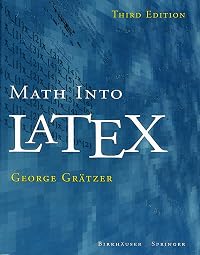
Math Into LaTeX
by George Grätzer
On This Page
Description
A new chapter "A Visual Introduction to MikTeX," an open source implementation of TeX and LaTeX for Windows operating systems Another new chapter describing amsrefs, a simpler method for formatting references that incorporates and replaces BibTeX data Integrates a major revision to the amsart document class, along with updated examplesTags
Recommendations

Member Reviews
Middle-of-the-road book, covering most LaTeX math needs
June 2001
Math Into LaTeX is a book with diffuse purpose -- a little bit of introduction for those trying to get into using LaTeX for their mathematical type-setting needs, a little bit of wide coverage on commands needed for many math articles, and plenty of pointing to other references on the Internet and in books. In many ways, it's too diffuse to be useful on a day-to-day basis; even though there's a Quick Finder, a mini-index at the front of the book, the choices don't seem appropriate for what comes up most often in my hair-pulling sessions with a recalcitrant LaTeX (such as fixing the margin at the top of the page).
The first section, titled A Short Course, is a simple 63-page show more guide, walking one through the creation of a LaTeX file, from a 22-line simple note, to adding individual math terms, to producing large formulas, to dealing with the inevitable error messages, even through running the LaTeX program. However, it's not really explained how to deal with the dvi file that comes out of the program -- a vague description that a video driver is used to view a dvi file is given in this short course, but the real information is to be found scattered throughout the book. This is a failing shared with =many= TeX and LaTeX books; one gets in lots of trouble for all that is =not= written down.
A quick overview of the remaining sections: in Text and Math one finds the meat of the book -- how to organize text regions, whether in paragraphs or lists; dealing with fonts; how to organize formulas and symbols; how to align equations and their different parts. I use this section as a reference almost constantly in typing up math articles. Section III, Document Structure, does a quick look at the overall skeleton of a LaTeX document, and in particular looks at AMS articles. Customization covers some of the more used customizing options, like changing spacing and counters of list items. The Long Documents section looks at three things: making bibliographies, making indexes, and pulling separate files together for one large document (like books). The last section, Math and the Web, talks about various conversions one can use to put up a version of LaTeX documents on the Internet, and how to deal with some PDF issues, but it's rather a spare section. The appendices, of course, have the standard charts for math symbols and European Accents, lists of fonts, and dealing with conversions. Check out the Bibliography - if you get a hold of some of the other LaTeX tomes, you will see that it's hard to find a better one than this one (though that doesn't mean a better one can't be written).
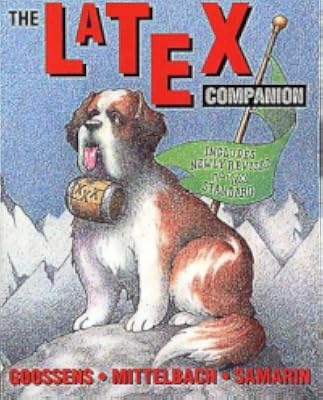
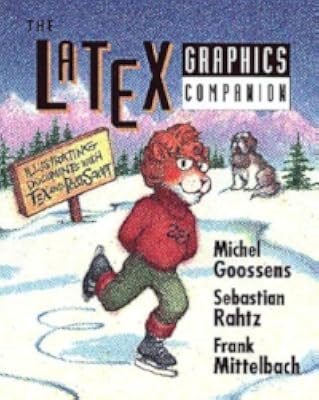
That said, this has turned out to be one of the most useful LaTeX books I have ever used (the absolutely most useful was a very short book printed by SIAM, and is for people who don't need help with the bare bones). I own three LaTeX books right now (this one, The Latex Companion, and The Latex Graphics Companion). Of the three, this one is the most useful in my day-to-day writing of mathematics in LaTeX. The problem with the Companion books is that they are useful for the esoteric topics they cover, which would be hard to figure out on one's own, but they really don't address nuts & bolts issues like Math Into LaTeX does. If you can only have one LaTeX book, you should get this one; if you have three LaTex books, you should still get it, for there are few other LaTeX books which make things so understandable and covers so many useful topics. show less
June 2001
Math Into LaTeX is a book with diffuse purpose -- a little bit of introduction for those trying to get into using LaTeX for their mathematical type-setting needs, a little bit of wide coverage on commands needed for many math articles, and plenty of pointing to other references on the Internet and in books. In many ways, it's too diffuse to be useful on a day-to-day basis; even though there's a Quick Finder, a mini-index at the front of the book, the choices don't seem appropriate for what comes up most often in my hair-pulling sessions with a recalcitrant LaTeX (such as fixing the margin at the top of the page).
The first section, titled A Short Course, is a simple 63-page show more guide, walking one through the creation of a LaTeX file, from a 22-line simple note, to adding individual math terms, to producing large formulas, to dealing with the inevitable error messages, even through running the LaTeX program. However, it's not really explained how to deal with the dvi file that comes out of the program -- a vague description that a video driver is used to view a dvi file is given in this short course, but the real information is to be found scattered throughout the book. This is a failing shared with =many= TeX and LaTeX books; one gets in lots of trouble for all that is =not= written down.
A quick overview of the remaining sections: in Text and Math one finds the meat of the book -- how to organize text regions, whether in paragraphs or lists; dealing with fonts; how to organize formulas and symbols; how to align equations and their different parts. I use this section as a reference almost constantly in typing up math articles. Section III, Document Structure, does a quick look at the overall skeleton of a LaTeX document, and in particular looks at AMS articles. Customization covers some of the more used customizing options, like changing spacing and counters of list items. The Long Documents section looks at three things: making bibliographies, making indexes, and pulling separate files together for one large document (like books). The last section, Math and the Web, talks about various conversions one can use to put up a version of LaTeX documents on the Internet, and how to deal with some PDF issues, but it's rather a spare section. The appendices, of course, have the standard charts for math symbols and European Accents, lists of fonts, and dealing with conversions. Check out the Bibliography - if you get a hold of some of the other LaTeX tomes, you will see that it's hard to find a better one than this one (though that doesn't mean a better one can't be written).
That said, this has turned out to be one of the most useful LaTeX books I have ever used (the absolutely most useful was a very short book printed by SIAM, and is for people who don't need help with the bare bones). I own three LaTeX books right now (this one, The Latex Companion, and The Latex Graphics Companion). Of the three, this one is the most useful in my day-to-day writing of mathematics in LaTeX. The problem with the Companion books is that they are useful for the esoteric topics they cover, which would be hard to figure out on one's own, but they really don't address nuts & bolts issues like Math Into LaTeX does. If you can only have one LaTeX book, you should get this one; if you have three LaTex books, you should still get it, for there are few other LaTeX books which make things so understandable and covers so many useful topics. show less
Ratings
Members
- Recently Added By
Author Information
20 Works 316 Members
Classifications
Statistics
- Members
- 74
- Popularity
- 427,609
- Reviews
- 1
- Rating
- (4.50)
- Languages
- English, German
- Media
- Paper, Ebook
- ISBNs
- 7