On This Page
Description
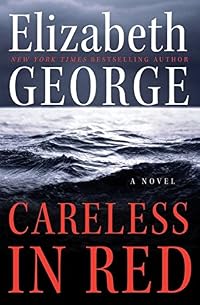
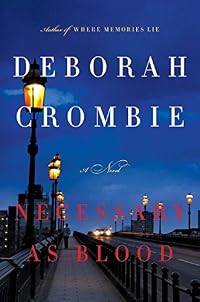
Scotland Yard's Thomas Lynley discovers the body of a young man who appears to have fallen to his death. The closest town, better known for its tourists and its surfing than its intrigue, seems an unlikely place for murder. However, it soon becomes apparent that a clever killer is indeed at work, and this time Lynley is not a detective but a witness and possibly a suspect.Tags
Recommendations










Member Reviews
Long live DS Barbara Havers!!!
I've read a few of the Inspector Lynley series by this time. No use covering old ground in this review. Hence, these drippings of opinion are dedicated to the disheveled delight of a detective. She has a hairstyle no doubt maintained by a pair of clothing shears kept in her medicine cabinet, a body best described as one that itself will probably be grateful when it gives out, and eating habits that would make junk-foodies cringe [I restate from a previous review... watermelon Pop-tarts?!...(O_o)....]. What isn't to absolutely adore about this character?
Shall I give an example of my adoration? Why not.
Havers is the one to provide such fuck-bloody-all clarifications to evasive suspects as:
Aldara said, "Santo show more Kerne. What about him?"
"We'd like to talk to you about your relationship with him."
"My relationship with him. What about it?
"I hope this isn't going to be your style of answering," [Detective Inspector] Bea [Hannaford] said.
"My style of answering. What do you mean?"
"The Little Miss Echo bit, Miss Pappas. Or is it Missus?"
"Aldara will do."
"Aldara, then. If it is your style - the echoing bit - we're likely to be with you most of the day, and something tells me you'd not appreciate that. We'd be happy enough to oblige, however."
"I'm not sure I understand your meaning."
"The gaff's been blown," Sergeant Haver told her. Her tone was impatient. "The chicken's flown the coop. The orchard pig's in the laundry. Whatever works."
"What the sergeant means," Bea added, "is that your relationship with Santo Kerne has come to light, Aldara. That's why we're hear: to sort through it."
"You were bonking him till he was blue in the face," Sergeant Havers put in. (George, 2008, p. 485)
Havers is obviously a woman who, if not comfortable in her own skin, certain doesn't give a rat's ass about being uncomfortable. Another complete mess of an individual to love and enjoy. show less
I've read a few of the Inspector Lynley series by this time. No use covering old ground in this review. Hence, these drippings of opinion are dedicated to the disheveled delight of a detective. She has a hairstyle no doubt maintained by a pair of clothing shears kept in her medicine cabinet, a body best described as one that itself will probably be grateful when it gives out, and eating habits that would make junk-foodies cringe [I restate from a previous review... watermelon Pop-tarts?!...(O_o)....]. What isn't to absolutely adore about this character?
Shall I give an example of my adoration? Why not.
Havers is the one to provide such fuck-bloody-all clarifications to evasive suspects as:
Aldara said, "Santo show more Kerne. What about him?"
"We'd like to talk to you about your relationship with him."
"My relationship with him. What about it?
"I hope this isn't going to be your style of answering," [Detective Inspector] Bea [Hannaford] said.
"My style of answering. What do you mean?"
"The Little Miss Echo bit, Miss Pappas. Or is it Missus?"
"Aldara will do."
"Aldara, then. If it is your style - the echoing bit - we're likely to be with you most of the day, and something tells me you'd not appreciate that. We'd be happy enough to oblige, however."
"I'm not sure I understand your meaning."
"The gaff's been blown," Sergeant Haver told her. Her tone was impatient. "The chicken's flown the coop. The orchard pig's in the laundry. Whatever works."
"What the sergeant means," Bea added, "is that your relationship with Santo Kerne has come to light, Aldara. That's why we're hear: to sort through it."
"You were bonking him till he was blue in the face," Sergeant Havers put in. (George, 2008, p. 485)
Havers is obviously a woman who, if not comfortable in her own skin, certain doesn't give a rat's ass about being uncomfortable. Another complete mess of an individual to love and enjoy. show less
Elizabeth George is one of my favorite authors. I consider her a master of the English detective/police procedural genre. I’ve looked on her writing as an exemplar of near-perfect prose, a joy to read. Her portrayals of a rather large group of main characters in the Thomas Lynley/Barbara Havers series are so evocative that I have a hard time with what are probably perfectly good portrayals of these characters in the TV series based on the books. George’s descriptions are simply too sharp to be replaced by anything else.
However, George did remark some years ago that the reason she had such a large cast is that it would allow her to kill one of them off and still keep the series alive and interesting. In With No One As Witness, she show more did exactly that, thereby eliminating one of the most empathetic characters in the series, Lynley’s wife, Helen.
The following book, What Came Before He Shot Her, was only tangentially related to the series, and was the story of the adolescent youth of a Jamaican mother who, abandoned by his mother to live with his older sister, becomes involved in the street gangs and winds up shooting and killing Helen. Because there was no tension in the story—we all knew the outcome-- to me it wound up reading like a sociological study, which is not what I wanted out of George. I wound up not finishing the book.
So it was with relief that I greeted Careless in Red as a return to and continuation of the series.
However, the book did not live up to my hopes, which were of a smooth transition back into the series. Transition it is, but not the best, not the caliber of which we know George is capable. In the story, Lynley, to escape his well-meaning and understanding family, friends and colleagues, takes the walking route up the coast of Cornwall. Six weeks into this walk and looking like a homeless beggar, Lynley happens upon the body of a young man in which it appears that the victim has died in a climbing accident. One thing leads to another, and Lynley is fairly sure that the young man was murdered. He stays on to participate in the investigation.
This is the basis for the plot, which itself is rather well done. But what is the surprise is the radical shift in George’s style of writing. From precise prose where every word seemed perfect and polished, George in this book has developed a looser, more informal style which she does not handle in the same masterly way. It’s so startlingly different that at first it hinders getting into the book; you keep expecting the “real Elizabeth George” to step up, please. Even after you adjust, it still is somewhat uncertain and simply does not fit the personas of the characters she created with her previous style—Lynley does not seem like Lynley, Havers appears like an impersonation of Barbara Havers. Given that a good deal of the strength of George’s books is based on her outstanding characterizations, this is a severe handicap to Careless in Red. It’s interesting to note that in between With no One As Witnessand Careless in Red, George moved to the Seattle area, notorious home (I’ve lived there) to informality and a PC type of vagueness. You worry about George, as if she’s caught a serious infection from which you hope that she recovers fully.
The book is good but not her best, and in fact so far below in quality to any of the others in the series that you wonder if George is ever going to make it back to the standard which she herself set. Too bad if true. show less
However, George did remark some years ago that the reason she had such a large cast is that it would allow her to kill one of them off and still keep the series alive and interesting. In With No One As Witness, she show more did exactly that, thereby eliminating one of the most empathetic characters in the series, Lynley’s wife, Helen.
The following book, What Came Before He Shot Her, was only tangentially related to the series, and was the story of the adolescent youth of a Jamaican mother who, abandoned by his mother to live with his older sister, becomes involved in the street gangs and winds up shooting and killing Helen. Because there was no tension in the story—we all knew the outcome-- to me it wound up reading like a sociological study, which is not what I wanted out of George. I wound up not finishing the book.
So it was with relief that I greeted Careless in Red as a return to and continuation of the series.
However, the book did not live up to my hopes, which were of a smooth transition back into the series. Transition it is, but not the best, not the caliber of which we know George is capable. In the story, Lynley, to escape his well-meaning and understanding family, friends and colleagues, takes the walking route up the coast of Cornwall. Six weeks into this walk and looking like a homeless beggar, Lynley happens upon the body of a young man in which it appears that the victim has died in a climbing accident. One thing leads to another, and Lynley is fairly sure that the young man was murdered. He stays on to participate in the investigation.
This is the basis for the plot, which itself is rather well done. But what is the surprise is the radical shift in George’s style of writing. From precise prose where every word seemed perfect and polished, George in this book has developed a looser, more informal style which she does not handle in the same masterly way. It’s so startlingly different that at first it hinders getting into the book; you keep expecting the “real Elizabeth George” to step up, please. Even after you adjust, it still is somewhat uncertain and simply does not fit the personas of the characters she created with her previous style—Lynley does not seem like Lynley, Havers appears like an impersonation of Barbara Havers. Given that a good deal of the strength of George’s books is based on her outstanding characterizations, this is a severe handicap to Careless in Red. It’s interesting to note that in between With no One As Witnessand Careless in Red, George moved to the Seattle area, notorious home (I’ve lived there) to informality and a PC type of vagueness. You worry about George, as if she’s caught a serious infection from which you hope that she recovers fully.
The book is good but not her best, and in fact so far below in quality to any of the others in the series that you wonder if George is ever going to make it back to the standard which she herself set. Too bad if true. show less
Posted at:
http://web.mac.com/ann163125/Table_Talk/Table_Talk_Blog/Entries/2008/7/1_Careles...
Careless in Red is the latest of Elizabeth George’s crime novels and the first to directly feature DI Lynley since the one in which his wife was murdered. Except, as far as he’s concerned he is no longer anything to do with the police force. He has handed in his warrant card and having failed to find any peace in the family home is now walking the Cornish coastal path in an attempt to make some sort of sense out of the turmoil that he is still feeling. Inevitably, (and there is a sort of Busman’s Honeymoon feeling to all this, although, of course, the circumstances are rather different) while trying to put all thoughts of murder out of his show more mind, he stumbles upon the body of a local youth and, as he puts it himself, the game’s afoot.
The local police force is not really equipped to take on an investigation of this magnitude and so the ACC calls in the Met. Lynley, as a prime suspect (well he did find the body and we all know that that makes him the most likely person to have done the deed) is unable to leave the district and so finds himself roped into the investigation and partnered up once more with DS Havers, who has been sent, not only to help find the killer, but also to try to persuade Lynley that quitting the force is not the answer to his grief.
It’s hard to say any more without giving the game away but George’s writing has matured over the years and here she manages to explore a number of different types of relationship between married couples all of which help the reader to reflect on what Lynley has lost and the ways in which it may or may not be possible for him to come through the devastation that Helen’s death has caused. She also considers the parent/child relationship and asks what makes a parent, what is owed by one side to the other and what happens when the relationship becomes more about the feelings of the parent and less about understanding the child. The one thing she still doesn’t do well is the sex, but at least there isn’t as much of it in her later books as there was originally.
I enjoyed this much more than I’ve enjoyed some other crime sequels I’ve read lately. It’s a long read, but it saw me well through a difficult weekend. show less
http://web.mac.com/ann163125/Table_Talk/Table_Talk_Blog/Entries/2008/7/1_Careles...
Careless in Red is the latest of Elizabeth George’s crime novels and the first to directly feature DI Lynley since the one in which his wife was murdered. Except, as far as he’s concerned he is no longer anything to do with the police force. He has handed in his warrant card and having failed to find any peace in the family home is now walking the Cornish coastal path in an attempt to make some sort of sense out of the turmoil that he is still feeling. Inevitably, (and there is a sort of Busman’s Honeymoon feeling to all this, although, of course, the circumstances are rather different) while trying to put all thoughts of murder out of his show more mind, he stumbles upon the body of a local youth and, as he puts it himself, the game’s afoot.
The local police force is not really equipped to take on an investigation of this magnitude and so the ACC calls in the Met. Lynley, as a prime suspect (well he did find the body and we all know that that makes him the most likely person to have done the deed) is unable to leave the district and so finds himself roped into the investigation and partnered up once more with DS Havers, who has been sent, not only to help find the killer, but also to try to persuade Lynley that quitting the force is not the answer to his grief.
It’s hard to say any more without giving the game away but George’s writing has matured over the years and here she manages to explore a number of different types of relationship between married couples all of which help the reader to reflect on what Lynley has lost and the ways in which it may or may not be possible for him to come through the devastation that Helen’s death has caused. She also considers the parent/child relationship and asks what makes a parent, what is owed by one side to the other and what happens when the relationship becomes more about the feelings of the parent and less about understanding the child. The one thing she still doesn’t do well is the sex, but at least there isn’t as much of it in her later books as there was originally.
I enjoyed this much more than I’ve enjoyed some other crime sequels I’ve read lately. It’s a long read, but it saw me well through a difficult weekend. show less
It’s been four years since we last caught up with Inspector Thomas Lynley and Sgt. Barbara Havers. Four very long years.
Four years made longer by the fact that at the end of With No One As Witness, Elizabeth George left Lynley and the entire series as a cross-roads. Something big happened at the end of the book that left me stunned at the audacity of George to contemplate it, much less pull it off. And it left me eager for more.
And then we got her last book, What Came Before He Shot Her, which was good but didn’t quite satisfy the craving and yearning I had for more Lynley and Havers.
Finally, we get Careless in Red.
And it was worth every last day she made us wait for it.
Careless in Red opens a few months after the events of With No show more One as Witness. Lynley, in his depression over his wife and unborn child’s death, has gone on a walk and a rather long one. He’s wandering up the British coast, trying to get away from places and things that remind him of Helen and those well-meaning friends and family who are trying to understand what he’s going through. On the forty-third day of his walk, he discovers the body of Santo Kerne on the rocks, apparently killed while cliff climbing. Lynley tries to report the crime and soon finds himself drawn into the murder investigation (early on, he’s as suspect, but soon he’s dismissed as such and made part of the investigation, though his role is entirely unofficial).
As she’s done with the last few Lynley and Havers novels, George expands the focus beyond our two protagonists. George introduces a myriad of characters who knew the deceased, many of which have a very good reason to wish harm to the eighteen-year old boy. Kerne was part of the surfing commuity as well as a ladies’ man and had burned more than his fair share of bridges. Add that to mysterious ties to the past by his parents and you’ve got the usual George tapestry of colorful suspects, all of whom had a very good motive for bumping off Santo Kerne.
All of these lead to a satisfying conclusion to the mystery, which I won’t give away here.
And while the mystery itself is absorbing, it’s the pyschological aspects of the novel that make it compelling. From a literary standpoint, George is head and shoulders above any mystery novelist writing today because she does more than just present the facts of the case. She take the time to get inside the lives of each of the suspects, having them be characters rather than simply suspects. We get to see why they’d each have a myriad of reasons to comit the crime and why they have a myriad of reason to not comit each crime. In Careless in Red, George takes the time to develop each of the people of the setting into something more than just a standard suspect.
But the character development doesn’t stop there. The story is about Thomas Lynley and his journey through the healing process. When we first meet Lynley in Red, he’s still reeling from the death of his wife. The novel provides Lynley with a way to reconnect with the world and become part of it again. Yes, it’s a bit of convienence that Lynley is walking on the coast and happens across a dead body. But that event serves as a catalyst that allows Lynley’s healing process to continue and bring him back to the things of his life that matter–his friends, his family and his work at New Scotland Yard. You can take Lynley out of Scotland Yard, but you can’t take out his essential instincts as a detective. George highlights this in a subplot when Lynley assigned to watch and discover more about a mysterious vet.
And the book includes Havers, who may be my favorite character of the novels. When Lynley calls her for help around page 200, I was literally cheering. Bringing the two together is a delight and it’s always a pleasure to see how others outside of the Lynley/Havers circle react to the give and take of the characters.
In short, Careless in Red is everything that I was hoping for and more. Well-drawn characters, a well-executed mystery and our chance to explore more about Lynley and Havers. I won’t say this is an ideal place for a new fan to step in, but certainly you could if you wanted to. Instead, I’d say if you want to find out why everyone loves Elizabeth George, start with her first novel A Great Deliverance and explore the Lynley and Havers universe from the beginning. show less
Four years made longer by the fact that at the end of With No One As Witness, Elizabeth George left Lynley and the entire series as a cross-roads. Something big happened at the end of the book that left me stunned at the audacity of George to contemplate it, much less pull it off. And it left me eager for more.
And then we got her last book, What Came Before He Shot Her, which was good but didn’t quite satisfy the craving and yearning I had for more Lynley and Havers.
Finally, we get Careless in Red.
And it was worth every last day she made us wait for it.
Careless in Red opens a few months after the events of With No show more One as Witness. Lynley, in his depression over his wife and unborn child’s death, has gone on a walk and a rather long one. He’s wandering up the British coast, trying to get away from places and things that remind him of Helen and those well-meaning friends and family who are trying to understand what he’s going through. On the forty-third day of his walk, he discovers the body of Santo Kerne on the rocks, apparently killed while cliff climbing. Lynley tries to report the crime and soon finds himself drawn into the murder investigation (early on, he’s as suspect, but soon he’s dismissed as such and made part of the investigation, though his role is entirely unofficial).
As she’s done with the last few Lynley and Havers novels, George expands the focus beyond our two protagonists. George introduces a myriad of characters who knew the deceased, many of which have a very good reason to wish harm to the eighteen-year old boy. Kerne was part of the surfing commuity as well as a ladies’ man and had burned more than his fair share of bridges. Add that to mysterious ties to the past by his parents and you’ve got the usual George tapestry of colorful suspects, all of whom had a very good motive for bumping off Santo Kerne.
All of these lead to a satisfying conclusion to the mystery, which I won’t give away here.
And while the mystery itself is absorbing, it’s the pyschological aspects of the novel that make it compelling. From a literary standpoint, George is head and shoulders above any mystery novelist writing today because she does more than just present the facts of the case. She take the time to get inside the lives of each of the suspects, having them be characters rather than simply suspects. We get to see why they’d each have a myriad of reasons to comit the crime and why they have a myriad of reason to not comit each crime. In Careless in Red, George takes the time to develop each of the people of the setting into something more than just a standard suspect.
But the character development doesn’t stop there. The story is about Thomas Lynley and his journey through the healing process. When we first meet Lynley in Red, he’s still reeling from the death of his wife. The novel provides Lynley with a way to reconnect with the world and become part of it again. Yes, it’s a bit of convienence that Lynley is walking on the coast and happens across a dead body. But that event serves as a catalyst that allows Lynley’s healing process to continue and bring him back to the things of his life that matter–his friends, his family and his work at New Scotland Yard. You can take Lynley out of Scotland Yard, but you can’t take out his essential instincts as a detective. George highlights this in a subplot when Lynley assigned to watch and discover more about a mysterious vet.
And the book includes Havers, who may be my favorite character of the novels. When Lynley calls her for help around page 200, I was literally cheering. Bringing the two together is a delight and it’s always a pleasure to see how others outside of the Lynley/Havers circle react to the give and take of the characters.
In short, Careless in Red is everything that I was hoping for and more. Well-drawn characters, a well-executed mystery and our chance to explore more about Lynley and Havers. I won’t say this is an ideal place for a new fan to step in, but certainly you could if you wanted to. Instead, I’d say if you want to find out why everyone loves Elizabeth George, start with her first novel A Great Deliverance and explore the Lynley and Havers universe from the beginning. show less
To say I'm an Elizabeth George fan is an understatement. I am a huge fan of her Lynley and Havers novels, and I enjoyed the last two books before this one, unlike quite a few of the reviewers. The reason I enjoyed them is because Ms. George is an extraordinary author, and I love the way she explores her characters, both the returning and non-returning ones. I did not know what to expect with this book after the shock of "With No One As Witness". I knew that we would be seeing a post-Helen Inspector Lynley. Ms. George has portrayed grief and love in a very thorough and beautiful way in this book. That is what makes this book so special! She also opens up teenage angst, marital and family issues and revenge and betrayal. All very show more ambitious, but this book is 600 or so pages. And she does a marvellous job of all of these things. The thing that was lacking was mystery and the successful conclusion of what mystery there was. I missed this greatly, since I also love how Ms. George builds a plot with tension and plot twists. Certainly what we saw in "With No One As a Witness". But if you like to read a marvelous writer, than certainly read this. Ms. George is at the top of her game. show less
Inspector Lynley turned in his badge at New Scotland Yard and went back to Cornwall. When the story opens, Lynley is trying to deal with the death of his wife, Helen, by walking the cliff-side paths around Cornwall. When he comes upon a young man dead at the bottom of a cliff, he breaks into Daidre Trahir's cottage to call the authorities. However, she does not have a phone and comes home while he is in her house. She is a veterinarian in London, but has some secrets that seem to implicate her in the murder. After cleaning himself up from over a month of walking and sleeping rough, Lynley is asked to help in the investigation, particularly with Deidre's secrets. He asks Barbara Havers to look into her background, which Barbara does on show more her way to Cornwall, but does not tell him that she has been sent to help with the investigation and keep an eye on him. The lead investigator is a divorced woman, DI Bea Hannaford, with a 15-year-old son, Peter, who wants his parents to get back together. She has an interesting relationship with her ex-husband, Ray, an Assistant Chief Constable. The victim, Santos Kerne, was murdered by someone tampering with his cliff climbing equipment, a crime almost impossible to solve since there were many people who could have wished him harm. He had just broken up with his girlfriend, Madelyn, who had been pregnant with his child, due to his promiscuous ways. Lynley decides to look into the background of Santos' father and discovers another death of a teenage boy 30 years prior. The book moves at a glacial pace with much description of the surroundings, the weather, preparation for the tourist season in the area, and surfing. Again, I was not happy with the ending, as I was not happy with the previous book. It is not as bad as the previous one, but not anywhere near her earlier efforts. show less
Much to my relief this book is a recovery for the author, Elizabeth George, and the main character Thomas Lynley. Her last two books, were confusing and dull. And it took me a long time to finish each one. Not so with this book. Lynley is interesting as he slowly recovers from his grieving. There is a new character D.I. Bea Hannaford, who is both repellent and sympathetic. George continues a sub theme of Lynley's pain delving into people's lives but nevertheless is essential to truth and solving mysteries. A good read!
Members
- Recently Added By
Lists

Crime and Mysteries to Read
746 works; 31 members

A Rainbow of Books: Colors in the Title
570 works; 24 members
Author Information

79+ Works 52,932 Members
Elizabeth George was born on February 26, 1949, in Warren, Ohio. She received a bachelor's degree in education from the University of California in Riverside and a master's degree in counseling/psychology from California State University at Fullerton. She taught English in high school for about thirteen years before leaving to become a full-time show more writer. She is the New York Times and internationally best selling author of twenty British crime novels featuring Detective Inspector Thomas Lynley and his unconventional partner Detective Sergeant Barbara Havers. Her novel, A Great Deliverance, won the Anthony Award, the Agatha Award, and France's Le Grand Prix de Literature Policiere in 1989. Her crime novels have been translated into 30 languages and featured on television by the BBC. She is also the author of a young adult series set on the island where she lives in the state of Washington. Her title's include Edge of Light, The Edge of the Shadows, The Edge of the Water, I, Richard, and The Punishment She Deserves. (Bowker Author Biography) show less
Some Editions
Awards and Honors
Distinctions
Series

Lynley & Havers (15)
Belongs to Publisher Series
Harper Perennial Olive Editions (2019 Olive)
Common Knowledge
- Canonical title
- Careless in Red
- Original title
- Careless in Red
- Original publication date
- 2008
- People/Characters
- Santo Kerne; Max Priestley; Aldara Pappas; Beatrice Hannaford; Thomas Lynley; Benesek Kerne (show all 31); Barbara Havers; Daidre Trahair; Dellen Kerne; Niamh Parsons; Jonathan Parsons; Jamie Parsons; Mick McNulty; Cadan Angarrack; Lew Angarrack; Madlyn Angarrack; Selevan Penrule; Tammy Penrule; Will Mendick; Ray Hannaford; Pete Hannaford; Kerra Kerne; Alan Cheston; Ione Soutar; Leigh Soutar; Jennie Soutar; Jago Reeth; Edrek Udy; Jen Udy; Goron Udy; Gwynder Udy
- Important places
- Casvelyn; Cornwall, England, UK
- Epigraph
- If thou art indeed my father,
then thou hast stained the sword
in the lifeblood of thy son.
And thou didst it of thine own obstinacy.
For I sought to turn thee into love...
From the Shahnama - Dedication
- To the memory of Stephen Lawrence and 22 April 1993, when he was murdered in Eltham, southeast London, by five men who have gone unpunished by the British judicial system to this day.
- First words
- He found the body on the forty-third day of his walk.
- Quotations*
- Als gíj inderdaad mijn vader bent.
Dan hebt gij uw zwaard bezoedeld
met het levensbloed van uw zoon.
En dat deed gij vanwege uw eigen halsstarrigheid
Want ik wilde u tot liefde brengen...
- uit de Shahnama... (show all)h - Last words
- (Click to show. Warning: May contain spoilers.)We will.
- Original language*
- Engels
*Some information comes from Common Knowledge in other languages. Click "Edit" for more information.
Classifications
Statistics
- Members
- 2,677
- Popularity
- 6,928
- Reviews
- 95
- Rating
- (3.64)
- Languages
- 10 — Danish, Dutch, English, French, German, Italian, Norwegian (Bokmål), Norwegian, Spanish, Swedish
- Media
- Paper, Audiobook, Ebook
- ISBNs
- 67
- ASINs
- 23