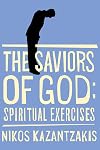
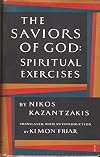
The Saviors of God: Spiritual Exercises
by Níkos Kazantzákis
On This Page
Description
As a writer and philosopher, Nikos Kazantzakis struggled all his life with existential questions, once spending several months in a monastery in an attempt to attain a closer relationship with God. His relentless quest to understand the nature of life through travel, extensive reading, and constant conversation with a diverse array of compatriots ultimately led Kazantzakis to compose this book of "spiritual exercises" meant to help the reader achieve harmony between the countervailing human show more impulses toward an immortality-seeking asceticism and toward a more nihilistic and materialist view of death. As with all Kazantzakis's philosophical works, The Saviors of God sheds light on a mind uniquely suited to a nuanced examination of what it means to be human, and establishes a hopeful vision for a dazzlingly syncretic approach to spiritual life. show lessTags
Recommendations





















Member Reviews
A little big book. These 143 pages contain much to think about... especially recommended to tormented souls! Goes straight to my "read again" pile.
Luftë, angështi, ngjitje, shqetësim, eros dhe urrejtje, det dhe tokë, erë dhe zjarr - janë paraqitur nga Kazantzakis me origjinalitet si temat kryesore të qënësisë njerëzore.
Kazantzakis përshkruan njeriun, natyrën, tokën, universin: gjithshka ndehet për të dëgjuar "Klithmën e Zotit" në çdo fije, në molekulën më të fshehtë të lëndës.
Autori përshkruan përpjekjen dhe luftën e vazhdueshme të njeriut, natyrës, tokës dhe universit për të shpetuar "Zotin në rrezik". Zotin që mbytet": ngjitja drejt lirisë së madhe, drejt shpëtimit nuk ka fund.
Kazantzakis përshkruan njeriun, natyrën, tokën, universin: gjithshka ndehet për të dëgjuar "Klithmën e Zotit" në çdo fije, në molekulën më të fshehtë të lëndës.
Autori përshkruan përpjekjen dhe luftën e vazhdueshme të njeriut, natyrës, tokës dhe universit për të shpetuar "Zotin në rrezik". Zotin që mbytet": ngjitja drejt lirisë së madhe, drejt shpëtimit nuk ka fund.
Ascesis: The Saviors of God is a series of "spiritual exercises" written by Greek author Nikos Kazantzakis. It was first written between 1922 and 1923, while staying in Vienna and Berlin, and subsequently published in 1927 in the Athenian magazine Anayennisi. The text was later revised on various occasions and reached its final state in 1944. The author first presents a prologue. Given the sacred tone of the book, which strives to go beyond philosophy and metaphysics, this introduction is better understood as an admonition. The first words summarize the undercurrent of The Saviors of God: "We came from an abyss of darkness; we end in an abyss of darkness: the interval of light between one and another we name life."
Kazantzakis thought show more that there are two streams in life: the first one runs toward ascesis, synthesis, life and immortality, while the second one runs towards dissolution, matter, death. However, both streams are part of the universe, and being so, sacred. One of Kazantzakis' main concerns was what force drives the uncreated to the created. As opposition seems to be intrinsic to life and infinite, human beings should strive to ascend to a harmonic view of these oppositions, to be a guide for thought and action. Source: Wikipedia show less
Kazantzakis thought show more that there are two streams in life: the first one runs toward ascesis, synthesis, life and immortality, while the second one runs towards dissolution, matter, death. However, both streams are part of the universe, and being so, sacred. One of Kazantzakis' main concerns was what force drives the uncreated to the created. As opposition seems to be intrinsic to life and infinite, human beings should strive to ascend to a harmonic view of these oppositions, to be a guide for thought and action. Source: Wikipedia show less
> Babelio : https://www.babelio.com/livres/Kazantzakis-Ascese-Salvatores-Dei/83736
> Un des plus grands chants mystiques. Rare sont ceux qui ont lu ce texte sans en être touché.
—Danieljean (Babelio)
> Un des plus grands chants mystiques. Rare sont ceux qui ont lu ce texte sans en être touché.
—Danieljean (Babelio)
Feb 23, 2021 (Edited)French
Members
- Recently Added By
Talk Discussions
Past Discussions
The lead-off article to start the discussion in The Arresting Life & Writings Of Nikos Kazantzakis (December 2012)
Author Information

140+ Works 12,327 Members
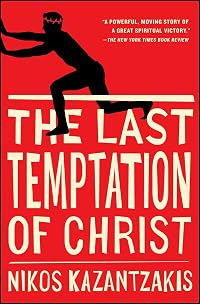
This distinguished novelist, poet, and translator was born in Crete and educated in Athens, Germany, Italy, and Paris, where he studied philosophy. He found time to write some 30 novels, plays, and books on philosophy, to serve his government, and to travel widely. He ran the Greek ministry of welfare from 1919 to 1921 and was minister of state show more briefly in 1945. A political activist, he spent his last years in France and died in Germany. Kazantzakis's character Zorba has been called "one of the great characters of modern fiction," in a novel that "reflects Greek exhilaration at its best" (TLS). A film version of 1965, starring Anthony Quinn, made Kazantzakis widely known in the West. Intensely religious, he imbued his novels with the passion of his own restless spirit, "torn between the active and the contemplative, between the sensual and the aesthetic, between nihilism and commitment" (Columbia Encyclopedia). Judas, the hero of The Last Temptation of Christ (1951) is asked by Christ to betray him so that he can fulfill his mission through the crucifixion. For this book Kazantzakis was excommunicated from the Greek Orthodox Church. The Fratricides, Kazantzakis's last novel, portrays yet another religious hero, a priest caught between Communists and Royalists in the Greek Civil War. (Bowker Author Biography) show less
Some Editions
Series
Belongs to Publisher Series
Work Relationships
Has as a commentary on the text
Common Knowledge
- Canonical title
- The Saviors of God: Spiritual Exercises
- Original title
- Ασκητική - Salvatores dei; Ασκητική (Salvatores dei) (Salvatores dei)
- Alternate titles
- Salvatores Dei
- Original publication date
- 1927 (Greek) (Greek)
- Dedication*
- Dedico questa mia gratissima fatica alla memoria del professor Antonio Maddalena, maestro, amico e fratello indimenticabile, che ora certo, accanto a Kazantzakis e all’altro grande create, El Greco, fratello maggiore... (show all) di Kazantzakis, continua la sua perenne, ormai gioiosa lotta.
PREFAZIONE - First words
- With clarity and quiet, I look upon the world and say: All that I see, hear, taste, smell, and touch are the creations of my mind.
- Original language
- Greek
*Some information comes from Common Knowledge in other languages. Click "Edit" for more information.
Classifications
- Genres
- Fiction and Literature, Religion & Spirituality
- DDC/MDS
- 889.1 — Literature & rhetoric Classical & modern Greek literatures Modern Greek literature Poetry
- LCC
- PA5610 .K39 .S33 — Language and Literature Greek language and literature. Latin language and literature Byzantine and modern Greek literature Individual authors
- BISAC
Statistics
- Members
- 314
- Popularity
- 101,621
- Reviews
- 7
- Rating
- (4.13)
- Languages
- 13 — Catalan, Dutch, English, Estonian, Finnish, French, German, Greek, Italian, Lithuanian, Portuguese, Spanish, Turkish
- Media
- Paper, Ebook
- ISBNs
- 30
- ASINs
- 7