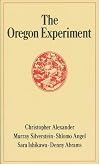
The Oregon Experiment
by Christopher Alexander
On This Page
Description
Focusing on a plan for an extension to the University of Oregon, this book shows how any community the size of a university or small town might go about designing its own future environment with all members of the community participating personally or by representation. It is a brilliant companion volume to A Pattern Language. --Publisher description.Tags
Recommendations



















Member Reviews
The Timeless Way of Building explains the ideas of Christopher Alexander, A Pattern Language supplies the building blocks and finally The Oregon Experiment the practical application at the campus of the University of Oregon at Eugene, OR.
The book is divided into six chapters. The first chapter "organic order" recapitulates why some English universities work and proclaims that master plan do not due to their technocratic aspirations. Alexander sees a special planning process as the solution. Chapter two "participation" postulates that only (future) users know their requirements and must lead the design process assisted by specialists. Chapter three "piecemeal growth" advises against giant complexes and advocates incremental user-driven show more growth. A new way of budgeting directing the funds to small projects should ensure piecemeal growth. Chapter four "patterns" offers 18 great, new university-specific patterns and postulates that all proposals must be clothed in community-adopted patterns. Chapter five "diagnosis" shows the main strengths of patterns in analyzing why certain places work. Chapter six "coordination" deals with project applications and approval by the planning board and presents a vision of the development of the university to the Nineties.
Unfortunately, the book ends before his planning process is confronted with reality, especially the ego of donors. The Wikipedia entry has some links about the sad ending of the project. A quick look at the Google map shows that Alexander's ideas have not been realized. Sad. show less
The book is divided into six chapters. The first chapter "organic order" recapitulates why some English universities work and proclaims that master plan do not due to their technocratic aspirations. Alexander sees a special planning process as the solution. Chapter two "participation" postulates that only (future) users know their requirements and must lead the design process assisted by specialists. Chapter three "piecemeal growth" advises against giant complexes and advocates incremental user-driven show more growth. A new way of budgeting directing the funds to small projects should ensure piecemeal growth. Chapter four "patterns" offers 18 great, new university-specific patterns and postulates that all proposals must be clothed in community-adopted patterns. Chapter five "diagnosis" shows the main strengths of patterns in analyzing why certain places work. Chapter six "coordination" deals with project applications and approval by the planning board and presents a vision of the development of the university to the Nineties.
Unfortunately, the book ends before his planning process is confronted with reality, especially the ego of donors. The Wikipedia entry has some links about the sad ending of the project. A quick look at the Google map shows that Alexander's ideas have not been realized. Sad. show less
Ratings
Members
- Recently Added By
Author Information

27+ Works 6,416 Members
Christopher Alexander, Fellow of the American Academy of Arts and Sciences, winner of the first medal for research ever awarded by the American Institute of Architects, is an architect, scientist and builder who has built in many countries. After thirty-eight years in the Department of Architecture at the University of California, Berkeley, he is show more now Emeritus Professor at the University, Director of the Center for Environmental Structure, and Chairman of the Board at PatternLanguage.com show less
Series
Belongs to Publisher Series
Common Knowledge
- Canonical title
- The Oregon Experiment
- Original publication date
- 1978-08-17
- Important places
- Oregon, USA
Classifications
Statistics
- Members
- 215
- Popularity
- 151,339
- Reviews
- 2
- Rating
- (3.97)
- Languages
- English, Italian, Japanese, Spanish
- Media
- Paper
- ISBNs
- 3
- ASINs
- 1