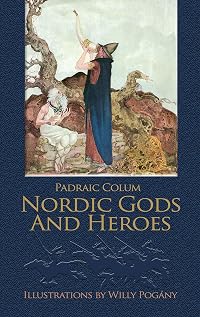
Nordic Gods and Heroes
by Padraic Colum
On This Page
Description
A retelling of the Norse sagas about Odin, Freya, Thor, Loki and the other gods and goddesses who lived in Asgard before the dawn of time.Tags
Recommendations







Member Reviews
Years and years ago my mother found a copy of this being sold from a high school library and bought it for me. I never got around to reading it, though. I loved mythology, but my high school mythology teacher had recently ruined the subject for me so I wasn't really interested in touching it. Years have gone by, though, and I decided to give it another whirl. I think Padraic Colum did a good job retelling the various myths from the Eddas and sequencing them in a rational order so that their telling made sense. It continues to strike me how the ancient Norsemen had a completely different conception of beginning-middle-end from our own. For example, the whole tale of the Volsungs is a mess by modern standards (with the first half show more consisting of a mythological hero who fights a dragon and the second half involving the deceased hero's widow plotting revenge on Attila the Hun - where the hell is narrative consistency in that?). But Colum presents the tales in such a way that it actually makes sense, even though it requires some narrative license to pull it off.
4/5 stars show less
4/5 stars show less
The Children of Odin:
The book of Northern Myths
Author: Padraic Colum
Publisher: Collier Books - Macmillan Publishing Company
Published In: New York
Date: 1920 / 1948
Pgs: 163
REVIEW MAY CONTAIN SPOILERS
Summary:
A retelling of the Norse Myths. The building of Asgard. Iduna. Loki. Sif. Freya. Frey. Gerda. Giants. Heimdall. Odin. Thor. Baldur. Sigmund. Valkyries. And the Twilight of the Gods. The stories that Vikings shared around lodge fires. Stories that lit their wanderlust and kept them warm and reaching for more beyond the circle of fire.
Genre:
Academics
Adventure
Ancient Knowledge
Apocalypse
Classics
Culture
Fantasy
Fiction
Gods and Goddesses
Historical fiction
History
Mythology
Religion and Spirituality
Society
Why this book:
I am fascinated by mythology show more in all cultures.
______________________________________________________________________________
Favorite Character:
Odin, Loki, Heimdall, Tyr...and many more.
Least Favorite Character:
Thor. In the myths, he seems like a real hammerhead.
The Feel:
There is an edge of wonder in these tales making them every bit the match of the Roman and Greek tales that I’m more familiar with.
Pacing:
Well paced.
Plot Holes/Out of Character:
The repetitive trusting of Loki after he had been revealed to be what he was. And the way that the Asgardians used Loki’s deceitfulness to their advantage and then were surprised that it was used against them.
Hmm Moments:
Did Loki in the guise of the little mare have sex with the giant horse Svaldifare?
The story The Building of the Wall shows the Gods of Asgard as oathbreakers. But it also shows them as fools for striking a bargain with the Giant to build the wall without knowing his price in advance. (Trying to ignore the echoes of wallbuilding and not knowing the price in American politics right now). And they take advantage of Loki’s guile and rejoice in it making them hypocritical when he does the same thing to them later on.
Loki comparing Idunna’s apples to the apples he had seen earlier that day beyond the walls of Asgard. He appleshamed her into falling into the Giant’s trap. The apple comparison makes me wonder if we’re talking about apples or if I just have a dirty mind. After she is taken by the Giant, the whole her apples only glow when she gives them to you versus when her apples are taken against her will, so are her apples a metaphor for virtue, for life, for drugs, for sex, for her breasts.
There are many ways to interpret the story of Idunna. Case could be made for the apples being drugs and the Gods of Asgard as addicts who only “come alive” when Idunna gives them her apples.
Wow. The Asgardians defenestrating Ymir after the first war with the Giants. And using his body, bones, and hair to fill in the hollow spots, build the mountains, the rocks, the trees, and all of Midgard. That is such a gross origin of the world.
Odin and Gunnlod’s tale and how wisdom is made from the blood of poets could be seen as a justification of cannibalism.
The story of Vegtam the Wanderer/Odin visiting his son Vidar, the Silent God. The leather leavings when shoemakers make shoes to be taken up and made into Vidar’s sandals. The sandals that Vidar will wear on the day he avenges Odin’s death, on the day Vidar kills Fenrir.
Thor losing Mjolnir and having to, at Loki’s urging, engage in a transvestite drag masquerade and Giant betrothal ceremony all because he got drunk, re: roofied, and let his hammer be taken by a Giant is greatness. And Loki wanting to tag along in all his shapechanging, transexual glory makes me think of The Rocky Horror Picture Show. Considering the rampant penis allegory that is Thor, his hammer being taken from him by a Giant while he is drunk...draw your own conclusions.
The Thor of the Sagas isn’t very smart. He repeatedly falls for this trap or that. He continually trusts Loki at his word.
Loki-quakes, Loki being blamed for earthquakes, and the Sisyphusian punishment that the Asgardians meted out on him. Siguna’s role mimicking the rock rolling back down the hill when she would have to empty the poison cup and the venom would drip into Loki’s face until her return. The Asgardians created their Frankenstein in Loki through their various ignoble deeds. Reading this causes me to look on Asgard in a far different light. Marvel’s interpretation of Thor owes little to this iteration. Though Odin’s capriciousness marks him as more in line with his mythic idiom.
______________________________________________________________________________
Last Page Sound:
Sleeping Beauty, Adam and Eve, and The Book of Revelations...all three and more were here under slightly different circumstances and in slightly different forms.
Knee Jerk Reaction:
real classic
Disposition of Book:
e-Book
Would recommend to:
everyone
______________________________________________________________________________ show less
The book of Northern Myths
Author: Padraic Colum
Publisher: Collier Books - Macmillan Publishing Company
Published In: New York
Date: 1920 / 1948
Pgs: 163
REVIEW MAY CONTAIN SPOILERS
Summary:
A retelling of the Norse Myths. The building of Asgard. Iduna. Loki. Sif. Freya. Frey. Gerda. Giants. Heimdall. Odin. Thor. Baldur. Sigmund. Valkyries. And the Twilight of the Gods. The stories that Vikings shared around lodge fires. Stories that lit their wanderlust and kept them warm and reaching for more beyond the circle of fire.
Genre:
Academics
Adventure
Ancient Knowledge
Apocalypse
Classics
Culture
Fantasy
Fiction
Gods and Goddesses
Historical fiction
History
Mythology
Religion and Spirituality
Society
Why this book:
I am fascinated by mythology show more in all cultures.
______________________________________________________________________________
Favorite Character:
Odin, Loki, Heimdall, Tyr...and many more.
Least Favorite Character:
Thor. In the myths, he seems like a real hammerhead.
The Feel:
There is an edge of wonder in these tales making them every bit the match of the Roman and Greek tales that I’m more familiar with.
Pacing:
Well paced.
Plot Holes/Out of Character:
The repetitive trusting of Loki after he had been revealed to be what he was. And the way that the Asgardians used Loki’s deceitfulness to their advantage and then were surprised that it was used against them.
Hmm Moments:
Did Loki in the guise of the little mare have sex with the giant horse Svaldifare?
The story The Building of the Wall shows the Gods of Asgard as oathbreakers. But it also shows them as fools for striking a bargain with the Giant to build the wall without knowing his price in advance. (Trying to ignore the echoes of wallbuilding and not knowing the price in American politics right now). And they take advantage of Loki’s guile and rejoice in it making them hypocritical when he does the same thing to them later on.
Loki comparing Idunna’s apples to the apples he had seen earlier that day beyond the walls of Asgard. He appleshamed her into falling into the Giant’s trap. The apple comparison makes me wonder if we’re talking about apples or if I just have a dirty mind. After she is taken by the Giant, the whole her apples only glow when she gives them to you versus when her apples are taken against her will, so are her apples a metaphor for virtue, for life, for drugs, for sex, for her breasts.
There are many ways to interpret the story of Idunna. Case could be made for the apples being drugs and the Gods of Asgard as addicts who only “come alive” when Idunna gives them her apples.
Wow. The Asgardians defenestrating Ymir after the first war with the Giants. And using his body, bones, and hair to fill in the hollow spots, build the mountains, the rocks, the trees, and all of Midgard. That is such a gross origin of the world.
Odin and Gunnlod’s tale and how wisdom is made from the blood of poets could be seen as a justification of cannibalism.
The story of Vegtam the Wanderer/Odin visiting his son Vidar, the Silent God. The leather leavings when shoemakers make shoes to be taken up and made into Vidar’s sandals. The sandals that Vidar will wear on the day he avenges Odin’s death, on the day Vidar kills Fenrir.
Thor losing Mjolnir and having to, at Loki’s urging, engage in a transvestite drag masquerade and Giant betrothal ceremony all because he got drunk, re: roofied, and let his hammer be taken by a Giant is greatness. And Loki wanting to tag along in all his shapechanging, transexual glory makes me think of The Rocky Horror Picture Show. Considering the rampant penis allegory that is Thor, his hammer being taken from him by a Giant while he is drunk...draw your own conclusions.
The Thor of the Sagas isn’t very smart. He repeatedly falls for this trap or that. He continually trusts Loki at his word.
Loki-quakes, Loki being blamed for earthquakes, and the Sisyphusian punishment that the Asgardians meted out on him. Siguna’s role mimicking the rock rolling back down the hill when she would have to empty the poison cup and the venom would drip into Loki’s face until her return. The Asgardians created their Frankenstein in Loki through their various ignoble deeds. Reading this causes me to look on Asgard in a far different light. Marvel’s interpretation of Thor owes little to this iteration. Though Odin’s capriciousness marks him as more in line with his mythic idiom.
______________________________________________________________________________
Last Page Sound:
Sleeping Beauty, Adam and Eve, and The Book of Revelations...all three and more were here under slightly different circumstances and in slightly different forms.
Knee Jerk Reaction:
real classic
Disposition of Book:
e-Book
Would recommend to:
everyone
______________________________________________________________________________ show less
I was really glad to finally get an overview of Norse mythology. The interlude about the Volsungs seems out of place, and I was already somewhat familiar with it, but it was good reading all the same. It's interesting to see how parts of these stories have been used by modern writers in their own way: most obviously Lewis and Tolkien, but I suspect also George R.R. Martin.
It's a decent primer, but should be treated like Baby's First Edda. The stories told are the most popular attestations, and therefore the most Christian attestations, and are simplified in a way that might better appeal to children than to adults. While I wouldn't discount it entirely, it's not something that should be used for any real scholarly purpose either. If you have a passing interest in the Norse pantheon, it's a great place to start.
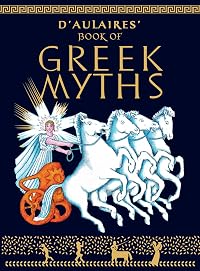
Norse mythology retold as a very satisfying prose narrative by Irish writer Colum. It has remained a favorite since its first publication in 1920. Like the D'Aulaires, he draws upon the material of the Eddas with the addition of the heroic tales of Sigurd, the Volsungs, the Nibelung, and their cursed treasure.
Good retelling of Norse myths, meant for children but not too simple for adults.
A rather disjoint collection of the Norse myths. I was confused by both way too many names and the confusing chronology. I think there are probably better versions out there.
Members
- Recently Added By
Lists

CCE 1000 Good Books List
1,033 works; 12 members

Satori Smiles Children's Book List
262 works; 7 members

Newbery Adjacent
747 works; 3 members

Romalda Spalding's Writing Road To Reading
213 works; 3 members

Before Austen Comes Aesop
318 works; 9 members
Author Information

85+ Works 7,485 Members
Born in a Longford workhouse where his father was first teacher and then master, Padraic Colum grew into an important figure in the Irish literary renaissance before immigrating to the United States. Invited by the Fay brothers to join the National Theatre Society, he married the teacher and writer Mary Maguire, with whom he undertook several show more joint projects. The Colums immigrated to the United States in 1914. Colum kept up a varied production of verse, plays, fiction, criticism, and children's literature, together with active lecturing. His most extended teaching appointment was at Columbia University, where he and his wife offered a joint course in comparative literature. Colum felt that his Roman Catholic and peasant roots gave him a closer tie to the Irish folk than did the Protestant, Anglo-Irish background of many writers of the Irish renaissance. His poetry usually deals with common people and rural landscapes in a forthright manner. Colum was resolutely Irish, and his work for the most part avoids didacticism or sentimental nationalism in favor of straightforward presentation. (Bowker Author Biography) show less
Some Editions
Series
Belongs to Publisher Series
Work Relationships
Common Knowledge
- Original title
- The Children of Odin
- Alternate titles
- Nordic Gods and Heroes; The Children of Odin: The Book of Northern Myths
- Original publication date
- 1920
- Important places
- Asgard; Ásgarðr
- Dedication
- To Harriett Vaughn Moody lover of tales and reader of runes
- First words
- "Once there was another Sun and another Moon"
- Last words
- (Click to show. Warning: May contain spoilers.)"They walked abroad in the world, and from them and from thier children came the men and women who spread themselves over the earth"
- Disambiguation notice
- CONTENTS:
PART I The Dwellers in Asgard
1. Far Away and Long Ago
2. The Building of the Wall
3. Iduna and Her Apples: How Loki Put the Gods in Danger
4. Sif's Golden Hair: How Loki Wrought Mischi... (show all)ef in Asgard 2
5. How Brock Brought Judgment on Loki
6. How Freya Gained Her Necklace and How Her Loved One Was Lost to Her
7. How Frey Won Gerda, the Giant Maiden, and How He Lost His Magic Sword
8. Heimdall and Little Hnossa: How All Things Came to Be
9. The All-Father's Forebodings: How He Leaves Asgard
PART II Odin the Wanderer
1. Odin Goes to Mimir's Well: His Sacrifice for Wisdom
2. Odin Faces an Evil Man
3. Odin Wins for Men the Magic Mead
4. Odin Tells to Vidar, His Silent Son, the Secret of His Doings
5. Thor and Loki in the Giants' City
6. How Thor and Loki Befooled Thrym the Giant
7. Ægir's Feast: How Thor Triumphed
8. The Dwarf's Hoard, and the Curse that It Brought
PART III The Witch's Heart
1. Foreboding in Asgard
2. Loki the Betrayer
3. Loki Against the Æsir
4. The Valkyrie
5. The Children of Loki
6. Baldur's Doom
7. Loki's Punishment
PART IV The Sword of the Volsungs and the Twilight of the Gods
1. Sigurd's Youth
2. The Sword Gram and the Dragon Fafnir
3. The Dragon's Blood
4. The Story of Sigmund and Signy
5. The Story of Sigmund and Sinfiotli
6. The Story of the Vengeance of the Volsungs and of the Death of Sinfiotli
7. Brynhild in the House of Flame
8. Sigurd at the House of the Nibelungs
9. How Brynhild Was Won for Gunnar
10. The Death of Sigurd
11. The Twilight of the Gods
Classifications
- Genres
- Nonfiction, Kids
- DDC/MDS
- 293.13 — Religion Other religions Norse Mythology Mythologies Mythology--Germanic religion
- LCC
- BL860 .C63 — Philosophy, Psychology and Religion Religions. Mythology. Rationalism Religions. Mythology. Rationalism History and principles of religions European. Occidental Germanic and Norse
- BISAC
Statistics
- Members
- 1,282
- Popularity
- 19,082
- Reviews
- 19
- Rating
- (3.81)
- Languages
- English, Italian, Spanish
- Media
- Paper, Audiobook, Ebook
- ISBNs
- 63
- UPCs
- 1
- ASINs
- 30