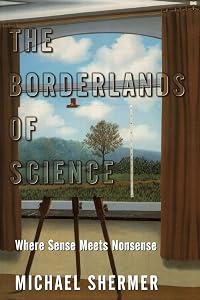
The Borderlands of Science: Where Sense Meets Nonsense
by Michael Shermer
On This Page
Description
As author of the bestselling Why People Believe Weird Things and How We Believe, and Editor-in-Chief of Skeptic magazine, Michael Shermer has emerged as the nation's number one scourge of superstition and bad science. Now, in The Borderlands of Science, he takes us to the place where real science (such as the big bang theory), borderland science (superstring theory), and just plain nonsense (Big Foot) collide with one another. Shermer argues that science is the best lens through which to show more view the world, but he recognizes that it's often difficult for most of us to tell where valid science leav show lessTags
Recommendations





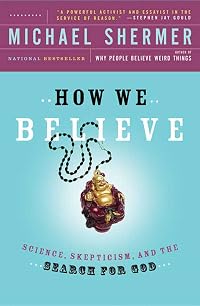
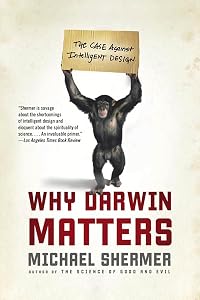




























Member Recommendations

ehines More about people who believe in the face of all evidence.
Member Reviews
I initially found this a bit off-putting. The first section with an overview of the sadly deluded made me feel like a chuckling gawker, as I felt in reading No One May Ever Have the Same Knowledge Again: Letters to Mt. Wilson Observatory, 1915 which is quoted here. However, the last half more than made up for it. There were covered three topics really work remembering and considering:
1: Thomas S. Kuhn in The Structure of Scientific Revolutions gave us the valuable concept of the paradigm shift. However, the shifting is often more complicated than that implies. There are often multiple paradigms held, emerging, and submerging.
2: Being open and receptive to new ideas -- more difficult with advancing age -- is critical to maintaining show more intellectual growth
3: The Piltdown Man paleo-anthropological hoax is a fascinating example of the failure and success of the institutionalized scientific method. show less
1: Thomas S. Kuhn in The Structure of Scientific Revolutions gave us the valuable concept of the paradigm shift. However, the shifting is often more complicated than that implies. There are often multiple paradigms held, emerging, and submerging.
2: Being open and receptive to new ideas -- more difficult with advancing age -- is critical to maintaining show more intellectual growth
3: The Piltdown Man paleo-anthropological hoax is a fascinating example of the failure and success of the institutionalized scientific method. show less
I like Michael Shermer and find his skeptical approach to be extremely fair, tending to the understated. The title attracted me, but I found this book to be uneven and tedious, which is disappointing.
Wordy, uneven, repetitive; presumptuous at times. Even though the author is a professional editor, this book would hugely benefit from more professional editing. And the title is misleading: the "borderlands of science" theme seems only an excuse for harangues on mostly irrelevant biographical details and rants. There are some insights and interesting stories thinly spread, though, which made this not a total waste of time.
Not so much a book as a collection of essays. At least, it seems that way. The level of detail and purpose vary from chapter to chapter, making for a bumpy ride. It's all worthwhile but a reader shouldn't feel bad about skipping past any that seem tedious. Likely, in the next, will be a topic to inspire further interest and research.
Not so much a book as a collection of essays. At least, it seems that way. The level of detail and purpose vary from chapter to chapter, making for a bumpy ride. It's all worthwhile but a reader shouldn't feel bad about skipping past any that seem tedious. Likely, in the next, will be a topic to inspire further interest and research.
I have all of Shermer's books. His book "Why People Believe Weird Things" made me realize there were other people 'out there' like me (skeptics). I found this the least readable of his books, however.
This book discusses how some realms of science aren't really scientific. Somethings they have fully figured out yet and are still running on theory with little to no evidence. He finished off the book discussing Darwin and how lots of research still needs to be done in the theory of evolution.
Members
- Recently Added By
Lists

The Great Courses: Your Deceptive Mind
60 works; 1 member
Author Information

148+ Works 9,617 Members
Michael Shermer is the director of the Skeptics Society and the host of the Skeptics Lecture Series at the California Institute of Technology. He teaches science, technology, and evolutionary thought in the Cultural Studies Program at Occidental College.
Common Knowledge
- Original publication date
- 2001
Classifications
Statistics
- Members
- 467
- Popularity
- 65,563
- Reviews
- 9
- Rating
- (3.59)
- Languages
- English, Spanish
- Media
- Paper, Audiobook, Ebook
- ISBNs
- 7
- ASINs
- 4