On This Page
Description
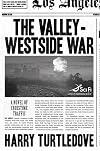
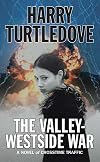
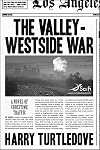
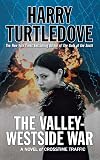
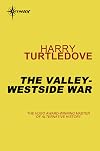
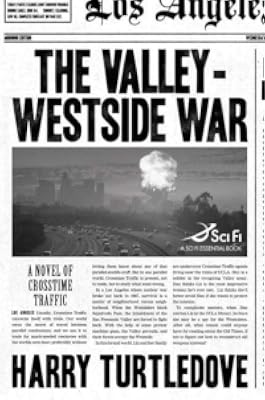
Usually Crosstime Traffic concerns itself with trade. Our world owns the secret of travel between parallel continuums, and we mean to use it to trade for much-needed resources with the worlds next door. Preferably without letting them know about any of that parallel-worlds stuff. But there’s one parallel world that’s different. In it, the atomic war broke out in 1967, at the height of the Summer of Love. Now, Crosstime Traffic has been given a different sort of mission: find out what show more on earth, or on the many earths, went wrong. show lessTags
Recommendations

Member Reviews
As a longtime fan of Harry Turtledove, I’ve read many of his works, but his “Crosstime Traffic” series is among his best. The premise – a world in the late 21st century that has discovered the ability to travel between alternate timelines – is one that he has used to create some imaginative divergences and the civilizations they have spawned. The timeline in this book is typical of this creativeness; an atomic war in 1967 had left a Southern California at a pre-industrial level of technology, splintered into squabbling domains.
His plot is just as engaging: the Mendozas, a family researching the origins of the war in the remnants of the UCLA library, find themselves in the middle of a war between the kingdom of the Valley and show more the Westside. Their neighborhood is quickly conquered, and teenaged Liz Mendoza draws the unwanted attentions of Dan, a young soldier in the Valley army. As the war drags on, the Mendozas come under suspicion, and they soon find themselves having to navigate both sides of the war while struggling to complete their project.
Turtledove succeeds in creating an entertaining tale for readers. Though the characters are somewhat underdeveloped, his alternative Los Angeles is well-visualized, with people living in the ruins of 1960s America, using the leftover artifacts as best they can and adopting the slang of the era as their everyday language. Readers should not be put off by the “juvenile fiction” label; this is a novel that can be enjoyed by people of all ages. show less
His plot is just as engaging: the Mendozas, a family researching the origins of the war in the remnants of the UCLA library, find themselves in the middle of a war between the kingdom of the Valley and show more the Westside. Their neighborhood is quickly conquered, and teenaged Liz Mendoza draws the unwanted attentions of Dan, a young soldier in the Valley army. As the war drags on, the Mendozas come under suspicion, and they soon find themselves having to navigate both sides of the war while struggling to complete their project.
Turtledove succeeds in creating an entertaining tale for readers. Though the characters are somewhat underdeveloped, his alternative Los Angeles is well-visualized, with people living in the ruins of 1960s America, using the leftover artifacts as best they can and adopting the slang of the era as their everyday language. Readers should not be put off by the “juvenile fiction” label; this is a novel that can be enjoyed by people of all ages. show less
Crosstime Traffic is a company, 130 or so years in our future, which has developed the means to travel sideways in time--that is to say, to travel to might-have-beens, presents that are parallel to, but different from, our own. In addition to doing whatever a company such as this might do to make money, Crosstime Traffic awards grants to historians and other researchers to visit various alternate presents to figure out what went wrong (or right).
An intriguing premise, and one upon which the extraordinarily prolific Turtledove has based one of his many uber-creative series. In this installment, a pair of professors from UCLA and their daughter are conducting research in an alternate in which a nuclear conflict in 1967 decimated the show more world as we know it. As The Valley-Westside War opens troops from the Valley are preparing to march on the Westside, which has blocked access from the north in an attempt to solidify its holdings throughout the South Bay area. Technological development having come to a crashing halt when nuclear fire rained from the sky, soldiers on both sides are armed with bows and arrows, old-fashioned muskets, and, in rare cases, found--and none-too-reliable--weapons from the Old Time.
The novel alternates between the points of view of a young solder in the Valley army, Dan, and Liz, the daughter of the two visiting historians. Turtledove has done a beautiful job of working out how different things would be were technology and globalization to have ceased before man walked on the moon. The tension in the story, such as it is, comes from Dan's attempts both to gain the attentions of and figure out Liz, and Liz's own attempts to avoid young Dan and hide her true origins.
Unfortunately, although the premise, as noted above, is intriguing and the details well-thought out and fascinating, the story itself is juvenile and the writing barely workmanlike. I wouldn't not read another of these novels if it came my way, but I certainly wouldn't seek it out. show less
An intriguing premise, and one upon which the extraordinarily prolific Turtledove has based one of his many uber-creative series. In this installment, a pair of professors from UCLA and their daughter are conducting research in an alternate in which a nuclear conflict in 1967 decimated the show more world as we know it. As The Valley-Westside War opens troops from the Valley are preparing to march on the Westside, which has blocked access from the north in an attempt to solidify its holdings throughout the South Bay area. Technological development having come to a crashing halt when nuclear fire rained from the sky, soldiers on both sides are armed with bows and arrows, old-fashioned muskets, and, in rare cases, found--and none-too-reliable--weapons from the Old Time.
The novel alternates between the points of view of a young solder in the Valley army, Dan, and Liz, the daughter of the two visiting historians. Turtledove has done a beautiful job of working out how different things would be were technology and globalization to have ceased before man walked on the moon. The tension in the story, such as it is, comes from Dan's attempts both to gain the attentions of and figure out Liz, and Liz's own attempts to avoid young Dan and hide her true origins.
Unfortunately, although the premise, as noted above, is intriguing and the details well-thought out and fascinating, the story itself is juvenile and the writing barely workmanlike. I wouldn't not read another of these novels if it came my way, but I certainly wouldn't seek it out. show less
This book is shelved in the adult fiction section of my library. It is however, not a book aimed at adults. The writing is meant for juveniles, maybe 10-year-olds. But I think, even a 10-year-old would be disappointed by this book. This is the second Cross Time Traffic book I read. The other book, Gladiator, was much better. I'm OK with the premise. People have learned how to cross over into an alternate reality where history has taken a different path. This is Harry Turtledove's life work, writing such novels. My real problem with this book is that there is plenty of story but virtually no plot. The only thing that kept me going was the hope that Liz was going to discover where this world had gone wrong. What was the turn that led to a show more nuclear war? My hope was realized, she does figure it out. The reason turns out to be so academic and trivial that I was really sorry I'd wasted my time. No more Cross Time Traffic novels for me. Most likely no more Harry Turtledove novels for me. show less
Well, it's better than the first Crosstime Traffic book. The visitors are somewhat less awkward than the ones in Gunpowder Empire - their secrets are better secured (though not well enough) and they do somewhat less sneering at the world around them. Liz frequently seems younger than eighteen, though - thirteen, maybe? In this book, most of the annoyingly stupid and repetitious thoughts come from the local. Three separate times he thinks about how Old Time rifle ammo's not to be trusted and 'it took several kinds of nerve to be a rifleman'. First time, fine; second time, dumb; third time - oh, come on! There were also lines where Turtledove would write about something in line with what Dan was thinking, then say 'But of course Dan show more didn't think about that' - what did the Russians think about the Fire, the houses made of rubble 'would have looked odd to someone who wasn't used to them'.... Well, if he didn't think about it why did you write it? Going back was really stupid - there are no other libraries remaining? URL is the only place they can look (and if Liz was the most recognizable of them, why send her in the first place?)? She got exactly one short session in there after they came back - so the fact that she found something is ridiculously coincidental. And so on. Better than Gunpowder Empire, but still a long way from good. I'll read other Crosstime Traffic books if I run across them, but I won't seek them out. Sheesh. I'm going to read Misplaced Legion and see if it's as stupid as this. show less
This is one of the later entries in this rather interesting YA series from Turtledove. In this book, the point of view characters are the 'traditional' californian girl and boy - she from the home time lin, and he the local yokel who's interest in her causes problems for the Cross-timers (her family). As Liz's parents buy and sell various items to maintain their cover as traders, Liz spends her time in the collapsing remains of the UCLA library searching for the reason for the fall of the Fire. Dan the local is part of the occupying army and as well as being sweet on Liz, he's become suspicious of her and her family especially when they hide a Westside spy.
This book does have a few of the South Californiafications that tended to stand show more out in the earlier books but it feels snappier and Turtledove has had fun with the mutated 1960s cant. There are some good fight scenes as well, especially when Liz and Dan have a little spat. show less
This book does have a few of the South Californiafications that tended to stand show more out in the earlier books but it feels snappier and Turtledove has had fun with the mutated 1960s cant. There are some good fight scenes as well, especially when Liz and Dan have a little spat. show less
Ratings
Members
- Recently Added By
Author Information

279+ Works 43,093 Members
Harry Turtledove was born in Los Angeles, California on June 14, 1949. He received a Ph.D. in Byzantine history from UCLA in 1977. From the late 1970's to the early 1980's, he worked as a technical writer for the Los Angeles County Office of Education. He left in 1991 to become full-time writer. His first two novels, Wereblood and Werenight, were show more published in 1979 under the pseudonym Eric G. Iverson because his editor did not think people would believe that Turtledove was his real name. He used this name until 1985 when he published Herbig-Haro and And So to Bed under his real name. He has received numerous awards including the Homer Award for Short Story for Designated Hitter in 1990, the John Esthen Cook Award for Southern Fiction for Guns of the Southand in 1993, and the Hugo Award for Novella for Down in the Bottomlands in 1994. (Bowker Author Biography) show less
Series

Common Knowledge
- People/Characters
- Liz; Dan
- Important places
- West Side, Los Angeles, Parallel World; UCLA Library, Los Angeles, Parallel World
Classifications
Statistics
- Members
- 143
- Popularity
- 228,372
- Reviews
- 5
- Rating
- (3.18)
- Languages
- English
- Media
- Paper, Ebook
- ISBNs
- 4
- ASINs
- 2