On This Page
Description
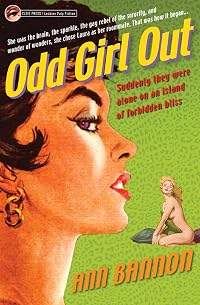
In the 1950s, Ann Bannon broke through the shame and isolation typically portrayed in lesbian pulps, offering instead women characters who embraced their sexuality. With Odd Girl Out, Bannon introduces Laura Landon, whose love affair with her college roommate Beth launched the lesbian pulp fiction genre.Tags
Recommendations
























Member Reviews
My first foray into the world of lesbian pulp fiction is an interesting and unexpected experience. With expectations set aside for the sake of amusement alone, it's a surprise to find something insightful and satisfying in Odd Girl Out's pages. How the first words that often trail the phrase "pulp fiction" are "perverse" and "smut" make most people stay away from the genre. But the only perversity found in Odd Girl Out is the insistence of men almost without consent (a hand creeping up your thighs with no warning) and the consistent disregard of a character towards another's feelings. Set and published in the 1950s, this is a piece of lesbian history in its own right; lesbianism is believed to be a mental illness by some of the show more characters if not an ordinary fad most women should grow out of.
Odd Girl Out is the story of college freshie Laura Landon who is instantly enamoured by a senior in her sorority. What is initially and supposedly just a strong girl crush develops into an intense infatuation. But no affection is strengthened without being fed of its hunger. And so ensue the maddening push-and-pull of such forbidden and confusing feelings on both sides. Certainty can't blend with ambivalence; and when commitment is a game for one but a future for another, it obviously spells heartbreak. Yet no character here is completely vilified and there is more or less a reason, be it personal trauma or upbringing (this doesn’t necessarily excuse anyone but rather a chance for understanding their actions), for their motivations; for their selfishness and anger. And whilst the struggle with sexual orientation and first love against someone's experimentation is delineated in a grey area and not in black-and-whites—what a relief that is—it's quite an observation to read the descriptive sexual parts between men and women compared to the restrained and even enigmatic parts between two women. Perhaps this is a cautious reflection of the author's experience in itself who wrote this whilst she was still married, raising two children, and was questioning her own sexuality. She isn't called the "Queen of Lesbian Pulp Fiction" for nothing.
This novel is not written for pleasures of men nor for tragedies, it presents homosexuality in a positive light hence defying the common lesbian tropes and beliefs at the time. And what makes it an absolute outlier is its non-tragic ending (see also: Highsmith's classic The Price of Salt). Bannon's prose is straightforward and simple but she does a fine job of communicating her characters’ emotions if not for some dangling, sudden subplots and awkwardly worded phrases here and there. A necessary read for those interested with the history of lesbianism in literature. show less
Odd Girl Out is the story of college freshie Laura Landon who is instantly enamoured by a senior in her sorority. What is initially and supposedly just a strong girl crush develops into an intense infatuation. But no affection is strengthened without being fed of its hunger. And so ensue the maddening push-and-pull of such forbidden and confusing feelings on both sides. Certainty can't blend with ambivalence; and when commitment is a game for one but a future for another, it obviously spells heartbreak. Yet no character here is completely vilified and there is more or less a reason, be it personal trauma or upbringing (this doesn’t necessarily excuse anyone but rather a chance for understanding their actions), for their motivations; for their selfishness and anger. And whilst the struggle with sexual orientation and first love against someone's experimentation is delineated in a grey area and not in black-and-whites—what a relief that is—it's quite an observation to read the descriptive sexual parts between men and women compared to the restrained and even enigmatic parts between two women. Perhaps this is a cautious reflection of the author's experience in itself who wrote this whilst she was still married, raising two children, and was questioning her own sexuality. She isn't called the "Queen of Lesbian Pulp Fiction" for nothing.
This novel is not written for pleasures of men nor for tragedies, it presents homosexuality in a positive light hence defying the common lesbian tropes and beliefs at the time. And what makes it an absolute outlier is its non-tragic ending (see also: Highsmith's classic The Price of Salt). Bannon's prose is straightforward and simple but she does a fine job of communicating her characters’ emotions if not for some dangling, sudden subplots and awkwardly worded phrases here and there. A necessary read for those interested with the history of lesbianism in literature. show less
Siempre me asombro cuando termino un libro muy rápido.
Vamos por el comienzo, este libro me dejó con grandes sentimientos encontrados, para empezar quiero agradecer al Moicy que hizo llegar a mi las portadas de estos libros, para empezar no tiene nada que ver el contenido con la portada y solo puedo imaginar a la gente pajera comprando esto esperando encontrar altas escenas sexuales cuando esto no tiene ni una gota de tinta rosa intenso.
La crítica principal la quiero dar con una frase de Laura hacia Beth: "En esa vida que te espera hay un hombre, unos hijos y un título universitario". Eso me llevó directo a los inicios de mi adolescencia y a lo mucho que repetian esa frase en nuestros oídos porque claro, eso era lo politicamente show more correcto. Laura es todo lo que define mis temores, al comienzo sientes que das riendas suelta a la pasión y te dejas llevar con simples palabras lindas olvidando la realidad y lo malo que es el sentir amor por alguien de tu mismo sexo, el prejuicio, los valores y así un montón de cosas que el amor te hacen olvidar. No asimismo pasa con Beth, que es todo aquello que uno espera, pero que la perfección no puede ser encontrada en ninguna parte. Me sentí como Laura, me enamoré de Beth y de su encanto en particular, pero así como Laura sufrió a mares, Beth también me partió el corazón, supongo que siempre tendremos una Beth en nuestras vidas y claro, critico mucho el cliche de que la pareja de lesbianas no se puede quedar junta. Es cierto que actualmente el tema no da para pensar en fatalidades y aquí quiero aplaudir a Ann Bannon por atreverse a intentar caminar en un camino diferente, se fue en contra todas las fatalidades de sus colegas (que acaban con muertes o el suicidio de alguna chica) y realiza una fuerte crítica al sistema, en este caso habla mucho del odio al sistema universitario, a los prejuicios y los conflictos que se podian cargar si las veían juntas y sobre todo, el sistema en como Beth hace creer a Laura que todo va bien cuando no es así. Más que una crítica al sistema propiamente tal, Bannon hace una crítica a su propio sistema y aquí agradezco enormemente la introducción del libro y Ann diciendo que no podía dar otro rumbo al libro o no la iban a publicar, que no podía normalizar estas cosas y vamos, la publicaron porque ella les dio en el gusto de darles el final triste, pero sin antes recalcarlos en la cara que se podía ser feliz sin un hombre y de esto ya se hablaba hace casi 40 años atrás.
Soy un Bicho Raro es eso, el sentirte como Laura extraña frente al amor, a la atracción por otra chica, a los mismos prejuicios de ser hija de una familia disfuncional, sentirte un bicho raro por no salir a fiesta o no hablar con hombres, sentirte raro por hacer lo que las demás no hacen. Sentirte raro por ser tú mismo y no asumirlo. Gracias Ann Bannon por escribir esto, creo que tengo ese agradecimiento que sentían las mujeres de familias conservadores que sentía algo de libertad en sus textos.
Capaz leo el resto de los libros sin antes seguir mentalizada a lo que la editorial le pedía y lo enojada que me pondré cuando lea que nada puede resultar de la mejor manera, pero la perdono.
Gracias a mi polola que me consiguió el libro. show less
Vamos por el comienzo, este libro me dejó con grandes sentimientos encontrados, para empezar quiero agradecer al Moicy que hizo llegar a mi las portadas de estos libros, para empezar no tiene nada que ver el contenido con la portada y solo puedo imaginar a la gente pajera comprando esto esperando encontrar altas escenas sexuales cuando esto no tiene ni una gota de tinta rosa intenso.
La crítica principal la quiero dar con una frase de Laura hacia Beth: "En esa vida que te espera hay un hombre, unos hijos y un título universitario". Eso me llevó directo a los inicios de mi adolescencia y a lo mucho que repetian esa frase en nuestros oídos porque claro, eso era lo politicamente show more correcto. Laura es todo lo que define mis temores, al comienzo sientes que das riendas suelta a la pasión y te dejas llevar con simples palabras lindas olvidando la realidad y lo malo que es el sentir amor por alguien de tu mismo sexo, el prejuicio, los valores y así un montón de cosas que el amor te hacen olvidar. No asimismo pasa con Beth, que es todo aquello que uno espera, pero que la perfección no puede ser encontrada en ninguna parte. Me sentí como Laura, me enamoré de Beth y de su encanto en particular, pero así como Laura sufrió a mares, Beth también me partió el corazón, supongo que siempre tendremos una Beth en nuestras vidas y claro, critico mucho el cliche de que la pareja de lesbianas no se puede quedar junta. Es cierto que actualmente el tema no da para pensar en fatalidades y aquí quiero aplaudir a Ann Bannon por atreverse a intentar caminar en un camino diferente, se fue en contra todas las fatalidades de sus colegas (que acaban con muertes o el suicidio de alguna chica) y realiza una fuerte crítica al sistema, en este caso habla mucho del odio al sistema universitario, a los prejuicios y los conflictos que se podian cargar si las veían juntas y sobre todo, el sistema en como Beth hace creer a Laura que todo va bien cuando no es así. Más que una crítica al sistema propiamente tal, Bannon hace una crítica a su propio sistema y aquí agradezco enormemente la introducción del libro y Ann diciendo que no podía dar otro rumbo al libro o no la iban a publicar, que no podía normalizar estas cosas y vamos, la publicaron porque ella les dio en el gusto de darles el final triste, pero sin antes recalcarlos en la cara que se podía ser feliz sin un hombre y de esto ya se hablaba hace casi 40 años atrás.
Soy un Bicho Raro es eso, el sentirte como Laura extraña frente al amor, a la atracción por otra chica, a los mismos prejuicios de ser hija de una familia disfuncional, sentirte un bicho raro por no salir a fiesta o no hablar con hombres, sentirte raro por hacer lo que las demás no hacen. Sentirte raro por ser tú mismo y no asumirlo. Gracias Ann Bannon por escribir esto, creo que tengo ese agradecimiento que sentían las mujeres de familias conservadores que sentía algo de libertad en sus textos.
Capaz leo el resto de los libros sin antes seguir mentalizada a lo que la editorial le pedía y lo enojada que me pondré cuando lea que nada puede resultar de la mejor manera, pero la perdono.
Gracias a mi polola que me consiguió el libro. show less
I love this book. Even though it was published before even my mother was born, this book impacted my life in a way that I can't put into words adequately. I was seventeen years old, queer and miserable and living in an extremely rural and insular area, and I felt that I was the only girl in the world who was attracted to other girls. This was pre-internet, of course. I knew that there were men who were attracted to men (my best friend was one of them), but I had never (knowingly) met a woman attracted to another woman.
I was on vacation in Maine, and I found a little used bookstore. I started looking through the titles, and for some reason "Odd Girl Out" caught my eye. And then...the cover. Oh man, the cover. It was the Naiad Press show more version, the one with two girls kissing in silhouette, and my heart literally felt as if it came to a stop. I had to buy this book. It took me almost a half hour to gather up the courage to take it up to the counter, and the entire time I was afraid that my family would come find me and I'd have to put the book down and leave it behind. I remember reading that book that night, in the dark, the pages illuminated by a flashlight. I was terrified of being caught, but I HAD to read this in one sitting. And I did.
And even though it's not a particularly happy ending, Laura resonated with me. I was Laura. There were other Lauras out there; I only had to find them. And a year later, I discovered the internet and chat rooms and my life was irrevocably changed for the better, but this book validated me. This book told me that I wasn't alone. I still have the Naiad Press version, tattered and creased and well-loved and -read, sitting beside the newer Cleis Press version. If I had to pick one book that impacted my life above all others, this is probably the one that I'd choose. show less
I was on vacation in Maine, and I found a little used bookstore. I started looking through the titles, and for some reason "Odd Girl Out" caught my eye. And then...the cover. Oh man, the cover. It was the Naiad Press show more version, the one with two girls kissing in silhouette, and my heart literally felt as if it came to a stop. I had to buy this book. It took me almost a half hour to gather up the courage to take it up to the counter, and the entire time I was afraid that my family would come find me and I'd have to put the book down and leave it behind. I remember reading that book that night, in the dark, the pages illuminated by a flashlight. I was terrified of being caught, but I HAD to read this in one sitting. And I did.
And even though it's not a particularly happy ending, Laura resonated with me. I was Laura. There were other Lauras out there; I only had to find them. And a year later, I discovered the internet and chat rooms and my life was irrevocably changed for the better, but this book validated me. This book told me that I wasn't alone. I still have the Naiad Press version, tattered and creased and well-loved and -read, sitting beside the newer Cleis Press version. If I had to pick one book that impacted my life above all others, this is probably the one that I'd choose. show less
This review was written for The Lesbrary.
Laura goes off to college and meets Beth. Beth inspires in her a frenzied, frightening passion, which she can barely contain. Beth, in her loneliness, is drawn to Laura’s worship of her. They start an affair. Until Beth meets Charlie, and finally falls in love.
This is basically the plot of Ann Bannon’s Odd Girl Out and on this cursory, superficial level, I sort of enjoyed it. It’s not the best written story I have ever read, and in particular, I found the narrative head hopping from one character to the next jarring. However, as a pulp novel, it satisfies. There are a lot of trembling arms and heaving sighs, a lot of exclamatory statements and women on the brink of overwhelming desires.
As show more a modern day reader, I didn’t much like it. Laura, for being the star of the scandalous lesbian plot, fairly disappears from the book for the last half. When she is present, her character is presented as an underwhelming girl-child, always crying or about to cry. Beth’s motivations for wandering in and out of a lesbian romance are explained in the most facile psych 101 terms (she wasn’t loved enough as a child!). Charlie is an odd combination of tender and caveman, having his way in the name of Good & Manly Decision-making whenever the plot requires it.
As a modern day lesbian, I liked it even less. I will say, that for something produced in pulp literature world of the late 1950s, Odd Girl Out is less judgemental and less condemning than I expected. There is no happy queer ending, but on the other hand, Laura is able to achieve a sort of self-acceptance that is presented in an admirable light. Beth and Charlie definitely win the narrative race to heteronormative success, but Bannon carves out a small space for Laura too, and I appreciated that. show less
Laura goes off to college and meets Beth. Beth inspires in her a frenzied, frightening passion, which she can barely contain. Beth, in her loneliness, is drawn to Laura’s worship of her. They start an affair. Until Beth meets Charlie, and finally falls in love.
This is basically the plot of Ann Bannon’s Odd Girl Out and on this cursory, superficial level, I sort of enjoyed it. It’s not the best written story I have ever read, and in particular, I found the narrative head hopping from one character to the next jarring. However, as a pulp novel, it satisfies. There are a lot of trembling arms and heaving sighs, a lot of exclamatory statements and women on the brink of overwhelming desires.
As show more a modern day reader, I didn’t much like it. Laura, for being the star of the scandalous lesbian plot, fairly disappears from the book for the last half. When she is present, her character is presented as an underwhelming girl-child, always crying or about to cry. Beth’s motivations for wandering in and out of a lesbian romance are explained in the most facile psych 101 terms (she wasn’t loved enough as a child!). Charlie is an odd combination of tender and caveman, having his way in the name of Good & Manly Decision-making whenever the plot requires it.
As a modern day lesbian, I liked it even less. I will say, that for something produced in pulp literature world of the late 1950s, Odd Girl Out is less judgemental and less condemning than I expected. There is no happy queer ending, but on the other hand, Laura is able to achieve a sort of self-acceptance that is presented in an admirable light. Beth and Charlie definitely win the narrative race to heteronormative success, but Bannon carves out a small space for Laura too, and I appreciated that. show less
The plot line of this book was almost unbelievable, and terribly slow going. None of the characters are particularly happy, and none of them act at all in their own best interest. Makes for a frustrating read. There also isn't nearly enough lesbian action... a lot of time is wasted with Charlie/Beth and Bud/Emma.
Lesbian classic first published in 1957 - the book that launched the lesbian pulp fiction genre
http://www.newsreview.com/sacramento/Content?oid=oid%3A34731
My interview with Ann Bannon:
You'd never suspect Ann Weldy, former associate dean of the College of Arts and Letters at California State University, Sacramento, of being anything but what she appears to be: a trim, attractive and energetic retired professor. But before her distinguished career at CSUS--for which she will be honored with the 2005 Distinguished Faculty Award by the CSUS Alumni Association next week--Weldy broke down barriers and raised eyebrows as Ann Bannon, the author of a series of pulp-fiction novels about lesbians.
In 1957, as her first lesbian-themed novel was about to be published, Weldy picked the name “Bannon” from a list of prospective clients her show more then-husband had brought home from work. “I needed a pen name; my husband had made that very clear,” she said. Besides thinking that “Bannon” sounded “sort of euphonious,” Weldy pointed out that “it encapsulated my first name, and there’s a lot of Irish in my family.” She had no suspicion that it would become one of the most famous names in that era of pulp fiction.
Weldy, who will discuss her writing next Wednesday in the CSUS University Library Gallery as part of National Library Week, took time to speak with SN&R at her home in a quiet, tree-lined Sacramento neighborhood. It’s a far cry from the Greenwich Village of the 1950s, the bustling heart of the mid-century gay and lesbian community that she brought to life in the books that make up The Beebo Brinker Chronicles.
Weldy was a recent college graduate and a new bride when she first took up the pen to write a novel. “I wasn’t working,” she said. “I used to kid my husband that we were the last Victorian family in the 20th century, but he wanted me at home, cooking and ironing, and he was going to be the breadwinner.”
She was looking around for something to do and came across Vin Packer’s paperback original Spring Fire. Weldy had read The Well of Loneliness, Radclyffe Hall’s well-known lesbian novel, and found it grim. But Weldy said that Packer’s novel “captured experiences that were familiar to me.” It was set in a Midwestern college and described a romance between two students who both were women. Of course, the book lacked a happy ending--Packer later told her that the publishers insisted on it--but in reading it, Weldy said, “I thought, ‘I know all about this. I can do this.’ So, I sat down and wrote a very bad book.”
Weldy’s first attempt at a novel was huge; it ran 600 pages and weighed about five pounds. But she contacted Packer in New York--her real name was Marijane Meaker--and asked for advice on what to do next.
Packer invited her to New York. “She took me down to Greenwich Village and showed me around,” Weldy remembered. “She knew all the women’s bars. The Bagatelle, the Sea Colony, she knew all of them.” Packer also introduced Weldy to the editor in chief at Gold Medal, a division of Fawcett and a major publisher of the “pulp” books that dominated the kiosks in drugstores, train and bus stations, and airports.
After reading the draft of Weldy’s novel, he told her to “put it on a diet.” He also told her that it had a lot of good stuff in it, and “the best thing in it is the two young women.” Weldy was shocked. “I thought, ‘Oh, my God. He noticed the two young women.’ I thought they were off in the corner in a little subplot.” But the editor informed her that they were the story she should write.
Her second version of that novel became Odd Girl Out, the first of the five books that make up The Beebo Brinker Chronicles. She took it back to the editor at Gold Medal. “They didn’t change a word,” Weldy said. “They published it just as it was.” Odd Girl Out became the second-best-selling paperback of 1957.
“Gosh, I was thrilled,” Weldy remembered. “My husband was thrilled--not by the subject matter--but he was delighted by the financial arrangements.” The publisher had a relatively generous arrangement with its writers. The books were made cheaply (hence the “pulp” moniker), and their lurid covers guaranteed that they’d fly off the racks.
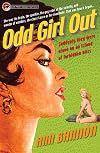
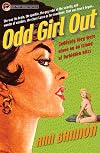
Almost a half-century later, the covers of her novels are still a source of amusement for Weldy. “We used to cringe when the covers came in,” she said, “because we had no idea what would be on them.” When she received her complimentary copies, they came in brown paper wrappers, and she’d be afraid to open them.
Courtesy Of Ann Weldy
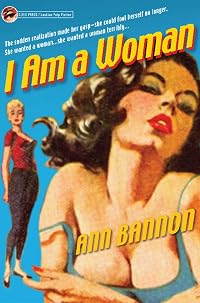
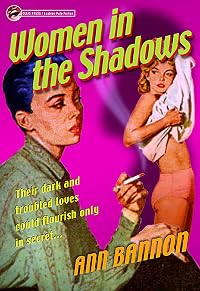
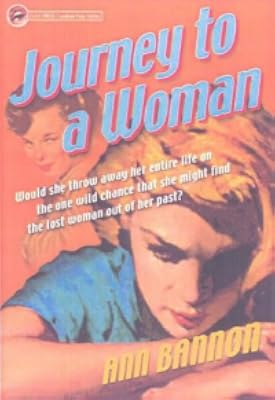
“It was very rare when the art was remotely connected to the story,” she said, noting that the publisher knew what would sell: cleavage. “That was another reason I chose a pseudonym,” she recalled. “My husband said, ‘I do not want to see my name printed across a bosom on a paperback book.’”
But the covers served a double purpose for the books’ crossover audience. “They were made to be sexy and made to appeal to a male readership,” Weldy said, but she pointed out that women readers who were interested in lesbian stories knew how to read the covers “iconically.” According to Weldy, “They would decode them. They knew that if it said ‘shocking’ or ‘twilight’ or ‘secret’ or ‘shameful,’ and there was a pair of pretty women on the cover, you had found the lesbian gold at the end of the rainbow.”
People have complained about the covers for decades, including the author. “Looking back, I can get kind of sentimental about them,” she admitted, “but at the time, I wanted something dignified.”
Over several years, Weldy wrote a series of five books: Odd Girl Out, I Am a Woman, Women in the Shadows, Journey to a Woman and Beebo Brinker. All were very successful. Then she moved on with her life, a journey that took her to Sacramento for a master’s degree at CSUS and then on to Stanford for a Ph.D. in linguistics. Her doctorate was followed by a distinguished academic career at CSUS.
While she was completing her doctorate, Weldy was contacted by The New York Times, requesting permission to reprint some of the books in the Arno Press series on homosexuality in culture. Weldy was happy to agree, but she then thought, “That’s it; it’s been put to bed. I’m now a college professor; it’s over.” She was mistaken.
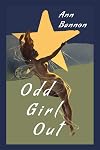
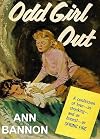
In 1982, the books were reissued by Naiad Press, a feminist publishing house. Editor Barbara Grier had to call Weldy’s ex-husband to find out where she was in order to get the rights to print the books. “It was a successful partnership,” Weldy remembered, and it did get the books a new audience. “It gave me a presence in the community that I might not otherwise have had,” Weldy said. Then, in 1995, the Quality Paperback Book Club reprinted four of the books--omitting Journey to a Woman for some reason--in a single edition for their Triangle Classics series.
Photo By Kel Munger
Weldy had little idea of how the books were being received. “Every now and then, a student would come in with a little bouquet and say, ‘I just found out who you are,’ which was touching,” she remembered. Another time, a colleague saw an article in The Village Voice and told her, “My God, they made you sound like Edith Wharton!” But, for the most part, she was occupied with her career and unaware of how widely read--and beloved--the novels had become.
Sometime after she retired in 1997, Weldy attended a fund-raising party in San Francisco and met the publishers from Cleis Press, who wondered if copyrights on the books had returned to her. She told them they had, and the publishers expressed interest in reprinting the books, with racy new pulp-fiction covers. They started with Beebo Brinker in 2000.
“That created a huge stir,” Weldy said. In the 20 years since the Naiad Press editions, “pulp” had become fashionable, so the gay and lesbian press gave the books a lot of attention. And Weldy began to find out just what sort of impact her novels had made over the years.
“One of the delightful things about coming back into this after all these years is finding out all the women who were reading these books when they were young,” said Weldy. She gives an example of the late Audre Lorde, who, in her book Zami: A New Spelling of My Name, wrote about wandering around Greenwich Village and wondering if she would meet Beebo Brinker and if it would be possible for her to love two women at the same time, as Beebo had. “I had no way of knowing at the time how many people had read the books,” Weldy said.
Not only do the books that make up The Beebo Brinker Chronicles offer a snapshot of lesbian life in the 1950s, but also, in many ways, the stories still resonate, perhaps because they are principally concerned with the emotional lives of their characters. “The lesbian pulps, at least the ones written by women, were kind of sweet, sentimental, even innocent, love stories,” Weldy said.
While the novels do explore the homophobia rampant in the culture at the time--and even within the characters themselves, which Weldy readily admits was part of her history--they also offer the possibility of transformation. “To think, for the first time in your life, ‘Oh my God, I’m not the only one! Maybe it’s OK to be who I am’ is a pretty important moment,” she said. “If the books did anything good or positive, that was it.”
Weldy described herself all those years ago as a “housewife just out of college, sitting at her decrepit old Remington typewriter” who would have been astonished if the “ghosts of readers-yet-to-be” had appeared to tell her that her books would take on a life of their own. “I’m glad I didn’t know,” she chuckled, “because if I had, I would have been too self-conscious to write them.”
Fans who want to know more about Weldy’s personal journey can look forward to reading her current project--a memoir of her life during the pulp-fiction years. show less
My interview with Ann Bannon:
You'd never suspect Ann Weldy, former associate dean of the College of Arts and Letters at California State University, Sacramento, of being anything but what she appears to be: a trim, attractive and energetic retired professor. But before her distinguished career at CSUS--for which she will be honored with the 2005 Distinguished Faculty Award by the CSUS Alumni Association next week--Weldy broke down barriers and raised eyebrows as Ann Bannon, the author of a series of pulp-fiction novels about lesbians.
In 1957, as her first lesbian-themed novel was about to be published, Weldy picked the name “Bannon” from a list of prospective clients her show more then-husband had brought home from work. “I needed a pen name; my husband had made that very clear,” she said. Besides thinking that “Bannon” sounded “sort of euphonious,” Weldy pointed out that “it encapsulated my first name, and there’s a lot of Irish in my family.” She had no suspicion that it would become one of the most famous names in that era of pulp fiction.
Weldy, who will discuss her writing next Wednesday in the CSUS University Library Gallery as part of National Library Week, took time to speak with SN&R at her home in a quiet, tree-lined Sacramento neighborhood. It’s a far cry from the Greenwich Village of the 1950s, the bustling heart of the mid-century gay and lesbian community that she brought to life in the books that make up The Beebo Brinker Chronicles.
Weldy was a recent college graduate and a new bride when she first took up the pen to write a novel. “I wasn’t working,” she said. “I used to kid my husband that we were the last Victorian family in the 20th century, but he wanted me at home, cooking and ironing, and he was going to be the breadwinner.”
She was looking around for something to do and came across Vin Packer’s paperback original Spring Fire. Weldy had read The Well of Loneliness, Radclyffe Hall’s well-known lesbian novel, and found it grim. But Weldy said that Packer’s novel “captured experiences that were familiar to me.” It was set in a Midwestern college and described a romance between two students who both were women. Of course, the book lacked a happy ending--Packer later told her that the publishers insisted on it--but in reading it, Weldy said, “I thought, ‘I know all about this. I can do this.’ So, I sat down and wrote a very bad book.”
Weldy’s first attempt at a novel was huge; it ran 600 pages and weighed about five pounds. But she contacted Packer in New York--her real name was Marijane Meaker--and asked for advice on what to do next.
Packer invited her to New York. “She took me down to Greenwich Village and showed me around,” Weldy remembered. “She knew all the women’s bars. The Bagatelle, the Sea Colony, she knew all of them.” Packer also introduced Weldy to the editor in chief at Gold Medal, a division of Fawcett and a major publisher of the “pulp” books that dominated the kiosks in drugstores, train and bus stations, and airports.
After reading the draft of Weldy’s novel, he told her to “put it on a diet.” He also told her that it had a lot of good stuff in it, and “the best thing in it is the two young women.” Weldy was shocked. “I thought, ‘Oh, my God. He noticed the two young women.’ I thought they were off in the corner in a little subplot.” But the editor informed her that they were the story she should write.
Her second version of that novel became Odd Girl Out, the first of the five books that make up The Beebo Brinker Chronicles. She took it back to the editor at Gold Medal. “They didn’t change a word,” Weldy said. “They published it just as it was.” Odd Girl Out became the second-best-selling paperback of 1957.
“Gosh, I was thrilled,” Weldy remembered. “My husband was thrilled--not by the subject matter--but he was delighted by the financial arrangements.” The publisher had a relatively generous arrangement with its writers. The books were made cheaply (hence the “pulp” moniker), and their lurid covers guaranteed that they’d fly off the racks.
Almost a half-century later, the covers of her novels are still a source of amusement for Weldy. “We used to cringe when the covers came in,” she said, “because we had no idea what would be on them.” When she received her complimentary copies, they came in brown paper wrappers, and she’d be afraid to open them.
Courtesy Of Ann Weldy
“It was very rare when the art was remotely connected to the story,” she said, noting that the publisher knew what would sell: cleavage. “That was another reason I chose a pseudonym,” she recalled. “My husband said, ‘I do not want to see my name printed across a bosom on a paperback book.’”
But the covers served a double purpose for the books’ crossover audience. “They were made to be sexy and made to appeal to a male readership,” Weldy said, but she pointed out that women readers who were interested in lesbian stories knew how to read the covers “iconically.” According to Weldy, “They would decode them. They knew that if it said ‘shocking’ or ‘twilight’ or ‘secret’ or ‘shameful,’ and there was a pair of pretty women on the cover, you had found the lesbian gold at the end of the rainbow.”
People have complained about the covers for decades, including the author. “Looking back, I can get kind of sentimental about them,” she admitted, “but at the time, I wanted something dignified.”
Over several years, Weldy wrote a series of five books: Odd Girl Out, I Am a Woman, Women in the Shadows, Journey to a Woman and Beebo Brinker. All were very successful. Then she moved on with her life, a journey that took her to Sacramento for a master’s degree at CSUS and then on to Stanford for a Ph.D. in linguistics. Her doctorate was followed by a distinguished academic career at CSUS.
While she was completing her doctorate, Weldy was contacted by The New York Times, requesting permission to reprint some of the books in the Arno Press series on homosexuality in culture. Weldy was happy to agree, but she then thought, “That’s it; it’s been put to bed. I’m now a college professor; it’s over.” She was mistaken.
In 1982, the books were reissued by Naiad Press, a feminist publishing house. Editor Barbara Grier had to call Weldy’s ex-husband to find out where she was in order to get the rights to print the books. “It was a successful partnership,” Weldy remembered, and it did get the books a new audience. “It gave me a presence in the community that I might not otherwise have had,” Weldy said. Then, in 1995, the Quality Paperback Book Club reprinted four of the books--omitting Journey to a Woman for some reason--in a single edition for their Triangle Classics series.
Photo By Kel Munger
Weldy had little idea of how the books were being received. “Every now and then, a student would come in with a little bouquet and say, ‘I just found out who you are,’ which was touching,” she remembered. Another time, a colleague saw an article in The Village Voice and told her, “My God, they made you sound like Edith Wharton!” But, for the most part, she was occupied with her career and unaware of how widely read--and beloved--the novels had become.
Sometime after she retired in 1997, Weldy attended a fund-raising party in San Francisco and met the publishers from Cleis Press, who wondered if copyrights on the books had returned to her. She told them they had, and the publishers expressed interest in reprinting the books, with racy new pulp-fiction covers. They started with Beebo Brinker in 2000.
“That created a huge stir,” Weldy said. In the 20 years since the Naiad Press editions, “pulp” had become fashionable, so the gay and lesbian press gave the books a lot of attention. And Weldy began to find out just what sort of impact her novels had made over the years.
“One of the delightful things about coming back into this after all these years is finding out all the women who were reading these books when they were young,” said Weldy. She gives an example of the late Audre Lorde, who, in her book Zami: A New Spelling of My Name, wrote about wandering around Greenwich Village and wondering if she would meet Beebo Brinker and if it would be possible for her to love two women at the same time, as Beebo had. “I had no way of knowing at the time how many people had read the books,” Weldy said.
Not only do the books that make up The Beebo Brinker Chronicles offer a snapshot of lesbian life in the 1950s, but also, in many ways, the stories still resonate, perhaps because they are principally concerned with the emotional lives of their characters. “The lesbian pulps, at least the ones written by women, were kind of sweet, sentimental, even innocent, love stories,” Weldy said.
While the novels do explore the homophobia rampant in the culture at the time--and even within the characters themselves, which Weldy readily admits was part of her history--they also offer the possibility of transformation. “To think, for the first time in your life, ‘Oh my God, I’m not the only one! Maybe it’s OK to be who I am’ is a pretty important moment,” she said. “If the books did anything good or positive, that was it.”
Weldy described herself all those years ago as a “housewife just out of college, sitting at her decrepit old Remington typewriter” who would have been astonished if the “ghosts of readers-yet-to-be” had appeared to tell her that her books would take on a life of their own. “I’m glad I didn’t know,” she chuckled, “because if I had, I would have been too self-conscious to write them.”
Fans who want to know more about Weldy’s personal journey can look forward to reading her current project--a memoir of her life during the pulp-fiction years. show less
Members
- Recently Added By
Lists

Pre-1969 LGBTQ Literature
182 works; 69 members
Author Information

10+ Works 1,897 Members
Some Editions
Series


Belongs to Publisher Series
Work Relationships
Common Knowledge
- Original publication date
- 1957
- People/Characters
- Laura Landon; Beth Ayers
Classifications
Statistics
- Members
- 477
- Popularity
- 63,863
- Reviews
- 7
- Rating
- (3.29)
- Languages
- Catalan, English, Swedish
- Media
- Paper, Ebook
- ISBNs
- 11
- ASINs
- 15