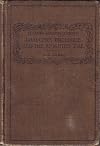
Eclectic English Classics (Chaucer's The Prologue and The Knightes Tale)
by Geoffrey Chaucer
On This Page
Description
Excerpt from The Prologue and the Knight's Tale Portions of the introduction have been written with a view to the teacher rather than the pupil, my aim being to give in a concise form the materials which the teacher requires to have at his disposal if the taught are to obtain an adequate conception of Chaucer's importance in the history of English literature and language. It is impossible to acknowledge in detail all the instances in which this edition is based upon the work of predecessors, show more though I have attempted to do so to the best of my ability. A short bibliography containing a list of authorities consulted - or to be consulted - has been appended. Yet, while drawing attention to my indebted ness to others, I may be permitted to express the hope that amongst much that is old, there may be found something that is new. About the Publisher Forgotten Books publishes hundreds of thousands of rare and classic books. Find more at www.forgottenbooks.com This book is a reproduction of an important historical work. Forgotten Books uses state-of-the-art technology to digitally reconstruct the work, preserving the original format whilst repairing imperfections present in the aged copy. In rare cases, an imperfection in the original, such as a blemish or missing page, may be replicated in our edition. We do, however, repair the vast majority of imperfections successfully; any imperfections that remain are intentionally left to preserve the state of such historical works. show lessTags
Members
- Recently Added By
Author Information

459+ Works 45,771 Members
Geoffrey Chaucer, one of England's greatest poets, was born in London about 1340, the son of a wine merchant and deputy to the king's butler and his wife Agnes. Not much is known of Chaucer's early life and education, other than he learned to read French, Latin, and Italian. His experiences as a civil servant and diplomat are said to have show more developed his fascination with people and his knowledge of English life. In 1359-1360 Chaucer traveled with King Edward III's army to France during the Hundred Years' War and was captured in Ardennes. He returned to England after the Treaty of Bretigny when the King paid his ransom. In 1366 he married Philippa Roet, one of Queen Philippa's ladies, who gave him two sons and two daughters. Chaucer remained in royal service traveling to Flanders, Italy, and Spain. These travels would all have a great influence on his work. His early writing was influenced by the French tradition of courtly love poetry, and his later work by the Italians, especially Dante, Boccaccio, and Petrarch. Chaucer wrote in Middle English, the form of English used from 1100 to about 1485. He is given the designation of the first English poet to use rhymed couplets in iambic pentameter and to compose successfully in the vernacular. Chaucer's Canterbury Tales is a collection of humorous, bawdy, and poignant stories told by a group of fictional pilgrims traveling to the shrine of St. Thomas a Becket. It is considered to be among the masterpieces of literature. His works also include The Book of the Duchess, inspired by the death of John Gaunt's first wife; House of Fame, The Parliament of Fowls, and The Legend of Good Women. Troilus and Criseyde, adapted from a love story by Boccaccio, is one of his greatest poems apart from The Canterbury Tales. Chaucer died in London on October 25, 1400. He was buried in Westminster Abbey, in what is now called Poet's Corner. (Bowker Author Biography) show less
Work Relationships
Is contained in
Common Knowledge
- Original publication date
- 1898
- People/Characters
- Geoffrey Chaucer; The Knight; Palamon; Arcite; Emelye; Theseus
- First words
- INTRODUCTION
The parentage, date of birth, and many other details in the life of Geoffrey Chaucer, the "Father of English Poetry," are involved in more or less obscurity, and those mentioned in the following brief b... (show all)iography, although in accordance with the best authorities, must not all be regarded as unquestionably established. - Last words
- (Click to show. Warning: May contain spoilers.)Y-wrye, covered: K 2046.
Classifications
Statistics
- Members
- 18
- Popularity
- 1,387,898
- Languages
- English
- Media
- Paper
- ISBNs
- 1
- ASINs
- 2