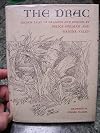
The Drac: French Tales of Dragons and Demons
by Felice Holman, Nanine Valen
On This Page
Description
A collection of five tales adapted from French legends including "The Invisible Demon," "The Carpenter's Crop," "The Terror of Nerluc," "The Lady of the Moor," and "The Flying Serpent."Tags
Recommendations






















Member Reviews
Co-authors Felice Holman and Nanine Valen present five tales taken from French folklore and legend in this slim but engrossing collection organized around the theme of dragons, demons and devils. Here we find:
The Drac —The Invisible Demon. In this story from the Provence and Camargue regions, an enchanter-dragon known as the Drac, living in the Rhône river between Arles and Avignon, kidnaps a young woman who spends seven years in his underwater home caring for his sickly child. Her carelessness in washing her hands, after applying a magical ointment to the young dragon's eyes, leaves her with the ability to see the Drac (otherwise invisible), once she returns to dry land...
The Devil's Field — The Carpenter's Crop. In this tale from show more Normandy, an unlucky and rather greedy carpenter named Evariste encounters the devil in a field in Clécy late one night, as he is making his way home from the tavern. Convinced to go into business with the devil, Evariste buys the field, and eventually replaces its owner as the local moneylender. Enriching himself over time, he imagines he will use his newfound wealth to get out of his deal with the devil, in which he promised his soul, little imagining that what is valuable to him might not interest that personage...
The Tarasque — The Terror Nerluc. This story is set in the same area as in The Drac —The Invisible Demon, along the Rhône river between Arles and Avignon, and concerns a terrible beast known as the Tarasque, who plagued the countryside around the town of Nerluc. A massive monster with the body of an ox, bear legs, turtle-like plates with spikes and scales, a scorpion's tail, the head of a lion and the face of a man, he remained unfazed by the many attempts to destroy him. It was only when Saint Martha arrived, with her prayers and holy water, that the beast was finally defeated, giving his name to Nerluc, which became Tarascon.
The Evil Weed — The Lady of the Moor. Set on the moors of the Val-de-Sair (Vale of the River Saire) in Lower Normandy, this tale follows young Gaston Bianchon as he returns to his ancestral village by the sea. Stopping at a local cottage along his way, he is regaled with tales of the Evil Weed and the Lady—one and the same, according to the storyteller—an evil ghost said to haunt the moor and lure unwary travelers to their demise. Scoffing at such stories, Gaston sets out on his journey again, only to encounter the Lady himself...
The Vouivre — The Flying Serpent. In this story from the region of Franche-Comté, a flying serpent known as the Vouivre terrorizes the community around Bourg, guarding the treasure she had gathered in the cave at the top of a cliff. When an impoverished mother, determined to claim some of the treasure on the one night of the year that the Vouivre was absent (midnight on Palm Sunday) instead loses her son to the cave, she is terribly distraught. Keeping vigil near the cave for an entire year, the woman manages to rescue her son, realizing that he is only treasure she needs.
I greatly enjoyed The Drac: French Tales of Dragons and Demons, finding the stories themselves fascinating and enjoyable, and appreciating the accompanying illustrations—alas, only one per story—from Stephen Walker. I also appreciated the note from the storytellers after each selection, describing the background, and giving sources. Unfortunately, none of these appears to have been translated into English (I checked), so I cannot read further, but I certainly hope to track down more French folklore in this vein. Nanine Valen herself has retold one other similar tale, in her picture book, The Devil's Tail, which I have already read and enjoyed. Highly recommended to folklore enthusiasts young and old, and to anyone looking for French legends and traditional tales. show less
The Drac —The Invisible Demon. In this story from the Provence and Camargue regions, an enchanter-dragon known as the Drac, living in the Rhône river between Arles and Avignon, kidnaps a young woman who spends seven years in his underwater home caring for his sickly child. Her carelessness in washing her hands, after applying a magical ointment to the young dragon's eyes, leaves her with the ability to see the Drac (otherwise invisible), once she returns to dry land...
The Devil's Field — The Carpenter's Crop. In this tale from show more Normandy, an unlucky and rather greedy carpenter named Evariste encounters the devil in a field in Clécy late one night, as he is making his way home from the tavern. Convinced to go into business with the devil, Evariste buys the field, and eventually replaces its owner as the local moneylender. Enriching himself over time, he imagines he will use his newfound wealth to get out of his deal with the devil, in which he promised his soul, little imagining that what is valuable to him might not interest that personage...
The Tarasque — The Terror Nerluc. This story is set in the same area as in The Drac —The Invisible Demon, along the Rhône river between Arles and Avignon, and concerns a terrible beast known as the Tarasque, who plagued the countryside around the town of Nerluc. A massive monster with the body of an ox, bear legs, turtle-like plates with spikes and scales, a scorpion's tail, the head of a lion and the face of a man, he remained unfazed by the many attempts to destroy him. It was only when Saint Martha arrived, with her prayers and holy water, that the beast was finally defeated, giving his name to Nerluc, which became Tarascon.
The Evil Weed — The Lady of the Moor. Set on the moors of the Val-de-Sair (Vale of the River Saire) in Lower Normandy, this tale follows young Gaston Bianchon as he returns to his ancestral village by the sea. Stopping at a local cottage along his way, he is regaled with tales of the Evil Weed and the Lady—one and the same, according to the storyteller—an evil ghost said to haunt the moor and lure unwary travelers to their demise. Scoffing at such stories, Gaston sets out on his journey again, only to encounter the Lady himself...
The Vouivre — The Flying Serpent. In this story from the region of Franche-Comté, a flying serpent known as the Vouivre terrorizes the community around Bourg, guarding the treasure she had gathered in the cave at the top of a cliff. When an impoverished mother, determined to claim some of the treasure on the one night of the year that the Vouivre was absent (midnight on Palm Sunday) instead loses her son to the cave, she is terribly distraught. Keeping vigil near the cave for an entire year, the woman manages to rescue her son, realizing that he is only treasure she needs.
I greatly enjoyed The Drac: French Tales of Dragons and Demons, finding the stories themselves fascinating and enjoyable, and appreciating the accompanying illustrations—alas, only one per story—from Stephen Walker. I also appreciated the note from the storytellers after each selection, describing the background, and giving sources. Unfortunately, none of these appears to have been translated into English (I checked), so I cannot read further, but I certainly hope to track down more French folklore in this vein. Nanine Valen herself has retold one other similar tale, in her picture book, The Devil's Tail, which I have already read and enjoyed. Highly recommended to folklore enthusiasts young and old, and to anyone looking for French legends and traditional tales. show less
The stories have beautifully detailed illustrations and despite being interpretations of old folk tales, are written with clear simple language that almost any age group could follow. Similar to the troll mythology, these French stories tend to have a more sympathetic take on the creatures in question. Many of them willingly let their victims go and pay rewards for their services.
Ratings
Members
- Recently Added By
Author Information

31+ Works 1,087 Members
Felice Holman's awards include Lewis Carroll Shelf Award; Austrian Youth Book Prize; Bank Street College Book Award; ALA Notable Books; and N.Y. Times Best Books of the Year.
2+ Works 38 Members
All Editions
Common Knowledge
- Original publication date
- 1975
Classifications
Statistics
- Members
- 26
- Popularity
- 1,045,293
- Reviews
- 2
- Rating
- (4.00)
- Languages
- English
- Media
- Paper
- ISBNs
- 1
- ASINs
- 1