On This Page
Description
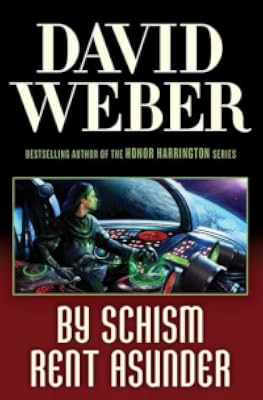
Despite the implacable hostility of the Church of God Awaiting, Charis still stands, still free, still tolerant, still an island of innovation in a world in which the Church has worked for centuries to keep humanity locked at a medieval level of existence. But the powerful men who run the Church aren't going to take their defeat lying down. Charis may control the world's seas, but it barely has an army worthy of the name. And as King Cayleb knows, far too much of the kingdom's recent good show more fortune is due to the secret manipulations of the being that calls himself Merlin--a being that, the world must not find out too soon, is more than human. A being on whose shoulders rests the last chance for humanity's freedom.--From publisher description. show lessTags
Recommendations










Member Reviews
This is another epic book in the Safehold series, Book Two. Even though this book has a 4.07 out of 5 rating on Goodreads, almost all of the reviews I read were one and two star annihilations of the book. Readers/reviewers HATE this book! It's too long. There are too many characters. There's too much religion. There's too much infodumping. Worst of all, nothing happens. It's all politics and dialogue. There aren't any major battles like in the previous book or, presumably, in the following books.
Well. That's a lot to swallow. And most of it's true. But you know what? I don't care. I loved this book. After finishing the first one, which was brilliant, I had to read the next one to know what happened next and this book went a long way in show more explaining a lot of things. Cayleb has taken over as king of Charis for his late father. Merlin, the indestructible android, is still his guard and is still providing spying information on virtually everyone in the world to the Charisian leaders, as well as technological advances. The Archbishop sent a letter to the Group of 4 (Vicars of the Church of God Awaiting, which essentially rules the world) insisting that "Mother Church" has unprovoked-ly attacked Charis and that the Church is corrupt. The Gang of 4 is shaken by their military defeat and seriously ticked about Charis's letter, copies of which have been sent to every kingdom on Safehold. They are meeting to determine what to do next and they decide to build a new fleet to attack Charis again, to force the various kingdoms to blockade their ports from Charisian merchant seamen, and nearly to officially declare a Holy War. The Grand Inquisitor Clyntahn is the worst. He is utterly evil. Meanwhile, King Cayleb is looking for allies. One of the five kingdoms that was ordered to attack him seems like a natural fit, as they had been friends before. And it is ruled by a young queen. Queen Sharleyan of Chisholm is surprised to get a visit from the first councilor of Charis in which he proposes, not only an alliance, but a marriage and an equal partnership. This really throws her, but Cayleb means it. And she accepts, knowing this will mean her kingdom will endure Mother Church's wrath now too. She sails to Charis, where she is warmly greeted by the population, and they are married.
Now what to do about Charis's enemies? Emerald and Corisande, the leaders of the attacks, are the biggest threats. Cayleb is determined to have Corisande's Prince Hektor's head for killing his father and playing the biggest role in the attack. He's going to invade Corisande. Emerald is a different story. Prince Nahrmahn tried to assassinate Cayleb when he was still a prince and they've been enemies for a long time, but they are neighbors and Cayleb knows he can destroy Prince Nahrmahn and Emerald anytime he wants and he knows they know it too. So he surprises them. Prince Nahrmahn sends an emissary to Charis to negotiate a peace, knowing it'll probably cost him his life, but it will save his kingdom. Instead, Cayleb offers to allow him to remain prince of Emerald if the country will join the new Charisian Empire. Nahmahn takes little time to think about this and does it. He's named spymaster of Emerald and is encouraged to continue his tricks against Hektor and others. Meanwhile, the Inquisitors have gone to a small kingdom where they have forced the military to board and take all Charisian ships. They do so at night and it turns violent, with the priests loudly shouting, "Kill the heretics." One of the ships is armed with cannons, though, and protects itself and about eight other ships and they escape the slaughter. They return to Charis, tell their tale, and the Charisians are royally pissed. They send their Navy and Marines to teach this kingdom a lesson and the Navy destroys their shoreline cannon batteries and pretty much the entire shoreline and the Marines land. I was disappointed to see the military surrender, as I wanted vengeance, but there you have it. However, what I really wanted was Hektor's blood. Towards the end of the book, the Charisian harbor is full of ships loaded with artillery and Marines. They're getting ready to sail. Cayleb says goodbye to his new wife. And that's where the book ends! DAMMIT! Now I have to read the next one. I have already ordered it from Amazon and it's due to arrive tomorrow. I can't wait to get started.
So, does this sound like a terrible book to you? It isn't. Oh, and Merlin's secret is revealed, first to the Archbishop and then to Cayleb. I forgot to mention that and it's critical. And the secret of their history and of humanity's. Big. It's a great book. Lots of politics. Lots of intrigue. Lots of spying. Lots of preparations. Some fighting. The promise of a major war. The names are still freaking ridiculous, but I guess I'm getting used to them. The length of the book doesn't bother me. Sometimes the infodumping annoys me and I think Weber's just showing off his research, but oh well. It's not perfect. It's a good book. If you haven't read the first book, I definitely wouldn't start with this one, but if you have, I certainly recommend it. show less
Well. That's a lot to swallow. And most of it's true. But you know what? I don't care. I loved this book. After finishing the first one, which was brilliant, I had to read the next one to know what happened next and this book went a long way in show more explaining a lot of things. Cayleb has taken over as king of Charis for his late father. Merlin, the indestructible android, is still his guard and is still providing spying information on virtually everyone in the world to the Charisian leaders, as well as technological advances. The Archbishop sent a letter to the Group of 4 (Vicars of the Church of God Awaiting, which essentially rules the world) insisting that "Mother Church" has unprovoked-ly attacked Charis and that the Church is corrupt. The Gang of 4 is shaken by their military defeat and seriously ticked about Charis's letter, copies of which have been sent to every kingdom on Safehold. They are meeting to determine what to do next and they decide to build a new fleet to attack Charis again, to force the various kingdoms to blockade their ports from Charisian merchant seamen, and nearly to officially declare a Holy War. The Grand Inquisitor Clyntahn is the worst. He is utterly evil. Meanwhile, King Cayleb is looking for allies. One of the five kingdoms that was ordered to attack him seems like a natural fit, as they had been friends before. And it is ruled by a young queen. Queen Sharleyan of Chisholm is surprised to get a visit from the first councilor of Charis in which he proposes, not only an alliance, but a marriage and an equal partnership. This really throws her, but Cayleb means it. And she accepts, knowing this will mean her kingdom will endure Mother Church's wrath now too. She sails to Charis, where she is warmly greeted by the population, and they are married.
Now what to do about Charis's enemies? Emerald and Corisande, the leaders of the attacks, are the biggest threats. Cayleb is determined to have Corisande's Prince Hektor's head for killing his father and playing the biggest role in the attack. He's going to invade Corisande. Emerald is a different story. Prince Nahrmahn tried to assassinate Cayleb when he was still a prince and they've been enemies for a long time, but they are neighbors and Cayleb knows he can destroy Prince Nahrmahn and Emerald anytime he wants and he knows they know it too. So he surprises them. Prince Nahrmahn sends an emissary to Charis to negotiate a peace, knowing it'll probably cost him his life, but it will save his kingdom. Instead, Cayleb offers to allow him to remain prince of Emerald if the country will join the new Charisian Empire. Nahmahn takes little time to think about this and does it. He's named spymaster of Emerald and is encouraged to continue his tricks against Hektor and others. Meanwhile, the Inquisitors have gone to a small kingdom where they have forced the military to board and take all Charisian ships. They do so at night and it turns violent, with the priests loudly shouting, "Kill the heretics." One of the ships is armed with cannons, though, and protects itself and about eight other ships and they escape the slaughter. They return to Charis, tell their tale, and the Charisians are royally pissed. They send their Navy and Marines to teach this kingdom a lesson and the Navy destroys their shoreline cannon batteries and pretty much the entire shoreline and the Marines land. I was disappointed to see the military surrender, as I wanted vengeance, but there you have it. However, what I really wanted was Hektor's blood. Towards the end of the book, the Charisian harbor is full of ships loaded with artillery and Marines. They're getting ready to sail. Cayleb says goodbye to his new wife. And that's where the book ends! DAMMIT! Now I have to read the next one. I have already ordered it from Amazon and it's due to arrive tomorrow. I can't wait to get started.
So, does this sound like a terrible book to you? It isn't. Oh, and Merlin's secret is revealed, first to the Archbishop and then to Cayleb. I forgot to mention that and it's critical. And the secret of their history and of humanity's. Big. It's a great book. Lots of politics. Lots of intrigue. Lots of spying. Lots of preparations. Some fighting. The promise of a major war. The names are still freaking ridiculous, but I guess I'm getting used to them. The length of the book doesn't bother me. Sometimes the infodumping annoys me and I think Weber's just showing off his research, but oh well. It's not perfect. It's a good book. If you haven't read the first book, I definitely wouldn't start with this one, but if you have, I certainly recommend it. show less
The Safehold series feels like half science fiction, half alternative history. Weber usually brings a fair amount of history in to guide his science fiction; for example, the Honor Harrington books are based pretty heavily on Napoleonic politics. The Safehold books are, in a similar way, based on sixteenth and seventeenth century Europe and England (which has the fabulous side effect of letting Weber actually write naval battles on the high seas, which, if you've read the Honor books, you just know he's always wanted to do). Weber doesn't use the history to create one for one parallels--in fact, there are some MAJOR differences--but the similarities are striking.
The science fiction elements that make this NOT alternative history come show more from the fact that a) this isn't happening on Earth, but on the planet Safehold, where humanity's technology has been set back to the late middle ages/early Renaissance period--they have guns and ships, but not very good ones--because of an alien threat that has already destroyed the rest of humanity; and b) there's a nine-hundred-year-old simulacrum of a woman named Nimue (though the simulacrum has transformed itself into a man called Merlin) who is the only one who remembers Earth and what humanity's technology looked like. And she/he is helping along the social and intellectual changes and advances that characterized the sixteenth and seventeenth centuries. In other words, what takes two centuries in Europe is taking only a few years in the country of Charis (roughly parallel to England in the 16th Century, but with far more respectable leaders than Henry VIII).
One of the things that I'm really loving about this particular series is how Weber treats religion. Most sci-fi and even fantasy authors are rather abysmal at it: religion is either a source of evil (a la Philip Pullman's His Dark Materials series), or a crutch for the weak, or just a cover for institutional magic (in the case of most fantasy). Sci-fi authors are more likely to take a look at religion in order to dismiss it: they like to take the lid off, poke and prod around as if it were another scientific object, and say, "see? not really God behind it after all!" and the only people who still believe at the end--if anyone ever really did in the first place--are the bad guys. Admittedly, there are some authors who manage to be more subtle or complex, and certainly there are sci-fi/fantasy authors with religious sympathies, but in the end, there just aren't many who pull off dealing with religion in any way that I can enjoy or respect. As a result, I usually just prefer my sci-fi authors to leave off religious questions and just deal with moral or ethical ones so that I don't get terribly depressed with how badly they do it.
Weber takes a much more complex view of religion in the Safehold series (as he does in the Honor Harrington ones, to a certain extent), and it is one I really do appreciate. Even in a world where there is PROOF that the religious system was manufactured by human beings masquereding as Archangels and Gods, Weber treats those who believe with a significant amount of respect--and as if they might be right to continue to believe. Unlike Pullman, he is able to offer significant critiques of corruption in church heirarchies without falling into the trap of dismissing religion or those who believe altogether. This is where Weber's decision to draw on 16th and 17th century England, in particular, seems to have helped him--or maybe his desire to treat religious schism and reform while maintaining respect for his characters who keep their belief led him to use the 16th and 17th century as a model. He allows religion to transform characters for the better--maybe not completely, but there are at least two corrupt religious officials who, upon starting to read "the Writ" again, regain their faith and start questioning the problems in their society. One dies a martyr, and the other... well, at the end of Schism, we don't quite know where he's going yet (though I have my suspicions).
Schism also focuses a lot more heavily on the interesting characters than the first book in the series did. In particular, we finally get an extended look at the one major female character besides Nimue: Sharleyne, the one female monarch who has managed to survive in a heavily patriarchial world. Weber is one of the very few male writers of military and hard sci-fi whose female characters I tend to really like; John Scalzi is the other one that comes to mind. It looks like book 3 of the series, By Heresies Distressed (which comes out in July!), will focus even more on Sharleyne, which makes me happy.
But my biggest annoyance with this book is that because Schism had such a cliffhanger ending, I'm going to have to get Heresies as soon as it comes out. I should have waited another two weeks before reading Schism so that I wouldn't have to wait! show less
The science fiction elements that make this NOT alternative history come show more from the fact that a) this isn't happening on Earth, but on the planet Safehold, where humanity's technology has been set back to the late middle ages/early Renaissance period--they have guns and ships, but not very good ones--because of an alien threat that has already destroyed the rest of humanity; and b) there's a nine-hundred-year-old simulacrum of a woman named Nimue (though the simulacrum has transformed itself into a man called Merlin) who is the only one who remembers Earth and what humanity's technology looked like. And she/he is helping along the social and intellectual changes and advances that characterized the sixteenth and seventeenth centuries. In other words, what takes two centuries in Europe is taking only a few years in the country of Charis (roughly parallel to England in the 16th Century, but with far more respectable leaders than Henry VIII).
One of the things that I'm really loving about this particular series is how Weber treats religion. Most sci-fi and even fantasy authors are rather abysmal at it: religion is either a source of evil (a la Philip Pullman's His Dark Materials series), or a crutch for the weak, or just a cover for institutional magic (in the case of most fantasy). Sci-fi authors are more likely to take a look at religion in order to dismiss it: they like to take the lid off, poke and prod around as if it were another scientific object, and say, "see? not really God behind it after all!" and the only people who still believe at the end--if anyone ever really did in the first place--are the bad guys. Admittedly, there are some authors who manage to be more subtle or complex, and certainly there are sci-fi/fantasy authors with religious sympathies, but in the end, there just aren't many who pull off dealing with religion in any way that I can enjoy or respect. As a result, I usually just prefer my sci-fi authors to leave off religious questions and just deal with moral or ethical ones so that I don't get terribly depressed with how badly they do it.
Weber takes a much more complex view of religion in the Safehold series (as he does in the Honor Harrington ones, to a certain extent), and it is one I really do appreciate. Even in a world where there is PROOF that the religious system was manufactured by human beings masquereding as Archangels and Gods, Weber treats those who believe with a significant amount of respect--and as if they might be right to continue to believe. Unlike Pullman, he is able to offer significant critiques of corruption in church heirarchies without falling into the trap of dismissing religion or those who believe altogether. This is where Weber's decision to draw on 16th and 17th century England, in particular, seems to have helped him--or maybe his desire to treat religious schism and reform while maintaining respect for his characters who keep their belief led him to use the 16th and 17th century as a model. He allows religion to transform characters for the better--maybe not completely, but there are at least two corrupt religious officials who, upon starting to read "the Writ" again, regain their faith and start questioning the problems in their society. One dies a martyr, and the other... well, at the end of Schism, we don't quite know where he's going yet (though I have my suspicions).
Schism also focuses a lot more heavily on the interesting characters than the first book in the series did. In particular, we finally get an extended look at the one major female character besides Nimue: Sharleyne, the one female monarch who has managed to survive in a heavily patriarchial world. Weber is one of the very few male writers of military and hard sci-fi whose female characters I tend to really like; John Scalzi is the other one that comes to mind. It looks like book 3 of the series, By Heresies Distressed (which comes out in July!), will focus even more on Sharleyne, which makes me happy.
But my biggest annoyance with this book is that because Schism had such a cliffhanger ending, I'm going to have to get Heresies as soon as it comes out. I should have waited another two weeks before reading Schism so that I wouldn't have to wait! show less
I started this second book in the Safehold series with some trepidation. I read the first book in the series (Off Armageddon Reef) over a year ago, and although I loved the thought-provoking premise, I found it perhaps too long and wordy for my taste. I dipped my toe in the waters of this one recently, though, and was immediately hooked. This book sees the continuation of the conflict between the kingdom of Charis and the Church of God Awaiting, exploring a number of interesting questions about the nature and role of religion in society. I would personally prefer less technical detail, although it may be that other readers quite like Weber’s comprehensiveness. This was nevertheless an enjoyable, gripping, thought-provoking read.
Ok, I am thoroughly caught up in the story. Safehold really is a four-volume novel - the books stop at crisis points as often as at pauses. This one has the courtship of Queen Sharleyn, the surrender of King Nahrmahn, the massacre in Ferayd, and Mistress Dynnys' arrival. Oh yes, and the minor matter of the Order of Saint Zherneau, where Merlin gets the kind of surprise he was more expecting to hand out... I also finally noticed King Nahrmahn's name - Norman Bates?! It looks like he wasn't expected to turn into a sympathetic character. It's very much a Weber story - politics aside, there's a couple battles that remind me strongly of the early Ghost Rider ones. The raid on Ferayd, in particular, where "...in return for their thirty round show more shot, [the Charisians] fired almost three thousand back." But the real interest of the story is the characters - as the cardboard villains turn into real people, and the protagonists reveal unexpected depths. I don't enjoy Safehold as much as I do the Honor Harrington stories, but they're pretty good. show less
I am enjoying this series, and will continue it. I like the premise, am interested in the world that has been created, and am becoming fond of some of the principal characters.
But I think the books could move a bit faster. The book gets bogged down in lots of detail and going-nowhere descriptions of battles and such. It would be 5 stars and hold my interest better if the writing were tighter.
But I think the books could move a bit faster. The book gets bogged down in lots of detail and going-nowhere descriptions of battles and such. It would be 5 stars and hold my interest better if the writing were tighter.
Normally, I adore David Weber's writings. He's a great conceptual writer, a great world builder.
Most of his recent books are losing me.
This book continues the trend of the editor not working with the author to eliminate the unneeded drek. It's overly verbose, goes on for too long without real action, and requires a translator for the names. (I'm not improving from the first book.) I think between the first two books, I'd eliminate half and merge them into one book. It would make a simpler, less boring read.
Politics is fine as filler, provided you offer the proper action to offset the overarching pain. The author's lost his way with regard to that style of writing. I'll give this series one more try, but if I suffer as much, I'm done.
Most of his recent books are losing me.
This book continues the trend of the editor not working with the author to eliminate the unneeded drek. It's overly verbose, goes on for too long without real action, and requires a translator for the names. (I'm not improving from the first book.) I think between the first two books, I'd eliminate half and merge them into one book. It would make a simpler, less boring read.
Politics is fine as filler, provided you offer the proper action to offset the overarching pain. The author's lost his way with regard to that style of writing. I'll give this series one more try, but if I suffer as much, I'm done.
I'm hooked on this series. The valiant kingdom of Charis stands against the corrupt plutocratic empire of the church, and there are great sea battles. It's Hornblower on another planet, with a dash of Arthurian magic thrown in (except it really is advanced technology).
A great romp for Weber fans - and this one brings in some new female characters, which alleviates some of the blokiness of the first one. Go Sharleyan!
A great romp for Weber fans - and this one brings in some new female characters, which alleviates some of the blokiness of the first one. Go Sharleyan!
Members
- Recently Added By
Author Information

222+ Works 77,417 Members
David Weber was born in Cleveland, Ohio on October 24, 1952. He received an undergraduate degree from Warren Wilson College and attended graduate school at Appalachian State University. He ran Weber Associates, a small advertising and public relations agency, for several years. He currently writes science fiction and fantasy full-time. His first show more novel, Insurrection, in collaboration with Steve White, was published in 1990. He has authored or co-authored over 40 books including The Honor of the Queen, In Enemy Hands, The Service of the Sword, Storm from the Shadows, the Honor Harrington series, the Safehold series, and the Star Kingdom series. Weber's first book in the Manticore Ascendant Series, co-authored with Timothy Zahn, made the New York Times bestseller list in October 2014. At the Sign of Triumph, book 9 in the Safehold series, made the New York Times bestseller list in 2016. Book 10, Through Fiery Trials, was published in January 2019. (Bowker Author Biography) show less
Some Editions
Awards and Honors
Awards
Series

Work Relationships
Common Knowledge
- Canonical title*
- L'Alliance des hérétiques
- Original publication date
- 2008-07-22
- People/Characters
- Merlin Athrawes / Nimue Alban; Cayleb Ahrmahk
- Important places
- Kingdom of Charis, Safehold
- Dedication
- This one is for Sharon. Well they all are, really, and I don't usually do public love letters, but this year is an exception. Thank you for marrying me all over again. I love you.
- First words
- It was very quite in the inverted recon skimmer.
- Publisher's editor
- Nielsen Hayden, Patrick
- Blurbers
- Drake, David; Salvatore, R.A.; Vinge, Vernor; Haydon, Elizabeth
*Some information comes from Common Knowledge in other languages. Click "Edit" for more information.
Classifications
Statistics
- Members
- 1,173
- Popularity
- 21,367
- Reviews
- 23
- Rating
- (3.82)
- Languages
- English, French, Polish
- Media
- Paper, Audiobook, Ebook
- ISBNs
- 15
- ASINs
- 14