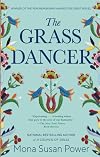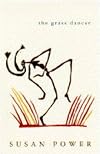
The Grass Dancer
by Susan Power
On This Page
Description
Inspired by the lore of her Native American heritage, this critically-acclaimed novel from Susan Power--an enrolled member of the Standing Rock Sioux tribe--weaves the stories of the old and the young, of broken families, romantic rivals, men and women in love and at war... Set on a North Dakota reservation, The Grass Dancer reveals the harsh price of unfulfilled longings and the healing power of mystery and hope. Rich with drama and infused with the magic of the everyday, it takes readers show more on a journey through both past and present--in a tale as resonant and haunting as an ancestor's memory, and as promising as a child's dream. WINNER OF THE ERNEST HEMINGWAY FOUNDATION AWARD FOR FIRST FICTION show lessTags
Recommendations













Member Reviews
This is more a collection of interconnected stories than a novel, in form. Some of them can easily stand alone. We progress backward (an oxymoron that says exactly what I mean) chronologically with each section until the final two chapters which circle back to where we began. New bits of family history are revealed each time, helping the reader to shed preconceived notions and understand certain characters with compassion. One brilliant example is the case of Jeannette McVay, whom we first meet as a disenchanted white woman who comes to the reservation to study a culture she views as more in tune with the natural world and spiritual realm than her own. She embarrasses herself with her misguided attempts to fit in, to "turn native", yet show more eventually she does become a respected member of the reservation community and brings about a very moving reunion/reconciliation. Life---it's complicated. There are heroes and villains on both sides of the cultural divide here, and the stories illustrate how easily things can go wrong whether one is trying to preserve a culture or subdue it. However, they also prove that sometimes things can unexpectedly go quite right, even when the odds are against it. I absolutely loved this book, and will seek out more of Powers' work. show less
One of the reasons I write "reviews" is to help jog my memory down the road when I might want to reread a book or mention it in relation to another book. But then there are stories so immediately embedded in my brain I know I won't need any reminders no matter how long it's been since I first read it. The Grass Dancer is one of those stories. It was also one of those where I would read a passage I wanted to bookmark but couldn't make myself stop reading long enough to do so.
I loved how the story started off in 1981 with Charlene Thunder and Harley Wind Soldier, then progressed in reverse chronology, until the story of Red Dress in 1864. The story then circles back to Charlene Thunder in 1981 before concluding in 1982. Through the young show more Sioux's ancestry, showing how their paths have been influenced and affected by the events set in motion before they were born. Anna/Mercury Thunder! Right up till her backstory was revealed, I couldn't believe how much she'd gotten away with, how much pain she'd inflicted for personal gain. But her story deeply affected me, made me question how many of us in her position would choose power over pain, revenge over forgiveness? Would she do it differently if she could step away and see the whole picture? Hindsight and all that.
Highly recommended to readers looking for multi-generational stories by Indigenous authors, especially fans of Louise Erdrich.
4.5 stars show less
I loved how the story started off in 1981 with Charlene Thunder and Harley Wind Soldier, then progressed in reverse chronology, until the story of Red Dress in 1864. The story then circles back to Charlene Thunder in 1981 before concluding in 1982. Through the young show more Sioux's ancestry, showing how their paths have been influenced and affected by the events set in motion before they were born. Anna/Mercury Thunder! Right up till her backstory was revealed, I couldn't believe how much she'd gotten away with, how much pain she'd inflicted for personal gain. But her story deeply affected me, made me question how many of us in her position would choose power over pain, revenge over forgiveness? Would she do it differently if she could step away and see the whole picture? Hindsight and all that.
Highly recommended to readers looking for multi-generational stories by Indigenous authors, especially fans of Louise Erdrich.
4.5 stars show less
I read this book ages ago, re-read it a couple of years later. I haven't picked it up in a while, and I'm almost afraid to. It's a story of a Native American family through several generations. There are a lot of fantasy and imagined elements that I worry I might not find as captivating as I did when I was younger, and had just visited the Badlands of South Dakota.
There is one scene that has made a permanent imprint on my imagination. A group of young friends drive through the black hills during a rainstorm, after performing a grass dance. Power so perfectly described the scene I can hear the voices, taste the rain, and smell the damp old car even years after I read the passage.
I recommend this if you like Louise Erdrich's books, or show more have a liking of fantasy elements in literature. show less
There is one scene that has made a permanent imprint on my imagination. A group of young friends drive through the black hills during a rainstorm, after performing a grass dance. Power so perfectly described the scene I can hear the voices, taste the rain, and smell the damp old car even years after I read the passage.
I recommend this if you like Louise Erdrich's books, or show more have a liking of fantasy elements in literature. show less
At first, The Grass Dancer seems like just another ill-fated love story, but as the author traces the history of the passage of power from mother to daughter and back through the matrilineal line, the story is transformed into a declaration of a people's recovery of their heritage, learning through pain to find their own inner strengths. (review based on memory from reading more than 20 years ago)
ETA: reread in 2014 for a book club. This book engendered lots of enthusiastic discussion, but several people took notes while they were reading to help them keep relationship lines clear. Spiritual power is not specifically linked to a family line, or to women (Herod Small War lives surrounded by power, and Margaret Many Hands helps her show more grandson see the moon). This is more a cautionary tale of one woman's misuse of spiritual power, and wanting to pass this misuse on to her daughter or granddaughter. Both of them, as young adults, recognized that they needed to escape that.
You can also analyze the book's presentation of relationships between whites & Dakotas. Young people interested in someone from the other culture were always told "we don't do that", and yet in all generations there was a great deal of intermingling.
The story line summary doesn't really recognize the role of Red Dress, why she is trapped as a ghost in this world, how her attitude seems to change from being vengeful (Anna "had seen her kneeling beside a fire feeding it with objects stolen from her victims" p.222) to protective (Calvin "thinks she's concerned and wants to keep me out of trouble" p. 204). show less
ETA: reread in 2014 for a book club. This book engendered lots of enthusiastic discussion, but several people took notes while they were reading to help them keep relationship lines clear. Spiritual power is not specifically linked to a family line, or to women (Herod Small War lives surrounded by power, and Margaret Many Hands helps her show more grandson see the moon). This is more a cautionary tale of one woman's misuse of spiritual power, and wanting to pass this misuse on to her daughter or granddaughter. Both of them, as young adults, recognized that they needed to escape that.
You can also analyze the book's presentation of relationships between whites & Dakotas. Young people interested in someone from the other culture were always told "we don't do that", and yet in all generations there was a great deal of intermingling.
The story line summary doesn't really recognize the role of Red Dress, why she is trapped as a ghost in this world, how her attitude seems to change from being vengeful (Anna "had seen her kneeling beside a fire feeding it with objects stolen from her victims" p.222) to protective (Calvin "thinks she's concerned and wants to keep me out of trouble" p. 204). show less
Grass Dancer doesn't have a plot. It doesn't have a main character. It doesn't have a linear timeline. At best, I would call it a mishmash of stories with interconnected characters, most from the same family. Grass Dancer as a whole is a shape shifter. With multiple points of view bouncing from first person to third and timelines that are all over the place (1981, 1964, 1935, and 1969 are important dates), it is hard to stay focused on the main purpose of the story. What I found most disheartening is that I would grow attached to a character (like Pumpkin) and then the story would move away from him or her. Most characters came back, but in impersonal ways. Wait until you read what happens to Pumpkin! This is not to say I didn't enjoy show more Power's writing. She inserted some surprises along the way that I wasn't expecting and she stayed true to the cultures, legends and myths of the Sioux Indians which I appreciated. show less
Power's first novel is an unusual mélange of history and fantasy, tradition and modernity, and though its backwards-looking chronology is intriguing in a Memento-like way, it never captures the power and intrigue of its opening moments and ends up being ultimately more forgettable than impressive.
The novel opens with the enigmatic young girl Pumpkin, en route to college and taking one last tour of Midwestern powwows in an effort to keep in touch with her Native American routes. She impresses the young dancer Harley and they share a night that is captured in beautiful, ethereal writing. The next morning, Pumpkin is killed in a car accident, but instead of charging forward with how Harley reacts to the tragedy, the story plunges show more backwards to the roots of his family tree -- a family that is similarly haunted by the untimely death of his brother and father.
The web of narratives is impressive, and for the most part, Power handles each story well, but the novel's great weakness is that not every tale is nearly as interesting as the opening one. Pumpkin as a character exudes a liveliness and presence that even the malevolent magic woman Mercury Thunder can't match up to, so while the stories deeper in the history become more explanatory and revealing, they are not nearly as compelling.
Also uneven is Power's treatment of Native culture. There is a clear reverence for Native history and an expectedly ambivalent relationship to the reservation on which the novel takes place, but with the past feeling just as tainted with both internal and external evil as the present, there doesn't seem for Power to be an alternative to the reservation. As such, while the novel wants to make a provocative comment on what life is like for the modern Native American, it falls short and often settles for stereotypes and expected tropes instead of real, original commentary.
While the novel delves confidently into history, Power's greatest strengths lie in her ability to address the present, and she is at her best when she is remaining somewhat mysterious. Unfortunately, in a novel where the layers get deeper and deeper, the closer it gets to the end, the less satisfying it becomes. One longs instead to know far more about what happened AFTER chapter one, a story that remains untold and a promise that remains unfulfilled. show less
The novel opens with the enigmatic young girl Pumpkin, en route to college and taking one last tour of Midwestern powwows in an effort to keep in touch with her Native American routes. She impresses the young dancer Harley and they share a night that is captured in beautiful, ethereal writing. The next morning, Pumpkin is killed in a car accident, but instead of charging forward with how Harley reacts to the tragedy, the story plunges show more backwards to the roots of his family tree -- a family that is similarly haunted by the untimely death of his brother and father.
The web of narratives is impressive, and for the most part, Power handles each story well, but the novel's great weakness is that not every tale is nearly as interesting as the opening one. Pumpkin as a character exudes a liveliness and presence that even the malevolent magic woman Mercury Thunder can't match up to, so while the stories deeper in the history become more explanatory and revealing, they are not nearly as compelling.
Also uneven is Power's treatment of Native culture. There is a clear reverence for Native history and an expectedly ambivalent relationship to the reservation on which the novel takes place, but with the past feeling just as tainted with both internal and external evil as the present, there doesn't seem for Power to be an alternative to the reservation. As such, while the novel wants to make a provocative comment on what life is like for the modern Native American, it falls short and often settles for stereotypes and expected tropes instead of real, original commentary.
While the novel delves confidently into history, Power's greatest strengths lie in her ability to address the present, and she is at her best when she is remaining somewhat mysterious. Unfortunately, in a novel where the layers get deeper and deeper, the closer it gets to the end, the less satisfying it becomes. One longs instead to know far more about what happened AFTER chapter one, a story that remains untold and a promise that remains unfulfilled. show less
From the 1980's we go back through the history of two Sioux families in North Dakota exploring the connections as the myth that is Red Dress and Ghost Horse's story affects their descendants.
Taking in approximately one hundred years of North American Native history this does have an episodic feel as Susan Power's takes us back through time, highlighting certain critical events in the lives of the families. There are strong characters here and I would love to learn more about the lives. This is a good book but slightly disjointed and some sections and stories are stronger than others.
I did enjoy this book and the stories Power's tells. Obviously she has great respect for history and Native American heritage. I would definitely read more show more of her work. show less
Taking in approximately one hundred years of North American Native history this does have an episodic feel as Susan Power's takes us back through time, highlighting certain critical events in the lives of the families. There are strong characters here and I would love to learn more about the lives. This is a good book but slightly disjointed and some sections and stories are stronger than others.
I did enjoy this book and the stories Power's tells. Obviously she has great respect for history and Native American heritage. I would definitely read more show more of her work. show less
Members
- Recently Added By
Published Reviews
ThingScore 75
Power's strong debut ...sense of story, her effective use of characters and plots... some telling unevenness...
Power's generations all face tremendous challenges in whatever time and place they happen to find themselves... the task of finding a way ... in a world where life and its challenges can end in a moment.
Power's generations all face tremendous challenges in whatever time and place they happen to find themselves... the task of finding a way ... in a world where life and its challenges can end in a moment.
added by juniperSun
She chooses to represent indigenous history not as a record of defeat but rather as a continuing process whose outcome is still uncertain. The past and the spirit world lie within and around the present.
added by juniperSun
Lists

Native American / Indigenous Literature
172 works; 100 members

Top 100 books by Indigenous Masters
134 works; 7 members

Myth (Reuse and Retelling)
188 works; 24 members

Indigenous America Reader
145 works; 12 members

Native American Heritage
52 works; 2 members
Author Information

7+ Works 1,172 Members
Susan Power is an enrolled member of the Standing Rock Sioux Tribe. Her first novel, The Grass Dancer, received the PEN/Hemingway award for best new fiction. She lives in Saint Paul, Minnesota.
Some Editions
Awards and Honors
Awards
Distinctions
Series
Belongs to Publisher Series
Goldmann (42667)
Work Relationships
Has as a student's study guide
Common Knowledge
- Canonical title
- The Grass Dancer
- Original title
- The Grass Dancer
- Original publication date
- 1994-08
- People/Characters
- Harley Wind Soldier; Lydia Wind Soldier; Frank Pipe; Charlene Thunder; Mercury Thunder; Red Dress (show all 8); Herod Small War; Jeannette McVay
- Important places
- North Dakota, USA
- Epigraph
- Shush, we have too many stories
to carry on our backs like houses
Joy Harjo, In Mad Love and war - Dedication
- To my mother, Susan Kelly Power,
who told me the stories.
In lvoing memory of my father, Carleton Gilmore Power,
who read them to me every night.
And for the great ladies who gave me keys to two cities
my ... (show all)grandmothers
Josephine Gates Kelly and Marjorie Gilmore Power. - First words
- When Harley saw his father, Calvin Wind Soldier, and his brother, Duane, in dreams, they were wearing crowns of glass.
- Last words
- (Click to show. Warning: May contain spoilers.)What he heard was the music of his own voice, rising above the rest.
- Blurbers
- Erdrich, Louise; Tan, Amy; Hoffman, Alice
Classifications
Statistics
- Members
- 766
- Popularity
- 36,738
- Reviews
- 18
- Rating
- (3.88)
- Languages
- 8 — Danish, Dutch, English, French, German, Norwegian (Bokmål), Spanish, Swedish
- Media
- Paper, Audiobook, Ebook
- ISBNs
- 30
- ASINs
- 11