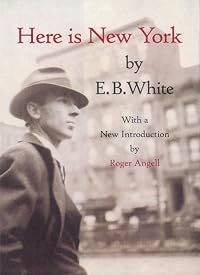
Here is New York
by E. B. White
On This Page
Description
Perceptive, funny, and nostalgic, E. B. White's stroll around Manhattan remains the quintessential love letter to the city, written by one of America's foremost literary figures. The New York Times named Here Is New York one of the ten best books ever written about the metropolis, and the New Yorker called it "the wittiest essay, and one of the most perceptive, ever done on the city."Included with this essay are two short poems by E. B. White: "Commuter" and "Critic," both published in the show more New Yorker in 1925. show lessTags
Recommendations
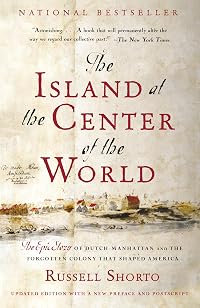
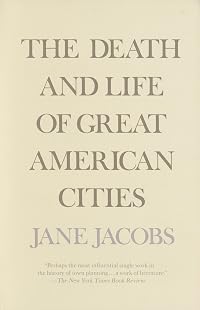
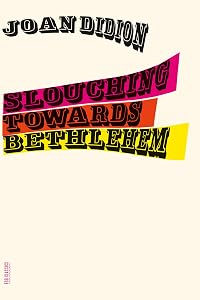
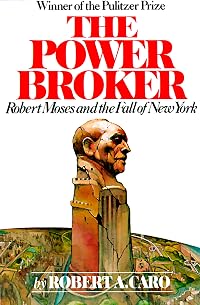





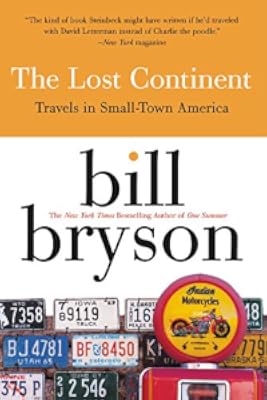
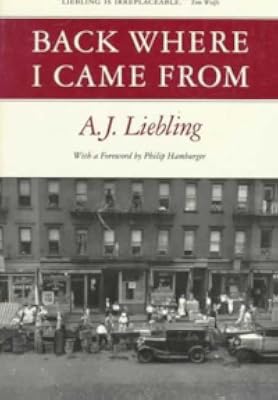
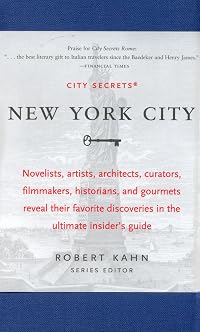
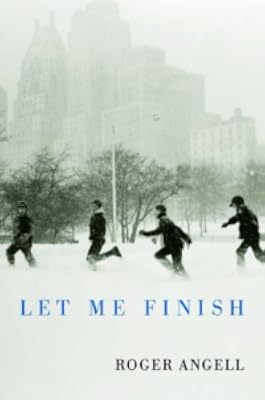

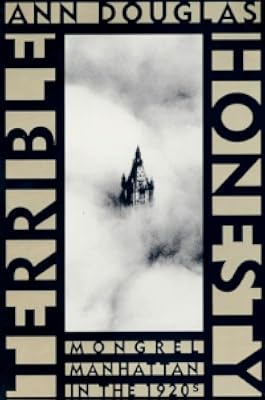
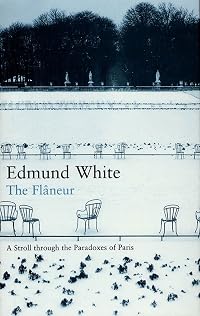

Member Recommendations

lilithcat Another love story to New York!

edwinbcn Both The Owl Pen by Kenneth McNeill Wells and Here is New York by E. B. White describe living on a farm in the countryside, with nostalgia for the old ways of living that were still around in the 1920s - 1950s, but came under pressure later in the century.
Member Reviews
Here is a delightful, insightful, almost prophetic lengthy essay written in 1948 or '49 about the ever-changing, ever-fascinating city that never sleeps. Whole paragraphs could be lifted out, printed in 2010, and accepted as having been written last week. Only the statistics date it.
ETA: Roger Angell, E. B. White's stepson, wrote the introduction to my 1999 edition. He died at the age of 101, in 2022. I re-read the whole thing in May of 2022, and it still captures the essence of the city for me.
ETA: Roger Angell, E. B. White's stepson, wrote the introduction to my 1999 edition. He died at the age of 101, in 2022. I re-read the whole thing in May of 2022, and it still captures the essence of the city for me.
Many years after I first read this essay my GR friend Left Coast Justin offered up a compelling review for White's Writings From the New Yorker and I was inspired to revisit. Some books that were life-changing for me when I was young do not appeal to me at all now. I travelled for two years of my life inspired in part by On the Road. When I tried rereading On the Road in my 40's I hated it, finding Kerouac both a bad writer and a flaming narcissist, but at 16 he planted in me a thirst to see the world riding alongside the person I loved with no money and no plans. and I am forever grateful to that bad boy.
White did not inspire me to want to move to NYC, visiting here did that. My mother says that after my first visit at the age of 3 I show more told anyone who asked that when I grew up I was going to be a New Yorker. That desire grew with every visit from forays to FAO Schwarz and Serendipity when I was 5, to Broadway shows and tea at the Plaza when I was 10, to dancing at Area and Danceteria with a fake ID and crashing in Avenue C squats when I was 17, to pretending to be cool at parties in Tribeca lofts and knowing the name of every bartender at Beirut when I was 23, to dinners at Daniel and Le Bernardin and arguments with writers that were featured in well-known publications at 30. But this book did have an impact. I first read this in a Norton's Anthology for a lit class my sophomore year of college, and it moved my filmy dreams of moving to the city to firm intent and then to positive action. And all these years later, after several readings, it is still the best explanation I have read of what makes New York New York and for why I love it with such passion. To be sure many of the particulars of this essay are dated, but it still explains why New York is the only place for some people, and as one of those people, one who has lived many other places but has never felt at home anywhere else, I find such joy in these pages. I reread this yesterday in part on an unpleasantly fragrant F-train, in part as I waited for a friend to meet me to see a gorgeous chamber music performance, in part as I sat on the 6-train full from too much Malaysian food and on my way to meet other friends at a jazz club uptown and it was perfect -- this is the only big warm hug I ever want to feel at midnight on the 6. show less
White did not inspire me to want to move to NYC, visiting here did that. My mother says that after my first visit at the age of 3 I show more told anyone who asked that when I grew up I was going to be a New Yorker. That desire grew with every visit from forays to FAO Schwarz and Serendipity when I was 5, to Broadway shows and tea at the Plaza when I was 10, to dancing at Area and Danceteria with a fake ID and crashing in Avenue C squats when I was 17, to pretending to be cool at parties in Tribeca lofts and knowing the name of every bartender at Beirut when I was 23, to dinners at Daniel and Le Bernardin and arguments with writers that were featured in well-known publications at 30. But this book did have an impact. I first read this in a Norton's Anthology for a lit class my sophomore year of college, and it moved my filmy dreams of moving to the city to firm intent and then to positive action. And all these years later, after several readings, it is still the best explanation I have read of what makes New York New York and for why I love it with such passion. To be sure many of the particulars of this essay are dated, but it still explains why New York is the only place for some people, and as one of those people, one who has lived many other places but has never felt at home anywhere else, I find such joy in these pages. I reread this yesterday in part on an unpleasantly fragrant F-train, in part as I waited for a friend to meet me to see a gorgeous chamber music performance, in part as I sat on the 6-train full from too much Malaysian food and on my way to meet other friends at a jazz club uptown and it was perfect -- this is the only big warm hug I ever want to feel at midnight on the 6. show less
“Here is New York” is a portrait of New York City at a particular time: 1948, freshly emerged from the second World War. Though White mentions the outer boroughs in passing when describing the treks of commuters, this is really about the island of Manhattan in all its contradictions and impossibilities, everything it represents and fails to be and excels at.
It's a wonderful piece and I love it. I’ve lived here for a little less than a year, and in that year I’ve felt freer and happier than I have living anywhere else, for precisely the reasons White describes in this essay: the strange sense of being so incredibly close to so many people and yet able to, at any moment, be completely isolated from everything. He calls it the show more “eighteen inches” that separate every New Yorker from everyone else, every other person or event:
With White as our guide, we get a broad survey of Manhattan and the strange multitudes who call it home. We enjoy an open-air concert with him on a balmy summer night in Central Park; sit in a hot, dim bar on East 53rd Street (eighteen inches from the next patron, of course); recall the strange cellular structure of the lighted office windows in skyscrapers, and their haunted quality in the height of emptiest summer. He writes with curiosity, wonder, and a critical eye—the voice of someone who was dazzled by the city as a young man and has lived there long enough to view it with a mix of bewilderment, exhaustion, and tenderness.
The essay ends—as all discussions of New York must, apparently by some ancient decree—by lamenting how much the city has changed. And we may participate in this ourselves, because of course the midcentury city that White experienced no longer exists either: the automats are gone, the shoeshiners are gone, the radio repair shops are gone. It’s even shocking how few 24/7 restaurants exist anymore in the “city that never sleeps.” The Bowery is far from the hellish “street of lost souls” that White describes. And, of course, gentrification is causing the overall homogenization of neighborhoods—bit by bit, everything starts to look more and more like midtown, silver-blue and shiny. It is increasingly becoming a place where nobody but the very rich can afford to live; and the working class have to scrabble over each other for apartments, jobs, $20 shrink-wrapped sandwiches.
But still, “Here is New York” is timeless for a reason, and that’s because White captures the quality of the city perfectly: the pace of life, the swells and surges, the everyday indignities, the patchwork of neighborhoods, the boiling heat and freezing cold with no in-between, the way it shouldn’t work but it does, impossibly.
It's a wonderful piece and I love it. I’ve lived here for a little less than a year, and in that year I’ve felt freer and happier than I have living anywhere else, for precisely the reasons White describes in this essay: the strange sense of being so incredibly close to so many people and yet able to, at any moment, be completely isolated from everything. He calls it the show more “eighteen inches” that separate every New Yorker from everyone else, every other person or event:
The governor came to town. I heard the siren scream, but that was all there was to that—an eighteen-inch margin again. A man was killed by a falling cornice. I was not a party to the tragedy, and again the inches counted heavily. […] I mention these merely to show that New York is peculiarly constructed to absorb almost anything that comes along (whether a thousand-foot liner out of the East or a twenty-thousand-man convention out of the West) without inflicting the event on its inhabitants; so that every event is, in a sense, optional… The quality in New York that insulates its inhabitants from life may simply weaken them as individuals. Perhaps it is healthier to live in a community where, when a cornice falls, you feel the blow; where, when the governor passes, you see at any rate his hat.
With White as our guide, we get a broad survey of Manhattan and the strange multitudes who call it home. We enjoy an open-air concert with him on a balmy summer night in Central Park; sit in a hot, dim bar on East 53rd Street (eighteen inches from the next patron, of course); recall the strange cellular structure of the lighted office windows in skyscrapers, and their haunted quality in the height of emptiest summer. He writes with curiosity, wonder, and a critical eye—the voice of someone who was dazzled by the city as a young man and has lived there long enough to view it with a mix of bewilderment, exhaustion, and tenderness.
The essay ends—as all discussions of New York must, apparently by some ancient decree—by lamenting how much the city has changed. And we may participate in this ourselves, because of course the midcentury city that White experienced no longer exists either: the automats are gone, the shoeshiners are gone, the radio repair shops are gone. It’s even shocking how few 24/7 restaurants exist anymore in the “city that never sleeps.” The Bowery is far from the hellish “street of lost souls” that White describes. And, of course, gentrification is causing the overall homogenization of neighborhoods—bit by bit, everything starts to look more and more like midtown, silver-blue and shiny. It is increasingly becoming a place where nobody but the very rich can afford to live; and the working class have to scrabble over each other for apartments, jobs, $20 shrink-wrapped sandwiches.
But still, “Here is New York” is timeless for a reason, and that’s because White captures the quality of the city perfectly: the pace of life, the swells and surges, the everyday indignities, the patchwork of neighborhoods, the boiling heat and freezing cold with no in-between, the way it shouldn’t work but it does, impossibly.
It is a miracle that New York works at all. The whole thing is implausible. Every time the residents brush their teeth, millions of gallons of water must be drawn from the Catskills and the hills of Westchester. When a young man in Manhattan writes a letter to his girl in Brooklyn, the love message gets blown to her through a pneumatic tube—pfft—just like that. The subterranean system of telephone cables, power lines, steam pipes, gas mains and sewer pipes is reason enough to abandon the island to the gods and the weevils. Every time an incision is made in the pavement, the noisy surgeons expose ganglia that are tangled beyond belief. By rights New York should have destroyed itself long ago, from panic or fire or rioting or failure of some vital supply line in its circulatory system or from some deep labyrinthine short circuit. Long ago the city should have experienced an insoluble traffic snarl at some impossible bottleneck. It should have perished of hunger when food lines failed for a few days. It should have been wiped out by a plague starting in its slums or carried in by ships' rats. It should have been overwhelmed by the sea that licks at it on every side. The workers in its myriad cells should have succumbed to nerves, from the fearful pall of smoke-fog that drifts over every few days from Jersey, blotting out all light at noon and leaving the high offices suspended, men groping and depressed, and the sense of world's end. It should have been touched in the head by the August heat and gone off its rocker.show less
Full book review can be found here: https://thebeerthrillers.com/2024/02/29/book-review-here-is-new-york-e-b-white/
---------
Excerpt:
---------
White’s writing is beautifully precise, imbued with a nostalgic yet clear-eyed tone that avoids sentimentality. His observations are often prophetic, touching on issues such as overpopulation, gentrification, and the loss of individuality—issues that are even more relevant today than they were in the mid-20th century. For instance, he notes, “The city, for the first time in its long history, is destructible,” a line that carries chilling resonances post-September 11, 2001.
“Here is New York” also excels in its vivid imagery. White masterfully sketches scenes from the streets, capturing show more the bustling life and the architectural marvels that define the cityscape. His essay reads like a love letter to New York, penned by someone who understands its imperfections yet is completely enamored by its dynamic character.
--------
Full book review can be found here: https://thebeerthrillers.com/2024/02/29/book-review-here-is-new-york-e-b-white/ show less
---------
Excerpt:
---------
White’s writing is beautifully precise, imbued with a nostalgic yet clear-eyed tone that avoids sentimentality. His observations are often prophetic, touching on issues such as overpopulation, gentrification, and the loss of individuality—issues that are even more relevant today than they were in the mid-20th century. For instance, he notes, “The city, for the first time in its long history, is destructible,” a line that carries chilling resonances post-September 11, 2001.
“Here is New York” also excels in its vivid imagery. White masterfully sketches scenes from the streets, capturing show more the bustling life and the architectural marvels that define the cityscape. His essay reads like a love letter to New York, penned by someone who understands its imperfections yet is completely enamored by its dynamic character.
--------
Full book review can be found here: https://thebeerthrillers.com/2024/02/29/book-review-here-is-new-york-e-b-white/ show less
E.B. White’s valentine to New York City remains fresh even 75 years after he wrote it. As White’s stepson, Roger Angell, notes in his introduction, even in 1949, when this slim book was released:
Since then, much more of show more White’s beloved New York has disappeared: Scribner’s Bookstore, Mama Leone’s, Horn & Hardart, Schrafft’s, Gimbels, the Rialto, B. Altman and Alexander’s. The World Trade Center would appear on the skyline and then disappear. So why does Here Is New York remain so poignant?
Because White was correct that New York is, in essence, a dream and a poem:
As White notes, New Yorkers, both those born and those self-made by emigrating from elsewhere, are surrounded by greatness. Every day has the promise of magic. White “burned with a low steady fever just because I was on the same island with Don Marquis, Heywood Broun, Christopher Morley, Franklin P. Adams, Robert C. Benchley, Frank Sullivan, Dorothy Parker, Alexander Woollcott, Ring Lardner and Stephen Vincent Benét…. This excitation (nearness of giants) is a continuing thing. The city is always full of young worshipful beginners—young actors, young aspiring poets, ballerinas, painters, reporters, singers—each depending on his own brand of tonic to stay alive, each with his own stable of giants.”
To which every New Yorker can relate. Woody Allen shot a movie at Columbia University while I was a student there, so I got to see him. I stood in line at Macy’s behind Chaka Khan. Jacqueline Onassis and Caroline Kennedy were at the Metropolitan Museum of Art for an exhibition of Russian imperial clothing and kindly spoke to my uncle and me. Philip Roosevelt (yes, of those Roosevelts) was my classmate. Comedian David Brenner was on a date at One Fifth Avenue while I was there with my classmates; unfortunately, he left early because we were too rowdy. Every New Yorker can relate stories about — as White phrases it — being 18 inches from greatness and the ensuing excitement.
Albert Camus called Paris the greatest city in the world because its denizens knew that every day could yield something wonderful. New Yorkers know that’s even more so in the Big Apple. show less
Many of White’s places and references in Here is New York are long gone. The Third Avenue Elevated, the neighborhood ice-coal-and-wood cellars, Schrafft’s restaurant on Fifth Avenue, the ancient book elevators at the Public Library, the old Metropolitan Opera, the Queen Mary and her mournful horn, and the dock from which she departed—all have vanished from sight and almost from memory. The thought occurs that this book should now be called Here Was New York, except that White himself has foreseen this dilemma.
Since then, much more of show more White’s beloved New York has disappeared: Scribner’s Bookstore, Mama Leone’s, Horn & Hardart, Schrafft’s, Gimbels, the Rialto, B. Altman and Alexander’s. The World Trade Center would appear on the skyline and then disappear. So why does Here Is New York remain so poignant?
Because White was correct that New York is, in essence, a dream and a poem:
The island of Manhattan is without any doubt the greatest human concentrate on earth, the poem whose magic is comprehensible to millions of permanent residents but whose full meaning will always remain elusive. At the feet of the tallest and plushiest offices lie the crummiest slums. The genteel mysteries housed in the Riverside Church are only a few blocks from the voodoo charms of Harlem. The merchant princes, riding to Wall Street in their limousines down the East River Drive, pass within a few hundred yards of the gypsy kings; but the princes do not know they are passing kings, and the kings are not up yet anyway—they live a more leisurely life than the princes and get drunk more consistently.
As White notes, New Yorkers, both those born and those self-made by emigrating from elsewhere, are surrounded by greatness. Every day has the promise of magic. White “burned with a low steady fever just because I was on the same island with Don Marquis, Heywood Broun, Christopher Morley, Franklin P. Adams, Robert C. Benchley, Frank Sullivan, Dorothy Parker, Alexander Woollcott, Ring Lardner and Stephen Vincent Benét…. This excitation (nearness of giants) is a continuing thing. The city is always full of young worshipful beginners—young actors, young aspiring poets, ballerinas, painters, reporters, singers—each depending on his own brand of tonic to stay alive, each with his own stable of giants.”
To which every New Yorker can relate. Woody Allen shot a movie at Columbia University while I was a student there, so I got to see him. I stood in line at Macy’s behind Chaka Khan. Jacqueline Onassis and Caroline Kennedy were at the Metropolitan Museum of Art for an exhibition of Russian imperial clothing and kindly spoke to my uncle and me. Philip Roosevelt (yes, of those Roosevelts) was my classmate. Comedian David Brenner was on a date at One Fifth Avenue while I was there with my classmates; unfortunately, he left early because we were too rowdy. Every New Yorker can relate stories about — as White phrases it — being 18 inches from greatness and the ensuing excitement.
Albert Camus called Paris the greatest city in the world because its denizens knew that every day could yield something wonderful. New Yorkers know that’s even more so in the Big Apple. show less
Lovely Nostalgic Essay with a Chilling Closing
Review of the Audible Audio edition (2016) of the original essay Here Is New York (1948 Holiday magazine/1949 hardcover) including a 1999 Introduction by Roger Angell
This is primarily a lovely quaint memoir of how New York City was changing in the late 1940s compared to when essayist E.B. White first came to work in the city in the 1920s. You wonder about how he would feel about it in the 2000s if it already seemed chaotic in those years. That all changes towards the end (about 5 minutes before the end in the audio version) when he speculates (in 1948, World War II would have still been a very recent memory) about how "the city...is destructible", "a single flight of planes... can end this show more island fantasy, burn the towers", and "in the mind of whatever perverted dreamer, might loose the lightning."
The narration by Malcolm Hillgartner was excellent. show less
Review of the Audible Audio edition (2016) of the original essay Here Is New York (1948 Holiday magazine/1949 hardcover) including a 1999 Introduction by Roger Angell
This is primarily a lovely quaint memoir of how New York City was changing in the late 1940s compared to when essayist E.B. White first came to work in the city in the 1920s. You wonder about how he would feel about it in the 2000s if it already seemed chaotic in those years. That all changes towards the end (about 5 minutes before the end in the audio version) when he speculates (in 1948, World War II would have still been a very recent memory) about how "the city...is destructible", "a single flight of planes... can end this show more island fantasy, burn the towers", and "in the mind of whatever perverted dreamer, might loose the lightning."
The narration by Malcolm Hillgartner was excellent. show less
It’s really a nostalgic trip to see New York as E. B. White did. First published in 1948, this essay speaks of White’s love for New York, both the pretty sights and not so pretty aspects. The excitement of the city, glorious in its imperfections, shines through the pages. Clearly, in White’s eyes, it is a wondrous town. His descriptions paint pictures in the mind, and his prediction of airplanes wreaking havoc on tall skyscrapers chills the soul. Especially enjoyable are the two poems that end his essay. Succinct and to the point.
Members
- Recently Added By
Lists

Best Travel Narrative
32 works; 20 members

Good Nonfiction about New York City
62 works; 10 members
Author Information

92+ Works 111,572 Members
Born in Mount Vernon, New York, E. B. White was educated at Cornell University and served as a private in World War I. After several years as a journalist, he joined the staff of the New Yorker, then in its infancy. For 11 years he wrote most of the "Talk of the Town" columns, and it was White and James Thurber who can be credited with setting the show more style and attitude of the magazine. In 1938 he retired to a saltwater farm in Maine, where he wrote essays regularly for Harper's Magazine under the title "One Man's Meat." Like Thoreau, White preferred the woods; he also resembled Thoreau in his impatience and indignation. White received several prizes: in 1960, the gold medal of the American Academy of Arts and Letters; in 1963, the Presidential Medal of Freedom, the nation's highest civilian award (he was honored along with Thornton Wilder and Edmund Wilson); and in 1978, a special Pulitzer Prize. His verse is original and witty but with serious undertones. His friend James Thurber described him as "a poet who loves to live half-hidden from the eye." Three of his books have become children's classics: Stuart Little (1945), about a mouse born into a human family, Charlotte's Web (1952), about a spider who befriends a lonely pig, and The Trumpet of the Swan (1970). Among his best-known and most widely used books is The Elements of Style (1959), a guide to grammar and rhetoric based on a text written by one of his professors at Cornell, William Strunk, which White revised and expanded. White was married to Katherine Angell, the first fiction editor of the New Yorker. (Bowker Author Biography) Elwyn Brooks White was born on July 11, 1899, in Mt. Vernon, New York. After graduating from Cornell University, he worked briefly for an advertising agency and as a newspaper reporter before joining the staff of The New Yorker magazine in 1927. As a columnist for The New Yorker and a contributor to Harper's Magazine, White established a reputation as a prose stylist of exceptional elegance, clarity and wit. His interests, as reflected in his writing, were numerous and varied; his essays touched on such wide-ranging subjects as politics, farm animals, and life in New York City. White married Katharine S. Angell in 1929. They had one son, and in 1957 the family left New York for a farm in North Brookline, Maine. Writings from The New Yorker, 1927-1976 is a compilation of columns and essays produced during White's long relationship with the magazine. One Man's Meat, published in 1942, is a collection of his writings for Harper's. White adapted a short guide to English grammar and usage, The Elements of Style, from a college text written by one of his professors at Cornell, William Strunk Jr. It has sold millions of copies since it was first published in 1959 and has become a cherished resource for guidance in writing. White also co-authored Is Sex Necessary? with the humorist James Thurber, a fellow staff member at The New Yorker. E.B. White died on October 1, 1985 after succumbing to Alzheimer's. His diverse legacy also includes three children's books: Stuart Little, Charlotte's Web, and The Trumpet of the Swan. In 1970 the American Library Association presented White the Laura Ingalls Wilder Award in recognition of his "substantial and lasting contribution to literature for children." He was also awarded the Presidential Medal of Freedom in 1963 and received a special Pulitzer Prize citation for his body of work in 1970. (Bowker Author Biography) show less
Some Editions
Awards and Honors
Distinctions
Work Relationships
Is contained in
Common Knowledge
- Canonical title*
- Volete sapere cos'è New York?
- Original title
- Here is New York
- Original publication date
- 1949
- Important places
- New York, New York, USA
*Some information comes from Common Knowledge in other languages. Click "Edit" for more information.
Classifications
- Genres
- Nonfiction, Travel, General Nonfiction, Biography & Memoir
- DDC/MDS
- 974.71 — History & geography History of North America Northeastern United States (New England and Middle Atlantic states) New York New York (N.Y.)
- LCC
- F128.5 .W58 — Local History of the United States, Canada and Latin America United States local history New York
- BISAC
Statistics
- Members
- 1,206
- Popularity
- 20,563
- Reviews
- 23
- Rating
- (4.19)
- Languages
- 6 — Chinese, English, French, Italian, Portuguese, Spanish
- Media
- Paper, Audiobook, Ebook
- ISBNs
- 19
- ASINs
- 13