On This Page
Description
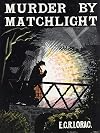
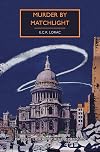
London, 1945. The capital is shrouded in the darkness of the blackout, and mystery abounds in the parks after dusk. During a stroll through Regent's Park, Bruce Mallaig witnesses two men acting suspiciously around a footbridge. In a matter of moments, one of them has been murdered; Mallaig's view of the assailant but a brief glimpse of a ghastly face in the glow of a struck match. The murderer's noiseless approach and escape seems to defy all logic, and even the victim's identity is quickly show more thrown into uncertainty. Lorac's shrewd yet personable C.I.D. man MacDonald must set to work once again to unravel this near-impossible mystery. show lessTags
Recommendations











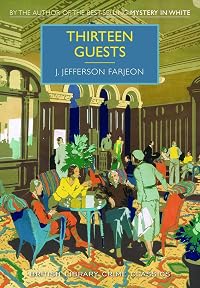
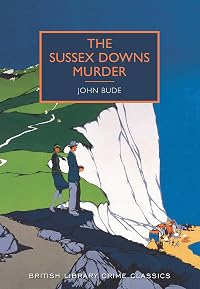
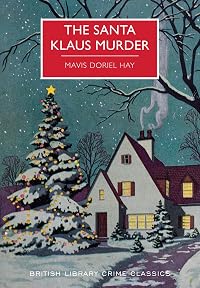

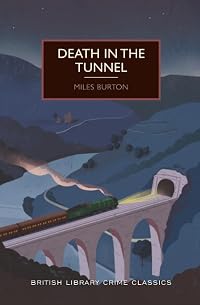





Member Reviews
Murder by Matchlight is a classic whodunnit with a bit of howdunnit as a bonus. It takes place in World War II London when the Germans were bombing the city. There was a tenuous quality to life and it is deeply present in the story–the obvious risk that at any moment your home or your life may be lost to a bomb. The murder happened at night in the darkness of the London blackout and was witnessed by two people. Their separate stories were outlandish and reported from very different perspectives, but tallied in ways that led Chief inspector MacDonald to think they might be telling the truth, unlikely as their truths seemed.
Figuring out how they could be telling the truth is the howdunnit and MacDonald and his team hit upon a possible show more solution rather quickly but that doesn’t necessarily lead to the killer. Meanwhile, through the hard slog of interviews and canvassing, they find out more and more about their murder victim, hoping to find the solution in his history. This was a story about fact-finding, but also intuition. MacDonald was presented with more than one easy solution that would, in lesser hands, result in an arrest, even conviction thanks to circumstantial evidence, no further investigation, and complete injustice. Today, police infamously stop investigating as soon as they find enough evidence to hang it on someone…and they make a lot of work for the Innocence Project for that reason.
I found myself loving Murder by Matchlight for several reasons. First, it was scrupulously fair, but not the least bit easy to solve. Second, there was plenty of misdirection with more than one motive, more than one suspect, and reasons for suspecting one and all. Third, Lorac did not once try to make it cute. The war was serious and murder was serious. Fourth, in a great rejection of vigilantism, when one person suggests perhaps the death of a ne’er-do-well was not that important considering the War, he is soundly rebuked by the argument that vigilantism is the road to fascism. Fifth, the mystery was complex and multi-layered. It was thoroughly satisfying even though I did not begin to suspect the resolution until it was just about in hand.
It was not flawless, one character took the revelation of who the killer was with far too much equanimity, but other than that, I loved this book for its seriousness of purpose and detailed attention. It had the right mix of investigation and intuition, which should always be mostly investigation. I hope there are several more to read.
I received a copy of Murder by Matchlight from the publisher through NetGalley.
Murder by Matchlight at Poisoned Pen Press
E. C. R. Lorac at Wikipedia
https://tonstantweaderreviews.wordpress.com/2019/03/20/9781464210938/ show less
Figuring out how they could be telling the truth is the howdunnit and MacDonald and his team hit upon a possible show more solution rather quickly but that doesn’t necessarily lead to the killer. Meanwhile, through the hard slog of interviews and canvassing, they find out more and more about their murder victim, hoping to find the solution in his history. This was a story about fact-finding, but also intuition. MacDonald was presented with more than one easy solution that would, in lesser hands, result in an arrest, even conviction thanks to circumstantial evidence, no further investigation, and complete injustice. Today, police infamously stop investigating as soon as they find enough evidence to hang it on someone…and they make a lot of work for the Innocence Project for that reason.
I found myself loving Murder by Matchlight for several reasons. First, it was scrupulously fair, but not the least bit easy to solve. Second, there was plenty of misdirection with more than one motive, more than one suspect, and reasons for suspecting one and all. Third, Lorac did not once try to make it cute. The war was serious and murder was serious. Fourth, in a great rejection of vigilantism, when one person suggests perhaps the death of a ne’er-do-well was not that important considering the War, he is soundly rebuked by the argument that vigilantism is the road to fascism. Fifth, the mystery was complex and multi-layered. It was thoroughly satisfying even though I did not begin to suspect the resolution until it was just about in hand.
It was not flawless, one character took the revelation of who the killer was with far too much equanimity, but other than that, I loved this book for its seriousness of purpose and detailed attention. It had the right mix of investigation and intuition, which should always be mostly investigation. I hope there are several more to read.
I received a copy of Murder by Matchlight from the publisher through NetGalley.
Murder by Matchlight at Poisoned Pen Press
E. C. R. Lorac at Wikipedia
https://tonstantweaderreviews.wordpress.com/2019/03/20/9781464210938/ show less
It's so lovely to find a new-to-me golden age mystery, and one that almost lives up to favorites of its era. Murder by Matchlight – which I received through Netgalley, thanks very much – is a Dover reissue of a book originally published in 1945, the story of a murder in a park in London as the war continues to rage across the Channel.
And it was wonderfully enjoyable. The mystery is a lovely puzzle, with the wartime setting, some fun and exotic elements, and sheer happenstance combining into just a whole lot of fun. One suspect says:
"I’d wanted to kill Johnnie Ward—which I didn’t—I shouldn’t have done it in a way that would have brought Scotland Yard to my door next morning. Oh, no. If I’d done it, no one would have show more been any the wiser. I may be a clown, but I’m an efficient clown."
Which is a wonderful defense, isn't it?
I loved the characterizations. The victim was terrific – lovable, in his way, so that the reader can find room for regret at his death … but he also had plenty of truly exasperating ways and habits, and inspired lots of lovely motives. The police refused to follow the "official detectives are always idiots" school of thought, and the young hero-suspect declined to over-involve himself in the case and become an improbable sleuth. And the theatrical folk of the boarding house where the victim (and a bunch of the suspects) lived were marvelous.
(Also: there is a character named Tracey. Mr. Tracey. Heh.)
The setting is equally enjoyable. Set in 1944 and published in 1945, this is a London where nearly every able-bodied man is either at war or on his way, and where the civilians left home are in almost as much danger as their loved ones in actual battle as bombs rain down with alarming regularity. It's a setting in which a murder investigation – especially, in a way, this investigation – feels almost irrelevant.
"It seems to me that the fact that one ne’er-do-well has met a violent end is not a matter of supreme importance in a world which is in the throes of a convulsion which may destroy civilization itself before we’re through."
I was almost afraid to click on the author's name to see his – oh, no, sorry: HER other books. So often I read something by an author new to me, fall in love, and then find that there's little (or nothing) else out in the world by that writer. But! According to her Goodreads author profile: "She was a very prolific writer, having written forty-eight mysteries under her first pen name, and twenty-three under her second." Pardon me while I do a bit of a happy dance.
The usual disclaimer: I received this book via Netgalley for review. show less
And it was wonderfully enjoyable. The mystery is a lovely puzzle, with the wartime setting, some fun and exotic elements, and sheer happenstance combining into just a whole lot of fun. One suspect says:
"I’d wanted to kill Johnnie Ward—which I didn’t—I shouldn’t have done it in a way that would have brought Scotland Yard to my door next morning. Oh, no. If I’d done it, no one would have show more been any the wiser. I may be a clown, but I’m an efficient clown."
Which is a wonderful defense, isn't it?
I loved the characterizations. The victim was terrific – lovable, in his way, so that the reader can find room for regret at his death … but he also had plenty of truly exasperating ways and habits, and inspired lots of lovely motives. The police refused to follow the "official detectives are always idiots" school of thought, and the young hero-suspect declined to over-involve himself in the case and become an improbable sleuth. And the theatrical folk of the boarding house where the victim (and a bunch of the suspects) lived were marvelous.
(Also: there is a character named Tracey. Mr. Tracey. Heh.)
The setting is equally enjoyable. Set in 1944 and published in 1945, this is a London where nearly every able-bodied man is either at war or on his way, and where the civilians left home are in almost as much danger as their loved ones in actual battle as bombs rain down with alarming regularity. It's a setting in which a murder investigation – especially, in a way, this investigation – feels almost irrelevant.
"It seems to me that the fact that one ne’er-do-well has met a violent end is not a matter of supreme importance in a world which is in the throes of a convulsion which may destroy civilization itself before we’re through."
I was almost afraid to click on the author's name to see his – oh, no, sorry: HER other books. So often I read something by an author new to me, fall in love, and then find that there's little (or nothing) else out in the world by that writer. But! According to her Goodreads author profile: "She was a very prolific writer, having written forty-eight mysteries under her first pen name, and twenty-three under her second." Pardon me while I do a bit of a happy dance.
The usual disclaimer: I received this book via Netgalley for review. show less
This is my second novel by E.C.R. Lorac, and it was even better than Fire in the Thatch!
Set in London during the blackout nights of World War II, the novel follows Inspector Robert MacDonald of Scotland Yard’s CID as he investigates the eponymous murder by matchlight of one John Ward. Except the MacDonald soon discovers that the victim had stolen someone else’s identity and wasn’t John Ward at all! So who was he really? And who had a reason to want him dead?
Edith Caroline Rivett (pen name: E.C.R. Lorac) lards Murder by Matchlight with lots of twists and turns, and she plays fair by laying out all of the clues. Even so I never guessed the villain’s identity. I highly recommend this five-star Golden Age mystery.
Set in London during the blackout nights of World War II, the novel follows Inspector Robert MacDonald of Scotland Yard’s CID as he investigates the eponymous murder by matchlight of one John Ward. Except the MacDonald soon discovers that the victim had stolen someone else’s identity and wasn’t John Ward at all! So who was he really? And who had a reason to want him dead?
Edith Caroline Rivett (pen name: E.C.R. Lorac) lards Murder by Matchlight with lots of twists and turns, and she plays fair by laying out all of the clues. Even so I never guessed the villain’s identity. I highly recommend this five-star Golden Age mystery.
This is terribly inventive murder, there are witnesses, for a start, an unusual occourence, and they see someone quite distinctive who appears having made no sound. How was the man on the bridge coshed on the head without making any noice of approach and who did he cosh? A whole series of quesitons that it is left to MacDonald to try and wheedle out of people. His task is complicated by the fact that the coshed man lives in a boarding house full of theatrical types and the air raid that intervenes at one point. It gets rather convoluted, with different people covering up their identity in various ways. But what was this, a crime of passion or blackmail? opportunistic or planned? The result was one I was getting towards when the fnal show more curtain falls, but it took the explanation reveal at the end for all th epieces to fall into place.
I like MacDonald, he has a nice solid way about him, but is clearly not stupid. show less
I like MacDonald, he has a nice solid way about him, but is clearly not stupid. show less
Thanks to Poisoned Pen Press and Netgalley for a review copy of this eBook. The comments below are my own.
The story begins on a dark November evening in a park in war blackened-out London. Within a few feet of a couple of strangers a man is brutally killed with a coal-hammer. One of these witnesses has a brief sighting of the killer when the victim lights a match to his cigarette seconds before he is struck down Then the murderer is gone into the black night.
Scotland Yard Chief Inspector MacDonald is soon on the scene to investigate the crime. The first mystery the inspector encounters is the identity of the victim: he is carrying another man's identity card. This begins a wartime whodunit, howdunit and whydunit which requires MacDonald show more and his sidekick,Inspector Jenkins, to find the killer. Their suspect pool is drawn mostly from the victim's lodging, a rundown apartment house, along with some people from the victim's checkered past.
It's a bleak story set against the background of life in wartime London. Characterization is a strong point of this novel: there's several strong characters who combine to breathe life into a somewhat tedious puzzle story. It's difficult to miss a moral debate played out in the story: why bother with the murder of a charlatan in the midst of the carnage of the air attacks on London? MacDonald says ignoring crimes will lead to the end of civilized society. The opposing view, "he got what he deserved so don't waste time looking for who killed him", is less argued.
This edition of "Murder by Matchlight" contains an informative introduction as well as a bonus short story by Ms. Lorac-- both of which are worth reading.
Recommended. show less
The story begins on a dark November evening in a park in war blackened-out London. Within a few feet of a couple of strangers a man is brutally killed with a coal-hammer. One of these witnesses has a brief sighting of the killer when the victim lights a match to his cigarette seconds before he is struck down Then the murderer is gone into the black night.
Scotland Yard Chief Inspector MacDonald is soon on the scene to investigate the crime. The first mystery the inspector encounters is the identity of the victim: he is carrying another man's identity card. This begins a wartime whodunit, howdunit and whydunit which requires MacDonald show more and his sidekick,Inspector Jenkins, to find the killer. Their suspect pool is drawn mostly from the victim's lodging, a rundown apartment house, along with some people from the victim's checkered past.
It's a bleak story set against the background of life in wartime London. Characterization is a strong point of this novel: there's several strong characters who combine to breathe life into a somewhat tedious puzzle story. It's difficult to miss a moral debate played out in the story: why bother with the murder of a charlatan in the midst of the carnage of the air attacks on London? MacDonald says ignoring crimes will lead to the end of civilized society. The opposing view, "he got what he deserved so don't waste time looking for who killed him", is less argued.
This edition of "Murder by Matchlight" contains an informative introduction as well as a bonus short story by Ms. Lorac-- both of which are worth reading.
Recommended. show less
A first-rate read. An eclectic assortment of characters - a juggler/ventriloquist, antiques dealer, doctor, and more - all appear to be uninvolved and in no way connected to the murder. As Inspector MacDonald delves deeper and deeper, all the bystanders become suspects. The conclusion is surprising but satisfying. Originally published in 1945, the story is set in wartime London with blackouts, sirens, and bombing raids enhancing the atmosphere and mood of the book.
One dark night during the Blitz, a young man witnesses a murder. The victim is seen once by matchlight as he lights a cigarette—and a disembodied face appears over the victim’s shoulder before the fatal blow is landed. Inspector MacDonald has his work cut out for him, with bombed-out houses creating false trails, and the blackout making working conditions a challenge.
I enjoyed this Golden Age mystery very much. It was first published in 1945, so the details of life during the Blitz feel that much more immediate and vivid; this was a contemporary book. Everything wrapped up to my satisfaction. It was a good bit of fun and just what I needed to read at this time.
I enjoyed this Golden Age mystery very much. It was first published in 1945, so the details of life during the Blitz feel that much more immediate and vivid; this was a contemporary book. Everything wrapped up to my satisfaction. It was a good bit of fun and just what I needed to read at this time.
Members
- Recently Added By
Lists

Books Read in 2021
5,361 works; 114 members
Author Information

77+ Works 3,401 Members
Some Editions
Series


Belongs to Publisher Series
British Library Crime Classics (Novel)
Common Knowledge
- Canonical title
- Murder by Matchlight
- Original publication date
- 1945
- People/Characters
- Robert MacDonald
- Important places
- London
- Important events
- World War II
- Original language
- English
Classifications
Statistics
- Members
- 236
- Popularity
- 138,526
- Reviews
- 14
- Rating
- (3.60)
- Languages
- English
- Media
- Paper, Audiobook, Ebook
- ISBNs
- 14
- ASINs
- 10