The Atrocities of the Pirates: A Faithful Narrative of the Unparalleled Suffering of the Author During His Captivity Among the Pirates
by Aaron Smith
On This Page
Description
Originally published in 1824, this firsthand account describes how, in June 1822, young English seaman Aaron Smith was taken captive by Cuban pirates when his ship was boarded en route from Jamaica to England. A skilled navigator, fluent in Spanish, and regarded as what was then acceptable as a ship's surgeon, he was an attractive candidate for conscription. Forced to work as a navigator and participate in pirate boarding parties for ten months, he suffered mightily and witnessed unspeakable show more acts of murder and torture. He struggled between resisting the orders of the cruel pirate captain and acting against his conscience to preserve his own life from the wrath of the pirates. After failed attempts to get away, he managed to narrowly escape with his life, but was arrested as a pirate upon arrival in Havana. Smith was jailed in Cuba and then sent back to England in chains, where he found himself on trial for his life at the Old Bailey courthouse. The attorney general himself led the prosecution, with the captains of the ships boarded by Smith and the pirates as the principal witnesses. show lessTags
Recommendations



















Member Reviews
This is a primary source captive narrative. Therefore it will not receive a rating althoughit probably should and you'll see why!
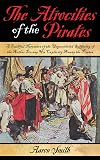
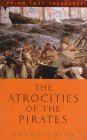
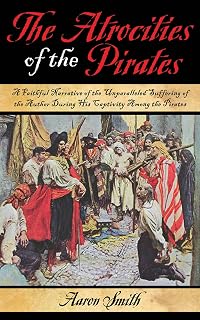
Firstly, let me clarify that this tale does not take place during the Golden Age of Piracy. The standard of Calico Jack doesn't belong on the cover and the illustration on the inside is of Bartholomew Roberts. Who, by 1822 when the events occurred, had been dead a century. The publisher really missed the mark on accuracy 😂
In 1822, Aaron Smith was taken captive by Cuban pirates while aboard Master Lumsden's ship, the Zephyr, and forced to be the pirates' navigator. Smith consistently calls the captain, "the corsair." This is inaccurate for the region, but it was a popular term for Barbary pirates at the show more time.
The "ruffians" immediately search the Zephyr's hold for coin and the Corsair even demands if there are any Americans on board. This might seem odd, but at the time the Monroe administration was actively hunting pirates in the Caribbean. Bloody acts of violence seem right out of a penny dreadful. Plenty of creative license here.
They sail to Rio Medias, and this is where it transforms into an adventurous romantic novel. Corsair visits the local magistrate, a friend, and Smith meets his daughter Seraphina. He convinces her that if she can set him free, he will marry her in England! While I don't doubt his capture, which is on record, this whole part is clearly an embellishment.
He manages to stay on the Corsair's good side with his rudimentary medical skills and accurate navigation. But the governor of Havana is now on the hunt. Not waiting for Seraphina, he finally sees a chance to escape. He is rescued and taken before the Cuban court before extradition to England. Entertaining for sure, but definitely needed annotations or notes! show less
Firstly, let me clarify that this tale does not take place during the Golden Age of Piracy. The standard of Calico Jack doesn't belong on the cover and the illustration on the inside is of Bartholomew Roberts. Who, by 1822 when the events occurred, had been dead a century. The publisher really missed the mark on accuracy 😂
In 1822, Aaron Smith was taken captive by Cuban pirates while aboard Master Lumsden's ship, the Zephyr, and forced to be the pirates' navigator. Smith consistently calls the captain, "the corsair." This is inaccurate for the region, but it was a popular term for Barbary pirates at the show more time.
The "ruffians" immediately search the Zephyr's hold for coin and the Corsair even demands if there are any Americans on board. This might seem odd, but at the time the Monroe administration was actively hunting pirates in the Caribbean. Bloody acts of violence seem right out of a penny dreadful. Plenty of creative license here.
They sail to Rio Medias, and this is where it transforms into an adventurous romantic novel. Corsair visits the local magistrate, a friend, and Smith meets his daughter Seraphina. He convinces her that if she can set him free, he will marry her in England! While I don't doubt his capture, which is on record, this whole part is clearly an embellishment.
He manages to stay on the Corsair's good side with his rudimentary medical skills and accurate navigation. But the governor of Havana is now on the hunt. Not waiting for Seraphina, he finally sees a chance to escape. He is rescued and taken before the Cuban court before extradition to England. Entertaining for sure, but definitely needed annotations or notes! show less
This is a curiously good book for a fan of Treasure Island. On the surface it's the real memoir of an Englishman who was captured by pirates off Cuba in the 1820s, forced to work as a pirate while suffering wretched ignobilities, then captured by English authorities and put on trial for piracy. The book is the authors attempt to restore his reputation, to show he was a loyal subject held captive, and not a pirate. It's impossible to know how much of the book is embellished as it is self-serving. Even contemporary reviewers said the same, they found it an exciting narrative, but unsure what to believe. There is no way to know. Whatever the case, it's a great story with insights into pirate sub-culture. The pirate captain is the best show more character, he is an unpredictable paranoid sadist who kills for the slightest reason yet is easily manipulated, the proverbial loose canon in all senses. There is little of the romanticism made famous in the morally ambiguous Long John Silver of Treasure Island. Rather it reminded me of accounts by people held captive in modern day Afghanistan or Colombia, the terror each day brings not knowing what would happen next. My overall sense is most of the story is true because there were witnesses still alive when it was published who could have refuted the facts. The 1999 edition contains a foreword and afterward with additional information by the relatives of Smith. Also, a great job by James K. White for LibriVox, these older texts are difficult to narrate smoothly he never falters. show less
Smith, Aaron, fl. 1823-1852/Pirates > Caribbean Area > History > 19th/century/Pirates > Cuba > History > 19th century/Prisoners > Great Britain > Biography/Sailors > Great Britain > Biography
Ratings
Members
- Recently Added By
Author Information
Some Editions
Series
Belongs to Publisher Series
Common Knowledge
- Original publication date
- 1824
- People/Characters
- Aaron Smith; Captain Talbot; Mr. Lumsden; Captain Cowper; Seraphina; Stromeda (show all 19); Captain Cooke; Captain Hearn; Captain Lillicrap; Judge Paine; Captain Rowley; Sir Robert Gifford; Captain Septimus Hern; John Holman; John Webster; Sophia Knight; William Henry; George Watson; Baron Garrow
- Important places
- Cayman Islands, Caribbean; Cape Saint Antonio, Guanahacabibes Peninsula, Cuba; Havana, La Habana, Cuba
- First words
- In the month of June 1821, I embarked on board the merchant ship Harrington, and proceeded on a voyage to the West Indies.
- Quotations
- Do not speak to me of poor people. I am poor, and your Countrymen and the Americans have made me so; I know there is more money, and will either have it, or burn you and the vessel.
Your case has been decided young man, and you are to be surrendered into the hands of the Admiral. - Last words
- (Click to show. Warning: May contain spoilers.)Execution Dock was the scene of capital punishment for more than four centuries until the last execution in 1830 - just after Aaron's second trial.
Classifications
- Genres
- Nonfiction, History, Biography & Memoir, General Nonfiction, Politics and Government
- DDC/MDS
- 364.164 — Society, government, & culture Social problems and social services Crime Criminal offenses Crimes of property Violent offenses against property
- LCC
- F2161 .S647 — Local History of the United States, Canada and Latin America Latin America. Spanish America Caribbean area. Caribbean Sea
- BISAC
Statistics
- Members
- 53
- Popularity
- 563,353
- Reviews
- 4
- Rating
- (3.33)
- Languages
- English
- Media
- Paper, Ebook
- ISBNs
- 4
- ASINs
- 2