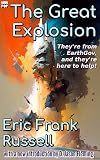
The Great Explosion
by Eric Frank Russell
On This Page
Description
Mission of Empire: Earthmen had colonized hundreds of planets in the four centuries of deep space exploration - independent new civilizations founded by the discontented and adventurous of Terra. Trouble was, they were too independent - and the Terran government had ambitions for a space empire. A giant battle cruiser went out into the starlanes, with instructions to persuade the colonial planets to join the Empire - and with a couple of thousand troops to back up the persuasion! It looked show more like an interesting, if easy, mission - after all, what kind of opposition could a bunch of backwoods planets offer to the most advanced military power in the Galaxy? Quite a lot, as it turned out... and all of it wildly unexpected! One of the "old pros" of science-fiction, Eric Frank Russell has, in The Great Explosion, written a fast-paced and compelling adventure - a fascinating look at a possible tomorrow. A satirical classic. show lessTags
Recommendations















Member Reviews
Aww, it's scifi from the 60s! It's witty, and funny, and sarcastic (but never quite mean). Love it a lot.
The first half of the book explains the general situation, and allows us to get to know the ship's crew as they come into contact with three planets (but only one meaningful one, grown from a colony of nudists).
The second half centers on an anarchist world and … it's pure joy. Go read it.
The first half of the book explains the general situation, and allows us to get to know the ship's crew as they come into contact with three planets (but only one meaningful one, grown from a colony of nudists).
The second half centers on an anarchist world and … it's pure joy. Go read it.
Na de ontdekking van de Blieder-aandrijving (vernoemd naar de excentrieke uitvinder er van) die verre zonnestelsels dichterbij brengt, trekken miljoenen mensen weg om zo'n 1.600 planeten te koloniseren.
Na een periode van 400 jaar wil de Aarde een poging doen om deze planeten onder beheer te krijgen en worden en schepen uitgezonden om dit voor elkaar te krijgen.
We lezen over een ruimteschip van ongeveer 2 kilometer lang en met een doorsnede van 250 meter, en zo'n 2.000 bemanningsleden, soldaten en ambtenaren, alsook een ambassadeur en diverse consuls. Dit ruimteschip heeft de opdracht om 4 van deze werelden te bezoeken en weer onder het Aardse gezag te krijgen.
De eerste wereld werd gekoloniseerd door veroordeelden en criminelen, wiens show more nazaten na 4 eeuwen niets veranderd zijn.
De tweede wereld is bewoond door gezondheidfreaks en nudisten; een planeet vol met naakte zonaanbidders en germofoben, die het niet laten om het de bemanning belachelijk te maken.
Op de derde wereld, Kasim, word niet geland, omdat het lijkt dat de bevolking van Boeddhisten en Moslims door een plaag is getroffen en volledig is uitgeroeid.
Op de laatste planeet, met de naam K229, die het schip aandoet treft de bemanning een bevolking aan die het niet lijkt te interesseren dat er een kilometers langs schip is geland.Het zijn mensen die leven volgens de principes van MIZU (Maak Ik Zelf Uit), een geldloze economy (inplaats daar van gaan de mensen VERP's aan (VERPlichtingen) , en de filosofie van 'passief verzet', gebaseerd op Ghandi), dat vooral neerkomt op 'IK NIET'. Deze filosofie lijkt besmettelijk en onweerstaanbaar voor een deel van de bemanning, op zo'n schaal dat de scheepskapitein Grayder en Kolonel Shelton te maken krijgen met muiterij en desertie.
Dit was naar mijn idee een zeer goed te lezen boek, met een duidelijk anti-autoritair gezichtspunt. Het gezichtspunt van de Gands zal me lang bij blijven: IK NIET show less
Na een periode van 400 jaar wil de Aarde een poging doen om deze planeten onder beheer te krijgen en worden en schepen uitgezonden om dit voor elkaar te krijgen.
We lezen over een ruimteschip van ongeveer 2 kilometer lang en met een doorsnede van 250 meter, en zo'n 2.000 bemanningsleden, soldaten en ambtenaren, alsook een ambassadeur en diverse consuls. Dit ruimteschip heeft de opdracht om 4 van deze werelden te bezoeken en weer onder het Aardse gezag te krijgen.
De eerste wereld werd gekoloniseerd door veroordeelden en criminelen, wiens show more nazaten na 4 eeuwen niets veranderd zijn.
De tweede wereld is bewoond door gezondheidfreaks en nudisten; een planeet vol met naakte zonaanbidders en germofoben, die het niet laten om het de bemanning belachelijk te maken.
Op de derde wereld, Kasim, word niet geland, omdat het lijkt dat de bevolking van Boeddhisten en Moslims door een plaag is getroffen en volledig is uitgeroeid.
Op de laatste planeet, met de naam K229, die het schip aandoet treft de bemanning een bevolking aan die het niet lijkt te interesseren dat er een kilometers langs schip is geland.Het zijn mensen die leven volgens de principes van MIZU (Maak Ik Zelf Uit), een geldloze economy (inplaats daar van gaan de mensen VERP's aan (VERPlichtingen) , en de filosofie van 'passief verzet', gebaseerd op Ghandi), dat vooral neerkomt op 'IK NIET'. Deze filosofie lijkt besmettelijk en onweerstaanbaar voor een deel van de bemanning, op zo'n schaal dat de scheepskapitein Grayder en Kolonel Shelton te maken krijgen met muiterij en desertie.
Dit was naar mijn idee een zeer goed te lezen boek, met een duidelijk anti-autoritair gezichtspunt. Het gezichtspunt van de Gands zal me lang bij blijven: IK NIET show less
The title is pure come-on; the explosion referred to is entirely figurative, and anyway, the book isn't about the explosion itself, but about the aftermath - to the extent that in fact I'd remembered the title as 'After the Explosion'. The explosion of Earth's population - and possibly other factors, which I can't now remember, and anyway it doesn't matter, all this is set-up - has resulted in colonies on distant planets, and then in the loss of contact for a considerable period. Now Earth is ready to renew contact with these lost children, and to bring them back into the fold. A mission is sent out, and the book tells of its encounters with a sequence of such settlements (five?).
Like Wasp, this is billed as SF, and uses the backdrop of show more SF (interstellar travel! distant planets! lost colonies!) and like Wasp, it isn't really interested in these things, other than as enabling the story. Unlike Wasp, it doesn't even pretend that its aliens are anything other than human, and US human, at that - if there is any language problem after the centuries of separation, I have forgotten it. All of the planets are Earthlike - and like those fortunate parts of Earth where cultivation permits people to live in reasonable comfort (fair enough, the premise is that this is why they've been chosen for colonisation, and clearly the colonists had enough choice not to settle for second best).
So the stage is clear for satire. The pompous mother country will be foiled in a variety of ways by independent societies which may have originated as colonies but have outgrown that status thankyou. Moreover, those original settlements wre each set up by a like-minded group - thus far, any parallel to known history holds up - and that like-mindedness has persisted. So there is the colony of nudist health freaks, who won't take seriously any offer made by this collection of white and weedy desk pilots (I paraphrase) and others similar but apparently even less memorable.
The last one, though, is the one I do remember, and I'm not the only one. It's a society of anarchists for whom F=IW: Freedom is 'I won't'. It's a form of anarchism which is closer to frontersman libertarianism than to Kropotkin's mutual aid. The unit of currency is the 'ob' or obligation; nothing could be more painful than to be under an obligation to someone else, and therefore anyone who has the misfortune to incur an obligation tries to work it off as soon as possible. The residents are so self-sufficient that no-one pays any attention to the arrival of a space ship, or has any curiosity about its crew. It's a mean-spirited basis for living, but it is presented as seductive - the Earth ship eventually has to leave before so many of its crew defect that it can't return home.
It was an easy read, if a dispiriting one - and it did help me see what Russell was doing with Wasp. show less
Like Wasp, this is billed as SF, and uses the backdrop of show more SF (interstellar travel! distant planets! lost colonies!) and like Wasp, it isn't really interested in these things, other than as enabling the story. Unlike Wasp, it doesn't even pretend that its aliens are anything other than human, and US human, at that - if there is any language problem after the centuries of separation, I have forgotten it. All of the planets are Earthlike - and like those fortunate parts of Earth where cultivation permits people to live in reasonable comfort (fair enough, the premise is that this is why they've been chosen for colonisation, and clearly the colonists had enough choice not to settle for second best).
So the stage is clear for satire. The pompous mother country will be foiled in a variety of ways by independent societies which may have originated as colonies but have outgrown that status thankyou. Moreover, those original settlements wre each set up by a like-minded group - thus far, any parallel to known history holds up - and that like-mindedness has persisted. So there is the colony of nudist health freaks, who won't take seriously any offer made by this collection of white and weedy desk pilots (I paraphrase) and others similar but apparently even less memorable.
The last one, though, is the one I do remember, and I'm not the only one. It's a society of anarchists for whom F=IW: Freedom is 'I won't'. It's a form of anarchism which is closer to frontersman libertarianism than to Kropotkin's mutual aid. The unit of currency is the 'ob' or obligation; nothing could be more painful than to be under an obligation to someone else, and therefore anyone who has the misfortune to incur an obligation tries to work it off as soon as possible. The residents are so self-sufficient that no-one pays any attention to the arrival of a space ship, or has any curiosity about its crew. It's a mean-spirited basis for living, but it is presented as seductive - the Earth ship eventually has to leave before so many of its crew defect that it can't return home.
It was an easy read, if a dispiriting one - and it did help me see what Russell was doing with Wasp. show less
After 400 years of neglect, Terra (Earth) decides to get back in touch with some of its colonies, each of which was founded by some sort of group of settlers who fell outside the mainstream--including convicts, nudists, you name it. There really isn't a plot. Just a series of somewhat amusing encounters between the colonists, who couldn't care less that an Earth ship has arrived, and the three classes of people aboard the spaceship--the crew, the soldiers, and the bureaucrats. This is a very dated 1950s type book, which is comforting to an extent in its predictability. The crew is all male. The characters are mostly stereotypes--the tough, no-nonsense, military leader, the often clueless Ambassador, the practical-minded Sergeant, the show more inventive engineer, and so on. In the hands of someone other than Russell, it might just sink into meaningless. But he has a way of writing that keeps the reader engaged and the book's overall libertarian philosophy is rather appealing. It definitely lacks the paranoia that is such a part of Russell's better known works such as Sinister Barrier or Wasp. So if you're looking for a pleasant, short, easygoing old-fashioned science fiction read, look no further. show less
An old favorite, always enjoyable. A little reminiscent of the "Retief" series by Keith Laumer.
400 years after the discovery of a faster-than-light drive causes a mass exodus from Earth, Earth sends out a huge spaceship to begin the process of picking up the pieces and forging them into a new Empire.
But the descendants of the fringe groups that escaped Earth so long ago have other ideas...
A wry and funny book, with Russell's characteristic anti-authority viewpoint. It's a pity that he only created three alternate societies in this book; it's a small gem, and an undisputed SF classic. It also has a warm heart, an essential niceness to it that is all too rare in modern SF. The world and creed of the Gands is likely to stay with you for a show more long, long time.
Gordon R. Dickson's Dorsai series explored the idea of the varigation of humanity from a biological and spiritual viewpoint. In A Planet Called Treason (later poorly rewritten as simply Treason), Orson Scott Card took the biological angle much further. The remarkable Cordwainer Smith also used similar themes of wild variation among far-flung branches of humanity, although the concept was not central to his work.
Eric Frank Russell didn't take the biological route. The people on distant planets are still quite human in every way. Rather, their culture is different - in the first two cases, a comic exaggeration of an already existing human trait.
It's a lovely book. When you're finished, you'll wish there was more.
Incidentally, the final section was also released separately as a short story "...And Then There Were None". show less
400 years after the discovery of a faster-than-light drive causes a mass exodus from Earth, Earth sends out a huge spaceship to begin the process of picking up the pieces and forging them into a new Empire.
But the descendants of the fringe groups that escaped Earth so long ago have other ideas...
A wry and funny book, with Russell's characteristic anti-authority viewpoint. It's a pity that he only created three alternate societies in this book; it's a small gem, and an undisputed SF classic. It also has a warm heart, an essential niceness to it that is all too rare in modern SF. The world and creed of the Gands is likely to stay with you for a show more long, long time.
Gordon R. Dickson's Dorsai series explored the idea of the varigation of humanity from a biological and spiritual viewpoint. In A Planet Called Treason (later poorly rewritten as simply Treason), Orson Scott Card took the biological angle much further. The remarkable Cordwainer Smith also used similar themes of wild variation among far-flung branches of humanity, although the concept was not central to his work.
Eric Frank Russell didn't take the biological route. The people on distant planets are still quite human in every way. Rather, their culture is different - in the first two cases, a comic exaggeration of an already existing human trait.
It's a lovely book. When you're finished, you'll wish there was more.
Incidentally, the final section was also released separately as a short story "...And Then There Were None". show less
Yup, it's funny. And not in a mean, snide way. Just, well, even smart people have blinders cuz of their own perspectives. I round down from 3.5 stars because I just can't quite see the success of the third world.
(ok, the fourth... was the third just filler, to make this book long enough to publish?)
(ok, the fourth... was the third just filler, to make this book long enough to publish?)
Not to my taste as a novel. As a book of ideas, as so much science fiction is, it didn't do much more for me. I have libertarian sympathies, but the last chapter is the kind of thing that makes libertarianism seem unserious. 1.28.07
Members
- Recently Added By
Author Information

117+ Works 4,665 Members
Some Editions
Awards and Honors
Awards
Series
Belongs to Publisher Series
Work Relationships
Common Knowledge
- Canonical title
- The Great Explosion
- Original title
- The Great Explosion
- Original publication date
- 1962
- People/Characters
- Johannes Pretorius van der Camp Blieder; Tenth Engineer Jim Harrison; Sixth Engineer Fuller; Captain Grayder; Sergeant Major Bidworthy; Sergeant Arthur Gleed (show all 7); Colonel Shelton
- Important places
- Hygeia; Gand
- Dedication
- Dedicated to all those who believe that there is a happy land far, far away.
- First words
- Prologue: When an explosion takes place lots of bits and pieces fly all over the scenery.
In the days when spaceships had been squirted along by vaporized boron sludge or by caesium-ion jets their size had been restricted by the limits of power available. - Last words
- (Click to show. Warning: May contain spoilers.)And then there were none.
- Original language
- English
Classifications
Statistics
- Members
- 333
- Popularity
- 95,924
- Reviews
- 11
- Rating
- (3.65)
- Languages
- Dutch, English, German, Italian
- Media
- Paper, Ebook
- ISBNs
- 7
- ASINs
- 16