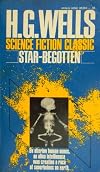
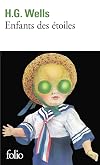
Star Begotten: A Biological Fantasia
by H. G. Wells
On This Page
Description
A sequel to "The War of the Worlds", "Star Begotten" concerns another suspected attack by the Martians, this time using cosmic rays to change human DNA. Joseph Davis is a writer of popular books who becomes obsessed with the rumours of invasion, so much so that he fears his wife, child, and even him might have already been affected by the cosmic rays. Contents include: "The Mind of Mr. Joseph Davis Is Greatly Troubled", "Mr. Joseph Davis Learns about Cosmic Rays", "Mr. Joseph Davis Wrestles show more with an Incredible Idea", "Dr. Holdman Stedding Is Infected with the Idea", "Professor Ernest Keppel Takes Up the Idea in His Own Peculiar Fashion", et cetera. show lessTags
Recommendations


















Member Reviews
My reaction to reading this novel in 1996. Spoilers follow.
This 1937 novel by Wells evoked some of the same responses in me that his In the Days of the Comet did.
First, I liked Wells’ satire against everything from women’s fashions to politics and the psychology of his characters – particularly protagonist Joseph Davis, who vehemently writes propagandistic works of history to defend a sociopolitical order he has doubts about; Harold Rigamey, an “ultra-heretic” (I wonder if Wells had Charles Fort in mind) who writes wildly speculative essays throwing pseudo-science and science together; Lord Thunderclap, a paranoid, conspiracy-mongering newspaper tycoon. I liked several bits. The public’s inability, due to the rapid rate of show more change even at the time of this novel’s writing, to give any but the most trivial and mundane reaction to even remarkable news (here the idea of extraterrestrial intelligence manipulating humans genetically) is mentioned. Wells sees Americans as too ready, in fits of anti-rational, anti-intellectual, misplaced egalitarianism, to denounce any new ideas and recognize no intellectual authorities over the common man and belittle ideas. Wells, by this time in his life, with Hitler in Europe and war seeming more likely – specifically mentioned here, getting more pessimistic and bitter, denounces the “common mind” as violent, brutal, ineffective for the present world, nationalistic and wandering between extremes of revolutionary or reactionary furor. To Wells, humanity is awash in self-deception which causes him to unquestioningly accept outdated, and sometimes contradictory, institutions, customs and traditions.
However, though the main theme of his sf from 1904's The Food of the Gods is a call for the destruction of the old, outdated, dangerous order with a new one (usually a “world state” that is socialist and ruled by a technocratic elite), there is no specific proposals for the new order which not only shows the novel's failure as a call to reform but perhaps Wells’ increasing despair at being able to save the world. George Orwell, a Wells’ fan, perhaps drew some inspiration (though most of it came, no doubt, from his own experiences) for 1984 from Wells’ attack on “mystical personifications like the People, My Country Right or Wrong, the Church, the Party, the Masses, the Proletariat.” A bit of 1984’s famous nomenclature may have been inspired by Wells writing: “Our imaginations hang on to some such Big Brother idea almost to the end.” Wells’ also seems to have given up on his own former socialist comrades. Lord Thunderclap believes conspiring socialists have “a strong, clear plan for a workable human society … a hard, competent society”. Wells’ remarks, “He was probably the only man alive in England who believed in socialism to that extent.” Plot-wise, the novel follows the basic plot of The Food of the Gods: a group of exceptional children created by the intervention of an outside agency will create a better order.
The sf idea of “mutant” (sometimes in the technical sense of the word, sometimes just exceptional) children ushering in a new (though not always better) world is a tradition continuing at least through John Brunner’s Children of Thunder and Nancy Kress’ Beggar series. This book is even mildly recursive sf in that one character mentions The War of the Worlds though he can’t remember the author. (Indeed, this novel is a variation on that novel’s story of Martian invasion. Here the invasion is done by changing men into Martians or whoever is sending the cosmic rays to Earth –and for our benefit as well as theirs.) Olaf Stapledon’s Last and First Men is explicitly mentioned.
Ultimately, though, this novel fails both as a realistic working out of its sf premise and as an allegorical call for reform. Realistically, it fails on a couple of account. First, though the idea of aliens inducing genetic mutations in humans is interesting, surely Wells must have known, even with the knowledge of genetics circa 1937, that you can’t induce specific mutations that way, and without specific mutations the method is useless. Second, even after protagonist Davis suspects his wife may be “star begotten” and that the Martians who have induced the mutations may have sinister ends, he seems remarkably nonplussed by this. Indeed, Wells’ rarely deals with Davis’ marriage until the end when he finds out he’s “star begotten”. Third, the relationship between Davis’ wife and “her people” is never explained. Is this a community of “star begotten” who has already coalesced together? Or does an entire family of mutants exist?
As allegory, the novel also fails. Not only is no specific plan for reform mentioned – somehow the clear-minded, consistent “star begotten” are just supposed to know to do something unspecified – but Wells undercuts his allegorical call for reform by explaining it in unrealistic terms. Is man’s only hope to wait for extra-terrestrials to genetically mutate his bestial side away? Evidently man is incapable of reform on his own. In effect, Wells says we are doomed if we don’t change our ways then says we can’t change on our own.
There is a final bit of personal curiosity. Wells’ criticizes humans’ primal nature as being amongst other things, “over-sexed” which, for a man of such voracious sexual appetites, is curious. Perhaps, he was feeling guilty about this side of him or just realized (or maybe not) he possessed, like all of us, an animal nature. show less
This 1937 novel by Wells evoked some of the same responses in me that his In the Days of the Comet did.
First, I liked Wells’ satire against everything from women’s fashions to politics and the psychology of his characters – particularly protagonist Joseph Davis, who vehemently writes propagandistic works of history to defend a sociopolitical order he has doubts about; Harold Rigamey, an “ultra-heretic” (I wonder if Wells had Charles Fort in mind) who writes wildly speculative essays throwing pseudo-science and science together; Lord Thunderclap, a paranoid, conspiracy-mongering newspaper tycoon. I liked several bits. The public’s inability, due to the rapid rate of show more change even at the time of this novel’s writing, to give any but the most trivial and mundane reaction to even remarkable news (here the idea of extraterrestrial intelligence manipulating humans genetically) is mentioned. Wells sees Americans as too ready, in fits of anti-rational, anti-intellectual, misplaced egalitarianism, to denounce any new ideas and recognize no intellectual authorities over the common man and belittle ideas. Wells, by this time in his life, with Hitler in Europe and war seeming more likely – specifically mentioned here, getting more pessimistic and bitter, denounces the “common mind” as violent, brutal, ineffective for the present world, nationalistic and wandering between extremes of revolutionary or reactionary furor. To Wells, humanity is awash in self-deception which causes him to unquestioningly accept outdated, and sometimes contradictory, institutions, customs and traditions.
However, though the main theme of his sf from 1904's The Food of the Gods is a call for the destruction of the old, outdated, dangerous order with a new one (usually a “world state” that is socialist and ruled by a technocratic elite), there is no specific proposals for the new order which not only shows the novel's failure as a call to reform but perhaps Wells’ increasing despair at being able to save the world. George Orwell, a Wells’ fan, perhaps drew some inspiration (though most of it came, no doubt, from his own experiences) for 1984 from Wells’ attack on “mystical personifications like the People, My Country Right or Wrong, the Church, the Party, the Masses, the Proletariat.” A bit of 1984’s famous nomenclature may have been inspired by Wells writing: “Our imaginations hang on to some such Big Brother idea almost to the end.” Wells’ also seems to have given up on his own former socialist comrades. Lord Thunderclap believes conspiring socialists have “a strong, clear plan for a workable human society … a hard, competent society”. Wells’ remarks, “He was probably the only man alive in England who believed in socialism to that extent.” Plot-wise, the novel follows the basic plot of The Food of the Gods: a group of exceptional children created by the intervention of an outside agency will create a better order.
The sf idea of “mutant” (sometimes in the technical sense of the word, sometimes just exceptional) children ushering in a new (though not always better) world is a tradition continuing at least through John Brunner’s Children of Thunder and Nancy Kress’ Beggar series. This book is even mildly recursive sf in that one character mentions The War of the Worlds though he can’t remember the author. (Indeed, this novel is a variation on that novel’s story of Martian invasion. Here the invasion is done by changing men into Martians or whoever is sending the cosmic rays to Earth –and for our benefit as well as theirs.) Olaf Stapledon’s Last and First Men is explicitly mentioned.
Ultimately, though, this novel fails both as a realistic working out of its sf premise and as an allegorical call for reform. Realistically, it fails on a couple of account. First, though the idea of aliens inducing genetic mutations in humans is interesting, surely Wells must have known, even with the knowledge of genetics circa 1937, that you can’t induce specific mutations that way, and without specific mutations the method is useless. Second, even after protagonist Davis suspects his wife may be “star begotten” and that the Martians who have induced the mutations may have sinister ends, he seems remarkably nonplussed by this. Indeed, Wells’ rarely deals with Davis’ marriage until the end when he finds out he’s “star begotten”. Third, the relationship between Davis’ wife and “her people” is never explained. Is this a community of “star begotten” who has already coalesced together? Or does an entire family of mutants exist?
As allegory, the novel also fails. Not only is no specific plan for reform mentioned – somehow the clear-minded, consistent “star begotten” are just supposed to know to do something unspecified – but Wells undercuts his allegorical call for reform by explaining it in unrealistic terms. Is man’s only hope to wait for extra-terrestrials to genetically mutate his bestial side away? Evidently man is incapable of reform on his own. In effect, Wells says we are doomed if we don’t change our ways then says we can’t change on our own.
There is a final bit of personal curiosity. Wells’ criticizes humans’ primal nature as being amongst other things, “over-sexed” which, for a man of such voracious sexual appetites, is curious. Perhaps, he was feeling guilty about this side of him or just realized (or maybe not) he possessed, like all of us, an animal nature. show less
**SPOILERS**
A rather brilliant piece of speculative fiction regarding a future in which mankind is gradually and subtly replaced in spirit by another race of beings. The concept is explored and researched thoroughly by the protagonist, leaving the reader the option of joining him in his epiphany (as other characters do) or siding with the likelyhood of his progressive insanity. During the latter half of the book, Wells does unfortunately spend a little too much time on a certain character's limited vision of the future, which somewhat hinders the pace of the book (and almost cost it a star). However, for the most part, Star Begotten is consistent, satisfying and amusing.
And an unusual plus point and blessed novelty: not a single use of show more the word “Tumult" or any of it's derivatives! show less
A rather brilliant piece of speculative fiction regarding a future in which mankind is gradually and subtly replaced in spirit by another race of beings. The concept is explored and researched thoroughly by the protagonist, leaving the reader the option of joining him in his epiphany (as other characters do) or siding with the likelyhood of his progressive insanity. During the latter half of the book, Wells does unfortunately spend a little too much time on a certain character's limited vision of the future, which somewhat hinders the pace of the book (and almost cost it a star). However, for the most part, Star Begotten is consistent, satisfying and amusing.
And an unusual plus point and blessed novelty: not a single use of show more the word “Tumult" or any of it's derivatives! show less
This short novel was first published in 1937, and seventy-five years later, I finally got around to reading it. It took me a while because I had to wait around for things like my parents to reach puberty, me being born, learning to read, and then realizing this book existed. I find this last thing surprising because, after reading it, I am amazed it does not have a cult following. There should be T-shirts and buttons for people who wish to identify themselves as Star-Begotten or Star-Born. Once you read it, you’ll know what I mean.
The story centers on Joseph Davis, a popular writer of romanticized histories, who comes to believe that some people differ fundamentally from most of us. They are more rational, possibly more talented and show more intelligent. Who are these people? Why are they different?
After what amount to BS sessions with his friends and associates, Davis entertains the hypothesis that genetic mutations caused by cosmic rays are responsible for this new step in human evolution. One of his compatriots suggests that since the mutations appear neither random nor harmful, they must be intentional. Martians (as a euphemism for aliens) are tagged as likely agents. There is an interesting contrast presented here in which people of today (well, people of 75 years ago) jump to unscientific, irrational speculation to explain how people are becoming more rational. Wells is indulging in a bit of dry, tongue-in-cheek humor with this, I suspect.
But the cause of the mutations is not the central point, it’s simply a dryly humorous plot device. The thought provoking question behind it is, ‘Is humanity really becoming more intelligent and more rational?’ And the other question is, ‘Should it?’
This is not your average kind of novel. In some ways, it’s a philosophical treatise on politics and humanity like Plato’s Republic or Ayn Rand’s Atlas Shrugged, except, unlike the latter, Star Begotten is enjoyable, optimistic, and well-written. It’s one of those books that can make you think, if you let it. It can give you ideas. And this may be why it never rose to cult classic status. Ideas can be uncomfortable things. This is what Wells himself says about them:
‘A notion is something you can handle. But an idea, a general idea, has a way of getting all over you and subjugating you, and no free spirit submits to that. Confronted with an idea the American says: 'Oh, yeah!' or 'Sez you,' and the Englishman says: 'I don't fink,' or at a higher social level: 'Piffle—piffle before the wind.' These simple expressions are as good against ideas as the sign of the cross used to be against the medieval devil. The pressure is at once relieved.’ (Another case of Wells’ dry humor.)
There are about ten other sections, mostly assessments about the current state of mankind, that I marked because I thought they deserved to be shared. But this would make for a very long book review, or whatever this is, so I’ll refrain from doing that. I will, however, share this summation of how Wells says you can recognize these star-begotten people:
‘one characteristic of this new type of mind is its resistance to crowd suggestions, crowd loyalties, instinctive mass prejudices, and mere phrases, ... these strongminded individualists ... doing sensible things and refusing to do cruel, monstrous, and foolish things...’
Is humanity progressing? Is it overcoming its infancy? Is it becoming rational? I don’t know but I would like to believe so. I’ve met sane, intelligent people and I suspect there are a lot of them. If you think you may be one, Wells provides this cautionary statement in the voice of one of the book’s more cynical characters:
‘There are bad times ahead for uncompliant sane men. They will be hated by the right and by the left with an equal intensity.'
I found this short novel refreshingly different from popular contemporary ‘action-packed’ and largely idea-barren novels. It is a thought provoking social commentary about ideas, the evolution of ideas, and human potential. The charming characters, bits of dry humor, and the hopeful, optimistic outlook also appealed to me. I highly recommend it for those seeking something other than mindless entertainment. show less
The story centers on Joseph Davis, a popular writer of romanticized histories, who comes to believe that some people differ fundamentally from most of us. They are more rational, possibly more talented and show more intelligent. Who are these people? Why are they different?
After what amount to BS sessions with his friends and associates, Davis entertains the hypothesis that genetic mutations caused by cosmic rays are responsible for this new step in human evolution. One of his compatriots suggests that since the mutations appear neither random nor harmful, they must be intentional. Martians (as a euphemism for aliens) are tagged as likely agents. There is an interesting contrast presented here in which people of today (well, people of 75 years ago) jump to unscientific, irrational speculation to explain how people are becoming more rational. Wells is indulging in a bit of dry, tongue-in-cheek humor with this, I suspect.
But the cause of the mutations is not the central point, it’s simply a dryly humorous plot device. The thought provoking question behind it is, ‘Is humanity really becoming more intelligent and more rational?’ And the other question is, ‘Should it?’
This is not your average kind of novel. In some ways, it’s a philosophical treatise on politics and humanity like Plato’s Republic or Ayn Rand’s Atlas Shrugged, except, unlike the latter, Star Begotten is enjoyable, optimistic, and well-written. It’s one of those books that can make you think, if you let it. It can give you ideas. And this may be why it never rose to cult classic status. Ideas can be uncomfortable things. This is what Wells himself says about them:
‘A notion is something you can handle. But an idea, a general idea, has a way of getting all over you and subjugating you, and no free spirit submits to that. Confronted with an idea the American says: 'Oh, yeah!' or 'Sez you,' and the Englishman says: 'I don't fink,' or at a higher social level: 'Piffle—piffle before the wind.' These simple expressions are as good against ideas as the sign of the cross used to be against the medieval devil. The pressure is at once relieved.’ (Another case of Wells’ dry humor.)
There are about ten other sections, mostly assessments about the current state of mankind, that I marked because I thought they deserved to be shared. But this would make for a very long book review, or whatever this is, so I’ll refrain from doing that. I will, however, share this summation of how Wells says you can recognize these star-begotten people:
‘one characteristic of this new type of mind is its resistance to crowd suggestions, crowd loyalties, instinctive mass prejudices, and mere phrases, ... these strongminded individualists ... doing sensible things and refusing to do cruel, monstrous, and foolish things...’
Is humanity progressing? Is it overcoming its infancy? Is it becoming rational? I don’t know but I would like to believe so. I’ve met sane, intelligent people and I suspect there are a lot of them. If you think you may be one, Wells provides this cautionary statement in the voice of one of the book’s more cynical characters:
‘There are bad times ahead for uncompliant sane men. They will be hated by the right and by the left with an equal intensity.'
I found this short novel refreshingly different from popular contemporary ‘action-packed’ and largely idea-barren novels. It is a thought provoking social commentary about ideas, the evolution of ideas, and human potential. The charming characters, bits of dry humor, and the hopeful, optimistic outlook also appealed to me. I highly recommend it for those seeking something other than mindless entertainment. show less
A later Wells book, he seems to have been heavy into psychology in his later books. Another one Mr.Blettsworthy on Rampole Island had a fair bit of psychology too, but that was much more entertaining than this.
The main issue here is that its all Tell no Show. It starts with an expectant father who begins to think his wife and child might be aliens. From that premise i thought this one either be really stupid or really dark but its too dry for either.
About half the story is actually a quite modern concept as its an examination of Meme culture. The spread of an idea. Its interesting enough. One character, Lord Thunderclap, an incompetent, paranoid millionaire whose staff have to constantly undermine his insane orders, will be quite show more familiar to today's audience.
So its an ok 3 stars, until we get this very dull utopian exposition stuff around the 3/4 mark. The ending is ok but really to use a metaphor ,the whole thing feels more like the notes from a tv pitch meeting rather than the resultant show. show less
The main issue here is that its all Tell no Show. It starts with an expectant father who begins to think his wife and child might be aliens. From that premise i thought this one either be really stupid or really dark but its too dry for either.
About half the story is actually a quite modern concept as its an examination of Meme culture. The spread of an idea. Its interesting enough. One character, Lord Thunderclap, an incompetent, paranoid millionaire whose staff have to constantly undermine his insane orders, will be quite show more familiar to today's audience.
So its an ok 3 stars, until we get this very dull utopian exposition stuff around the 3/4 mark. The ending is ok but really to use a metaphor ,the whole thing feels more like the notes from a tv pitch meeting rather than the resultant show. show less
Really interesting and odd little volume about a group of men who think martians are changing the make-up of humans through cosmic rays. Full of ambiguity. It is not quite science fiction and not quite pyschology but somewhere in between. Much to think about.
Fascinating book - not really a story, more a discussion on an idea but one that holds the interest throughout.
Certainly not his best work.
Members
- Recently Added By
Author Information

1,557+ Works 108,829 Members
H. G. Wells was born in Bromley, England on September 21, 1866. After a limited education, he was apprenticed to a draper, but soon found he wanted something more out of life. He read widely and got a position as a student assistant in a secondary school, eventually winning a scholarship to the Royal College of Science in South Kensington, where show more he studied biology. He graduated from London University in 1888 and became a science teacher. He also wrote for magazines. When his stories began to sell, he left teaching to write full time. He became an author best known for science fiction novels and comic novels. His science fiction novels include The Time Machine, The War of the Worlds, The Wonderful Visit, The Island of Doctor Moreau, The Invisible Man, The First Men in the Moon, and The Food of the Gods. His comic novels include Love and Mr. Lewisham, Kipps: The Story of a Simple Soul, The History of Mr. Polly, and Tono-Bungay. He also wrote several short story collections including The Stolen Bacillus, The Plattner Story, and Tales of Space and Time. He died on August 13, 1946 at the age of 79. (Bowker Author Biography) show less
Some Editions
Series
Belongs to Publisher Series
Work Relationships
Common Knowledge
- Canonical title
- Star Begotten: A Biological Fantasia
- Alternate titles
- Star-Begotten
Classifications
Statistics
- Members
- 227
- Popularity
- 143,377
- Reviews
- 8
- Rating
- (3.22)
- Languages
- 5 — English, French, German, Italian, Swedish
- Media
- Paper, Ebook
- ISBNs
- 24
- ASINs
- 16