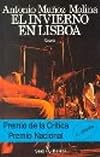
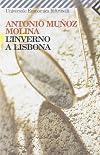
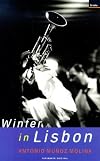
Winter in Lisbon
by Antonio Muñoz Molina
On This Page
Description
When jazz pianist Santiago Biralbo meets the wife of an American art dealer, he begins not only an obsessional love affair, but also an odyssey that will strip him of his identity in his quest to understand love and music.Tags
Recommendations




























Member Recommendations
Member Reviews
Winter in Lisbon by Antonio Munoz Molina
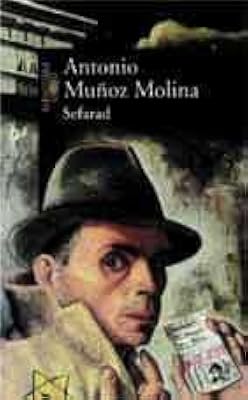
I recently read Antonio Munoz Molina’s masterpiece, Sepharad. A meditation in fictional mode on the exile experience. How one’s identity is often determined by outside forces and when faced with racism, nationalism or anti-Semitism, one’s sense of security and selfhood can be drastically altered overnight.
Struck by the depth of feelings and mastery storytelling I was motivated to read more of Munoz Molina’s work. Reviewing his publications, I decided on Winter In Lisbon, an earlier piece about a jazz musician which sparked an interest. Little did I know that this book was not easily attained. An Initial Google search listed a few copies for sale at a heavy price point and the New York show more Public Library (NYPL) did not possess a copy; neither did Hunter College where I was planning to audit creative writing classes.
I contacted the Cervantes Institute, a language and cultural center coincidentally located just a few city blocks from where I live. I had learned that Munoz Molina had been its Director from 2004 to 2005. Surely, they would have an available copy. The librarian there informed me that they had a copy in its original Spanish, and he was nice enough to do a quick inter-library computer search and learned that there were only 60 translated copies held in US libraries; the nearest being Stoneybrook and Yale Universities.
I also emailed Granta Books which had published the English translation in 1999 and they, too, informed me the book was out of print, they had no copies left and no longer held publishing rights. Winter In Lisbon, which started off as a simple reading request idea had, by now, become an object with greater meaning, the rarity of its existence and accessibility heightened my desire to read it.
Initiating an inter-library request at the NYPL resulted, 4 weeks later, in a very good copy arriving from the Colgate University Library. I had 3 weeks to spend in its company. As I opened the first page I wondered if, after spending so much effort to obtain this book, might it fail to live up to my expectations.
Two acquaintances meet up again at The Metropolitano, a jazz bar in Madrid. Sebastian Biralbo, who now calls himself Giacomo Dolphin, a piano player who describes himself as like all, “musicians know the past doesn’t exist. Painters and writers accumulate the past on their shoulders, in their words and paintings, but a musician always operates in a void. His music ceases to exist the moment he stops playing. It’s pure present.”
His friend, the narrator and interlocuter, relates the strange tale of intrigue and love that then ensues. The two men originally met several years prior at another jazz bar, Floro Bloom’s Lady Bird, located in the coastal city, San Sebastian. There still known as Sebastian Biralbo he is better known as a member of the Billy Swann quartet, a combo led by the trumpet player, bass, piano and drums. With some renown they have recorded an album, toured Scandinavia and the Iberian Peninsula. Sebastian is a quiet, lonely figure whose playing is captivating. His music playing attracts both the narrator and also a beautiful mysterious femme fatale, Lucrecia, who is married to Malcolm, an art dealer who is not above shady business. In fact, the narrator sells Malcolm a painting and other odd and ends but is stiffed for half the agreed upon price.
At the same time, Biralbo and Lucrecia embark on a secretive affair that is soon interrupted when she and Malcolm suddenly leave town on a ship bound for Germany where they get involved in theft, murder and other underhanded business. Lucrecia, fearful and still longing for Sebastian, escapes alone with a valuable Cezanne painting and is on the run from both her estranged husband and his crime boss, a mixed-race opera buff named Toussaints Morton and his blonde haired secretary Daphne.
Years later now in Madrid, Biralbo, leading his own trio under the name Giacomo Dolphin, relates how his current alcoholism and melancholia resulted from his forlorn love for Lucrecia. The tale flashes backward and forward between the cities of San Sebastian, Lisbon, Berlin and Madrid. Like a film noir, the scenes are often drawn out in dark, cloudy environs peopled by shady characters and danger.
Interspersed is also the jazz which is magically described in the following passage in which Dolphin gets ready for the next set:
“with his curly hair, dark glasses and sloping shoulders, hands twitching at his sides like a gunman’s, he walked slowly to the piano, staring straight ahead, and abruptly sat down on the stool, embracing the keyboard with his outstretched fingers. The room fell silent. I could hear him clicking his fingers rhythmically and tapping his foot on the floor and then, without warning, the music started, as if it had already been playing a while and we were only now allowed to hear it. There was no prelude, no initial emphasis, no beginning or end, it was like coming out into the street or opening the window on a winter’s night and suddenly hearing the sound of rain…”
“I was mesmerized by their fixed stares and the rapid movement of their hands, of those parts of their bodies that could visibly express rhythm-head, shoulders, heels, everything moving with the instinctively synchronized movement of the gills and fins of fish in an aquarium. They seemed less to play the music than be possessed by it, imbued with it, propelling the notes towards our ears and hearts on waves of air with serene contempt born of wisdom not even they controlled, which beat unceasing and dispassionate within the music, like a pulse, or like fear and desire throbbing in the darkness.”
This description captures both the music, characters and setting of the overall story.
In contrast to his masterpiece Sepharad this book would be considered a minor work with less scope and depth. Yet these two novels exhibit the arc of creation this great writer exhibits. Winter in Lisbon, written in 1988 when he was 32 years old, demonstrates his ability for suspense, detail and captivating writing. Sepharad, written 13 years later, is a more mature philosophical work about a larger human experience: identity, belonging, exile, and guilt. While I might not highly recommend Winter In Lisbon as a must read, it is certainly entertaining and created by a most talented writer at an earlier stage in his writing career.
A shout out to the translator, Sonia Soto, whose translation of the above excerpts reveal her own talents. show less
I recently read Antonio Munoz Molina’s masterpiece, Sepharad. A meditation in fictional mode on the exile experience. How one’s identity is often determined by outside forces and when faced with racism, nationalism or anti-Semitism, one’s sense of security and selfhood can be drastically altered overnight.
Struck by the depth of feelings and mastery storytelling I was motivated to read more of Munoz Molina’s work. Reviewing his publications, I decided on Winter In Lisbon, an earlier piece about a jazz musician which sparked an interest. Little did I know that this book was not easily attained. An Initial Google search listed a few copies for sale at a heavy price point and the New York show more Public Library (NYPL) did not possess a copy; neither did Hunter College where I was planning to audit creative writing classes.
I contacted the Cervantes Institute, a language and cultural center coincidentally located just a few city blocks from where I live. I had learned that Munoz Molina had been its Director from 2004 to 2005. Surely, they would have an available copy. The librarian there informed me that they had a copy in its original Spanish, and he was nice enough to do a quick inter-library computer search and learned that there were only 60 translated copies held in US libraries; the nearest being Stoneybrook and Yale Universities.
I also emailed Granta Books which had published the English translation in 1999 and they, too, informed me the book was out of print, they had no copies left and no longer held publishing rights. Winter In Lisbon, which started off as a simple reading request idea had, by now, become an object with greater meaning, the rarity of its existence and accessibility heightened my desire to read it.
Initiating an inter-library request at the NYPL resulted, 4 weeks later, in a very good copy arriving from the Colgate University Library. I had 3 weeks to spend in its company. As I opened the first page I wondered if, after spending so much effort to obtain this book, might it fail to live up to my expectations.
Two acquaintances meet up again at The Metropolitano, a jazz bar in Madrid. Sebastian Biralbo, who now calls himself Giacomo Dolphin, a piano player who describes himself as like all, “musicians know the past doesn’t exist. Painters and writers accumulate the past on their shoulders, in their words and paintings, but a musician always operates in a void. His music ceases to exist the moment he stops playing. It’s pure present.”
His friend, the narrator and interlocuter, relates the strange tale of intrigue and love that then ensues. The two men originally met several years prior at another jazz bar, Floro Bloom’s Lady Bird, located in the coastal city, San Sebastian. There still known as Sebastian Biralbo he is better known as a member of the Billy Swann quartet, a combo led by the trumpet player, bass, piano and drums. With some renown they have recorded an album, toured Scandinavia and the Iberian Peninsula. Sebastian is a quiet, lonely figure whose playing is captivating. His music playing attracts both the narrator and also a beautiful mysterious femme fatale, Lucrecia, who is married to Malcolm, an art dealer who is not above shady business. In fact, the narrator sells Malcolm a painting and other odd and ends but is stiffed for half the agreed upon price.
At the same time, Biralbo and Lucrecia embark on a secretive affair that is soon interrupted when she and Malcolm suddenly leave town on a ship bound for Germany where they get involved in theft, murder and other underhanded business. Lucrecia, fearful and still longing for Sebastian, escapes alone with a valuable Cezanne painting and is on the run from both her estranged husband and his crime boss, a mixed-race opera buff named Toussaints Morton and his blonde haired secretary Daphne.
Years later now in Madrid, Biralbo, leading his own trio under the name Giacomo Dolphin, relates how his current alcoholism and melancholia resulted from his forlorn love for Lucrecia. The tale flashes backward and forward between the cities of San Sebastian, Lisbon, Berlin and Madrid. Like a film noir, the scenes are often drawn out in dark, cloudy environs peopled by shady characters and danger.
Interspersed is also the jazz which is magically described in the following passage in which Dolphin gets ready for the next set:
“with his curly hair, dark glasses and sloping shoulders, hands twitching at his sides like a gunman’s, he walked slowly to the piano, staring straight ahead, and abruptly sat down on the stool, embracing the keyboard with his outstretched fingers. The room fell silent. I could hear him clicking his fingers rhythmically and tapping his foot on the floor and then, without warning, the music started, as if it had already been playing a while and we were only now allowed to hear it. There was no prelude, no initial emphasis, no beginning or end, it was like coming out into the street or opening the window on a winter’s night and suddenly hearing the sound of rain…”
“I was mesmerized by their fixed stares and the rapid movement of their hands, of those parts of their bodies that could visibly express rhythm-head, shoulders, heels, everything moving with the instinctively synchronized movement of the gills and fins of fish in an aquarium. They seemed less to play the music than be possessed by it, imbued with it, propelling the notes towards our ears and hearts on waves of air with serene contempt born of wisdom not even they controlled, which beat unceasing and dispassionate within the music, like a pulse, or like fear and desire throbbing in the darkness.”
This description captures both the music, characters and setting of the overall story.
In contrast to his masterpiece Sepharad this book would be considered a minor work with less scope and depth. Yet these two novels exhibit the arc of creation this great writer exhibits. Winter in Lisbon, written in 1988 when he was 32 years old, demonstrates his ability for suspense, detail and captivating writing. Sepharad, written 13 years later, is a more mature philosophical work about a larger human experience: identity, belonging, exile, and guilt. While I might not highly recommend Winter In Lisbon as a must read, it is certainly entertaining and created by a most talented writer at an earlier stage in his writing career.
A shout out to the translator, Sonia Soto, whose translation of the above excerpts reveal her own talents. show less
8447300331
Ο "Χειμώνας στη Λισσαβώνα" είναι ταυτόχρονα ένας φόρος τιμής στον αμερικανικό "νουάρ" κινηματογράφο (και τις λογοτεχνικές του καταβολές) και στον κόσμο της τζαζ. Όμως, πάνω απ' όλα, είναι μια ιστορία έρωτα και μυστηρίου που εκτυλίσσεται μεταξύ Σαν Σεμπαστιάν και Λισσαβώνας, σε ανώνυμα δωμάτια ξενοδοχείων, σε νυχτερινά κέντρα και σε σοκάκια κακόφημων συνοικιών.
Το μυθιστόρημα αυτό, που τιμήθηκε με το Βραβείο show more των Κριτικών και το Εθνικό Βραβείο Λογοτεχνίας της Ισπανίας, επιβεβαιώνει τη λογοτεχνική αξία του Αντόνιο Μουνιόθ Μολίνα και τον καθιερώνει ως έναν από τους κορυφαίους σύγχρονους Ισπανούς πεζογράφους. (Από την παρουσίαση στο οπισθόφυλλο του βιβλίου)
Ο χειμώνας στη Λισσαβώνα εκτυλίσσεται κυρίως μεταξύ Μαδρίτης, Σαν Σεμπαστιάν και Λισσαβώνας, σε απρόσωπα δωμάτια ξενοδοχείων, στο ημίφως νυχτερινών κέντρων, στα σοκάκια γοτθικών συνοικιών, κάποια βροχερά συνήθως βράδια. Δύο από τους βασικούς ήρωες του συγγραφέα είναι μουσικοί της τζαζ, κι αυτό το είδος μουσικής μοιάζει να παίρνει σάρκα και οστά, να ηχεί στ' αυτιά του αναγνώστη και να τον συνοδεύει, σ' όλη τη διάρκεια της ανάγνωσης του βιβλίου, σαν υπόκρουση κινηματογραφικής ταινίας. Λέει ο Μολίνα: "Οι μουσικοί της τζαζ μ' ενδιαφέρουν πολύ, γιατί είναι οι μεγάλοι καταραμένοι καλλιτέχνες του εικοστού αιώνα. Η μουσική τους βαδίζει στην κόψη του ξυραφιού, όπως και η καλή λογοτεχνία". Ο ίδιος δέχεται ότι έχει επηρεαστεί σαφώς από τον Αλφρεντ Χίτσκοκ: "Ο Χίτσκοκ σε διδάσκει ν' αφηγείσαι, ν' αρθρώνεις μια ιστορία, σε μαθαίνει πού και πότε πρέπει ν' αφήνεις την ένταση να καταλαγιάζει". Ωστόσο, παρά τη διάχυτη ατμόσφαιρα του "νουάρ", Ο χειμώνας στη Λισσαβώνα δεν ανήκει σ' αυτή την κατηγορία μυθιστορήματος. Είναι, πάνω απ' όλα, μια ερωτική ιστορία. Εμπεριέχει ένα στοιχείο πάθους, που, όπως πολύ εύστοχα γράφτηκε, την κάνει εθιστική - ένα στοιχείο έρωτα για τον έρωτα. (Από τον πρόλογο της έκδοσης) show less
Το μυθιστόρημα αυτό, που τιμήθηκε με το Βραβείο show more των Κριτικών και το Εθνικό Βραβείο Λογοτεχνίας της Ισπανίας, επιβεβαιώνει τη λογοτεχνική αξία του Αντόνιο Μουνιόθ Μολίνα και τον καθιερώνει ως έναν από τους κορυφαίους σύγχρονους Ισπανούς πεζογράφους. (Από την παρουσίαση στο οπισθόφυλλο του βιβλίου)
Ο χειμώνας στη Λισσαβώνα εκτυλίσσεται κυρίως μεταξύ Μαδρίτης, Σαν Σεμπαστιάν και Λισσαβώνας, σε απρόσωπα δωμάτια ξενοδοχείων, στο ημίφως νυχτερινών κέντρων, στα σοκάκια γοτθικών συνοικιών, κάποια βροχερά συνήθως βράδια. Δύο από τους βασικούς ήρωες του συγγραφέα είναι μουσικοί της τζαζ, κι αυτό το είδος μουσικής μοιάζει να παίρνει σάρκα και οστά, να ηχεί στ' αυτιά του αναγνώστη και να τον συνοδεύει, σ' όλη τη διάρκεια της ανάγνωσης του βιβλίου, σαν υπόκρουση κινηματογραφικής ταινίας. Λέει ο Μολίνα: "Οι μουσικοί της τζαζ μ' ενδιαφέρουν πολύ, γιατί είναι οι μεγάλοι καταραμένοι καλλιτέχνες του εικοστού αιώνα. Η μουσική τους βαδίζει στην κόψη του ξυραφιού, όπως και η καλή λογοτεχνία". Ο ίδιος δέχεται ότι έχει επηρεαστεί σαφώς από τον Αλφρεντ Χίτσκοκ: "Ο Χίτσκοκ σε διδάσκει ν' αφηγείσαι, ν' αρθρώνεις μια ιστορία, σε μαθαίνει πού και πότε πρέπει ν' αφήνεις την ένταση να καταλαγιάζει". Ωστόσο, παρά τη διάχυτη ατμόσφαιρα του "νουάρ", Ο χειμώνας στη Λισσαβώνα δεν ανήκει σ' αυτή την κατηγορία μυθιστορήματος. Είναι, πάνω απ' όλα, μια ερωτική ιστορία. Εμπεριέχει ένα στοιχείο πάθους, που, όπως πολύ εύστοχα γράφτηκε, την κάνει εθιστική - ένα στοιχείο έρωτα για τον έρωτα. (Από τον πρόλογο της έκδοσης) show less
Oct 30, 2024Greek
Pues el libro no ha envejecido del todo bien. Puesto a mediados de los 80, la mezcla de mafiosos, jazz, garitos, mujeres fatales, viajes, personajes perdidos y demás parafernalia estaba bastante bien. Hoy se me antoja demasiado visto. Los personajes son un tanto excesivamente tristes, salvo quizá el dueño del garito Floro Bloom (que, no sé por qué, me lo imagino como el pescadero de los comics de Astèrix) y, sobre todo, el matón Toutsaints Morton, que creo que es el mejor de todos.
Otro tema es el tono literario. Un tanto cansino y monocorde. Está bien el recurso a un personaje secundario como narrador, que entra y sale de la trama de modo que a veces actúa como mero testigo o transmisor de las narraciones de otros, y a veces show more interviene de forma efectiva. Pero Muñoz Molina todavía no había encontrado el pulso, la capacidad de cambiar de registro o de mover las emociones que tendría después. Todo está contado un poco como quien oye llover o como quien no tiene muchas ganas de hacerlo. Aun así, el autor es un gran escritor, ya en la época de escribir este libro, y uno nunca se aburre. Pero, visto años después, se me antoja una obra de juventud. Claro, que eso es fácil decirlo a toro pasado. show less
Otro tema es el tono literario. Un tanto cansino y monocorde. Está bien el recurso a un personaje secundario como narrador, que entra y sale de la trama de modo que a veces actúa como mero testigo o transmisor de las narraciones de otros, y a veces show more interviene de forma efectiva. Pero Muñoz Molina todavía no había encontrado el pulso, la capacidad de cambiar de registro o de mover las emociones que tendría después. Todo está contado un poco como quien oye llover o como quien no tiene muchas ganas de hacerlo. Aun así, el autor es un gran escritor, ya en la época de escribir este libro, y uno nunca se aburre. Pero, visto años después, se me antoja una obra de juventud. Claro, que eso es fácil decirlo a toro pasado. show less
Jul 12, 2016 (Edited)Spanish
Esta historia es un homenaje al cine negro americano y a los tugurios en donde los grandes musicos inventaron el jazz, una evocacion de las pasiones amorosas que discurren en el torbellino del mundo y el resultado de la fascinacion por la intriga que enmascara los motivos del crimen. Entre Lisboa, Madrid y San Sebastian, la inspiracion musical del jazz envuelve una historia de amor. El pianista Santiago Biralbo se enamora de Lucrecia y son perseguidos por su marido, Bruce Malcolm. Mientras, un cuadro de Cezanne tambien desaparece y Toussaints Morton, procedente de Angola y patrocinador de una organizacion ultraderechista, traficante de cuadros y libros antiguos, participa en la persecucion. La intriga criminal se enreda siguiendo un show more ritmo meticuloso e infalible. El Invierno en Lisboa confirmo plenamente las cualidades de un autor que se cuenta ya por derecho propio entre los valores mas firmes de la actual novela espanola. El invierno en Lisboa fue galardonada con el premio de la Critica y el premio Nacional de Literatura en 1988 y fue llevada al cine, con la participacion del trompetista Dizzy Gillespie. show less
Mar 23, 2023Spanish
Antonio Muñoz Molina réussit le tour de force de nous conter tout le long de ce roman, une belle histoire d'amour impossible dans une atmosphère digne d'un film noir où aurait joué Humphrey Bogart. le tout dans une ambiance jazzy de l'époque.
Un vrai régal.
Un vrai régal.
Jan 30, 2016French
Esta historia es un homenaje al cine «negro» americano y a los tugurios en donde los grandes músicos inventaron el jazz, una evocación de las pasiones amorosas que discurren en el torbellino del mundo y el resultado de la fascinación por la intriga que enmascara los motivos del crimen. Entre Lisboa, Madrid y San Sebastián, la inspiración musical del jazz envuelve una historia de amor. El pianista Santiago Biralbo se enamora de Lucrecia y son perseguidos por su marido, Bruce Malcolm. Mientras, un cuadro de Cézanne también desaparece y Toussaints Morton, procedente de Angola y patrocinador de una organización ultraderechista, traficante de cuadros y libros antiguos, participa en la persecución. La intriga criminal se enreda show more siguiendo un ritmo meticuloso e infalible. show less
Dec 19, 2010Spanish
Members
- Recently Added By
Author Information

59+ Works 5,154 Members
Antonio Munoz Molina was director of the Cervantes Institute from 2004 to 2006.
Some Editions
Awards and Honors
Series
Belongs to Publisher Series
Common Knowledge
- Canonical title
- Winter in Lisbon
- Original title
- El invierno en Lisboa
- Original publication date
- 1987-05
- People/Characters*
- Santiago Biralbo
- Important places*
- San Sebastian, Baskenland, Spanje; Madrid, Spanje
*Some information comes from Common Knowledge in other languages. Click "Edit" for more information.
Classifications
Statistics
- Members
- 448
- Popularity
- 68,458
- Reviews
- 12
- Rating
- (3.43)
- Languages
- 15 — Danish, Dutch, English, Estonian, Finnish, French, German, Greek, Hebrew, Italian, Polish, Portuguese, Spanish, Swedish, Turkish
- Media
- Paper, Ebook
- ISBNs
- 35
- ASINs
- 8