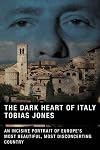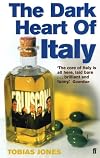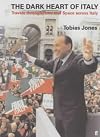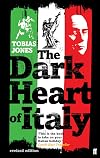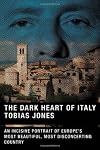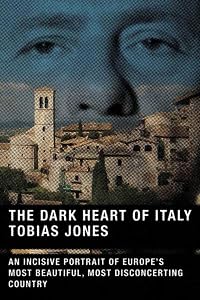
The Dark Heart of Italy
by Tobias Jones
On This Page
Description
"In 1999 Tobias Jones immigrated to Italy, expecting to discover the pastoral bliss described by centuries of foreign visitors. Instead, he found a very different country: one besieged by unfathomable terrorism and deep-seated paranoia. The Dark Heart of Italy is Jones's extraordinary, often funny, and always revealing account of his four years on the Italian peninsula." "Jones writes not only about Italy's art, climate, and cuisine but about the much livelier and stranger sides of the Bel show more Paese: the language, soccer, Catholicism, cinema, television, and terrorism. Why, he wonders, does the parliament need a "slaughter commission"? Why do bombs still explode every time politics start getting serious? Why does everyone urge him to go home as soon as possible, saying that Italy is a "brothel"? Most of all, why does one man, Silvio Berlusconi - in the words of a famous song - appear to own everything from the Padrenostro (Our Father) to the Cosa Nostra (the Mafia)?" "The Italy that emerges from Jones's travels is a country scarred by civil wars and "illustrious corpses"; a country that is proudly visual rather than verbal, based on aesthetics rather than ethics; a country where crime is hardly ever followed by punishment; a place where it is impossible to distinguish fantasy from reality and fact from fiction."--BOOK JACKET. show lessTags
Recommendations








Member Reviews
This book was written in 2003 and probably needs updating, since the current affairs in Italy may be slightly less current almost 25 years later. In 2024 I would have been bored by the chapters on how justice worked in Berlusconi's Italy. THIS year, it's a playbook introducing readers to Trump's USA and how fascism deals with political crime and rampant corruption (basically, by encouraging it for the benefit of the politically corrupt).
The chapter on football (soccer, calcio) is also interesting with the World Cup currently in progress right under our North American noses. Notable that corruption occurs on the football field, but very subtly. Not at all blatantly like Trump's intervention to get an American player's red card rescinded. show more
Now that Berlusconi is out of power, the political events that Jones talks about at such length have rescinded into the past. I doubt I'd even be much interested in a recap of political events in my country a quarter-century ago, if recounted in that level of detail. So a lot of the book just dragged. I perked up for the chapter on religion, but I think that Jones, a committed Protestant, is sadly obtuse about Catholicism as a religion. He even uses the loaded and highly offensive term "Mariolatry". He does express some insight into Catholicism as a political force, but nothing really sparks here. In another chapter, he starts out talking about a park in Parma and then in what must be an editing error because the pagination is correct, drops us into some historical politics that were entirely obscure.
The chapter on cemeteries and reverence for the deceased started out with promise but quickly devolved into a polemic about how it's all fascism, fascism is a cult of the dead, fascism promotes martyrdom. Not entirely valid, even his own text in this chapter gives examples of communist/ leftist inscriptions honouring their own martyrs. Nor entirely helpful: when i spent an All Souls day in the local catacombs of the 200s and the 19th-20th century cemetery, both next to the archaeological excavation of the Etruscan necropolis, I felt there was a lot more to unpack. The respect for those who have gone before us transcends politics. (Case in point: Canada, We Are the Story is a child's picture book which deals with the relationship with our predecessors and land from an Indigenous yet multiculturally inclusive point of view that seems to me quite harmonious with the Italian attitude -- probably most places in Italy and perhaps especially in "my" small town, where the burial grounds have at least 3000 years of continuous use by the indigenous Italian community.)
The amount of italicized text in the book -- I believe this represents Jones's own articles reprinted and recycled into book form -- becomes annoying after a while because it's not the easiest font to read, page after page.
In short. As Jones expresses a great affection and appreciation for Italy but finds it somewhat complicated and at time exasperating, I appreciate the book, the effort and insights, but feel it could be better. show less
The chapter on football (soccer, calcio) is also interesting with the World Cup currently in progress right under our North American noses. Notable that corruption occurs on the football field, but very subtly. Not at all blatantly like Trump's intervention to get an American player's red card rescinded. show more
Now that Berlusconi is out of power, the political events that Jones talks about at such length have rescinded into the past. I doubt I'd even be much interested in a recap of political events in my country a quarter-century ago, if recounted in that level of detail. So a lot of the book just dragged. I perked up for the chapter on religion, but I think that Jones, a committed Protestant, is sadly obtuse about Catholicism as a religion. He even uses the loaded and highly offensive term "Mariolatry". He does express some insight into Catholicism as a political force, but nothing really sparks here. In another chapter, he starts out talking about a park in Parma and then in what must be an editing error because the pagination is correct, drops us into some historical politics that were entirely obscure.
The chapter on cemeteries and reverence for the deceased started out with promise but quickly devolved into a polemic about how it's all fascism, fascism is a cult of the dead, fascism promotes martyrdom. Not entirely valid, even his own text in this chapter gives examples of communist/ leftist inscriptions honouring their own martyrs. Nor entirely helpful: when i spent an All Souls day in the local catacombs of the 200s and the 19th-20th century cemetery, both next to the archaeological excavation of the Etruscan necropolis, I felt there was a lot more to unpack. The respect for those who have gone before us transcends politics. (Case in point: Canada, We Are the Story is a child's picture book which deals with the relationship with our predecessors and land from an Indigenous yet multiculturally inclusive point of view that seems to me quite harmonious with the Italian attitude -- probably most places in Italy and perhaps especially in "my" small town, where the burial grounds have at least 3000 years of continuous use by the indigenous Italian community.)
The amount of italicized text in the book -- I believe this represents Jones's own articles reprinted and recycled into book form -- becomes annoying after a while because it's not the easiest font to read, page after page.
In short. As Jones expresses a great affection and appreciation for Italy but finds it somewhat complicated and at time exasperating, I appreciate the book, the effort and insights, but feel it could be better. show less
Had this book a while and read it while on a recent holiday in Italy. Found parts of it funny and witty and well-written throughout. Particularly enjoyed the chapters on Italian soccer, media, politics and the analysis of the ills of the Italian economy despite having an extraordinary voter turnout at elections. From an Anglo-Saxon perspective, as the author has, this is a testament to there clearly being something wrong with the place. Yet he complements the architecture, the geography, the food and drink, the beauty, the language and the regional dialects while acknowledging the inherent regional disparity, such as prevails in England also. He does acknowledge his errors in the conclusion by noting that the voter turnout could be a show more reaction to the reaction against Communism and the threat to democracy after WW2 which voters protect hence the tendency to still elect a strong leader in the form of Berlusconi. show less
If you are after one of those sappy 'how I moved to Italy and lived the good life and laughed at the funny locals' stories, this is not the book for you.
Jones looks beyond the cliches, and uses his insights as an outsider to explore the contradictions of modern Italy - how a country of such beauty and passion can have so much wrong with it: crap television, corrupt leaders, corrupt citizens, obsessions with conspiracy theories. What saves this from being one monumental condemnation is that Jones obviously loves Italy, and for all its faults can't bear to leave it, knowing that there is also so much right with this amazing country.
Definately recommended as an antidote for those 'My Year in Tuscany' and other assorted shallow views of a show more complex and confusing country. show less
Jones looks beyond the cliches, and uses his insights as an outsider to explore the contradictions of modern Italy - how a country of such beauty and passion can have so much wrong with it: crap television, corrupt leaders, corrupt citizens, obsessions with conspiracy theories. What saves this from being one monumental condemnation is that Jones obviously loves Italy, and for all its faults can't bear to leave it, knowing that there is also so much right with this amazing country.
Definately recommended as an antidote for those 'My Year in Tuscany' and other assorted shallow views of a show more complex and confusing country. show less
The wonder of this book is not that it reveals something new, even at the time it was originally written (2003), because it doesn't, but that the author is still alive, in Italy. Am I cynic? Maybe.
Italy is a fantastic country with a diversity of cultures and kitchens, full of beauty, but it's a country both high on civilization and low on it. Every time I visit the country I feel a calm descending on me, revelling in ordering a macchiato in the knowledge I'll get some high quality coffee. In many ways 'italian' to me is a by-word for style.
But every time I'm also anguished by the stubborn backwardness. Internet connection at your hotel? Weeeeell... One time I spent a day and a half arguing with staff before they said that of course show more could I have an internet connection - for €5/30 minutes. Two days and ceaseless arguments later they actually admitted that I could have a 24 hour access card for €18.
At that time I had almost left for another hotel, more forthcoming on the internet issue, had it not been for the fact that my hotel had a socket I could use to recharge my laptop while the other one (where a colleague of mine stayed) demanded a special adapter... and the conference centre hosting the conference we attended offered free internet (but a lack of sockets).
I also despair at the highways leading nowhere, the strikes ("buses to Palermo today, sorry, strike, you'll have to take the train", "to Olbia? Well, it's a strike so I don't know which trains will run but there's on in an hour which will take you half the way, if it leaves"), the skeleton buildings that never will be finished...
It's also a violent country, strung out on each side of a polarised rift that to all evidence seems to be much the same - political violence, nepotism, angry corrupted old men, wherever you go. I long ago gave up on knowing who was in power, other than when it's that man Berlusconi, and that is mainly down to the fact that he distinguishes himself as a fount of idiocy.
The author discusses the politics, the culture, and a lot of things Italian, and was accused of paining a too dark a picture, but personally I think his love for his adopted country is evident. That makes the book more than the righteous pamphlet it could had been - it makes it enjoyable.
He comes to no conclusion, naturally - this is more a chronicle than anything else. But as such it's very good.
If you have any interest in understanding the diversity of cultures that exists on this planet this book this book ought to be high on your must-read list. show less
Italy is a fantastic country with a diversity of cultures and kitchens, full of beauty, but it's a country both high on civilization and low on it. Every time I visit the country I feel a calm descending on me, revelling in ordering a macchiato in the knowledge I'll get some high quality coffee. In many ways 'italian' to me is a by-word for style.
But every time I'm also anguished by the stubborn backwardness. Internet connection at your hotel? Weeeeell... One time I spent a day and a half arguing with staff before they said that of course show more could I have an internet connection - for €5/30 minutes. Two days and ceaseless arguments later they actually admitted that I could have a 24 hour access card for €18.
At that time I had almost left for another hotel, more forthcoming on the internet issue, had it not been for the fact that my hotel had a socket I could use to recharge my laptop while the other one (where a colleague of mine stayed) demanded a special adapter... and the conference centre hosting the conference we attended offered free internet (but a lack of sockets).
I also despair at the highways leading nowhere, the strikes ("buses to Palermo today, sorry, strike, you'll have to take the train", "to Olbia? Well, it's a strike so I don't know which trains will run but there's on in an hour which will take you half the way, if it leaves"), the skeleton buildings that never will be finished...
It's also a violent country, strung out on each side of a polarised rift that to all evidence seems to be much the same - political violence, nepotism, angry corrupted old men, wherever you go. I long ago gave up on knowing who was in power, other than when it's that man Berlusconi, and that is mainly down to the fact that he distinguishes himself as a fount of idiocy.
The author discusses the politics, the culture, and a lot of things Italian, and was accused of paining a too dark a picture, but personally I think his love for his adopted country is evident. That makes the book more than the righteous pamphlet it could had been - it makes it enjoyable.
He comes to no conclusion, naturally - this is more a chronicle than anything else. But as such it's very good.
If you have any interest in understanding the diversity of cultures that exists on this planet this book this book ought to be high on your must-read list. show less
Tobias Jones did a very good job at describing the dark side of Italy. He wonders why there are so many misteries in Italy, why there is a "slaughter commision" when almost all these kind of crimes go unpunished, and he investigates Silvio Berlusconi's massive influence over Italian politics and society. For an Italian reader, like myself, it is a very painful reading, and the saddest part is that Jones wrote this book in 2003, and things here in Italy have been getting worse ever since.
The author in his introduction describes the tempest that his book stirred p in Italy. At first, I thought it was hyperbolic self-promotion; but after reading the book I can well understand that Italians took a decidedly manichean view of the book. To describe it as tough love is understanding it. The author love for Italy has not at all blinkered his insights into the "dark heart" of the place -- the corruption, the ability to get anything done depending on what you know, the public paralysis versus private efficiency, on and on. And it's all very readable.
An excellent book full of information about the Italian way of life. He manages to be both critical of the Italian way and also sympathetic, realistic and idealistic. Amusing and engaging book.
Members
- Recently Added By
Author Information
10 Works 914 Members
Tobias Jones was on the staff of the London Review of Books and of the Independent on Sunday.
Common Knowledge
- Important places*
- Italië
- Dedication
- For Francesca Lenzi
- First words
- Preface
'Travellers, without exception,' wrote Stendhal in 1824, 'are wont to confine their descriptions of Italy to the realm of the inanimate; their portraits concern only the mountains, the sites, the sublime manifesta... (show all)tions of nature in that happy land ...' Even today, that is still very much the case. - Last words
- (Click to show. Warning: May contain spoilers.)Revised postscript
Sometimes I don't even hear the noise of my mashing molars.
*Some information comes from Common Knowledge in other languages. Click "Edit" for more information.
Classifications
Statistics
- Members
- 638
- Popularity
- 45,604
- Reviews
- 17
- Rating
- (3.59)
- Languages
- Dutch, English, German, Italian
- Media
- Paper, Ebook
- ISBNs
- 14
- ASINs
- 6