On This Page
Description
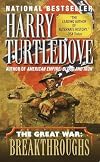
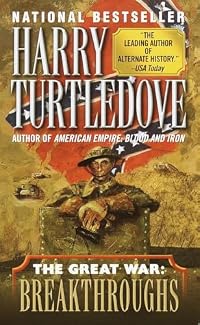
"Anyone who loves history will love what Harry Turtledove can do with it."--Larry Bond, New York Times bestselling author of Day of Wrath Is it the war to end all wars--or war without end? What began as a conflict in Europe, when Germany unleashed a lightning assault on its enemies, soon spreads to North America, as a long-simmering hatred between two independent nations explodes in bloody combat. Twice in fifty years the Confederate States of America had humiliated their northern neighbor. show more Now revenge may at last be at hand. "Turtledove has proved he can divert his readers to astonishing places. He's developed a cult following over the years; and if you've already been there, done that will real-history novelists Patrick O'Brian, Dorothy Dunnett, or George MacDonald Fraser, for your Next Big Enthusiasm you might want to try Turtledove. I know I'd follow his imagination almost anywhere."--San Jose Mercury News show lessTags
Recommendations


Member Reviews
This sucks! No, not the book. The book is quite well written and interesting. In it, Mr. Turtledove wraps up the First World War. Well, the first world war of this particular alternate reality. You know, the one where the South had won the Civil War. Now the USA and CSA are fighting across the trenches, just like the European powers. Like the previous volumes of the trilogy, Mr. Turtledove tells the tale from the perspective of a variety of people: soldier and civilian; rich and poor; damnyankee, reb and canuck. That's where the problem lies. Some of those plot threads end somewhat happily, others, not so well. One... ah, one just sucks. It's good writing. It shows an important facet of life during wartime but... I won't spoil the show more surprise. I hated it. Still, it's a good read and wraps up the trilogy, so I gotta have it on my shelf. show less
http://nhw.livejournal.com/1026099.html
The book is the third of a trilogy about an alternate history war ending in 1917, where the US and Germany are fighting a bitter trench combat against Britain/Canada, the Confederate States of America fifty years after their victory in the War of Secession, and France. All the action takes place on or near the North American continent. The major one of the "Breakthroughs" of the title is the penetration of Confederate lines on the Kentucky/Tennessee front by the US army's new battle machines (known as "barrels" rather than "tanks" in this world), under the command of septuagenarian George Armstrong Custer, as a result of which the Confederate front collapses, the US re-occupies Washington, annexes show more chunks of Canada and declares Quebec independent, and the war and the book both end.
Turtledove has about a dozen viewpoint characters, telling the story from the point of view of the military and civilians affected by the war. US president Teddy Roosevelt pops into the narrative now and then, and the defeated CSA president appears at the end, but on the whole this is the story of the little people. It is detailed and well worked out, but didn't quite grab me as much as I was hoping. I very much enjoyed Turtledove's Hugo-winning novella "Down in the Bottomlands", and wonder if the discipline of the shorter form enables him to concentrate quality rather better than in a trilogy of 650-page books. show less
The book is the third of a trilogy about an alternate history war ending in 1917, where the US and Germany are fighting a bitter trench combat against Britain/Canada, the Confederate States of America fifty years after their victory in the War of Secession, and France. All the action takes place on or near the North American continent. The major one of the "Breakthroughs" of the title is the penetration of Confederate lines on the Kentucky/Tennessee front by the US army's new battle machines (known as "barrels" rather than "tanks" in this world), under the command of septuagenarian George Armstrong Custer, as a result of which the Confederate front collapses, the US re-occupies Washington, annexes show more chunks of Canada and declares Quebec independent, and the war and the book both end.
Turtledove has about a dozen viewpoint characters, telling the story from the point of view of the military and civilians affected by the war. US president Teddy Roosevelt pops into the narrative now and then, and the defeated CSA president appears at the end, but on the whole this is the story of the little people. It is detailed and well worked out, but didn't quite grab me as much as I was hoping. I very much enjoyed Turtledove's Hugo-winning novella "Down in the Bottomlands", and wonder if the discipline of the shorter form enables him to concentrate quality rather better than in a trilogy of 650-page books. show less
With the third book in the Great War series, Turtledove brings his alternate WWI, if not the series, to a close.
There's nothing really startling here as far as alternate depictions of military technology or history. The peace treaty imposed on the Confederacy is obviously modelled on the Treaty of Versailles -- and has an even greater potential for cheating. Politically, of course, a victorious Germany on the Continent has profound implications for the future. As in our history, armored breakthroughs end the stalemate of trench warfare. Here the idea comes from an unlikely source: George Armstrong Custer, whose single notable quality, for good or ill, is aggressiveness. A noted variation from our timeline is an earlier linkage of air show more power with naval power.
But the real attraction of the book is to find out what happens to the characters we've followed in earlier books. Some benefit in unexpected ways from war. Some suffer. And some don't survive the war. Some carry on the fight after the armistice, and others begin to prepare for what they believe will be another war between the United States and the Confederacy.
The most interesting development is that one embittered Confederate veteran seems on his way to becoming a Hitlerian figure in the series' future. show less
There's nothing really startling here as far as alternate depictions of military technology or history. The peace treaty imposed on the Confederacy is obviously modelled on the Treaty of Versailles -- and has an even greater potential for cheating. Politically, of course, a victorious Germany on the Continent has profound implications for the future. As in our history, armored breakthroughs end the stalemate of trench warfare. Here the idea comes from an unlikely source: George Armstrong Custer, whose single notable quality, for good or ill, is aggressiveness. A noted variation from our timeline is an earlier linkage of air show more power with naval power.
But the real attraction of the book is to find out what happens to the characters we've followed in earlier books. Some benefit in unexpected ways from war. Some suffer. And some don't survive the war. Some carry on the fight after the armistice, and others begin to prepare for what they believe will be another war between the United States and the Confederacy.
The most interesting development is that one embittered Confederate veteran seems on his way to becoming a Hitlerian figure in the series' future. show less
"The American Front" -- the motives of the war.
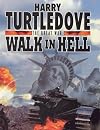
"Walk in Hell" -- the machinery of the war.
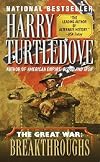
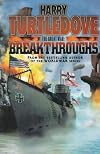
"Breakthroughs" -- the fallout of the war.
At the end of the war, the characters who fought in "Breakthroughs" are divided into two diverse camps. In one is the Let's Never Do This Again Camp. Some here wanted to punish the losers, preventing them from rising again, and others wanted to refrain from doing so. "Let them hate, as long as they fear." The other camp is the "Let's Get This War Behind Us So We Can Get Thinking About the Next One." I think bitterness runs deep in both.
Comparisons from WWI to today:
I saw a comparison in the book between the Socialist and Democratic Parties and today's Democratic and Republican Parties.
The coal board show more bureaucracy reminded me of LIHEAP, food stamps, Medicaid, Medicare, and Unemployment. Don't even get me started about trying to get Social Security Disability.
Back in WWI, a woman would lose her job to take off work to take care of her child/loved one. Despite current laws, this still happens today. If she works full-time, she will get paid only until her paid leave runs out. If she works part-time, she will get paid leave for the time off. There is no guarantee she will have a job when she comes back.
Wages rose but so did everything else, sometimes higher than the wages. show less
"Walk in Hell" -- the machinery of the war.
"Breakthroughs" -- the fallout of the war.
At the end of the war, the characters who fought in "Breakthroughs" are divided into two diverse camps. In one is the Let's Never Do This Again Camp. Some here wanted to punish the losers, preventing them from rising again, and others wanted to refrain from doing so. "Let them hate, as long as they fear." The other camp is the "Let's Get This War Behind Us So We Can Get Thinking About the Next One." I think bitterness runs deep in both.
Comparisons from WWI to today:
I saw a comparison in the book between the Socialist and Democratic Parties and today's Democratic and Republican Parties.
The coal board show more bureaucracy reminded me of LIHEAP, food stamps, Medicaid, Medicare, and Unemployment. Don't even get me started about trying to get Social Security Disability.
Back in WWI, a woman would lose her job to take off work to take care of her child/loved one. Despite current laws, this still happens today. If she works full-time, she will get paid only until her paid leave runs out. If she works part-time, she will get paid leave for the time off. There is no guarantee she will have a job when she comes back.
Wages rose but so did everything else, sometimes higher than the wages. show less
The ending to the Great War series. Overall, the best book of the three. If you made it this far in the series, you know the deal. Same players as histories WWI, just different sides and in different areas of the world. This story starts off fast and keeps going. Different characters continue to build upon within the story, and you learn a lot about the ongoing war through their eyes. The last book was worth the first two being a little slow at times. I still thought they themselves were solid reads.
Part of the "How Few Remain " Timeline, number three in this grouping. A very normal HT product but we try to keep track of our favourite characters, and know that the '30's lie ahead for us.
Audiobook
Members
- Recently Added By
Author Information

279+ Works 43,110 Members
Harry Turtledove was born in Los Angeles, California on June 14, 1949. He received a Ph.D. in Byzantine history from UCLA in 1977. From the late 1970's to the early 1980's, he worked as a technical writer for the Los Angeles County Office of Education. He left in 1991 to become full-time writer. His first two novels, Wereblood and Werenight, were show more published in 1979 under the pseudonym Eric G. Iverson because his editor did not think people would believe that Turtledove was his real name. He used this name until 1985 when he published Herbig-Haro and And So to Bed under his real name. He has received numerous awards including the Homer Award for Short Story for Designated Hitter in 1990, the John Esthen Cook Award for Southern Fiction for Guns of the Southand in 1993, and the Hugo Award for Novella for Down in the Bottomlands in 1994. (Bowker Author Biography) show less
All Editions
Series


Common Knowledge
- Canonical title
- The Great War: Breakthroughs
- Original title
- The Great War: Breakthroughs
- Original publication date
- 2000-08
- Important places
- USA; Confederate States of America
- Dedication
- To my readers.
- First words
- Klaxons hooted the call to battle stations.
- Last words
- (Click to show. Warning: May contain spoilers.)"We've got the damnyankees to catch up with, after all."
- Blurbers
- Anderson, Poul
- Original language
- English
Classifications
Statistics
- Members
- 803
- Popularity
- 34,272
- Reviews
- 7
- Rating
- (3.68)
- Languages
- English
- Media
- Paper, Audiobook, Ebook
- ISBNs
- 11
- ASINs
- 6