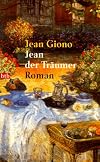
Blue Boy
by Jean Giono
On This Page
Description
A true forebear of magical realism, Giono creates men and women rooted in the folklore of provincial France. With a poet's grace and imagination, he weaves a grand story of the earth and of passion, of animals and weather, of the miracles we now call the laws of nature.Tags
Recommendations





















Member Reviews
So far the most attractive book of Giono's I've read, with the charm typical for childhood memoirs. The period spanned is from the turn of the century up to 1914, the year young Jean was conscripted to wage war, the place the hinterland of Provence. His father (of Italian, Piemontese extraction) was a shoemaker in a small town with many aspects of a village and at a certain age Jean was also sent to live an even more rural life with a shepherding family, to "man up". The book's chapters are composed of many vignettes describing the region and the characters, embedded or drifting through, especially men looking for work. It was a difficult time and poverty was omnipresent. One harsh winter decimates the population of the town through show more starvation and disease.
Giono, like his father, was very sympathetic to anarchism and this is still very much in evidence at the time the book was published, in particular in this segment, addressed to one of his friends killed in the war:
What would you have me do with this France which, it seems, you like me helped preserve? What would you have us do with it, we who have lost all our friends? Ah! If it were necessary to defend rivers, hills, mountains, skies, winds, rains, I'd say: "All right, that's our job. Let's fight, all our life's joy is here." No, we defended the false name of all that. Me, when I see a river I say "river", when I see a tree, I say "tree"; I never say "France". That doesn't exist.
Ah! How I'd give away all of that false name just so that one of those who died could live, the most simple, the most humble. Nothing can counterbalance the heart of a man. They are always there talking about God! It's God who flicked his finger against the scales of blood at the moment the child fell from his mother's opening. They are always there talking about God, and yet the only good thing God worked, the only thing God made, the life he himself, despite your imbecile sciences with spectacles, alone made, that life you crush at will in abominable mortars of mud and snot, with the blessings of all your churches. Lovely logic!
There is no glory in being French. There is only one glory: being alive. show less
Giono, like his father, was very sympathetic to anarchism and this is still very much in evidence at the time the book was published, in particular in this segment, addressed to one of his friends killed in the war:
What would you have me do with this France which, it seems, you like me helped preserve? What would you have us do with it, we who have lost all our friends? Ah! If it were necessary to defend rivers, hills, mountains, skies, winds, rains, I'd say: "All right, that's our job. Let's fight, all our life's joy is here." No, we defended the false name of all that. Me, when I see a river I say "river", when I see a tree, I say "tree"; I never say "France". That doesn't exist.
Ah! How I'd give away all of that false name just so that one of those who died could live, the most simple, the most humble. Nothing can counterbalance the heart of a man. They are always there talking about God! It's God who flicked his finger against the scales of blood at the moment the child fell from his mother's opening. They are always there talking about God, and yet the only good thing God worked, the only thing God made, the life he himself, despite your imbecile sciences with spectacles, alone made, that life you crush at will in abominable mortars of mud and snot, with the blessings of all your churches. Lovely logic!
There is no glory in being French. There is only one glory: being alive. show less
Less than entirely pleased; one of my favorite authors, this is largely fictionalized autobiography. I don’t know…I just somehow never quite connected with it though it certainly has its moments and some wonderful passage and, as always, his language is a pleasure.
Like eating a rich cheesecake--excellent, but best in small doses.
Jean Giono, an author I have not thought of for a while, was brought back to mind by another reader's (Kathrina Litchfield's) recommendation of a book called "Earth Abides" by George Stewart. Her description of a writing that takes the whole world into account with the human aspect merely a part of that whole made me remember Giono and what a revelation he was when I read him decades ago. Ecosystems, weather, plants, all take part in creating his books--they're not just scenery.
I have to go back and read him again.
I have to go back and read him again.
Jean wächst am Anfang des 20. Jahrhunderts in der Provence als Sohn eines Schusters und einer Büglerin auf. Der Ich-Erzähler erinnert sich in diesem autobiographischen Roman an seine Kindheit und Jugend.
Gionos Werk reiht Episoden zwar in chronologischer Abfolge - jedoch ohne weitere Rahmenhandlung - aneinander und schafft so ein Mosaik provencialischer Szenen. Er schildert ein ländliches, naturverbundenes Leben, mit glücklichem Unterton, obgleich im Roman Krankheit, Ungerechtigkeit, Armut, Tod und Eifersucht nicht ausspart sind.
Gionos Schlüsselwerk plätschert dementsprechend höhepunktlos dahin, teilweise ist den Handlungssprüngen auch nur mit großer Konzentration zu folgen. Interessanter ist der Roman dort, wo der Autor seine show more Lebensphilosophie - eine Art erdverbundenen Pazifismus - offenbart. show less
Gionos Werk reiht Episoden zwar in chronologischer Abfolge - jedoch ohne weitere Rahmenhandlung - aneinander und schafft so ein Mosaik provencialischer Szenen. Er schildert ein ländliches, naturverbundenes Leben, mit glücklichem Unterton, obgleich im Roman Krankheit, Ungerechtigkeit, Armut, Tod und Eifersucht nicht ausspart sind.
Gionos Schlüsselwerk plätschert dementsprechend höhepunktlos dahin, teilweise ist den Handlungssprüngen auch nur mit großer Konzentration zu folgen. Interessanter ist der Roman dort, wo der Autor seine show more Lebensphilosophie - eine Art erdverbundenen Pazifismus - offenbart. show less
Dec 20, 2023German
Ce roman relate la jeunesse de Giono, entre une mère repasseuse et un père cordonnier. Fidèle aux œuvres de Giono, le roman déborde d'anecdotes lumineuses et chargées de son doux parfum provençal.
Jul 18, 2007French
Une maison haute dans Manosque, avec un escalier étroit aux marches parfois traîtresses qui relie la blanchisserie du rez-de-chaussée, où s'active sa mère Pauline, au troisième où se trouve l'atelier de cordonnier de son père ?voilà le cadre où Jean Giono s'est éveillé à la vie, où il. apprend à sentir, à voir et à penser sous la garde vigilante de sa mère, modelé par la sagesse et l'agissante charité de son, père. Aux chants des repasseuses se mêlent les bêlements des moutons parqués dans la cour, les trilles des oiseaux en cage, la flÛte de Madame-la-Reine et le violon de Décidément qui l'initient à la musique des hommes. Déjà le monde se peuple pour lui de mystères et d'êtres qu'il déchiffre dans les show more nuages ou la tache d'eau sur une muraille, mais c 1 est quand on l'envoie se fortifier chez le berger Massot qu'il découvre la magie sensuelle de la campagne. Le récit autobiographique s'enrichit d'autres histoires. Il s'y greffe la fuite de la boulangère avec le berger des Conches la conjuration du feu neuf, les vendanges et les moisson~, les aventures et les drames d'un bourg provençal - et c'est sur le départ pour la guerre en 1914 que s'achève ce recueil de souvenirs d'enfance et de contes, vibrants de passion et de rêve. show less
Aug 14, 2010French
Members
- Recently Added By
Author Information

199+ Works 6,919 Members
Jean Giono was born in France on March 30, 1985. He was an author about whom Germaine Bree and M. Guiton have written, "When Giono's first novel, Colline (Hill of Destiny) appeared in 1929, it struck a fresh, new note. . . . After Proust and Gide, Duhamel and Romains, Cocteau and Giraudoux, what could be more restful than a world of wind and sun show more and simple men who apparently had never heard of psychological analysis, never confronted any social problems, never read any books. . ." (An Age of Fiction). Raised by his shoemaker father in a small town in the south of France, Giono's fiction has its roots in the peasant life of Provence. Horrified by his experiences in World War I, Giono returned to the world of his youth, which became the world of his imagination. After the shock of World War II, his novels seemed to gain in stature. One of his best is Horseman on the Roof (1951), his chronicle of the great cholera epidemic of 1838. Giono was honoured with the Prince Rainier of Monaco literary prize in 1953, awarded for his lifetime achievements, was elected to the Académie Goncourt in 1954, and became a member of the Conseil Littéraire of Monaco in 1963. Giono died of a heart attack in 1970. (Bowker Author Biography) show less
Series
Belongs to Publisher Series
Common Knowledge
- Canonical title*
- Jean le Bleu
- Original title
- Jean le bleu
- Original publication date
- 1932; 2024 (Nederlands) (Nederlands)
- First words
- Men of my age here remember the time when the road to Saint-Tulle was bordered by a serried row of poplars.
- Last words
- (Click to show. Warning: May contain spoilers.)It was easy for me to set out for the war without any great feeling of emotion, simply because I was young, and over all young men they were blowing a wind that sang of pirates and the ocean sail.
- Original language*
- Frans
*Some information comes from Common Knowledge in other languages. Click "Edit" for more information.
Classifications
- Genres
- Fiction and Literature, General Fiction
- DDC/MDS
- 843.912 — Literature & rhetoric French & related literatures French fiction 1900- 20th Century 1900-1945
- LCC
- PQ2613 .I57 .J413 — Language and Literature French, Italian, Spanish and Portuguese literatures French literature Modern literature 1900-1960
- BISAC
Statistics
- Members
- 173
- Popularity
- 188,394
- Reviews
- 8
- Rating
- (3.73)
- Languages
- 6 — Dutch, English, French, German, Italian, Spanish
- Media
- Paper, Audiobook, Ebook
- ISBNs
- 14
- ASINs
- 13