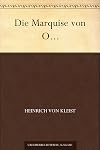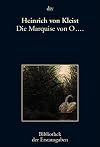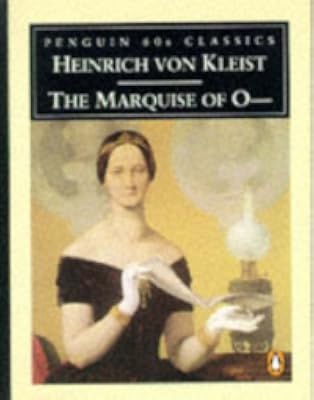
The Marquise of O
by Heinrich von Kleist
On This Page
Description
A vivid new translation of a timeless classic: Kleist's tense, ambiguous novella about an unexpected pregnancyIn a Northern Italian town during the Napoleonic Wars, Julietta, a young widow and mother of impeccable reputation, finds herself unexpectedly pregnant. This follows an attack on the town's citadel, in which several Russian soldiers tried to assault her before she was rescued by Count F-, at which point she fell unconscious. Thrown out of her father's house, Julietta publishes an show more announcement in the local newspaper stating that she is pregnant and would like the father of her child to make himself known so that she can marry him.
What follows is an ambiguously comic drama of sexuality and family respectability. One of Kleist's best-loved works, The Marquise of O- is an ingenious and timeless story of the mystery of human desire, and Nicholas Jacobs's new translation captures the full richness of its irony. show less
Tags
Recommendations




























Member Reviews
German poet, dramatist, novelist and short story writer Heinrich von Kleist (1777 – 1811) mixed with figures such as Achim von Arnim and Clemens Brentano, founders of the Romantic Movement in Germany, and could himself be considered one of the movement’s representatives – albeit an eccentric one. An encounter with Kant’s philosophy in 1801 shaped Kleist’s subsequent literary career, but also had a tragic influence on his life. He interpreted Kant’s view as implying the impossibility of ever establishing an objective truth and this led him into the dark alleys of an existential crisis from which he never fully recovered. He would eventually die by his own hand, in a murder-suicide planned with his then lover Henriette Vogel.
show more
The novella The Marquise of O- is possibly the best-known Kleist’s writings – it is available in several editions and translations (around half a dozen in English alone) and has also been turned into a film by Eric Röhmer (winner of the 1976 Cannes Festival Gran Prix Spécial) and a modern movie adaptation by Pappi Corsicato (Il seme della discordia, which participated in the 2008 Venice Film Festival).
Written in 1808, The Marquise of O- is set during the Napoleonic Wars and is based on a barely believable premise allegedly inspired by “a true incident whose location has been transferred from north to south”:
In M--, an important town in Northern Italy, the widowed Marquise of O—, a woman of impeccable reputation and mother of well-brought-up children, made it known through the newspapers that she had inexplicably found herself in a certain condition, that the father of the child she would bear should make himself known, and that out of regard for her family she was resolved to marry him.
The identity of the father is strongly hinted at from the very first pages of the novella, but what to the reader may seem obvious, remains a “mystery” to the Marquise until late in the book, and provides the narrative drive for the novella.
In Kleist’s prudish times, The Marquise of O— was condemned as an immoral. In our #metoo present, the novella is equally problematic, if for different reasons. It is based on an episode of rape, leading to some uncomfortable questions about the relationship between victim and perpetrator. And yet, it would be wrong to dismiss The Marquise of O— as an outdated, misogynist work because it clearly isn’t. From the theatrical cast of five – the Marquise, her parents, her brother and the Russian officer who wants to marry the Marquise – it is the mother and daughter who are portrayed more favourably. They are honourable and resourceful in a patriarchal world of bungling men. The novella is, ultimately, an enigmatic work, permeated with the same ambiguity Kleist (via Kant) perceived in the world around him.
What may also seem strange to the modern reader is the narrative voice – the novella is recounted throughout in the third person, but it portrays the thought processes of each of the characters, often creating the same “modern” effect as a first-person narrative.
In other words, The Marquise of O— is a story of its time, but also one which keeps raising questions today. For readers who, like me, are new to this novella, the edition recently issued as part of the ever-dependable Pushkin Classics series is a recommended choice. The new translation by Nicholas Jacobs is idiomatic and readable yet close to the text. Jacobs also provides an introduction to Kleist’s life and work, a biographical note and suggestions for further reading.
https://endsoftheword.blogspot.com/2019/11/Heinrich-von-Kleist-marquise-of-o.htm... show less
show more
The novella The Marquise of O- is possibly the best-known Kleist’s writings – it is available in several editions and translations (around half a dozen in English alone) and has also been turned into a film by Eric Röhmer (winner of the 1976 Cannes Festival Gran Prix Spécial) and a modern movie adaptation by Pappi Corsicato (Il seme della discordia, which participated in the 2008 Venice Film Festival).
Written in 1808, The Marquise of O- is set during the Napoleonic Wars and is based on a barely believable premise allegedly inspired by “a true incident whose location has been transferred from north to south”:
In M--, an important town in Northern Italy, the widowed Marquise of O—, a woman of impeccable reputation and mother of well-brought-up children, made it known through the newspapers that she had inexplicably found herself in a certain condition, that the father of the child she would bear should make himself known, and that out of regard for her family she was resolved to marry him.
The identity of the father is strongly hinted at from the very first pages of the novella, but what to the reader may seem obvious, remains a “mystery” to the Marquise until late in the book, and provides the narrative drive for the novella.
In Kleist’s prudish times, The Marquise of O— was condemned as an immoral. In our #metoo present, the novella is equally problematic, if for different reasons. It is based on an episode of rape, leading to some uncomfortable questions about the relationship between victim and perpetrator. And yet, it would be wrong to dismiss The Marquise of O— as an outdated, misogynist work because it clearly isn’t. From the theatrical cast of five – the Marquise, her parents, her brother and the Russian officer who wants to marry the Marquise – it is the mother and daughter who are portrayed more favourably. They are honourable and resourceful in a patriarchal world of bungling men. The novella is, ultimately, an enigmatic work, permeated with the same ambiguity Kleist (via Kant) perceived in the world around him.
What may also seem strange to the modern reader is the narrative voice – the novella is recounted throughout in the third person, but it portrays the thought processes of each of the characters, often creating the same “modern” effect as a first-person narrative.
In other words, The Marquise of O— is a story of its time, but also one which keeps raising questions today. For readers who, like me, are new to this novella, the edition recently issued as part of the ever-dependable Pushkin Classics series is a recommended choice. The new translation by Nicholas Jacobs is idiomatic and readable yet close to the text. Jacobs also provides an introduction to Kleist’s life and work, a biographical note and suggestions for further reading.
https://endsoftheword.blogspot.com/2019/11/Heinrich-von-Kleist-marquise-of-o.htm... show less
German poet, dramatist, novelist and short story writer Heinrich von Kleist (1777 – 1811) mixed with figures such as Achim von Arnim and Clemens Brentano, founders of the Romantic Movement in Germany, and could himself be considered one of the movement’s representatives – albeit an eccentric one. An encounter with Kant’s philosophy in 1801 shaped Kleist’s subsequent literary career, but also had a tragic influence on his life. He interpreted Kant’s view as implying the impossibility of ever establishing an objective truth and this led him into the dark alleys of an existential crisis from which he never fully recovered. He would eventually die by his own hand, in a murder-suicide planned with his then lover Henriette Vogel.
show more
The novella The Marquise of O- is possibly the best-known Kleist’s writings – it is available in several editions and translations (around half a dozen in English alone) and has also been turned into a film by Eric Röhmer (winner of the 1976 Cannes Festival Gran Prix Spécial) and a modern movie adaptation by Pappi Corsicato (Il seme della discordia, which participated in the 2008 Venice Film Festival).
Written in 1808, The Marquise of O- is set during the Napoleonic Wars and is based on a barely believable premise allegedly inspired by “a true incident whose location has been transferred from north to south”:
In M--, an important town in Northern Italy, the widowed Marquise of O—, a woman of impeccable reputation and mother of well-brought-up children, made it known through the newspapers that she had inexplicably found herself in a certain condition, that the father of the child she would bear should make himself known, and that out of regard for her family she was resolved to marry him.
The identity of the father is strongly hinted at from the very first pages of the novella, but what to the reader may seem obvious, remains a “mystery” to the Marquise until late in the book, and provides the narrative drive for the novella.
In Kleist’s prudish times, The Marquise of O— was condemned as an immoral. In our #metoo present, the novella is equally problematic, if for different reasons. It is based on an episode of rape, leading to some uncomfortable questions about the relationship between victim and perpetrator. And yet, it would be wrong to dismiss The Marquise of O— as an outdated, misogynist work because it clearly isn’t. From the theatrical cast of five – the Marquise, her parents, her brother and the Russian officer who wants to marry the Marquise – it is the mother and daughter who are portrayed more favourably. They are honourable and resourceful in a patriarchal world of bungling men. The novella is, ultimately, an enigmatic work, permeated with the same ambiguity Kleist (via Kant) perceived in the world around him.
What may also seem strange to the modern reader is the narrative voice – the novella is recounted throughout in the third person, but it portrays the thought processes of each of the characters, often creating the same “modern” effect as a first-person narrative.
In other words, The Marquise of O— is a story of its time, but also one which keeps raising questions today. For readers who, like me, are new to this novella, the edition recently issued as part of the ever-dependable Pushkin Classics series is a recommended choice. The new translation by Nicholas Jacobs is idiomatic and readable yet close to the text. Jacobs also provides an introduction to Kleist’s life and work, a biographical note and suggestions for further reading.
https://endsoftheword.blogspot.com/2019/11/Heinrich-von-Kleist-marquise-of-o.htm... show less
show more
The novella The Marquise of O- is possibly the best-known Kleist’s writings – it is available in several editions and translations (around half a dozen in English alone) and has also been turned into a film by Eric Röhmer (winner of the 1976 Cannes Festival Gran Prix Spécial) and a modern movie adaptation by Pappi Corsicato (Il seme della discordia, which participated in the 2008 Venice Film Festival).
Written in 1808, The Marquise of O- is set during the Napoleonic Wars and is based on a barely believable premise allegedly inspired by “a true incident whose location has been transferred from north to south”:
In M--, an important town in Northern Italy, the widowed Marquise of O—, a woman of impeccable reputation and mother of well-brought-up children, made it known through the newspapers that she had inexplicably found herself in a certain condition, that the father of the child she would bear should make himself known, and that out of regard for her family she was resolved to marry him.
The identity of the father is strongly hinted at from the very first pages of the novella, but what to the reader may seem obvious, remains a “mystery” to the Marquise until late in the book, and provides the narrative drive for the novella.
In Kleist’s prudish times, The Marquise of O— was condemned as an immoral. In our #metoo present, the novella is equally problematic, if for different reasons. It is based on an episode of rape, leading to some uncomfortable questions about the relationship between victim and perpetrator. And yet, it would be wrong to dismiss The Marquise of O— as an outdated, misogynist work because it clearly isn’t. From the theatrical cast of five – the Marquise, her parents, her brother and the Russian officer who wants to marry the Marquise – it is the mother and daughter who are portrayed more favourably. They are honourable and resourceful in a patriarchal world of bungling men. The novella is, ultimately, an enigmatic work, permeated with the same ambiguity Kleist (via Kant) perceived in the world around him.
What may also seem strange to the modern reader is the narrative voice – the novella is recounted throughout in the third person, but it portrays the thought processes of each of the characters, often creating the same “modern” effect as a first-person narrative.
In other words, The Marquise of O— is a story of its time, but also one which keeps raising questions today. For readers who, like me, are new to this novella, the edition recently issued as part of the ever-dependable Pushkin Classics series is a recommended choice. The new translation by Nicholas Jacobs is idiomatic and readable yet close to the text. Jacobs also provides an introduction to Kleist’s life and work, a biographical note and suggestions for further reading.
https://endsoftheword.blogspot.com/2019/11/Heinrich-von-Kleist-marquise-of-o.htm... show less
Je confesse ne l'avoir lu qu'après avoir vu le film d'Erc Rohmer
Kleist est un auteur romantique allemand par excellence, non ? Tellement emblématique qu’il se suicide à l’âge de 34 ans. Pourtant cette nouvelle, un art dans lequel Kleist s’est fait remarqué, même s’il reste avant tout un dramaturge, est plutôt cocasse. L’histoire d’une femme de la bonne société, veuve vertueuse, violée sans s’en apercevoir, tombant enceinte sans comprendre et rejetée par sa propre famille parce que, franchement, ça ne se fait pas ! S’ensuit toute une histoire rocambolesque pour retrouver le père de l’enfant, avec moult rebondissements, en général assez prévisibles mais vraiment risibles. Et la fin, très rose bonbon est un sommet de cynisme…
Une belle critique de la société show more bourgeoise et aristocratique campée sur ses valeurs immuables, dans un style assez loufoque que je ne m’attendais pas à trouver sous la plume de cet auteur. Je me suis bien amusée tout au long de cette lecture, des plus divertissantes, et dont le principal enjeu était de savoir jusqu’où Kleist oserait aller. Et il ose beaucoup, pour le plus grand plaisir (un peu sadique) du lecteur ! show less
Une belle critique de la société show more bourgeoise et aristocratique campée sur ses valeurs immuables, dans un style assez loufoque que je ne m’attendais pas à trouver sous la plume de cet auteur. Je me suis bien amusée tout au long de cette lecture, des plus divertissantes, et dont le principal enjeu était de savoir jusqu’où Kleist oserait aller. Et il ose beaucoup, pour le plus grand plaisir (un peu sadique) du lecteur ! show less
Jul 20, 2015French
Beau texte adapté au cinéma par Rohmer. Ambiguité d'un viol qui finit "bien".
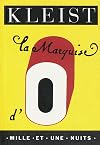
La couverture de Marion Bataille est magnifique.
A propos du film : « En respectant les règles de la “comédie larmoyante”, Rohmer a mis en scène, avec beaucoup d'intelligence, une suite de tableaux de mœurs se référant picturalement à Greuze, Füssli, Caspar David Friedrich. Tout est admirablement composé, jusque dans les situations excessives et les états d'âme du romantisme allemand. Les acteurs prennent la pose en fonction de leurs rôles, et l'on retrouve, ainsi, l'esprit d'une époque, avec pas mal de surprises, d'ailleurs. » Jacques Siclier, Télérama, 19 juillet 2012
La couverture de Marion Bataille est magnifique.
A propos du film : « En respectant les règles de la “comédie larmoyante”, Rohmer a mis en scène, avec beaucoup d'intelligence, une suite de tableaux de mœurs se référant picturalement à Greuze, Füssli, Caspar David Friedrich. Tout est admirablement composé, jusque dans les situations excessives et les états d'âme du romantisme allemand. Les acteurs prennent la pose en fonction de leurs rôles, et l'on retrouve, ainsi, l'esprit d'une époque, avec pas mal de surprises, d'ailleurs. » Jacques Siclier, Télérama, 19 juillet 2012
Mar 2, 2025 (Edited)French
Un grand classique sur l'amour passion
Apr 25, 2011French
Members
- Recently Added By
Lists

Favourite 19th century fiction
257 works; 60 members
Author Information

439+ Works 6,397 Members
Some Editions
Awards and Honors
Series
Belongs to Publisher Series
Work Relationships
Is contained in
Des lebens Ueberfluss: Liebe in deutschen Erzaehlungen von Grimmelshausen bis Gerhart Hauptmann by R Hochhuth, ed.
Suhrkamp BasisBibliothek : Kleist : Das Erdbeben in Chili + Die Marquise von O... + Die Verlobung in St. Domingo by Helmut Nobis
Hamburger Lesehefte plus Königs Materialien : Heinrich von Kleist : Die Marquise von O... by Dirk Jürgens (indirect)
Has as a commentary on the text
Has as a student's study guide
Suhrkamp BasisBibliothek : Kleist : Das Erdbeben in Chili + Die Marquise von O... + Die Verlobung in St. Domingo by Helmut Nobis
Common Knowledge
- Canonical title
- The Marquise of O
- Original title
- Die Marquise von O... [Novelle]
- Original publication date
- 1808
- First words
- In M-, an important town in northern Italy, the widowed Marquise of O-, a lady of unblemished reputation and the mother of several well-brought-up children, inserted the following announcement in the newspapers: that she had,... (show all) without knowledge of the cause, come to find herself in a certain situation; that she would like the father of the child she was expecting to disclose his identity to her; that she was resolved, out of consideration to her family, to marry him.
- Last words
- (Click to show. Warning: May contain spoilers.)Throwing her arms around his neck, she answered that she would not have seen a devil in him then if she had not seen an angel in him at their first meeting.
- Original language*
- Duits
- Disambiguation notice
- This work contains the single novella The Marquise of O. If your copy contains 2 or more stories, it should be separated out and combined with the correct work.
*Some information comes from Common Knowledge in other languages. Click "Edit" for more information.
Classifications
- Genres
- Fiction and Literature, General Fiction
- DDC/MDS
- 833.6 — Literature & rhetoric German & related literatures German fiction 1750-1832 : 18th century, classical period, romantic period
- LCC
- PT2378 — Language and Literature German, Dutch and Scandinavian literatures German literature Individual authors or works 1700-ca. 1860/70
- BISAC
Statistics
- Members
- 359
- Popularity
- 87,678
- Reviews
- 7
- Rating
- (3.48)
- Languages
- 9 — Catalan, Czech, Dutch, English, French, German, Italian, Russian, Spanish
- Media
- Paper, Audiobook, Ebook
- ISBNs
- 53
- ASINs
- 14