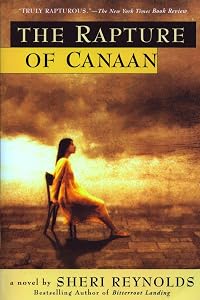
The Rapture of Canaan
by Sheri Reynolds
On This Page
Description
At the Church of Fire and Brimstone and Gods Almighty Baptizing Wind, Grandpa Herman makes the rules for everyone, and everyone obeys, or else. Try as she might, Ninah hasn't succeeded in resisting temptation her prayer partner, James and finds herself pregnant. She fears the wrath of Grandpa Herman, the congregation and of God Himself. But the events that follow show Ninah that Gods ways are more mysterious than even Grandpa Herman understands..
Tags
Recommendations











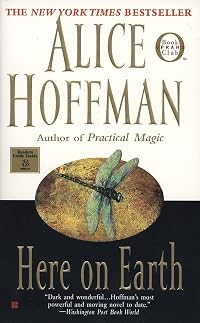
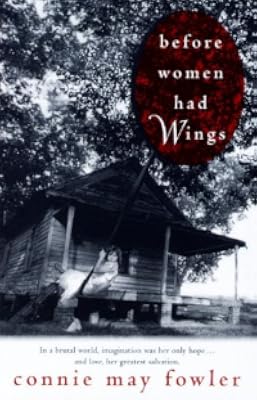
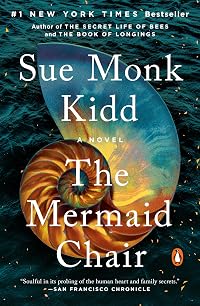



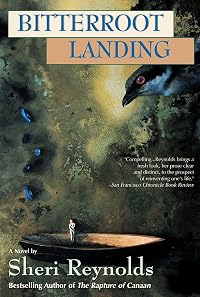


Member Reviews
The Rapture of Canaan is the story of a young girl’s coming of age within the confines of the Christian cult her grandfather devised. She struggles to understand her place in a community ruled more by her grandfather, Pastor Herman, than by Jesus. She’s desperate to avoid the sin her grandfather preaches against and uncertain why she doesn’t feel the connection to Jesus that has her family speaking in tongues and crying out to God during Sunday services. Into this confusion comes James, her prayer partner, and the two are equally torn by their desire to please God (or maybe just Pastor Herman) and to explore their newfound feelings for each other. When Ninah finds herself pregnant and abandoned, she fears her life in the church show more and the only community she’s ever known is over, but it may be that her indiscretion and its unexpected outcome will change the lives of the congregants of the Church of Fire and Brimstone and God’s Almighty Baptizing Wind forever.
This story starts off quickly with simple prose and a sympathetic narrator in Ninah. She has had the laws of the church drummed into her but finds herself confused that all the rhetoric and suffering for Jesus doesn’t produce the spiritual outpouring in her that she witnesses in the rest of her family and community. In fact, at points in the early going the writing style actually seems too simplistic, and I found myself bored for just the briefest moment before the story rapidly picked up steam.
As Ninah begins to experience the consequences of her pregnancy, the book plumbs the depths of radical religion, the fragility of community, the mysterious ways of God, and the weaknesses of self-proclaimed arbiters of right and wrong. Reynolds has created a very captivating picture of a community dominated by a charismatic leader. Ninah’s journey to discovery of what she herself will choose to believe is compelling reading. show less
This story starts off quickly with simple prose and a sympathetic narrator in Ninah. She has had the laws of the church drummed into her but finds herself confused that all the rhetoric and suffering for Jesus doesn’t produce the spiritual outpouring in her that she witnesses in the rest of her family and community. In fact, at points in the early going the writing style actually seems too simplistic, and I found myself bored for just the briefest moment before the story rapidly picked up steam.
As Ninah begins to experience the consequences of her pregnancy, the book plumbs the depths of radical religion, the fragility of community, the mysterious ways of God, and the weaknesses of self-proclaimed arbiters of right and wrong. Reynolds has created a very captivating picture of a community dominated by a charismatic leader. Ninah’s journey to discovery of what she herself will choose to believe is compelling reading. show less
I read this book on the recommendation of a fellow LTer and we had a challenge – I’d read this if he’d read Slaughterhouse Five by Kurt Vonnegut. It’s been a great challenge and I’m glad I read the book.
The Rapture of Canaan flowed like honey. It’s one of the quickest reads for me this year, yet is a very powerful story. It tells the tale of Ninah, a teenage girl who lives in a separatist Pentacostal Christian community in the South, a member of The Church of Fire and Brimstone and God's Almighty Baptizing Wind. The church and the individual lives of the members are rigidly controlled by her grandfather, Grandpa Herman, the founder of the church. Ninah is particularly close to her grandmother Nanna. She becomes close to her show more prayer partner James.
I almost got sick reading the punishments and religious twaddle espoused by Grandpa Herman. People kept in cellars for 40 days for drinking, made to lie overnight in graves, dunked in cages in rivers, strapped, beaten, shunned. Mortification of the flesh with barbed wire, nettles, pecan shells. All were done to purge the sinner of sin and lead them to the loving arms of Jesus. Except that Grandpa Herman believes more in the God of the Old Testament, less in the loving Son of the New. Fear of damnation, threats of eternal hellfire and being left behind when The Rapture comes all keep the congregants in line and fearful, cowed and submissive.
I hate hearing about this kind of lifestyle. This is the reason I didn’t want to read the book initially. This kind of religious belief system strikes at the core of everything I hate about organized religion.
Yet, once started, I found myself compelled to read it quickly, to learn what happens to Ninah and James, Caanan and Nanna.
The writing was beautiful, simple and powerful. I found Ninah immediately likeable for her honest and heartbreaking “voice” – her questioning of things yet firm belief that these questions would earn her a place in hell, a place left behind after everybody else was taken in The Rapture. She’s willing to take her punishments although she starts to wonder why. The writing was also vivid and evocative of a time and place not so unfamiliar to someone who lives in the South. The rhythms of nature drive the lifestyle of these people and are accurately captured in the narrative and emphasize the rigid roles of men and women, boys and girls.
It is one of the more memorable reads of 2009 for me. I would never have predicted that I would like it so much. show less
The Rapture of Canaan flowed like honey. It’s one of the quickest reads for me this year, yet is a very powerful story. It tells the tale of Ninah, a teenage girl who lives in a separatist Pentacostal Christian community in the South, a member of The Church of Fire and Brimstone and God's Almighty Baptizing Wind. The church and the individual lives of the members are rigidly controlled by her grandfather, Grandpa Herman, the founder of the church. Ninah is particularly close to her grandmother Nanna. She becomes close to her show more prayer partner James.
I almost got sick reading the punishments and religious twaddle espoused by Grandpa Herman. People kept in cellars for 40 days for drinking, made to lie overnight in graves, dunked in cages in rivers, strapped, beaten, shunned. Mortification of the flesh with barbed wire, nettles, pecan shells. All were done to purge the sinner of sin and lead them to the loving arms of Jesus. Except that Grandpa Herman believes more in the God of the Old Testament, less in the loving Son of the New. Fear of damnation, threats of eternal hellfire and being left behind when The Rapture comes all keep the congregants in line and fearful, cowed and submissive.
I hate hearing about this kind of lifestyle. This is the reason I didn’t want to read the book initially. This kind of religious belief system strikes at the core of everything I hate about organized religion.
Yet, once started, I found myself compelled to read it quickly, to learn what happens to Ninah and James, Caanan and Nanna.
The writing was beautiful, simple and powerful. I found Ninah immediately likeable for her honest and heartbreaking “voice” – her questioning of things yet firm belief that these questions would earn her a place in hell, a place left behind after everybody else was taken in The Rapture. She’s willing to take her punishments although she starts to wonder why. The writing was also vivid and evocative of a time and place not so unfamiliar to someone who lives in the South. The rhythms of nature drive the lifestyle of these people and are accurately captured in the narrative and emphasize the rigid roles of men and women, boys and girls.
It is one of the more memorable reads of 2009 for me. I would never have predicted that I would like it so much. show less
I came to this book with some trepidation, not even sure why I'd bought it in a thrift store and started reading it almost immediately. Another female, Southern coming of age story. I've been burned by one or two such this year. However, this book is something different altogether. The story of a girl, Ninah, yes, coming of age in a small isolated religious community (The Church of Fire and Brimstone and God's Almighty Baptizing Wind), run with an iron fist by the community's founder and the narrator's grandfather, Herman. A fundamentalist Christian community, one might say, although many of these fundamentals seem to be only in Herman's mind. He keeps the community's 60 or so members on the straight and narrow through some frequently show more bizarre means, such as making members who have broken one of his many rules spend a night sleeping in an open grave to think more directly about the wages of sin.
But Reynolds has a deft and knowing touch with character, and everyone we meet here, even Herman, is drawn in rounded, human terms. The book is the story of Ninah's self-discovery, her inevitable introduction both to the outside world and to the happy/tragic aspects of adulthood. The story, I have to say, I felt to be a little slow getting going, but overall was compelling and credible. You care about the characters, and especially the protagonist, and you believe what they're going through. And, perhaps best of all, Reynolds' writing style is direct and winning. She has a relatively light and wonderful facility with metaphor, never overdoing it and almost always dead on target. Here's the passage that won me over to the narrative, found in my edition on page 37:
"At Fire and Brimstone, we all looked alike, and that made me lonely, too. We didn't all have the same color eyes or the same textured hair, but it really didn't matter. Our shadows came in two varieties: male and female.
We were all lanky. We all dressed alike. We slept in the same hard beds and washed with soaps made from the same iron pot. All the men wore beards clipped close and work boots that left the same muddy tracks. All the women pulled their hair into buns and left their faces bare for the sun to adorn as it would.
We may has well have been skeletons, unidentifiable. We may as well have interchanged our bones.
I used to pray that God would stunt my growth and keep me little--so at least my frame wouldn't be confused with anyone else's.
Pammy was the relative closest to my size, and as we grew towards being lost in bodies all the same, I'd do my best to make my shadow different, even from hers. Afternoons as we marched through fields, I'd study our shapes bruised on the ground and pull myself up taller of fling out my arms to keep from getting confused about which shape belonged to her and which shape belonged to me."
Simple, clear, compelling and effective. Like the book as a whole. show less
But Reynolds has a deft and knowing touch with character, and everyone we meet here, even Herman, is drawn in rounded, human terms. The book is the story of Ninah's self-discovery, her inevitable introduction both to the outside world and to the happy/tragic aspects of adulthood. The story, I have to say, I felt to be a little slow getting going, but overall was compelling and credible. You care about the characters, and especially the protagonist, and you believe what they're going through. And, perhaps best of all, Reynolds' writing style is direct and winning. She has a relatively light and wonderful facility with metaphor, never overdoing it and almost always dead on target. Here's the passage that won me over to the narrative, found in my edition on page 37:
"At Fire and Brimstone, we all looked alike, and that made me lonely, too. We didn't all have the same color eyes or the same textured hair, but it really didn't matter. Our shadows came in two varieties: male and female.
We were all lanky. We all dressed alike. We slept in the same hard beds and washed with soaps made from the same iron pot. All the men wore beards clipped close and work boots that left the same muddy tracks. All the women pulled their hair into buns and left their faces bare for the sun to adorn as it would.
We may has well have been skeletons, unidentifiable. We may as well have interchanged our bones.
I used to pray that God would stunt my growth and keep me little--so at least my frame wouldn't be confused with anyone else's.
Pammy was the relative closest to my size, and as we grew towards being lost in bodies all the same, I'd do my best to make my shadow different, even from hers. Afternoons as we marched through fields, I'd study our shapes bruised on the ground and pull myself up taller of fling out my arms to keep from getting confused about which shape belonged to her and which shape belonged to me."
Simple, clear, compelling and effective. Like the book as a whole. show less
This book was hard to put down! Although I was raised in the Catholic church, I don't practise anymore. To me, faith is a very private thing and I prefer to keep my relationship with God between me and God. I find stories like this one fascinating - how a whole community of people can exist this way. While reading, I kept thinking how brainwashed the characters were and I encouraged those teetering on the edge to find the courage and strength to push through the barriers around their community and break free! The ending did leave me hanging - wanting to know more about how things were going to go, but overall, I did love this book.
I was skeptical about reading this book because I thought it would have a strong religious bent, but found that once I started it, I simply couldn't put it down. . . Ninah belongs to the Church of Fire and Brimstone and God's Almighty Baptizing Wind- invented by her grandfather who gathered his family members, their spouses, offspring and cousins as his followers. There's about eighty people in the congregation and they live together on a communal farm. (They raise tobacco as a cash crop and the leader divides the profits among the members, but seems to keep most for himself). In this group, strict obedience is required, it seems like any kind of pleasure is forbidden, and harsh punishments are meted out. Infractions such as talking show more back to elders, drinking alcohol, or women cutting their hair are met with punishments like wearing barbed wire under your shirt, sleeping on nettles and thorns in the bed, having to lie in a freshly-dug open grave all night, or being locked in the cellar for weeks. The followers are taught that they must be pious, constantly pray and wait for the rapture when the righteous will be lifted up to heaven. They speak in tongues during some wild-sounding church meetings, really unlike anything I've read about before. It was something to see- how the author wrote this character made me finally comprehend (a little bit) how a person could get caught up in that kind of belief system.
Ninah isn't sure she believes, though. She's afraid of the punishments and wants to feel close to God but also questions some things and finds herself growing attracted to James, her prayer partner. She's allowed to have private prayer sessions with James because the older folks see them as making a good match someday, and counsel the young people to seek out their hearts in prayer together. This goes in another direction, when Ninah and James convince themselves that their growing feelings for each other are a manifestation of God's love, so thus it can't be a sin when they express those feelings. Ninah ends up pregnant. The community does not react positively, to say the least. What follows is not at all what I expected, and I was gripped to the last page to find out what would happen to Ninah and the baby. Some parts of this story made me scratch my head, or roll my eyes- it's really weird in a few parts- and I wasn't too taken by the weaving metaphor- but the voice is lively, and the story compelling, of this young girl trying to find her way and lift her voice above all the strictures she lives with. (Especially as she sees how other kids are different, because she attends public school). The ending felt rather abrupt, but not enough to make me actively dislike the book. I would have liked to know more about how things worked out, but at least the community was starting to turn in a different direction by then.
from the Dogear Diary show less
Ninah isn't sure she believes, though. She's afraid of the punishments and wants to feel close to God but also questions some things and finds herself growing attracted to James, her prayer partner. She's allowed to have private prayer sessions with James because the older folks see them as making a good match someday, and counsel the young people to seek out their hearts in prayer together. This goes in another direction, when Ninah and James convince themselves that their growing feelings for each other are a manifestation of God's love, so thus it can't be a sin when they express those feelings. Ninah ends up pregnant. The community does not react positively, to say the least. What follows is not at all what I expected, and I was gripped to the last page to find out what would happen to Ninah and the baby. Some parts of this story made me scratch my head, or roll my eyes- it's really weird in a few parts- and I wasn't too taken by the weaving metaphor- but the voice is lively, and the story compelling, of this young girl trying to find her way and lift her voice above all the strictures she lives with. (Especially as she sees how other kids are different, because she attends public school). The ending felt rather abrupt, but not enough to make me actively dislike the book. I would have liked to know more about how things worked out, but at least the community was starting to turn in a different direction by then.
from the Dogear Diary show less
An interesting book set in a Pentecostal community where EVERYTHING pleasurable is forbidden. Story is told by Ninah, a young girl who is coming of age in this tormented community. The story opens your eyes to these types of communities and why lies beneath that can rock the foundation of those communities. A book that would generate a great discussion for a book club.
This book was required reading in an anthropology class on cults and small religious sects. It is not a book I would have picked up to read on my own. It is easy to read, so it was a good introduction to an extended family, Christian cult-type group for students who hadn’t read about cults before (plus the fact that it is fiction rather than an academic analysis). Personally, I did not enjoy the book, but I do appreciate how it illuminates behaviors in a cult-like setting and gave understanding to classmates who hadn’t grasped what those are like, so I gave it 3 stars.
Members
- Recently Added By
Lists

Oprah's Book Club (original and 2.0)
91 works; 21 members
Talk Discussions
Past Discussions
story about a young girl growing up in her grandfathers cult like community in Name that Book (March 2016)
Author Information

7 Works 3,471 Members
Sheri Reynolds teaches writing and literature at Old Dominion University.
Some Editions
Awards and Honors
Distinctions
Common Knowledge
- Original publication date
- 1996-01
- People/Characters
- Ninah; James
- Dedication
- For Mary Smith Cannon
- First words
- I've spent a lot of time weaving, but you'd never know it from my hands.
- Last words
- (Click to show. Warning: May contain spoilers.)They will speak like prophets.
Classifications
Statistics
- Members
- 2,227
- Popularity
- 9,016
- Reviews
- 36
- Rating
- (3.65)
- Languages
- English, German
- Media
- Paper, Audiobook, Ebook
- ISBNs
- 19
- UPCs
- 1
- ASINs
- 13