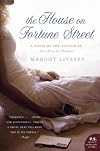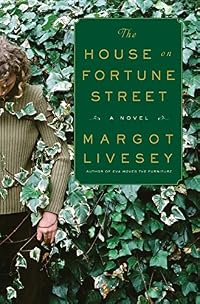
The House on Fortune Street
by Margot Livesey
On This Page
Description
Reveals how luck-- good and bad-- plays a vital role in our lives, and how the search for truth can prove a dangerous undertaking.Tags
Recommendations
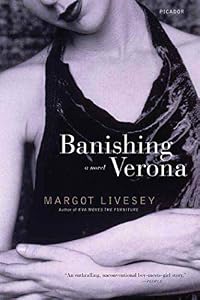









Member Recommendations
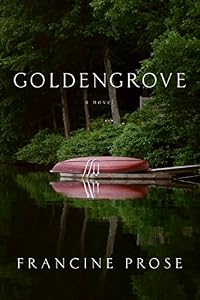
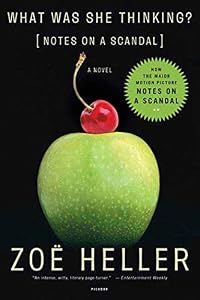
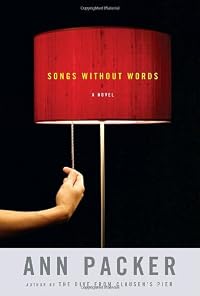
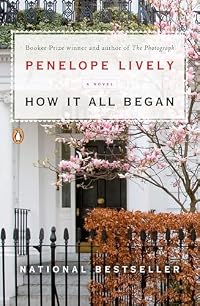
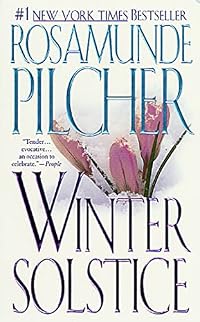
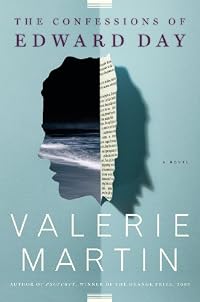
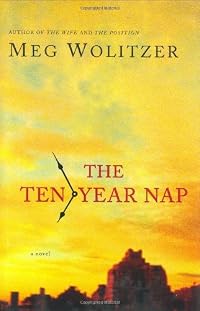
BookshelfMonstrosity Both A Visit from the Good Squad and The House on Fortune Street follow the often unexpected intricacies of human relationships of a handful of young adults.
Member Reviews
Told in four distinct sections, this novel is a powerful and affecting story centering around the way in which the characters connect and disconnect with each other, the ways in which we fail each other, and how self-absorbtion overtakes and smothers. The narrative is both set in the present and the past and the minute details serve to explain and illuminate the tragedy whose thread runs through each of the stories told between the covers.
First in the story is Sean, the boyfriend of Abigail, who owns the eponymous house. He is completely blocked on his doctoral dissertation and taking on questionable writing projects with a partner whom he doesn't respect in order to pay his share of the rent upon which arrangement Abigail insists show more despite the fact that he left his wife for her. As Sean and Abigail's relationship disintegrates, Sean becomes more and more fascinated by his current writing project on suicide. Wanting to discuss the project, he turns, very occasionally to Dara, Abigail's friend from university who lives in the basement flat of the house on Fortune Street.
The second section focuses on Cameron, Dara's father, who left his wife and children many years ago and who has hidden distasteful things about himself from his children. He is (or was) an amateur photographer whose kinship of feeling with Charles Dodgson is disturbing and is detailed during this section through important and defining snapshots of Dara's childhood and pre-pubescence.
The third section opens with Dara meeting Edward, her elusive boyfriend whose presence or absence mirrors Dara's feelings. Happy when she can spend time with him but miserable when he has disappeared into his other life (he still lives with his partner, the mother of his child), Dara is more similar than not to the women she counsels at the crisis center where she works, pinning her hopes on an unreliable man. In addition to the woes in her love life, Dara's working life is fully fleshed out in this section as is her adult relationship with her father, helping to create a more complete picture of Dara.
The fourth section centers on Abigail's college memories and her entrance into Dara's life, filling in the last bit of the puzzle that is this story. And while the reader has long known where the story has no choice but to go having read the climax in the first section, this final narrative wraps everything up so that it, as a whole, feels authentic and somehow understandable.
I am still thinking about the power of this one, many days after having finished it. It's an interesting novel in terms of format and aside from the jolt of trying to figure out who Cameron was after the focus on Sean, I think the four sections were successful. There's much fodder for discussion here and the writing was simply luminous. I loved the constant literary connections, often made overtly, in this book, pairing each main character with a major British literary figure. There is a somewhat desperate and desolate feel to the narratives so don't look here for a happily ever after although Livesey has managed to inject a certain small measure of cautious hope by the end. But for a searching and insightful look at human nature, our flaws and weaknesses, and the way we fail each other in and out of the many different types of love, this is masterful. show less
First in the story is Sean, the boyfriend of Abigail, who owns the eponymous house. He is completely blocked on his doctoral dissertation and taking on questionable writing projects with a partner whom he doesn't respect in order to pay his share of the rent upon which arrangement Abigail insists show more despite the fact that he left his wife for her. As Sean and Abigail's relationship disintegrates, Sean becomes more and more fascinated by his current writing project on suicide. Wanting to discuss the project, he turns, very occasionally to Dara, Abigail's friend from university who lives in the basement flat of the house on Fortune Street.
The second section focuses on Cameron, Dara's father, who left his wife and children many years ago and who has hidden distasteful things about himself from his children. He is (or was) an amateur photographer whose kinship of feeling with Charles Dodgson is disturbing and is detailed during this section through important and defining snapshots of Dara's childhood and pre-pubescence.
The third section opens with Dara meeting Edward, her elusive boyfriend whose presence or absence mirrors Dara's feelings. Happy when she can spend time with him but miserable when he has disappeared into his other life (he still lives with his partner, the mother of his child), Dara is more similar than not to the women she counsels at the crisis center where she works, pinning her hopes on an unreliable man. In addition to the woes in her love life, Dara's working life is fully fleshed out in this section as is her adult relationship with her father, helping to create a more complete picture of Dara.
The fourth section centers on Abigail's college memories and her entrance into Dara's life, filling in the last bit of the puzzle that is this story. And while the reader has long known where the story has no choice but to go having read the climax in the first section, this final narrative wraps everything up so that it, as a whole, feels authentic and somehow understandable.
I am still thinking about the power of this one, many days after having finished it. It's an interesting novel in terms of format and aside from the jolt of trying to figure out who Cameron was after the focus on Sean, I think the four sections were successful. There's much fodder for discussion here and the writing was simply luminous. I loved the constant literary connections, often made overtly, in this book, pairing each main character with a major British literary figure. There is a somewhat desperate and desolate feel to the narratives so don't look here for a happily ever after although Livesey has managed to inject a certain small measure of cautious hope by the end. But for a searching and insightful look at human nature, our flaws and weaknesses, and the way we fail each other in and out of the many different types of love, this is masterful. show less
Wasn't completely hooked at the beginning - I was thrown off because the book starts with Sean's section, whereas the flap copy made it seem like the friendship between the two girls, Dara and Abigail, was central - but I got more interested partway through Sean's section, and I loved Cameron's, Dara's, and Abigail's. The four sections, from four different points of view (with no switching back and forth, but pieces falling into place and making sense throughout), give the reader to understand how impossible it is to understand other people - what hidden things go on in their lives, the deep currents of feeling that are invisible, unguessable, mystifying. I can already tell I will forget, to some extent, the twists and turns of the show more story and the characters' relationships, and I will enjoy re-reading it sometime in the future.
What I came to understand was that there is a level of pain that destroys a person. If you take enough medicine to avoid that pain, you don't become your old self; you become a drugged zombie. (48)
All that fuss about the tree in the forest, watched or unwatched, was mere wishful thinking. If a passionately concerned participant made no difference, why on earth should a detached observer? (176)
This was another kind of magical thinking she had learned was common. When she wasn't keeping ill fortune at bay by imagining crises, she was doing her best to attract good fortune by pretending it was already present. (181)
"Secrecy isn't always a lie. People talk nowadays as if there are no taboos, as if everyone should act on their feelings, but what if you have the wrong feelings, what are you meant to do then?" (Cameron to Dara, 227)
"It doesn't matter how stupid the reasons are, if you're in the grip of a feeling it isn't stupid. You can't imagine it will ever change." (Dara to Abigail, 265) show less
What I came to understand was that there is a level of pain that destroys a person. If you take enough medicine to avoid that pain, you don't become your old self; you become a drugged zombie. (48)
All that fuss about the tree in the forest, watched or unwatched, was mere wishful thinking. If a passionately concerned participant made no difference, why on earth should a detached observer? (176)
This was another kind of magical thinking she had learned was common. When she wasn't keeping ill fortune at bay by imagining crises, she was doing her best to attract good fortune by pretending it was already present. (181)
"Secrecy isn't always a lie. People talk nowadays as if there are no taboos, as if everyone should act on their feelings, but what if you have the wrong feelings, what are you meant to do then?" (Cameron to Dara, 227)
"It doesn't matter how stupid the reasons are, if you're in the grip of a feeling it isn't stupid. You can't imagine it will ever change." (Dara to Abigail, 265) show less
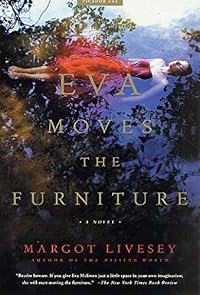
This was fantastic. I've been a Livesey fan since I read Eva Moves the Furniture but slightly disappointed with everything since. Not this one.
The novel is made up of four interlocking chapters that all concern - in one way or another - the death of one of characters. Each chapter is told by or is about different character and each is influenced by a book or author - Dickens, Keats, Jane Eyre, and Charles Dodgson (Lewis Carroll). The chapters comment and inform on one another in a way that is fairly dazzling. And yet, at the end, everything isn't tied up neatly. You understand more than you did at the outset but there are still gaps.
The novel is made up of four interlocking chapters that all concern - in one way or another - the death of one of characters. Each chapter is told by or is about different character and each is influenced by a book or author - Dickens, Keats, Jane Eyre, and Charles Dodgson (Lewis Carroll). The chapters comment and inform on one another in a way that is fairly dazzling. And yet, at the end, everything isn't tied up neatly. You understand more than you did at the outset but there are still gaps.
The House on Fortune Street is a leisurely novel about how our past reflects upon our future, and how our relationships with others are inextricably linked to how we integrate events from our childhood.
The book is broken into four separate parts – each narrated by a different character. Abigail is an actress and playwright who immerses herself in loveless sex, protecting herself from the intimacy she knows may hurt her. Sean has left his wife and struggles to complete his dissertation on Keats. He moves into the Fortune Street house with Abigail and finds himself regretting his decisions. Dara is Abigail’s best friend from college. Highly sensitive, she works as a counselor and longs to find true love and start a family, but her show more questions about why her father abandoned his family when she was a young girl overshadow her happiness. Cameron, Dara’s father, is living with a secret and struggling to come to terms with yearnings he is unable to explain.
Early in the novel, a pivotal event occurs … and from this point onward the reader searches for understanding of each character’s motivation, desire, and fears. Livesey has given each character “a literary godparent” – an author who the character relates to and provides further understanding of that character’s personality. For Sean, Keats provides that role; for Abigail is is Charles Dickens; Dara relates to Charlotte Bronte, and the novel Jane Eyre; and Cameron connects with Charles Dodgson (better known as Lewis Carroll).
Margot Livesey’s prose is gentle and probing. In The House on Fortune Street she brings her story together with patience, carefully flushing out each character and putting together the pieces of their lives as though constructing a psychological jigsaw puzzle. Thematically she explores the idea of luck or chance vs. choice, and examines the role which early childhood plays in the development of our personalities. Specifically, she gives the reader a glimpse into the complexity of women’s friendships – the intimacy, as well as the secrecy which these types of relationships engender.
I found myself deeply involved in the lives of Livesey’s characters – I grew to care about them, to wonder about their choices, and to sympathize with their struggles. The format of the novel – a series of interlocking narratives – gave depth to the story which might not have happened if told only through the eyes of one character.
The House on Fortune Street is a heartbreaking tale which deals with some uncomfortable subject matter. It is not filled with action, but requires patience and a slow reading to fully appreciate. There are no sudden “aha” moments, but rather a gradual realization and understanding of the underlying message of the novel. At times I wanted to flip ahead to get to the nitty-gritty of the story, but I am glad I restrained myself from doing so as I think I would have been disappointed that there are no easy answers in this book.
Readers who enjoy well-written literary fiction will like Livesey’s style. Written with sensitivity and compassion, The House on Fortune Street is recommended. show less
The book is broken into four separate parts – each narrated by a different character. Abigail is an actress and playwright who immerses herself in loveless sex, protecting herself from the intimacy she knows may hurt her. Sean has left his wife and struggles to complete his dissertation on Keats. He moves into the Fortune Street house with Abigail and finds himself regretting his decisions. Dara is Abigail’s best friend from college. Highly sensitive, she works as a counselor and longs to find true love and start a family, but her show more questions about why her father abandoned his family when she was a young girl overshadow her happiness. Cameron, Dara’s father, is living with a secret and struggling to come to terms with yearnings he is unable to explain.
Early in the novel, a pivotal event occurs … and from this point onward the reader searches for understanding of each character’s motivation, desire, and fears. Livesey has given each character “a literary godparent” – an author who the character relates to and provides further understanding of that character’s personality. For Sean, Keats provides that role; for Abigail is is Charles Dickens; Dara relates to Charlotte Bronte, and the novel Jane Eyre; and Cameron connects with Charles Dodgson (better known as Lewis Carroll).
Margot Livesey’s prose is gentle and probing. In The House on Fortune Street she brings her story together with patience, carefully flushing out each character and putting together the pieces of their lives as though constructing a psychological jigsaw puzzle. Thematically she explores the idea of luck or chance vs. choice, and examines the role which early childhood plays in the development of our personalities. Specifically, she gives the reader a glimpse into the complexity of women’s friendships – the intimacy, as well as the secrecy which these types of relationships engender.
I found myself deeply involved in the lives of Livesey’s characters – I grew to care about them, to wonder about their choices, and to sympathize with their struggles. The format of the novel – a series of interlocking narratives – gave depth to the story which might not have happened if told only through the eyes of one character.
The House on Fortune Street is a heartbreaking tale which deals with some uncomfortable subject matter. It is not filled with action, but requires patience and a slow reading to fully appreciate. There are no sudden “aha” moments, but rather a gradual realization and understanding of the underlying message of the novel. At times I wanted to flip ahead to get to the nitty-gritty of the story, but I am glad I restrained myself from doing so as I think I would have been disappointed that there are no easy answers in this book.
Readers who enjoy well-written literary fiction will like Livesey’s style. Written with sensitivity and compassion, The House on Fortune Street is recommended. show less
It seems like a stroke of mutual good luck for Abigail Taylor and Dara MacLeod when they meet while studying at St. Andrews University in Edinburgh, Scotland. Despite their differences, the two young women form a firm and fast friendship and a lasting, unshakable bond. Even years later, they remain such an unlikely pair.
Abigail - an actress who confidently uses her talent both on and offstage - charms everyone she meets, but believes herself immune to love. Dara - a counselor at a crisis center - is convinced that everyone is somehow irrevocably marked by their childhood; she throws herself into romantic relationships with frightening intensity.
Yet now it appears that each woman has finally found "true love". Is this another stroke of show more luck? Proof that each relationship is a once-in-a-lifetime love? Abigail has apparently found love with her academic boyfriend, Sean, and Dara with a tall, dark violinist named Edward; who quite literally falls at her feet. However, soon after Dara moves into Abigail's downstairs apartment, trouble threatens both relationships, as well as their friendship.
For Abigail, the trouble comes in the form of an anonymous letter, addressed to Sean and accusing Abigail of being unfaithful; for Dara, a reconciliation with her estranged father Cameron - who left the family when Dara was ten - reawakens some very complicated feelings. Through four ingeniously interlocking narratives - Sean's, Cameron's, Dara's, and Abigail's - we gradually come to understand how these characters' lives were shaped by both chance and determination. Whatever the source, there is absolutely no mistaking the veil that falls when tragedy strikes the house on Fortune Street.
I absolutely loved this book. In my opinion, it was a poignant and thought-provoking story - very intelligently and thoughtfully written. For me, this was also a compulsively readable story - one that I just could not put down. It was an interesting and engaging plot, and I needed to know what would happen next. I give The House on Fortune Street: A Novel by Margot Livesey an A+! and must say, that while this is the first book by this author that I've read, it most certainly won't be my last. show less
Abigail - an actress who confidently uses her talent both on and offstage - charms everyone she meets, but believes herself immune to love. Dara - a counselor at a crisis center - is convinced that everyone is somehow irrevocably marked by their childhood; she throws herself into romantic relationships with frightening intensity.
Yet now it appears that each woman has finally found "true love". Is this another stroke of show more luck? Proof that each relationship is a once-in-a-lifetime love? Abigail has apparently found love with her academic boyfriend, Sean, and Dara with a tall, dark violinist named Edward; who quite literally falls at her feet. However, soon after Dara moves into Abigail's downstairs apartment, trouble threatens both relationships, as well as their friendship.
For Abigail, the trouble comes in the form of an anonymous letter, addressed to Sean and accusing Abigail of being unfaithful; for Dara, a reconciliation with her estranged father Cameron - who left the family when Dara was ten - reawakens some very complicated feelings. Through four ingeniously interlocking narratives - Sean's, Cameron's, Dara's, and Abigail's - we gradually come to understand how these characters' lives were shaped by both chance and determination. Whatever the source, there is absolutely no mistaking the veil that falls when tragedy strikes the house on Fortune Street.
I absolutely loved this book. In my opinion, it was a poignant and thought-provoking story - very intelligently and thoughtfully written. For me, this was also a compulsively readable story - one that I just could not put down. It was an interesting and engaging plot, and I needed to know what would happen next. I give The House on Fortune Street: A Novel by Margot Livesey an A+! and must say, that while this is the first book by this author that I've read, it most certainly won't be my last. show less
I found this to be a fundamentally good book. It tackles important issues with a realistic approach from 4 of the participants' viewpoints. It is a story about relationships (families, friends, and lovers), what can go wrong, and what impact those wrongs can have - directly and indirectly. The only problem I had with this book is that the stories of the four different people tended to involve too much repetition for me. Of course the different people would tell much of the story of their interactions in the same way, so I'm not sure how else it could be written (I'm not a writer!). As a father trying to work through his relationships with his children & partner, I found Livesey's observations, made through her characters, to be often show more very insightful and sometimes disturbing (especially the situation of a daughter with her dying father). show less
"The House on Fortune Street" is a wonderfully complex novel set in contemporary London. The novel focuses on two friends, Dara and Abigail, and uses the voice of four distinct characters--each of the women, Sean, Abigail's boyfriend, and Cameron, Dara's father--to tell different segments of these women's lives.
The novel starts in the present and works backwards, a technique which hooks you instantly, because you want to know how these characters reached the known resolution. Although the novel really focuses on the two women, each of Livesey's four narrators is a fully developed character and you sympathize with the plights of each.
"The House on Fortune Street" is emotional, complex and thoroughly engaging. I had my doubts about this show more book based on the somewhat lukewarm review it received in the New York Times, but it was definitely worth the read. I really loved this novel, and found myself identifying with the characters, even the less sympathetic ones. I am recommending this book to all of my friends--and if you like deep, literary reads, I am recommending it to you too! show less
The novel starts in the present and works backwards, a technique which hooks you instantly, because you want to know how these characters reached the known resolution. Although the novel really focuses on the two women, each of Livesey's four narrators is a fully developed character and you sympathize with the plights of each.
"The House on Fortune Street" is emotional, complex and thoroughly engaging. I had my doubts about this show more book based on the somewhat lukewarm review it received in the New York Times, but it was definitely worth the read. I really loved this novel, and found myself identifying with the characters, even the less sympathetic ones. I am recommending this book to all of my friends--and if you like deep, literary reads, I am recommending it to you too! show less
Members
- Recently Added By
Lists

I Could Live There
185 works; 12 members

Which house?
423 works; 16 members
Author Information

14+ Works 3,847 Members
Margot Livesey is the award-winning author of a story collection, Learning by Heart, and the novels Homework, Criminals, and The Missing World. Born in Scotland, she currently lives and teaches in the Boston area. (Bowker Author Biography)
Awards and Honors
Awards
Distinctions
Common Knowledge
- Canonical title
- The House on Fortune Street
- Original publication date
- 2008-05-06
- Important places
- London, England, UK
- First words
- The letter came, deceptively, in the kind of envelope a businesslike friend, or his supervisor, might use.
Classifications
Statistics
- Members
- 452
- Popularity
- 67,364
- Reviews
- 31
- Rating
- (3.63)
- Languages
- English
- Media
- Paper, Ebook
- ISBNs
- 10
- UPCs
- 1
- ASINs
- 5