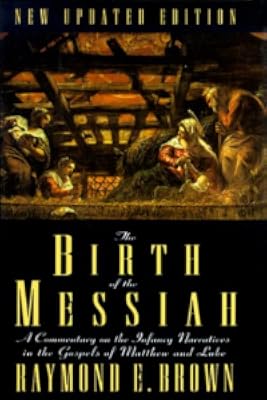
The Birth of the Messiah
by Raymond E. Brown
On This Page
Description
The truth behind the Gospel accounts of the Nativity, updated to include the latest research--a classic by a renowned scholar, hailed as "masterly" and "definitive" in the original edition.Tags
Recommendations














Member Reviews
Summary: An academic commentary on the Birth Narratives in Matthew and Luke.
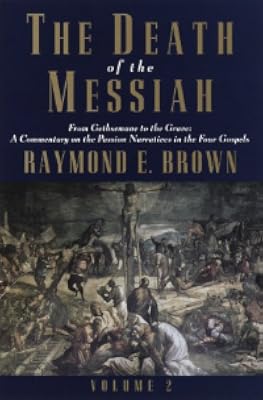
This has been on my shelves a long time, a library copy picked up at a sale many years ago. More recently, it has been joined by Brown’s two volume The Death of the Messiah. I decided for Advent this year, it would be a good time to finally dive into this magisterial commentary by Brown
The commentary consists of an overall introduction, introductions to Matthew and Luke’s account respectively, and then commentary, running section by section of each narrative. This includes Brown’s own translation of the text, notes on the text, including textual variants, and commentary. In addition to overall bibliographies, Brown offers a bibliography for each section. show more He also includes a number of appendices on the genealogies, the Birth at Bethlehem, virginal conception and the charge of illegitimacy, the census, and midsrash.
I will offer here some overall highlights, rather than a lengthy discussion of a lengthy commentary. First of all, it is Brown’s theory that the infancy narratives came last in the formation of the gospels, the passion narratives being first, and then the ministry narratives. One of the big questions is why these narratives are so different and Brown would chalk this up to the theology of each evangelist, which he develops in the commentaries.
First, with Matthew, he emphasizes how Matthew shows Jesus to be Son of God and son of David, fulfilling Old Testament prophecies, key for a Jewish-Christian audience. We see this in the genealogy, the five Old Testament texts which Brown would suggest may have been interpolated into an earlier pre-Matthean tradition, particularly Isaiah 7:14, which he deals with at length, as well as the visits of Magi, Herod’s attempt to kill him, and the flight to Egypt, a kind of recapitulation of Israel’s history. I was also struck with the thread of Joseph’s implicit obedience throughout. Joseph shines for this brief moment, and then slips from the scene.
The commentary on Luke focuses the transitional character of the infancy narratives, even as Acts 1-2 focuses on the transition from the ministry of Jesus to the church. The annunciation stories echo those of the births of Samuel and Samson, upon whom the Spirit dwelt. At the visit of Mary, who had conceived by the Holy Spirit, to Elizabeth, John, in utero, testifies to the coming of Jesus as Elizabeth speaks in the fullness of the Spirit. This anticipates the coming of the Spirit at Pentecost. Brown also gives extensive attention to the parallel annunciations, birth narratives, and subsequent hymns. He also offers intriguing ideas about the connections of Simeon and Anna to the anawim and the Essene sect at Qumran. He observes the intensification of each of these for Jesus, showing how John is the lesser forerunner we will encounter in the following chapters.
The work reflects the historical, form, and source criticism of Brown’s time. Brown moderates some of the radical skepticism that would question the historicity of these events. Most notably, he defends the virgin conception (but not necessarily birth) of Jesus and the Davidic descent, but considers the claims of a Bethlehem birth weaker (despite this being a commonality of the two accounts), and believes Luke was in error about a census under Quirinius. He would not consider such passages such as the Magnificat as ipsissima verba of Mary, being skeptical that testimony could have come through Mary or her family to Luke.
While Brown, in this work, is more skeptical about the historicity of various aspects of these narratives than I am, it is wonderful to read with this scholar who has read scripture so closely. Having written narratives of local history, drawing on various sources, I am more sympathetic than I once was to his exploration of how Matthew and Luke composed these narratives. But I suspect that no two people who studied what I wrote could dissect the sources in the same way. There is a speculative element of this and I am more appreciative of the rhetorical criticism that looks at the final form of a work and its theological purpose. I think this is where Brown seems to be on the most solid ground.
My review is based on the first edition of this work. A revised edition was published in 1999, a year after his death. I have not had the chance to compare the two and to see if Brown’s views changed on any matters. At very least, it may reflect more current scholarship. This is well worth obtaining for any who expect to preach on these texts and offered rich devotional reflection for me. show less
This has been on my shelves a long time, a library copy picked up at a sale many years ago. More recently, it has been joined by Brown’s two volume The Death of the Messiah. I decided for Advent this year, it would be a good time to finally dive into this magisterial commentary by Brown
The commentary consists of an overall introduction, introductions to Matthew and Luke’s account respectively, and then commentary, running section by section of each narrative. This includes Brown’s own translation of the text, notes on the text, including textual variants, and commentary. In addition to overall bibliographies, Brown offers a bibliography for each section. show more He also includes a number of appendices on the genealogies, the Birth at Bethlehem, virginal conception and the charge of illegitimacy, the census, and midsrash.
I will offer here some overall highlights, rather than a lengthy discussion of a lengthy commentary. First of all, it is Brown’s theory that the infancy narratives came last in the formation of the gospels, the passion narratives being first, and then the ministry narratives. One of the big questions is why these narratives are so different and Brown would chalk this up to the theology of each evangelist, which he develops in the commentaries.
First, with Matthew, he emphasizes how Matthew shows Jesus to be Son of God and son of David, fulfilling Old Testament prophecies, key for a Jewish-Christian audience. We see this in the genealogy, the five Old Testament texts which Brown would suggest may have been interpolated into an earlier pre-Matthean tradition, particularly Isaiah 7:14, which he deals with at length, as well as the visits of Magi, Herod’s attempt to kill him, and the flight to Egypt, a kind of recapitulation of Israel’s history. I was also struck with the thread of Joseph’s implicit obedience throughout. Joseph shines for this brief moment, and then slips from the scene.
The commentary on Luke focuses the transitional character of the infancy narratives, even as Acts 1-2 focuses on the transition from the ministry of Jesus to the church. The annunciation stories echo those of the births of Samuel and Samson, upon whom the Spirit dwelt. At the visit of Mary, who had conceived by the Holy Spirit, to Elizabeth, John, in utero, testifies to the coming of Jesus as Elizabeth speaks in the fullness of the Spirit. This anticipates the coming of the Spirit at Pentecost. Brown also gives extensive attention to the parallel annunciations, birth narratives, and subsequent hymns. He also offers intriguing ideas about the connections of Simeon and Anna to the anawim and the Essene sect at Qumran. He observes the intensification of each of these for Jesus, showing how John is the lesser forerunner we will encounter in the following chapters.
The work reflects the historical, form, and source criticism of Brown’s time. Brown moderates some of the radical skepticism that would question the historicity of these events. Most notably, he defends the virgin conception (but not necessarily birth) of Jesus and the Davidic descent, but considers the claims of a Bethlehem birth weaker (despite this being a commonality of the two accounts), and believes Luke was in error about a census under Quirinius. He would not consider such passages such as the Magnificat as ipsissima verba of Mary, being skeptical that testimony could have come through Mary or her family to Luke.
While Brown, in this work, is more skeptical about the historicity of various aspects of these narratives than I am, it is wonderful to read with this scholar who has read scripture so closely. Having written narratives of local history, drawing on various sources, I am more sympathetic than I once was to his exploration of how Matthew and Luke composed these narratives. But I suspect that no two people who studied what I wrote could dissect the sources in the same way. There is a speculative element of this and I am more appreciative of the rhetorical criticism that looks at the final form of a work and its theological purpose. I think this is where Brown seems to be on the most solid ground.
My review is based on the first edition of this work. A revised edition was published in 1999, a year after his death. I have not had the chance to compare the two and to see if Brown’s views changed on any matters. At very least, it may reflect more current scholarship. This is well worth obtaining for any who expect to preach on these texts and offered rich devotional reflection for me. show less
A wonderful, wonderful book which helped me better understand the birth narratives of Jesus in the Bible. This book is filled with information as each verse in those narratives and related prior texts in the Bible are looked at in considerable detail. And for me, as a mainline Protestant minister. Raymond Brown, now deceased, showed clearly that Roman Catholics and Protestants can do intensive biblical scholarship together, with considerable profit to both, even though there are some points were they, in line with their respective religious traditions, do differ markedly in their interpretations of specific texts. A large book, but well worth thoughtful and close study.
Renowned biblical scholar offers the best modern criticism, combined with insight into the spiritual concerns of the Gospel authors. Each scene of the narratives is followed by extensive notes and commentary relating to its Old Testament antecedents and its function in the first-century Church as well as to current thought.
An excellent quality resource that should be on every pastor's shelf. A thorough synthesis of academic work on the birth narratives of Christ blended with Brown's solid and matured insight into the scriptures.
Judicious, well-informed analysis of the two birth narratives.
1505 The Birth of the Messiah: A Commentary on the Infancy Narratives in Matthew and Luke, by Raymond E. Brown, S.S. (read 20 Feb 1979) The author is a Catholic priest. The book is a little more technical than I am prepared for. He analyzes very thoroughly the infancy narratives in Matthew and Luke. Thought-provoking. This is the most technical Scripture study I've ever read. Worthwhile.
The truth behind the Gospel accounts of the Nativity,a classic by a renowned scholar, hailed as "masterly" and "definitive" in its original edition.
Members
- Recently Added By
Author Information

70 Works 12,789 Members
Series
Belongs to Publisher Series
Common Knowledge
- Canonical title
- The Birth of the Messiah
- Original publication date
- 1979
Classifications
Statistics
- Members
- 1,162
- Popularity
- 21,664
- Reviews
- 8
- Rating
- (4.13)
- Languages
- English, Italian, Spanish
- Media
- Paper
- ISBNs
- 12
- ASINs
- 7