On This Page
Description
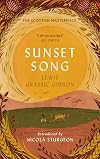
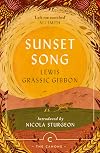
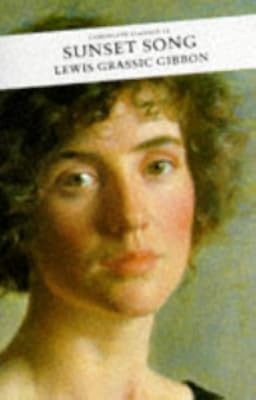
Faced with the choice between her harsh farming life and the seductive but distant world of books and learning, the spirited Chris Guthrie decides to remain in her rural community. But as the devastation of the First World War leaves her life-and community-in tatters, she must draw strength from what she loves and endure, like the land she loves so intensely. Brutal and beautiful, passionate and powerful, Sunset Song is a moving portrait of a declining way of life and an inspirational show more celebration of the human spirit. And in Chris Guthrie, Grassic Gibbon has given us one of literature's most unforgettable heroines. show lessTags
Recommendations










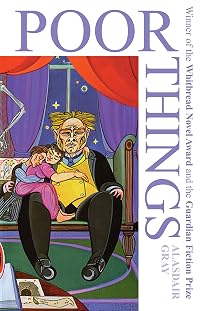
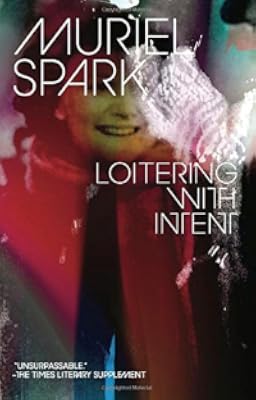
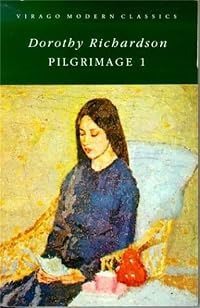

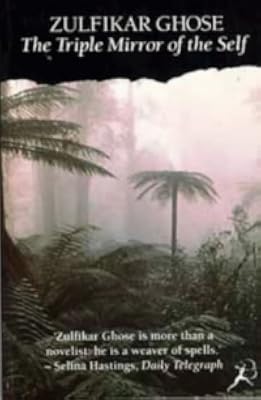
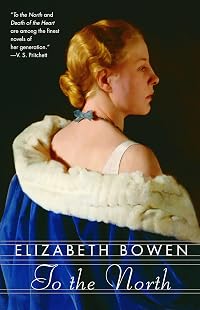
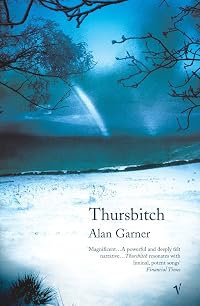
Member Recommendations


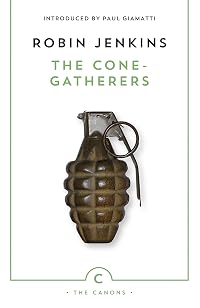
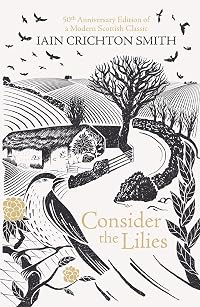
muse36 aberdeenshire, setting, period simliar

shelfoflisa Evocative tales of life in Edwardian rural English West Country seen through the eyes of a young boy growing up on a farm, with an intense awareness of nature and the lives of the animals he shares his life with.
Member Reviews
I have just finished re-reading my favourite book, Sunset Song, probably for the fifth or sixth time. It’s a book I first read as a student in secondary school―hated―and then fell in love with.
The novel tells the story of Chris Guthrie. Born into a farming family in the north-east of Scotland as the 20th century begins. The ‘Song’ is divided into sections that follow the farming year and mirror Chris’s own life; The Unfurrowed Field, Ploughing, Drilling, Seed-time, Harvest and then, once again, The Unfurrowed Field.
Like many students I really struggled with the prelude to this book when I first read it as a teenager. It’s written very differently to the Song, without the strong first-person narrative. I’m pretty show more sure that I would have read this book as Something To Be Read For School (a chore) but there must have been some reason that I was left with a desire to read this book again at some point the future.
Each time I have read the book as an adult I have been struck by different aspects of the story. With this most recent reading I was more aware of the pace of the story and struck by the small size of the geographical area in which it is set.
The language of the Song is unashamedly Scottish (or pseudo-Scottish) and agricultural — “education’s dirt and you’re better clear of it”. People are fine or course, from good stock or course stock. But the language also has a fine, delicate, poetry such as the example below.
“That died, and the Chris of the books and the dreams died with it, or you folded them up in their paper of tissue and laid them away by the dark, quiet corpse that was your childhood.”
And this expresses the theme of the book―nothing endures. Through Chris’s eyes we witness the end of a way of life, the end of the small tenant farmer and even the end of the land. show less
The novel tells the story of Chris Guthrie. Born into a farming family in the north-east of Scotland as the 20th century begins. The ‘Song’ is divided into sections that follow the farming year and mirror Chris’s own life; The Unfurrowed Field, Ploughing, Drilling, Seed-time, Harvest and then, once again, The Unfurrowed Field.
Like many students I really struggled with the prelude to this book when I first read it as a teenager. It’s written very differently to the Song, without the strong first-person narrative. I’m pretty show more sure that I would have read this book as Something To Be Read For School (a chore) but there must have been some reason that I was left with a desire to read this book again at some point the future.
Each time I have read the book as an adult I have been struck by different aspects of the story. With this most recent reading I was more aware of the pace of the story and struck by the small size of the geographical area in which it is set.
The language of the Song is unashamedly Scottish (or pseudo-Scottish) and agricultural — “education’s dirt and you’re better clear of it”. People are fine or course, from good stock or course stock. But the language also has a fine, delicate, poetry such as the example below.
“That died, and the Chris of the books and the dreams died with it, or you folded them up in their paper of tissue and laid them away by the dark, quiet corpse that was your childhood.”
And this expresses the theme of the book―nothing endures. Through Chris’s eyes we witness the end of a way of life, the end of the small tenant farmer and even the end of the land. show less
Why did I read it? Sunset Song is supposedly regarded as an important Scottish novel, and is (sometimes) studied in secondary schools, because it touches on important themes from the time period in which it is set. I thought I might enjoy it.
What is it about? Sunset Song follows the life of Chris(tine) Guthrie from arrival in Kinraddie (north-east of Scotland) as a young girl in the early 20th century. The Guthries' lease a croft, and we follow the fortunes of the Guthries, and other families in the rural community through to the end of the first world war.
What did I like? Very little. Kudos to the narrator, Eileen McCallum, for her vocal skills, both as a speaker, and singer when required. Ms McCallum created unique voices for each show more character, and her Scots accent was such that the dialogue was still intelligible. If there had been a duller narrator, I might not have been able to finish the novel at all. The one star rating is entirely for Eileen McCallum.
The author used some very interesting, and unique similes.
What didn't I like? From the start, this novel strained to keep my attention. It opens with a description of every family within Kinraddie, and tells quite a bit of their history, some of which occurs after the novel's actual end, as I was later to learn. This opening section of the novel felt interminable. I kept waiting for some semblance of a plot, and, after quite some time, began to wonder if there was one, or if this was a collection of short stories.
The descriptions of people, and places seemed to stretch on, and on, too. I like rural settings, I like descriptions of rural places that can evoke a character of the land itself. Other authors manage this beautifully, and elegantly, without devoting paragraph, after paragraph to the description of a single character before relating their part in tale.
The inner thoughts of Chris were far from cheery, which is not a complaint in itself, but Chris's sombre, morbid musings were just too much to bear for this listener. I found myself turning the volume down, waiting a few minutes before turning the volume back up, and then hoping that there was movement in the time line. I don't think I missed much by doing this. I got quite depressed listening to these sections of inner dialogue, and there were too many of them in my opinion.
Lewis Grassic Gibbon constantly jumped forward in time, and then would proceed to reflect on the events between the last point at which he left the tale, and the point to which he had just jumped. Why not just progress in a linear fashion? I am of the opinion that nothing would have been lost in the telling by doing so. I have seen this time jump technique used to great effect in other novels, but, in Sunset Song, it was pointless.
Other thoughts: My sympathies go to any secondary student for whom Sunset Song is required reading.
I get it: There is no such thing as the rural idyll; it's a tough living. It is not necessary to cram your story with as many instances of human defect as you can recall into one novel.
Would I recommend it? No. Nor will I be reading the remaining two books in the trilogy, because I cannot face any more dark, depressing navel-gazing. show less
What is it about? Sunset Song follows the life of Chris(tine) Guthrie from arrival in Kinraddie (north-east of Scotland) as a young girl in the early 20th century. The Guthries' lease a croft, and we follow the fortunes of the Guthries, and other families in the rural community through to the end of the first world war.
What did I like? Very little. Kudos to the narrator, Eileen McCallum, for her vocal skills, both as a speaker, and singer when required. Ms McCallum created unique voices for each show more character, and her Scots accent was such that the dialogue was still intelligible. If there had been a duller narrator, I might not have been able to finish the novel at all. The one star rating is entirely for Eileen McCallum.
The author used some very interesting, and unique similes.
What didn't I like? From the start, this novel strained to keep my attention. It opens with a description of every family within Kinraddie, and tells quite a bit of their history, some of which occurs after the novel's actual end, as I was later to learn. This opening section of the novel felt interminable. I kept waiting for some semblance of a plot, and, after quite some time, began to wonder if there was one, or if this was a collection of short stories.
The descriptions of people, and places seemed to stretch on, and on, too. I like rural settings, I like descriptions of rural places that can evoke a character of the land itself. Other authors manage this beautifully, and elegantly, without devoting paragraph, after paragraph to the description of a single character before relating their part in tale.
The inner thoughts of Chris were far from cheery, which is not a complaint in itself, but Chris's sombre, morbid musings were just too much to bear for this listener. I found myself turning the volume down, waiting a few minutes before turning the volume back up, and then hoping that there was movement in the time line. I don't think I missed much by doing this. I got quite depressed listening to these sections of inner dialogue, and there were too many of them in my opinion.
Lewis Grassic Gibbon constantly jumped forward in time, and then would proceed to reflect on the events between the last point at which he left the tale, and the point to which he had just jumped. Why not just progress in a linear fashion? I am of the opinion that nothing would have been lost in the telling by doing so. I have seen this time jump technique used to great effect in other novels, but, in Sunset Song, it was pointless.
Other thoughts: My sympathies go to any secondary student for whom Sunset Song is required reading.
I get it: There is no such thing as the rural idyll; it's a tough living. It is not necessary to cram your story with as many instances of human defect as you can recall into one novel.
Would I recommend it? No. Nor will I be reading the remaining two books in the trilogy, because I cannot face any more dark, depressing navel-gazing. show less
Sunset Song is the story of a young woman called Chris living in a Highland village in the first half of the twentieth century - and trying to decide between the land that she loves, and the joys of learning and literature. At least, it appears to be her story - but her life is inextricably rooted in the community where she lives, which itself is deeply embedded in the land and its history - so it's more about a place and a time than one individual person.
The work defines itself against "Englishness", in everything from politics (its attitude to villagers being sent off to fight World War I "for the English") to language - the book is written in language which represents Scots, and in a poetic and storytelling style, with digressions show more which gradually build up the texture of the community, and repeated themes and images.
At times, this can make the book quite hard to read - in particular, some peoples' motivations and behaviour seem to be the way they are to suit the book's theme rather than their characters. But overall, a moving and often lyrical story which is worth persisting with to the end. show less
The work defines itself against "Englishness", in everything from politics (its attitude to villagers being sent off to fight World War I "for the English") to language - the book is written in language which represents Scots, and in a poetic and storytelling style, with digressions show more which gradually build up the texture of the community, and repeated themes and images.
At times, this can make the book quite hard to read - in particular, some peoples' motivations and behaviour seem to be the way they are to suit the book's theme rather than their characters. But overall, a moving and often lyrical story which is worth persisting with to the end. show less
I saw this book mentioned in a list of books set in Scotland which caught my eye because we are planning a trip to Scotland next year. This book was mentioned as the one that was consistently rated the best Scottish book. So, of course, I had to read it. Luckily my public library had one copy in its catalogue.
Grassic Gibbon does a wonderful job of setting the stage for this book by describing the small valley of Kinraddie (which is fictional) and all the people who live there at the beginning of the book. Kinraddie is a little south and west of Aberdeen and quite near the shore of the North Sea. Most of the people in the valley don't own the land they farm so they could be turned out at any time. Chris Guthrie is the central figure of show more this book. Her father had brought the family to Kinraddie in the early part of the 20th century. The family consisted of 6 children at the time: Will, the oldest, Chris, Dod, Alec and then two twins who were just infants at the time of the move. Chris's mother was worn out with the childbearing and when she became pregnant again she killed herself and the twins. Chris, who was a smart girl and was planning to continue her education, had to leave school. Her father was a strict man with a violent temper. He and Will were always fighting and finally Will couldn't take it any more. He left the farm and Scotland. Chris, who had been very close to Will, was thus left to do even more of the work. Her father had a stroke or a heart attack and was left bedridden. Chris held the farm together but couldn't look after the two small boys so they went to live with a childless aunt. After her father's death she fought to keep the land and she was able to do so with the help of her new husband, Ewan. For a few years they had a happy marriage and a happy life and then the conflict that we know as World War I started. That changed everything but Chris persevered. A son was born and maybe he will continue on farming.
I made liberal use of the glossary at the back of the book as much of the dialect is sprinkled with words that are peculiar to that time and place. I learned, for instance, that bigging is a building and glunch means to mutter half-threatenly. I saw some reviews that complained about the use of this Scots idiom but, for me, it added to the charm of the story-telling. show less
Grassic Gibbon does a wonderful job of setting the stage for this book by describing the small valley of Kinraddie (which is fictional) and all the people who live there at the beginning of the book. Kinraddie is a little south and west of Aberdeen and quite near the shore of the North Sea. Most of the people in the valley don't own the land they farm so they could be turned out at any time. Chris Guthrie is the central figure of show more this book. Her father had brought the family to Kinraddie in the early part of the 20th century. The family consisted of 6 children at the time: Will, the oldest, Chris, Dod, Alec and then two twins who were just infants at the time of the move. Chris's mother was worn out with the childbearing and when she became pregnant again she killed herself and the twins. Chris, who was a smart girl and was planning to continue her education, had to leave school. Her father was a strict man with a violent temper. He and Will were always fighting and finally Will couldn't take it any more. He left the farm and Scotland. Chris, who had been very close to Will, was thus left to do even more of the work. Her father had a stroke or a heart attack and was left bedridden. Chris held the farm together but couldn't look after the two small boys so they went to live with a childless aunt. After her father's death she fought to keep the land and she was able to do so with the help of her new husband, Ewan. For a few years they had a happy marriage and a happy life and then the conflict that we know as World War I started. That changed everything but Chris persevered. A son was born and maybe he will continue on farming.
I made liberal use of the glossary at the back of the book as much of the dialect is sprinkled with words that are peculiar to that time and place. I learned, for instance, that bigging is a building and glunch means to mutter half-threatenly. I saw some reviews that complained about the use of this Scots idiom but, for me, it added to the charm of the story-telling. show less
Oh, it was fantastic. The cadence lilted and flowed like nothing else I've read in years, and the characters were real and full of life. I fell in love with Chris' life and it tore at me when things began to change and fall apart. I want desperately to read the second and third books.
This is definitely not something to be read on the train to work, though. This is something you'll want to find a comfortable and quiet corner to curl up and and disappear for hours at a time. It's magical.
This is definitely not something to be read on the train to work, though. This is something you'll want to find a comfortable and quiet corner to curl up and and disappear for hours at a time. It's magical.
This book is truly a gem, in my opinion. I have been to Scotland once, only. The descriptions are perfect. The story is compelling. This is the first book I have read where the author speaks in the voice of the opposite gender, that I felt did a good job. This man has a rare understanding of women's minds and emotions.
I found this a very moving book overall. The way it follows the death of a way of living in Scotland, one in which my grandparents grew up in, is very well handled and true to what I have heard. I can't really comment on the use of Scots, being Scottish myself it flowed beautifully and lyrically, but I can understand that people who have never encountered Scots before may get a bit lost. I think the time period before the war can often become romanticised, and this book steers far clear of it. It shows both the ugly side of the 1900s and the beautiful side. I can't agree that modernisation is always bad, but it is heartbreaking to watch as Chris drifts away from the land she feels she belongs to and to know that her way of life is show more dying. I loved this book, but I don't know if I could read it again. It is a very sad book and I cried many times throughout it. Showing how war destroyed not just the soldiers but the communities back home, how it changed everybody and everything of that time. If you have not already, I would certainly read this book, although heartbreaking at times, it does justice to its subject, how war changed a society. show less
Members
- Recently Added By
Lists

The Guardian's 1000 Novels Everyone Must Read
1,005 works; 551 members

1930s
262 works; 5 members
Author Information

28+ Works 1,850 Members
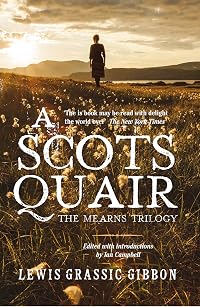
Lewis Grassic Gibbon (James Leslie Mitchell) is one of the finest writers of the twentieth century. Born in Aberdeenshire in 1901, he died at the age of thirty-four. He was a prolific writer of novels, short stories, essays, and science fiction and his writing reflected his wide interest in religion, archaeology, history, politics and science. The show more Mearns trilogy A Scots Quair is his most renowned work, and has become a landmark in Scottish literature. show less
Some Editions
Awards and Honors
Series

Belongs to Publisher Series
Canongate Classics (12)
Work Relationships
Is contained in
Common Knowledge
- Original publication date
- 1932
- People/Characters
- Chris Guthrie; Ewan Tavendale; Robert Colquohoun; Chae Strachan; Long Rob of the Mill
- Important places
- Kincardineshire, Scotland, UK (historic); Scotland, UK; Aberdeenshire, Scotland, UK
- Important events
- Comienzo de la Primera Guerra Mundial
- Related movies
- Sunset Song (1971 | IMDb); Sunset Song (2015 | IMDb)
- Dedication
- Para Jean Baxter
- First words
- Prelude: Kinraddie lands had been won by a Norman childe, Cospatric de Gondeshil, in the days of William the Lyon, when gryphons and such-like beasts still roamed the Scots countryside and folk would waken in their beds to he... (show all)ar the children screaming, with a great wolf-beast, come through the hide window, tearing at their throats.
Chapter I: Below and around where Chris Guthrie lay the June moors whispered and rustled and shook their cloaks, yellow with broom and powdered faintly with purple, that was the heather but not the full passion of its colour ... (show all)yet. - Last words
- (Click to show. Warning: May contain spoilers.)But they saw the minister was standing behind her, waiting for her, they'd the last of the light with them up there, and maybe they didn't need it or heed it, you can do without the day if you've a lamp quiet-lighted and kind in your heart.
- Original language
- English
Classifications
Statistics
- Members
- 691
- Popularity
- 41,403
- Reviews
- 19
- Rating
- (3.98)
- Languages
- 6 — English, French, German, Galician, Italian, Spanish
- Media
- Paper, Audiobook, Ebook
- ISBNs
- 42
- ASINs
- 12