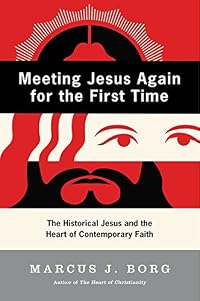
Meeting Jesus Again for the First Time: The Historical Jesus and the Heart of Contemporary Faith
by Marcus J. Borg
On This Page
Description
Of the many recent books on the historical Jesus, none has explored what the latest biblical scholarship means for personal faith. Now, in Meeting Jesus Again for the First Time, Marcus Borg addresses the yearnings of those who want a fully contemporary faith that welcomes rather than oppresses our critical intelligence and openness to the best of historical scholarship. Borg shows how a rigorous examination of historical findings can lead to a new faith in Christ, one that is critical and, show more at the same time, sustaining. Drawing on his own journey from a naïve, unquestioning belief in Christ through collegiate skepticism to a mature and contemporary Christian faith, Borg illustrates how an understanding of the historical Jesus can actually lead to a more authentic Christian life-one not rooted in creed or dogma, but in a life of spiritual challenge, compassion, and community. In straightforward, accessible prose, Borg looks at the major findings of modern Jesus scholarship from the perspective of faith, bringing alive the many levels of Jesus's character: spirit person, teacher of alternative wisdom, social prophet, and movement founder. He also reexamines the major stories of the Old Testament vital to an authentic understanding of Jesus, showing how an enriched understanding of these stories can uncover new truths and new pathways to faith. show lessTags
Recommendations



























Member Reviews
An exciting book that seeks to explain who Jesus actually was based on the gospels and scripture, stripping away the mythic superstructure that Christians built after Jesus' death, and demonstrating that what has become the dominant mode of understanding Jesus' life through scripture is only one of several metaphorical threads that are present in the Bible and understood by early Christians, and this narrowing of meaning has come at significant cost to the imaging of what religious life for the Christian should be.
Borg argues that Jesus never knew himself to be the Son of God in a unique sense, or as one whose mission was to die for the sins of the world. That picture comes out of the Gospel of John, which contains the great "I am" show more statements of Jesus, which are agreed by Biblical scholars to be ahistorical. John, the latest of the gospels, presents Jesus as he had come to be understood by Christians of that time. The earlier gospels do not show Jesus speaking in such a manner.
Rather, Borg sees Jesus as what he calls a "spirit person", one who has visions and direct experiences of the reality of God. People who have such experiences are found across cultures and times. Born into a culture whose social structure was rigidly based on a purity scheme, whose vision of religious life was to be as "pure" as God demanded, Jesus did not recognize his culture's social/religious constructs as consistent with his experience of God. His teaching sought to replace the "Be holy for I the Lord your God am holy" command of Leviticus with a "Be compassionate as God is compassionate" instruction (Luke).
His public life also contained an argument for moving from secondhand religion to firsthand religion: moving beyond secular and religious conventional wisdom, which is what we are taught to believe by others, to a subversive wisdom that comes from personal relationship and experience with God. The religious life is thus about relationship, not measuring up to a body of rules and regulations and expectations.
Borg brings out three main story narratives in the Bible, which originate with the experiences of the Hebrews but extend to have meaning for everyone in every time:
1)The Exodus story is saying that the human condition is bondage (to what? a great many things...) and the solution is liberation, which involves a journey through the wilderness, toward God and with God.
2)The Exile and Return story says that we feel separated from our true home and long to return. Exile is often marked by grief, and the religious life is a journey with God back home.
3)The Priestly story says that we are sinners who are guilty before God, in need of forgiveness. Religious life is not so much a journey as a story of sin, guilt, sacrifice and forgiveness.
All three of these stories were important to Jesus and early Christianity, but over time one of them came to dominate the popular understanding of Jesus and the Christian life. Obviously that would be the Priestly story.
Borg lays out six "severe distortions in our understanding of the Christian life" that result from the dominance of this priestly story:
1)Produces a static understanding of the Christian life, a repeated cycle of sin, guilt, and forgiveness.
2)Creates a passive understanding of the Christian life. Rather than seeking transformation, in ourselves and in our culture, we see that God has already done what needs to be done. It is a politically domesticating story... which suited the rulers of those societies where Christianity became the official religion quite well.
3)Tends to an understanding of Christianity as primarily a religion of the afterlife: better get right with God before you die!
4)Imagines God primarily as lawgiver and judge, whose forgiveness becomes conditional on our believing a certain dogma, that of Jesus' atoning death.
5)Creates a narrative that is very hard to believe: God's only and literal son came to this planet to sacrifice himself for the sins of humans, because God could not forgive us otherwise, and we are saved from damnation only by believing this. It's a powerful metaphor, but argued literally it alienates many people from Christianity.
6)Some people don't feel much guilt, for whatever reason. Yet they may recognize their state of bondage, or their feelings of alienation and estrangement. The priestly story offers them nothing, while the other Biblical narrative stories do.
In all, the book is a great popular level manuscript that demonstrates a less well known historical understanding of Jesus and his teachings, and offers an alternative to the dominant theological interpretations present in our culture. show less
Borg argues that Jesus never knew himself to be the Son of God in a unique sense, or as one whose mission was to die for the sins of the world. That picture comes out of the Gospel of John, which contains the great "I am" show more statements of Jesus, which are agreed by Biblical scholars to be ahistorical. John, the latest of the gospels, presents Jesus as he had come to be understood by Christians of that time. The earlier gospels do not show Jesus speaking in such a manner.
Rather, Borg sees Jesus as what he calls a "spirit person", one who has visions and direct experiences of the reality of God. People who have such experiences are found across cultures and times. Born into a culture whose social structure was rigidly based on a purity scheme, whose vision of religious life was to be as "pure" as God demanded, Jesus did not recognize his culture's social/religious constructs as consistent with his experience of God. His teaching sought to replace the "Be holy for I the Lord your God am holy" command of Leviticus with a "Be compassionate as God is compassionate" instruction (Luke).
His public life also contained an argument for moving from secondhand religion to firsthand religion: moving beyond secular and religious conventional wisdom, which is what we are taught to believe by others, to a subversive wisdom that comes from personal relationship and experience with God. The religious life is thus about relationship, not measuring up to a body of rules and regulations and expectations.
Borg brings out three main story narratives in the Bible, which originate with the experiences of the Hebrews but extend to have meaning for everyone in every time:
1)The Exodus story is saying that the human condition is bondage (to what? a great many things...) and the solution is liberation, which involves a journey through the wilderness, toward God and with God.
2)The Exile and Return story says that we feel separated from our true home and long to return. Exile is often marked by grief, and the religious life is a journey with God back home.
3)The Priestly story says that we are sinners who are guilty before God, in need of forgiveness. Religious life is not so much a journey as a story of sin, guilt, sacrifice and forgiveness.
All three of these stories were important to Jesus and early Christianity, but over time one of them came to dominate the popular understanding of Jesus and the Christian life. Obviously that would be the Priestly story.
Borg lays out six "severe distortions in our understanding of the Christian life" that result from the dominance of this priestly story:
1)Produces a static understanding of the Christian life, a repeated cycle of sin, guilt, and forgiveness.
2)Creates a passive understanding of the Christian life. Rather than seeking transformation, in ourselves and in our culture, we see that God has already done what needs to be done. It is a politically domesticating story... which suited the rulers of those societies where Christianity became the official religion quite well.
3)Tends to an understanding of Christianity as primarily a religion of the afterlife: better get right with God before you die!
4)Imagines God primarily as lawgiver and judge, whose forgiveness becomes conditional on our believing a certain dogma, that of Jesus' atoning death.
5)Creates a narrative that is very hard to believe: God's only and literal son came to this planet to sacrifice himself for the sins of humans, because God could not forgive us otherwise, and we are saved from damnation only by believing this. It's a powerful metaphor, but argued literally it alienates many people from Christianity.
6)Some people don't feel much guilt, for whatever reason. Yet they may recognize their state of bondage, or their feelings of alienation and estrangement. The priestly story offers them nothing, while the other Biblical narrative stories do.
In all, the book is a great popular level manuscript that demonstrates a less well known historical understanding of Jesus and his teachings, and offers an alternative to the dominant theological interpretations present in our culture. show less
As a non-Christian living in the US in the early 21st century, I almost instinctively recoil from Jesus talk. And the title of this book almost made me reject reading it. But I'm glad I did, as Borg does an admirable job of breaking down those barriers for people like me.
He draws a distinction between "pre-Easter Jesus" and "post-Easter Jesus." In other words between Jesus the man and Jesus the Christ his followers turned him into after his death. In this book, he almost exclusively focuses on pre-Easter Jesus, and how and why as a teacher and spiritual person, Jesus was a revolutionary. This focus allows the reader to see and understand his teachings without requiring the belief in the supernatural aspects of the story.
He draws a distinction between "pre-Easter Jesus" and "post-Easter Jesus." In other words between Jesus the man and Jesus the Christ his followers turned him into after his death. In this book, he almost exclusively focuses on pre-Easter Jesus, and how and why as a teacher and spiritual person, Jesus was a revolutionary. This focus allows the reader to see and understand his teachings without requiring the belief in the supernatural aspects of the story.
I read this little book several years back, and wanted to make sure it isn’t forgotten. Marcus Borg is one of my favorite writers, and this is what I’ve always considered his “coming out” book. The one that lays bare Borg’s understanding of the historical Jesus, and Borg’s journey from blind belief into a more complete, contemporary appreciation for Jesus and what his message means for mankind today. In this book is a Christianity for the 21st century and a Jesus who can be embraced by everyone.
One quote sums up the book well: Borg describes Jesus as a “spirit person, subversive sage, social prophet, and movement founder who invited his followers and hearers into a transforming relationship with the same Spirit that he show more himself knew, and into a community whose social vision was shaped by the core value of compassion.” I’m uncertain if Borg would use precisely the same words today, sixteen years later, because the wheels of Jesus scholarship continue to turn, but I’ll bet he wouldn’t change much … he has found the core Jesus. Meeting Jesus again for the first time, we are invited to appreciate Jesus’ beauty against a backdrop of dominating religion, and share in Jesus’ struggle to help compassion overcome purity. It was this very purity system of the Jews which led to social injustice, and which Jesus found most constricting.
This is one of those books everyone should read before giving up on Christianity. show less
One quote sums up the book well: Borg describes Jesus as a “spirit person, subversive sage, social prophet, and movement founder who invited his followers and hearers into a transforming relationship with the same Spirit that he show more himself knew, and into a community whose social vision was shaped by the core value of compassion.” I’m uncertain if Borg would use precisely the same words today, sixteen years later, because the wheels of Jesus scholarship continue to turn, but I’ll bet he wouldn’t change much … he has found the core Jesus. Meeting Jesus again for the first time, we are invited to appreciate Jesus’ beauty against a backdrop of dominating religion, and share in Jesus’ struggle to help compassion overcome purity. It was this very purity system of the Jews which led to social injustice, and which Jesus found most constricting.
This is one of those books everyone should read before giving up on Christianity. show less
Marcus Borg is one of the most influential Jesus scholars we have today. His characterization of Jesus is a "spirit person," one who's especially in touch with the divine and connects the power of God to his earthly ministry. He's written at length about it in other books, but here it serves as a backdrop for a different issue: how can we, either as historians or Christians, grasp a relationship with a Jesus who is still living and relevant?
Borg argues that Jesus' understanding of God was not the vast and transcendent deity that we sometimes picture, "a supernatural being 'out there' who created the world a long time ago...from time to time supernaturally intervenes in this world." That leads to a rather bland experience of "belief," show more that we affirm that something/someone exists that's greater than us and what else are we supposed to do with that information? Jesus instead brings a God who is an "experiential reality," found not only in his supernatural connections but also the extremely mundane (yet extraordinary) ideals of compassion and connection and love.
A relationship with Jesus develops beyond the passive Christian story of sin and salvation (not that it's not meaningful, but it's been done and we play little part in it). Thus God is acted in order to be "believed in," and believers are challenged to work out who God is and effect God's presence in the world. show less
Borg argues that Jesus' understanding of God was not the vast and transcendent deity that we sometimes picture, "a supernatural being 'out there' who created the world a long time ago...from time to time supernaturally intervenes in this world." That leads to a rather bland experience of "belief," show more that we affirm that something/someone exists that's greater than us and what else are we supposed to do with that information? Jesus instead brings a God who is an "experiential reality," found not only in his supernatural connections but also the extremely mundane (yet extraordinary) ideals of compassion and connection and love.
A relationship with Jesus develops beyond the passive Christian story of sin and salvation (not that it's not meaningful, but it's been done and we play little part in it). Thus God is acted in order to be "believed in," and believers are challenged to work out who God is and effect God's presence in the world. show less
For many Christians, and perhaps even more people brought up in Christian families but now estranged from their churches, Marcus Borg’s book, Meeting Jesus Again for the First Time, will foster a sense of liberation. For many evangelicals and other conservative Christians, his work will be considered controversial, perhaps even heretical. Either way, reading the book will raise significant questions and clarify serious issues.
To begin with, Borg distinguishes between the pre-Easter (or historical) Jesus and the post-Easter (or theological) Jesus. At the very beginning, he admits that the pre Easter Jesus was most likely non-messianic and non-eschatological; those dimensions of the character of the Christ were developed in the Pauline show more epistles, in the written gospels, and in the teachings of the early church. To him, however, the pre-Easter Jesus was a spirit person and a mediator of the sacred; a teacher of wisdom, indeed of alternative wisdom; a social prophet, often in conflict with authorities and critical of the economic, political, and religious elite of his day; and the founder of a movement, a Jewish revitalization that eventually would lead to the early Christian church.
Borg begins his book with his own life story. He grew up Lutheran, in a conventional church. But as a college student and seminarian, he came to question his own belief and struggle with personal doubt. Then finally, he came to understand the centrality of God, or Spirit, in Jesus’ life. “I began to see Jesus as one whose spirituality—his experiential awareness of Spirit—was foundational for his life.” Summarizing what this meant to him personally, Borg concludes, “Until my late thirties, I saw the Christian life as being primarily about believing. . . . Now I no longer see the Christian life as being primarily about believing. . . . Rather the Christian life is about entering into a relationship with that to which the Christian tradition points, which may be spoken of as God, the risen living Christ, or the Spirit.”
The rest of the book examines in some detail the nature and meaning of that relationship—a relationship that the historical Jesus modeled and that his followers accept and work out in their own spheres. He emphasizes the compassionate Jesus, the political Jesus, and Jesus as a teacher of an alternative, even subversive, wisdom. Indeed, Borg insists that a prominent image in the New Testament is that of Jesus as the embodiment or incarnation of the Sophia, a Jewish feminine term for the eternal wisdom of God.
Borg’s final chapter develops the relationship of Jesus to three recurring macro stories in Hebrew scripture: the exodus, the exile and return, and the priesthood. But his most moving, most eloquent witness involves the journey as a metaphor for the Christian life. “Discipleship,” he says, “is not an individual path, but a journey in a company of disciples. It is the road less traveled, yet discipleship involves being in a community that remembers and celebrates Jesus.”
So to meet Jesus again for the first time is to love Jesus not less but more and to love others as oneself. It is to “Be compassionate as God is compassionate.” “It leads,” he continues, “from life under the lordship of culture to the life of companionship with God.”
It is, in fact, after all, to believe. “Believing in Jesus,” he has come to understand, “does not mean believing doctrines about him. Rather, it means to give one’s heart, one’s self at its deepest level, to the post-Easter Jesus who is the living Lord, the side of God turned toward us, the face of God, the Lord who is also the Spirit.”
At the very beginning, Borg says that his work probably should be given the title Beyond Belief, that is, beyond conventional belief in facts and doctrines, beyond a narrow moralistic world view: Beyond Belief to Relationship. By the end, I might give it the title, Beyond Belief to Belief, a new, alternative, spiritual belief.
I believe; help thou mine unbelief. show less
To begin with, Borg distinguishes between the pre-Easter (or historical) Jesus and the post-Easter (or theological) Jesus. At the very beginning, he admits that the pre Easter Jesus was most likely non-messianic and non-eschatological; those dimensions of the character of the Christ were developed in the Pauline show more epistles, in the written gospels, and in the teachings of the early church. To him, however, the pre-Easter Jesus was a spirit person and a mediator of the sacred; a teacher of wisdom, indeed of alternative wisdom; a social prophet, often in conflict with authorities and critical of the economic, political, and religious elite of his day; and the founder of a movement, a Jewish revitalization that eventually would lead to the early Christian church.
Borg begins his book with his own life story. He grew up Lutheran, in a conventional church. But as a college student and seminarian, he came to question his own belief and struggle with personal doubt. Then finally, he came to understand the centrality of God, or Spirit, in Jesus’ life. “I began to see Jesus as one whose spirituality—his experiential awareness of Spirit—was foundational for his life.” Summarizing what this meant to him personally, Borg concludes, “Until my late thirties, I saw the Christian life as being primarily about believing. . . . Now I no longer see the Christian life as being primarily about believing. . . . Rather the Christian life is about entering into a relationship with that to which the Christian tradition points, which may be spoken of as God, the risen living Christ, or the Spirit.”
The rest of the book examines in some detail the nature and meaning of that relationship—a relationship that the historical Jesus modeled and that his followers accept and work out in their own spheres. He emphasizes the compassionate Jesus, the political Jesus, and Jesus as a teacher of an alternative, even subversive, wisdom. Indeed, Borg insists that a prominent image in the New Testament is that of Jesus as the embodiment or incarnation of the Sophia, a Jewish feminine term for the eternal wisdom of God.
Borg’s final chapter develops the relationship of Jesus to three recurring macro stories in Hebrew scripture: the exodus, the exile and return, and the priesthood. But his most moving, most eloquent witness involves the journey as a metaphor for the Christian life. “Discipleship,” he says, “is not an individual path, but a journey in a company of disciples. It is the road less traveled, yet discipleship involves being in a community that remembers and celebrates Jesus.”
So to meet Jesus again for the first time is to love Jesus not less but more and to love others as oneself. It is to “Be compassionate as God is compassionate.” “It leads,” he continues, “from life under the lordship of culture to the life of companionship with God.”
It is, in fact, after all, to believe. “Believing in Jesus,” he has come to understand, “does not mean believing doctrines about him. Rather, it means to give one’s heart, one’s self at its deepest level, to the post-Easter Jesus who is the living Lord, the side of God turned toward us, the face of God, the Lord who is also the Spirit.”
At the very beginning, Borg says that his work probably should be given the title Beyond Belief, that is, beyond conventional belief in facts and doctrines, beyond a narrow moralistic world view: Beyond Belief to Relationship. By the end, I might give it the title, Beyond Belief to Belief, a new, alternative, spiritual belief.
I believe; help thou mine unbelief. show less
Of the many recent books on the historical Jesus, none has explored what the latest biblical scholarship means for personal faith. Now, in Meeting Jesus Again for the First Time, Marcus Borg addresses the yearnings of those who want a fully contemporary faith that welcomes rather than oppresses our critical intelligence and openness to the best of historical scholarship. Borg shows how a rigorous examination of historical findings can lead to a new faith in Christ, one that is critical and, at the same time, sustaining."Believing in Jesus does not mean believing doctrines about him," Borg writes. "Rather, it means to give one's heart, one's self at its deepest level, to . . . the living Lord."Drawing on his own journey from a naive, show more unquestioning belief in Christ through collegiate skepticism to a mature and contemporary Christian faith, Borg illustrates how an understanding of the historical Jesus can actually lead to a more authentic Christian life—one not rooted in creeds or dogma, but in a life of spiritual challenge, compassion, and community.In straightforward, accessible prose, Borg looks at the major findings of modern Jesus scholarship from the perspective of faith, bringing alive the many levels of Jesus' character: spirit person, teacher of alternative wisdom, social prophet, and movement founder. He also reexamines the major stories of the Old Testament vital to an authentic understanding of Jesus, showing how an enriched understanding of these stories can uncover new truths and new pathways to faith.For questioning believers, doubters, and reluctant unbelievers alike, Meeting Jesus Again for the First Time frees our understanding of Jesus' life and message from popular misconceptions and outlines the way to a sound and contemporary faith: "For ultimately, Jesus is not simply a figure of the past, but a figure of the present. Meeting that Jesus—the living one who comes to us even now—will be like meeting Jesus again for the first time." show less
This is the first Borg book that I read for myself (previously my opinion of Borg was mitigated by my reading of N.T. Wright). There is a bunch here that I disagree with, but there were some insightful things as well. I would disagree with Borg that there is a strong distinction between the pre-Easter Jesus and the post-Easter Christ. I think Jesus thought himself the Messiah and was self-aware of his part in the divinity. Borg, as a member of the Jesus seminar, is skeptical of what we can know about the historical Jesus and what his self-awareness was. I don't share Borg's skepticism and agree with Wright that if Jesus saw himself as a Spirit person initiating a movement and re-interpreting and subverting the symbols of the Judaism of show more his day, he probably also saw himself as the Messiah (as did others like that in first Century Judaism).
But Borg says more than this and some of it is worth pondering. He also paints a picture of Jesus as a teacher of wisdom which challenged the conventional wisdom of the dominant culture. He paints a picture of the compassionate Jesus who included those who were excluded by the practices of the purity codes which developed in first century. He talks about the 3 meta-metaphors(my word) within the Bible: The Exodus, The Exile (and return) and the Priesty Story and the various ways the early Christian community made use of the metaphors.
Even if I do not share his skepticism there are some great insights here which help reveal who Jesus was and is. show less
But Borg says more than this and some of it is worth pondering. He also paints a picture of Jesus as a teacher of wisdom which challenged the conventional wisdom of the dominant culture. He paints a picture of the compassionate Jesus who included those who were excluded by the practices of the purity codes which developed in first century. He talks about the 3 meta-metaphors(my word) within the Bible: The Exodus, The Exile (and return) and the Priesty Story and the various ways the early Christian community made use of the metaphors.
Even if I do not share his skepticism there are some great insights here which help reveal who Jesus was and is. show less
Members
- Recently Added By
Published Reviews
ThingScore 75
"Professor Borg challenges as 'inadequate' typical images of the historical Jesus and their resulting images of what it mean to lead a 'Christian Life'. Among Catholic and mainstream (i.e., early- Reformation) Christians, the author's most controversial thesis may be his challenge to the most widespread image of Jesus - seeing Jesus as the divine savior."
added by bookcrazed
Lists

books read 2018
26 works; 1 member
Author Information

65+ Works 14,159 Members
Marcus J. Borg was born on March 11, 1942 in Minnesota. He majored in philosophy and political science at Concordia College. He did graduate work at Union Theological Seminary in New York City and at Oxford University. He taught at various Midwest universities before joining the faculty at Oregon State University in 1979. He taught religion there show more until his retirement in 2007. During his lifetime, he wrote or co-wrote 21 books including Jesus: A New Vision, The Meaning of Jesus: Two Visions with N. T. Wright, and Convictions: How I Learned What Matters Most. He died after a prolonged illness on January 21, 2015 at the age of 72. (Bowker Author Biography) show less
Common Knowledge
- Original title
- Meeting Jesus Again for the First Time: The Historical Jesus & the Heart of Contemporary Faith
- Original publication date
- 1994
- People/Characters
- Jesus Christ
- First words
- This book owes its title - Meeting Jesus Again for the First Time - and much of its content to a series of lectures I delivered at the annual meeting of the Northern California Conference of the United Church of Christ at Asi... (show all)lomar, California, in May 1992.
- Original language
- English
Classifications
- Genres
- Religion & Spirituality, Nonfiction, History, General Nonfiction
- DDC/MDS
- 232.908 — Religion Christianity Jesus Christ and his family Family and life of Jesus The Historical Jesus
- LCC
- BT303.2 .B59 — Philosophy, Psychology and Religion Doctrinal Theology Doctrinal Theology Christology Life of Christ
- BISAC
Statistics
- Members
- 1,992
- Popularity
- 10,517
- Reviews
- 21
- Rating
- (3.92)
- Languages
- Dutch, English
- Media
- Paper, Audiobook, Ebook
- ISBNs
- 12
- ASINs
- 11