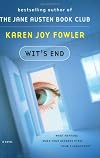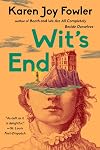
Wit's End
by Karen Joy Fowler
On This Page
Description
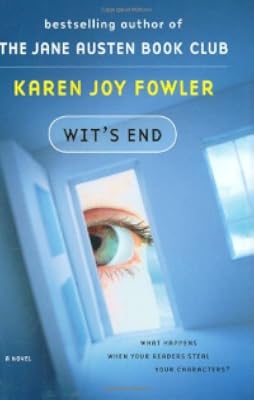
What happens when readers steal your characters? Rima Lanisell is about to find out when she visits her estranged godmother, Addison Early, the successful mystery writer of the Maxwell Lane mysteries, and discovers the truth behind Addison's novels.Tags
Recommendations








Member Reviews
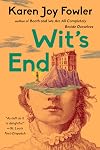
Well, I am sure swimming against the tide of opinion on this one, but I LOVED this clever, thoughtful. touching and brilliantly written book.[return][return]I should say that, some, if not all, of its problems for haters may be that it has been appallingly handled by its publishers, who clearly had no idea how to make it work in the "let's bash this square peg into a round hold" playbook that passes for book marketing these days. Cover art that misrepresents and trivializes the book and its themes? Check! A title for the UK edition that misrepresents, trivializes AND over-emphasizes one minor part of the whole? Check! Cover blurbs that are about a completely different Karen Joy Fowler book? Well, of course. Why not? Authors write the show more same book, every time, don't they? There you go, that should ensure that at least 50% of the readers who pick this up are getting something completely different than they were led to expect. You can thank me later ...[return][return]In my case, the "something different" was pure, unadulterated delight. Half-expecting a lightly novelized Cluedo scenario, or an upmarket Nancy Drew for adults, I only picked up this book because I was curious about Karen Joy Fowler, who I have heroically avoided reading (except for some of her short fiction) for far too long, and my favorite charity book shop was having a "BOGO" deal. How lucky I am that I can't resist a bargain ... [return][return]Why do I love this book? It is beautifully written. Fowler demonstrates an effortless mastery of every aspect of the craft, from word and sentence level, right through to the Big Ticket items, the pacing and structure of the narrative. Characters are sketched in surely and sympathetically. I feel I have known these people, all my life, whether we're talking about major characters like poor lost "adult orphan" Rima, or slightly scary Addison Early (a clever blend of authors who inspire cult-ish fan followings, like Agatha Christie and J.K. Rowling), or the walk-on parts, up to and including the two dachshunds, Berkeley and Stanford. (I will never look at dachshunds in the same way again. I may have to give this book to two friends who are great dachshund lovers ...) The quasi-omniscient narrative voice is pitch-perfect, and sometimes laugh out loud funny.[return][return]I love this book because it works on two levels. The first is the meta-level: this is a book about writing, and authorship. Everyone in this book is writing something, whether it's novels, blogs, fanfic, newspaper columns, Wikipeida entries, websites, college term papers, ransom letters or old fashioned snail mail. I don't think I have ever seen it presented so clearly, and so well, that, in these crazy times we live in, everyone is an author. Everyone in the book thinks that he or she has control of the narrative (just ponder that on the meta-level for a second ...), and is the hero of his/her own story. But if everyone is an author, and we can all, literally, "write our own adventure," where does that leave old-fashioned storytelling, and the old-fashioned story tellers like A.B Early, K.J. Fowler, Agatha Christie and J.K. Rowling?[return][return]But it also works on the level of character, the personal level. The deaths, one by one, of her mother, brother and father leave Rima, at the tender age of 29, an "orphan," struggling to find herself (or re-invent herself -- again, another sort of authorship), and those struggles feel very real and true, and beautifully rendered, to me. But perhaps I should confess that nine years ago, when I was a bit older than 29, I found myself in Rima's position, when my only, younger brother suddenly and unexpectedly passed away. Suddenly, no Mom (since 1996), no Dad (since 2003) ... and no one to phone me on our long-deceased grandmother's birthday (just to rub it in that he remembered, and I never did). No one to remember squeezing ourselves into the tiny "way back" of our Dad's VW, and the time the heat got stuck on HI, and we almost died of heatstroke. No one to reassure me that the beagle who chewed up all our Mom's shoes was really found a wonderful new home, on a farm upstate, no matter what anyone else says ...[return][return]So, yeah, it worked on the personal level for me. You can only find out if it works for you, if you try it ... show less
Mysteries are my weakness, and the whole idea of the doll-house murder scenes in Wit's End was so delightful to start with that I was drawn right in. Fowler sets off in a voice that is fresh and original, stirring in quirky characters with great names like Scorch - some of whom are "real," some of whom are characters in books within the book, and some of whom are both. The funky Santa Cruz scene and a cult outpost called Holy City are as fascinating on the page as the real Santa Cruz is. And when a mini-murder corps (named Thomas Grand) mysteriously disappears, the fun really begins.
As Rima - one of those characters who both is real and fictional, at least in some fans' minds! - tries to uncover the truth about her family, the reader is show more treated to wonderfully funny and true insights about human nature and the way we behave online and off. Wit's End is without a doubt one of the freshest, most original books I've read this year! show less
As Rima - one of those characters who both is real and fictional, at least in some fans' minds! - tries to uncover the truth about her family, the reader is show more treated to wonderfully funny and true insights about human nature and the way we behave online and off. Wit's End is without a doubt one of the freshest, most original books I've read this year! show less
Rima has lost her entire family in a series of unrelated tragedies, so she goes to stay for a while with her godmother Addison, an extremely popular mystery writer, even though Addison and Rima's father had been estranged for years before he died. While there, she has imaginary conversations with Addison's detective character, encounters an (extremely minor) actual mystery, and asks some questions about her family's past. Well, not so much asks questions, really, as plays detective in a vague, half-assed kind of way instead of just coming out and asking what she wants to know.
It's very hard to know what to make of this book. It's written in a slightly quirky, intermittently omniscient style that I sometimes found a little bit fun, and show more sometimes mildly irritating. I suspect which moments were which probably depended a lot more on my own changing mood than on the book itself, though. It did occur to me, in a less charitable moment, to wonder whether the style was meant to distract us from the fact that very little was actually happening, and that the supposed mysteries weren't particularly interesting. Well, maybe, maybe not. I think Fowler is trying to do something a bit meta, something that perhaps subverts a bunch of mystery tropes, and I often really enjoy that sort of thing when it's done well, but in this case, I'm left sort of wondering that the point of it all was. It was never a chore to read, moments of irritation notwithstanding, but nothing about it feels satisfying, either.
It also doesn't help that it was published in 2008, and it's chock full of rants about the politics of the George W. Bush era, which is something that feels so distant, so almost quaint compared to everything we're going through today that it just enhanced my feeling of disconnection from it all. (Also not helping: the fact that it's mildly laced with 9/11 conspiracy theories, and I have even less patience with conspiracy theories of any political stripe now than I did then, and also the fact that a lot of the backstory revolves around white supremacists, and nobody seems much bothered by them at all. Yeah, basically, this whole novel has aged like milk when it comes to the political stuff.) show less
It's very hard to know what to make of this book. It's written in a slightly quirky, intermittently omniscient style that I sometimes found a little bit fun, and show more sometimes mildly irritating. I suspect which moments were which probably depended a lot more on my own changing mood than on the book itself, though. It did occur to me, in a less charitable moment, to wonder whether the style was meant to distract us from the fact that very little was actually happening, and that the supposed mysteries weren't particularly interesting. Well, maybe, maybe not. I think Fowler is trying to do something a bit meta, something that perhaps subverts a bunch of mystery tropes, and I often really enjoy that sort of thing when it's done well, but in this case, I'm left sort of wondering that the point of it all was. It was never a chore to read, moments of irritation notwithstanding, but nothing about it feels satisfying, either.
It also doesn't help that it was published in 2008, and it's chock full of rants about the politics of the George W. Bush era, which is something that feels so distant, so almost quaint compared to everything we're going through today that it just enhanced my feeling of disconnection from it all. (Also not helping: the fact that it's mildly laced with 9/11 conspiracy theories, and I have even less patience with conspiracy theories of any political stripe now than I did then, and also the fact that a lot of the backstory revolves around white supremacists, and nobody seems much bothered by them at all. Yeah, basically, this whole novel has aged like milk when it comes to the political stuff.) show less
went to a concert in the late sixties to see a Canadian singing duo called Ian and Sylvia. One of their original songs, “Four Strong Winds,” had been high on the charts a few years before. When they started this song, the audience began to sing it, and when Ian and Sylvia Tyson tried to change the words in the third verse, they were drowned out by the crowd’s singing of the lyrics that had been on the record. Just whose song was it, I wondered at the time.
This question of who really owns a creative project like a song or in this case a book’s characters, is taken up by Karen Joy Fowler in her 2008 mystery, Wit’s End. In this book, Rima Lansill, saddened and confused by the deaths of her mother, father, and younger brother, show more arrives at Wit’s End, the Santa Cruz shoreline house of her godmother, the mystery writer Addison Early. She comes for a kind of rest cure and stays to solve a mystery.
The mystery is partly what the relationship was between Rima’s father and Addison, a relationship that would prompt Addison to put Rima’s father in one of her mysteries as a serial killer, complete with his real name. But there’s also a stalker who haunts the coast house and who may or may not be the same woman who writes fan letters to Addison’s fictional detective and who may or may not have grown up in a cult called the Holy City with the person who inspired the character of the detective.
At the house called Wit’s End, Rima encounters a cast of eccentrics that includes Tilda the tattooed cook, her unpleasant son Martin, the dog walkers Scorch and Cody, and various strangers who have trouble distinguishing between fact and fiction. The detective in Addison’s books becomes a regular visitor in Rima’s dreams, and she finds herself drawn into an investigation that puts her in danger from those who have been deranged by their bizarre and violent past.
Karen Joy Fowler has had several bestselling books, the most recent being The Jane Austen Book Club. She’s not really a mystery writer. What I mean by that is that her attention is always less with pacing Rima’s discoveries and clearly elucidating the mystery, always more with the developing new social order at Wit’s End, as well as whether and how Rima will fit into it. As she has shown from previous books, some of which combine historical and science fiction, she’s a little bit of a genre bender. But she kept me reading with a really ingratiating style that is often funny and never mistakes sarcasm for wit. show less
This question of who really owns a creative project like a song or in this case a book’s characters, is taken up by Karen Joy Fowler in her 2008 mystery, Wit’s End. In this book, Rima Lansill, saddened and confused by the deaths of her mother, father, and younger brother, show more arrives at Wit’s End, the Santa Cruz shoreline house of her godmother, the mystery writer Addison Early. She comes for a kind of rest cure and stays to solve a mystery.
The mystery is partly what the relationship was between Rima’s father and Addison, a relationship that would prompt Addison to put Rima’s father in one of her mysteries as a serial killer, complete with his real name. But there’s also a stalker who haunts the coast house and who may or may not be the same woman who writes fan letters to Addison’s fictional detective and who may or may not have grown up in a cult called the Holy City with the person who inspired the character of the detective.
At the house called Wit’s End, Rima encounters a cast of eccentrics that includes Tilda the tattooed cook, her unpleasant son Martin, the dog walkers Scorch and Cody, and various strangers who have trouble distinguishing between fact and fiction. The detective in Addison’s books becomes a regular visitor in Rima’s dreams, and she finds herself drawn into an investigation that puts her in danger from those who have been deranged by their bizarre and violent past.
Karen Joy Fowler has had several bestselling books, the most recent being The Jane Austen Book Club. She’s not really a mystery writer. What I mean by that is that her attention is always less with pacing Rima’s discoveries and clearly elucidating the mystery, always more with the developing new social order at Wit’s End, as well as whether and how Rima will fit into it. As she has shown from previous books, some of which combine historical and science fiction, she’s a little bit of a genre bender. But she kept me reading with a really ingratiating style that is often funny and never mistakes sarcasm for wit. show less
This book is truly a product of imagination which made it a refreshing read. Rima Lansill is 29 and adrift -- her father has recently died, capping off a string of losses for Rima -- her mother when she was young, her brother, Oliver in a drunk driving accident in her early twenties, and now her dad. She says "The thing people don't understand about grief is you don't just feel sad. You feel crazy." Thus she pegs herself as a somewhat unreliable character whose occasional point of view comes into question. Rima washes up at Wit's End (the former name of) her godmother's Santa Cruz home on the edge of the ocean. Addison Early is a serial murder mystery writer, featuring books about Maxwell Lane, ace detective. Before she writes a book, show more she first constructs the murder in miniature, creating macabre dollhouse dioramas which are scattered throughout her home. Addison was a friend of Rima's father, Bim, pre-dating his marriage, but the nature of which, Rima has never been sure. Raised in Ohio, Rima has not had much contact with Addison and has only overheard scraps of conversation to pair with her. While at Wit's End (ha, ha), Rima begins to heal her grief, befriends Scorch and Cody, Addison's twenty-something dog-walkers, and "dates" Martin, Addison's housekeeper's son. It all sounds convoluted, and it is, but an omniscient, and wry narrator helps to fill in the blanks and unravel the puzzle. This is essentially a mystery within a mystery-writer's book. What exactly were Addison and Bim to each other 30+ years ago? Why exactly did Addison name one of her murderous characters after Rima's father? What is the connection with the 60s cult at nearby Holy City? Rima's pursuit of solving this conundrum helps her find healing and belonging and peace. A fun read, if a little disjointed and confusing at times. show less
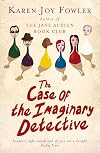
In Australia this book is published as The Case of the Imaginary Author and the cover is inspired by Cluedo pieces. I was expecting more of a cosy mystery than Fowler produces and given how much I had enjoyed The Jane Austen Book Club I was expecting to enjoy it more than I did. The problem with the novel is that the narrator is less than engaging: she can't make her mind up about whether to pursue the "mystery" of the novel and so we as readers can't make up our minds about whether to go along with her for the ride. It's a shame because the ideas that Fowler wants to engage us in are very interesting: the relationship between novelist and reader, between novelist and source material, even between author and medium of telling the story. show more She examines the mystery genre but one never feels that she loves it the way one felt that she loved Austen and so the passionless narrator creates the indifferent reader not quite the relationship between novelist and reader she would have hoped for, show less
Wit's End is a delightful read, made even more delightful if you are a mystery fan - particularly of any of the authors who have written oodles of books and had many of them made into television dramas (i.e. Christie, James, George, Dexter...). 29 year old Rima death makes an extended visit to her famous Godmother in Santa Cruz (California) who is a notable mystery author. It is hoped that she might heal from several family tragedies while getting to know her godmother and the other people who inhabit or frequent Wit's End (the house's name!). Odd things happen and that's all I'm going to say. The book has a sly wit that I loved - I chuckled through the whole thing. It also has a fair amount of pop culture and political references which show more date it but also makes it all the more California-ish. I'm a Karen Joy Fowler fan and each of her books are very different. This one is delightfully playful, imo. (Ok, I realize I used the word delightful at least three times here. . . ). show less
Members
- Recently Added By
Lists

Writers as Characters in Fiction
120 works; 19 members
Author Information

62+ Works 15,151 Members
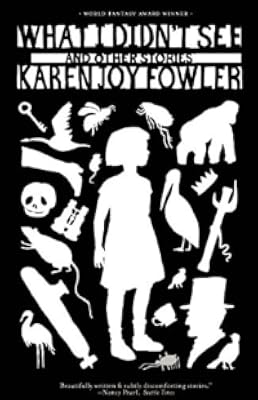
Karen Joy Fowler is the author of several novels and short story collections. Her works include Sarah Canary, The Sweetheart Season, Sister Noon, and The Jane Austen Book Club. She has received numerous awards including the World Fantasy Award in 1999 for Black Glass, the World Fantasy Award in 2011 for What I Didn't See, and the 2014 PEN/Faulkner show more Award for Fiction for We Are All Completely Beside Ourselves. This same title was nominated for The Man Booker Prize for Best Novel in 2014. (Bowker Author Biography) show less
Common Knowledge
- Alternate titles
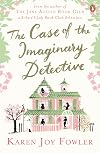
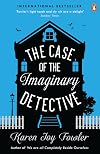
- Wit's End (UK) (UK); The Case of the Imaginary Detective (USA) (USA)
- Original publication date
- 2008
- Epigraph
- It seems only fair that I live with the people I've killed.
—A. B. Early, interview with Ms. Magazine, June 1983 - Dedication
- To Mike Burke:
mathematician, cook, teacher, backpacker, brother - First words
- Miss Time was seated with her feet on the floor and her head on the table.
- Last words
- (Click to show. Warning: May contain spoilers.)Whatever may or may not have happened, he, at least, is surely innocent.
I remain,
VTY,
Rima Lanisell - Publisher's editor
- Marian Wood
- Blurbers
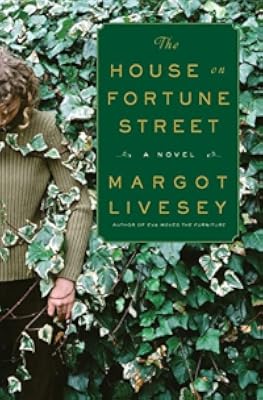
- Deirdre McNamer; Margot Livesey
- Original language
- English
- Disambiguation notice
- Published in the U.S. as "Wit's End" and in the U.K as "The Case of the Imaginary Detective".
Classifications
Statistics
- Members
- 500
- Popularity
- 60,227
- Reviews
- 25
- Rating
- (3.05)
- Languages
- Chinese, English, German
- Media
- Paper, Audiobook, Ebook
- ISBNs
- 26
- ASINs
- 7