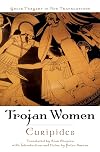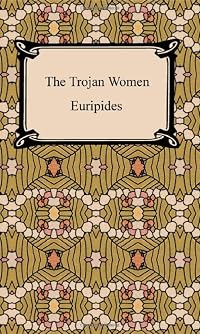
The Trojan Women
by Euripides
On This Page
Description
The Trojan Women follows the women of Troy after the famous war which devastated their city. It is believed to have been influenced by the capture of Melos, an Aegean Island, and the treatment of its population by the Athenians. These historical events took place the same year the play premiered, 415 BC..
Tags
Recommendations






















Member Reviews
On first sight, this seems to be one of Euripides' weaker plays: it contains hardly any action, but many (obstructive) choral passages and no plot at all; nor any personal struggles like in Medea and Electra; instead, there are many lamentations, and that starts to get on your nerves a bit in the long run.
But make no mistake: this is actually one of Euripides' more interesting works. To begin with, his perspective lies almost entirely with that of a so called enemy, namely Troy. Now, the attitude of the ancient Greeks in this regard has always been a bit ambiguous, even as far back as Homer. Granted, the Trojans were unequivocally the enemies of the Greeks, but in the Iliad they are simultaneously depicted as a sort of blood brothers, show more for they share almost the same culture, and just as many tears are shed over Trojan heroes who fall as over Greek ones. Yet it remains remarkable that Euripides adopts the Trojan perspective here, thereby presenting a rather unflattering view of Greek heroes such as Menelaus and especially Odysseus.
Should we conclude from this that this is an anti-war play, as is sometimes claimed? I hesitate: the brutality of war and the senselessness of violence are certainly highlighted, but I have the impression that Euripides rather wishes to point out the relativity of human happiness, the transience and futility of life and prosperity. In the words of the Trojan queen Hecuba: “Foolish is the man who thinks that his happiness is indestructible. The forces that decide our fate are as unpredictable as capricious people, and no one is happy his whole life long.”
In all this, we must not overlook the fact that Euripides is not simply putting Trojans in the spotlight here, but Trojan women. I keep mulling over the fact that a society as misogynistic as the ancient Greek one, in its best cultural work, explores the female perspective with so much empathy. In this play again: Cassandra, Andromache, and especially Hecuba are the voices that feature most prominently. Euripides vividly portrays their tragic fate as slaves to the brutal Greek army commanders, after their husbands and children have been slaughtered. As a perfidious antagonist, Euripides presents the Greek Helen (the cause of the Trojan War), who, in a debate with Hecuba and Menelaos, shifts all the blame away from herself—an example of eloquent depravity as the chorus (of Trojan women) interprets it.
Finally, let us zoom in briefly on a particularly strange passage, when Hecuba addresses Zeus in prayer: "O you who bear the earth and have the earth as your throne,/Zeus, enigmatic one, whoever you may be, law of nature or human reason,/I call upon you, for soundless you go your way/ and lead all the activity of mortals/ to a just end". It is once again a very ambiguous passage, for Hecuba relies on Zeus as the guarantor of just order (a recurring view among the Greeks), but at the same time portrays him as enigmatic, perhaps simply corresponding to the law of nature or to human reason (remark that last one, it’s telling). It is a quote that brings to mind Aeschyles’ Agamemnon (“Zeus – whoever Zeus may be – if this name pleases him, Zeus I call upon you”). It makes clear once again that the ancient Greeks were aware of the constructive character of their pantheon of gods, which was simultaneously a mysterious and a protective force.
In short: perhaps not such a successful play by Euripides in terms of tragedy, but packed with interesting elements.
Disclaimer: I'm reading and reviewing all classic ancient Greek plays, more or less in chronological order. But I'm not giving a rating. How could I, given their age? I'll make an exception only when a play is exceptional and still strikes an emotional and/or intellectual chord. show less
But make no mistake: this is actually one of Euripides' more interesting works. To begin with, his perspective lies almost entirely with that of a so called enemy, namely Troy. Now, the attitude of the ancient Greeks in this regard has always been a bit ambiguous, even as far back as Homer. Granted, the Trojans were unequivocally the enemies of the Greeks, but in the Iliad they are simultaneously depicted as a sort of blood brothers, show more for they share almost the same culture, and just as many tears are shed over Trojan heroes who fall as over Greek ones. Yet it remains remarkable that Euripides adopts the Trojan perspective here, thereby presenting a rather unflattering view of Greek heroes such as Menelaus and especially Odysseus.
Should we conclude from this that this is an anti-war play, as is sometimes claimed? I hesitate: the brutality of war and the senselessness of violence are certainly highlighted, but I have the impression that Euripides rather wishes to point out the relativity of human happiness, the transience and futility of life and prosperity. In the words of the Trojan queen Hecuba: “Foolish is the man who thinks that his happiness is indestructible. The forces that decide our fate are as unpredictable as capricious people, and no one is happy his whole life long.”
In all this, we must not overlook the fact that Euripides is not simply putting Trojans in the spotlight here, but Trojan women. I keep mulling over the fact that a society as misogynistic as the ancient Greek one, in its best cultural work, explores the female perspective with so much empathy. In this play again: Cassandra, Andromache, and especially Hecuba are the voices that feature most prominently. Euripides vividly portrays their tragic fate as slaves to the brutal Greek army commanders, after their husbands and children have been slaughtered. As a perfidious antagonist, Euripides presents the Greek Helen (the cause of the Trojan War), who, in a debate with Hecuba and Menelaos, shifts all the blame away from herself—an example of eloquent depravity as the chorus (of Trojan women) interprets it.
Finally, let us zoom in briefly on a particularly strange passage, when Hecuba addresses Zeus in prayer: "O you who bear the earth and have the earth as your throne,/Zeus, enigmatic one, whoever you may be, law of nature or human reason,/I call upon you, for soundless you go your way/ and lead all the activity of mortals/ to a just end". It is once again a very ambiguous passage, for Hecuba relies on Zeus as the guarantor of just order (a recurring view among the Greeks), but at the same time portrays him as enigmatic, perhaps simply corresponding to the law of nature or to human reason (remark that last one, it’s telling). It is a quote that brings to mind Aeschyles’ Agamemnon (“Zeus – whoever Zeus may be – if this name pleases him, Zeus I call upon you”). It makes clear once again that the ancient Greeks were aware of the constructive character of their pantheon of gods, which was simultaneously a mysterious and a protective force.
In short: perhaps not such a successful play by Euripides in terms of tragedy, but packed with interesting elements.
Disclaimer: I'm reading and reviewing all classic ancient Greek plays, more or less in chronological order. But I'm not giving a rating. How could I, given their age? I'll make an exception only when a play is exceptional and still strikes an emotional and/or intellectual chord. show less
Fortune is the prey of whims and,
like a maniac, turns somersaults.
No man for long escapes her jolts.
In Ancient Greece, the victors of war kill all their enemies' men and enslave their women and children. The Trojan Women depicts the final days of Troy as the women and children are waiting to learn their fates.
Euripides focuses on the Trojan royal family, Queen Hecuba, her daughters, her sons' wives, and her grandchildren. It is a sad and gruesome tale.
I read this play as part of a course and learned that Euripides wrote it as a warning to Athens at the height of the Peloponnesian War. By setting the tragedy in the mythical past, he hoped to make Athenians reflect upon the possible consequences of their current debacle in the same way show more that Arthur Miller wrote The Crucible during the McCarthy Era in the United States.
While The Trojan Women can be painful to read, Euripides' finely crafted dialogue and deft characterization make this a moving experience. Highly recommend. show less
like a maniac, turns somersaults.
No man for long escapes her jolts.
In Ancient Greece, the victors of war kill all their enemies' men and enslave their women and children. The Trojan Women depicts the final days of Troy as the women and children are waiting to learn their fates.
Euripides focuses on the Trojan royal family, Queen Hecuba, her daughters, her sons' wives, and her grandchildren. It is a sad and gruesome tale.
I read this play as part of a course and learned that Euripides wrote it as a warning to Athens at the height of the Peloponnesian War. By setting the tragedy in the mythical past, he hoped to make Athenians reflect upon the possible consequences of their current debacle in the same way show more that Arthur Miller wrote The Crucible during the McCarthy Era in the United States.
While The Trojan Women can be painful to read, Euripides' finely crafted dialogue and deft characterization make this a moving experience. Highly recommend. show less
This is the first play I have read since I studied Hamlet at school, so I was slightly unsure of how to go about this, but I needn't have worried. There are a number of characters, but the number who are speaking at any one time is relatively limited, meaning that ypou're not trying to keep umpteen people straight in your head at once.
I read an edition with a fairly long introduction (a fair proportion of which went way over my head), but it did help put the events leading up to the play's start into the forefront of my mind. I then read the play twice, once straight through, the second time reading the translator's notes in parallel. These were helpful in expanding what I had read the first time. it helped understand how this would show more have been viewed by the first theatre goers and the context in which they would have viewed what was happening and being said - or unsaid.
I enjoyed this. It seems really very modern, there are 2 men & 1 male god with a speaking role in the entire piece, the remainder are all women. I would hesitate to call it a feminist piece in today's environment - all the women are largely at the mercy of the men who claim them as their slaves. But we hear them women themselves speak and explain their feelings in a way that things like [The Iliad] and [The Odyssey] just don't do. I have read a couple of the modern novels telling these stories from a female perspective, I didn't realise that it had already been started - a very long time ago. I feel like I both learnt something and enjoyed it, an excellent combination. show less
I read an edition with a fairly long introduction (a fair proportion of which went way over my head), but it did help put the events leading up to the play's start into the forefront of my mind. I then read the play twice, once straight through, the second time reading the translator's notes in parallel. These were helpful in expanding what I had read the first time. it helped understand how this would show more have been viewed by the first theatre goers and the context in which they would have viewed what was happening and being said - or unsaid.
I enjoyed this. It seems really very modern, there are 2 men & 1 male god with a speaking role in the entire piece, the remainder are all women. I would hesitate to call it a feminist piece in today's environment - all the women are largely at the mercy of the men who claim them as their slaves. But we hear them women themselves speak and explain their feelings in a way that things like [The Iliad] and [The Odyssey] just don't do. I have read a couple of the modern novels telling these stories from a female perspective, I didn't realise that it had already been started - a very long time ago. I feel like I both learnt something and enjoyed it, an excellent combination. show less
Reading this for the second time, was as hard as the first. Through Hecuba’s agony, Euripides shows the senselessness of war. Her voice is also the voice of the surviving women, and its truly awful, but I’m still glad I read this. What stands out for me is the women’s strength. They have been through so much and yet they are not broken.
TW &A very young child is murdered by the Greeks, they are worried that the child, Astyanax will grow up get vengeance. Hecuba (bravely) retorts that this is not the action of a civilised society.
TW &
من نمیدونم تو یونان باستان خود نویسندهها موضوع نمایشنامه رو انتخاب میکردند و یا هر دوره در مسابقهای که برگزار میشده یک موضوع خاص پیشنهاد میشده که بقیه دربارهاش بنویسند؛ اما به هر حال جالبه که هر نمایشنامهای که از اوریپید من میشناسم، نمایشنامهای دربارهی زنها و خلق و خوی اونهاست... و جالبترش اینه که ما با یک مردی طرفیم که تو جامعهی 2000 سال پیش یونان این نمایشنامهها رو نوشته... تو دورهای show more که فیلسوفها و مردم یونانی معتقد بودند برای رسیدن به کمال، مرد (به عنوان یک کامل) باید با یک مرد (به عنوان یک کامل دیگر) ازدواج کنه و زنها به عنوان یک ناقص در کنار بردگان از بسیاری از حقوق برخوردار نبودند. show less
I read the Emily Wilson translation. The play was pretty much a study in how awful it was to be a noblewoman of Troy after their city fell to the Greeks. No plot, really. It is brimming with references to characters and stories outside of this play, which only made me wish I was reading any of them instead. If you weren't a classics scholar much of the narrative would be totally lost on you. Luckily the Emily Wilson translation provided copious footnotes, which were really helpful to appreciate the dialogue and context.
I thought this might be difficult and inaccessible but this version by Don Taylor was an easy read. I really enjoyed this and look forward to Melbourne University’s 10 Great Books lecture on the play.
Members
- Recently Added By
Lists

Plays I Like
230 works; 31 members

Books Read in 2010
631 works; 11 members

euripides ranked
23 works; 1 member

School Made Us Read It
380 works; 196 members

Next Plays / 2025
352 works; 1 member
My Play Collection
769 works; 3 members

Recommended Reading : 600 Classics Reviewed, Editors of Salem Press, 2015
634 works; 6 members

New Lifetime Reading Plan by Fadiman and Major
225 works; 5 members

Mustich's 1000 Books to Read Before You Die: A Life Changing List
1,001 works; 19 members

Truly old classics
63 works; 6 members

Books Referenced by Izetbegovic's Islam Between East and West
233 works; 2 members

Greatest Books, allegedly
484 works; 9 members

Stories of War and Revolution
143 works; 54 members

The Trojan War
109 works; 13 members
100 Books to Read in a Lifetime (That Are Older Than 200 Years)
415 works; 175 members

Favourite Greek Books
97 works; 1 member
Favourite Books
1,819 works; 316 members

Lectuurlijst
63 works; 1 member
Author Information

1,345+ Works 34,171 Members
Euripides was born in Attica, Greece probably in 480 B.C. He was the youngest of the three principal fifth-century tragic poets. In his youth he cultivated gymnastic pursuits and studied philosophy and rhetoric. Soon after he received recognition for a play that he had written, Euripides left Athens for the court of Archelaus, king of Macedonia. show more Fragments of about fifty-five plays survive. Among his best-known plays are Alcestis, Medea and Philoctetes, Electra, Iphigenia in Tauris, The Trojan Women, and Iphigenia in Aulis Iphigenia. He died in Athens in 406 B.C. (Bowker Author Biography) show less
Some Editions
Awards and Honors
Notable Lists
Series
Belongs to Publisher Series
Work Relationships
Is contained in
5 Plays: Bacchae / Heracles / Children of Heracles / Phoenician Women / Suppliant Women by Euripides
Great Books of The Western World: Aeschylus, Sophocles, Euripides, Aristophanes by Robert Maynard Hutchins (indirect)
10 Plays: Alcestis / Andromache / Children of Heracles / Helen / Hippolytus / Ion / Medea / Rhesus / Suppliant Women / Trojan Women by Euripides
11 Plays: Alcestis / Andromache / Children of Heracles / Electra / Hecuba / Helen / Heracles / Hippolytus / Medea / Suppliant Women / Trojan Women by Euripide
9 Plays: Cyclops / Ion / Iphigenia in Aulis / Iphigenia in Tauris / Medea / Orestes / Phoenician Women / Suppliant Women / Trojan Women by Euripides
Euripides III: Hecuba, Andromache, The Trojan Women, Ion (The Complete Greek Tragedies) (Vol 5) by Euripides
Has the adaptation
Inspired
Has as a student's study guide
Common Knowledge
- Canonical title
- The Trojan Women
- Original title
- The Trojan Women, The Play and the Screenplay; Τρωάδες
- Original publication date
- 415 BCE; 415 BC
- People/Characters
- Hecuba; Cassandra (of Troy); Andromache; Talthybius; Menelaus; Helen of Troy (show all 8); Poseidon; Athena
- Important places
- Troy
- Related movies
- The Trojan Women (1971 | IMDb); The Trojan Women (2004 | IMDb); Las troyanas (1963 | IMDb)
- First words
- I am Poseidon.
(Lattimore translation) - Last words
- (Click to show. Warning: May contain spoilers.)Mourn for the ruined city, then go away
to the ships of the Achaeans.
(Lattimore translation)
(Click to show. Warning: May contain spoilers.)In the glow of the burning city, they walk away into the night, getting smaller and smaller.,, - Original language
- Ancient Greek
Classifications
- Genre
- Fiction and Literature
- DDC/MDS
- 882.01 — Literature & rhetoric Classical & modern Greek literatures Classical Greek dramatic poetry and drama standard subdivisions; collections; history, description, critical appraisal; Specific periods Ancient period to ca. 499
- LCC
- PA3975 .T8 .R83 — Language and Literature Greek language and literature. Latin language and literature Greek literature Individual authors Euripedes
- BISAC
Statistics
- Members
- 778
- Popularity
- 35,936
- Reviews
- 16
- Rating
- (3.81)
- Languages
- 14 — Danish, Dutch, English, Finnish, French, German, Greek (Ancient), Greek, Italian, Norwegian (Bokmål), Portuguese, Russian, Spanish, Swedish
- Media
- Paper, Audiobook, Ebook
- ISBNs
- 93
- ASINs
- 28