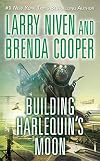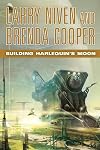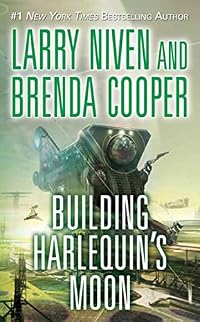
Building Harlequin's Moon
by Larry Niven (Author), Brenda Cooper (Author)
On This Page
Description
The first interstellar starship, John Glenn, fled a Solar System populated by rogue AIs and machine/human hybrids, threatened by too much nanotechnology, and rife with political dangers. The John Glenn's crew intended to terraform the nearly pristine planet Ymir, in hopes of creating a utopian society that would limit intelligent technology. But by some miscalculation they have landed in another solar system and must shape the gas giant planet Harlequin's moon, Selene, into a new, temporary show more home. Their only hope of ever reaching Ymir is to rebuild their store of antimatter by terraforming the moon. Gabriel, the head terraformer, must lead this nearly impossible task, with all the wrong materials: the wrong ships and tools, and too few resources. His primary tools are the uneducated and nearly-illiterate children of the original colonists, born and bred to build Harlequin's moon into an antimatter factory. Rachel Vanowen is one of these children. Basically a slave girl, she must do whatever the terraforming Council tells her. She knows that Council monitors her actions from a circling vessel above Selene's atmosphere, and is responsible for everything Rachel and her people know, as well as all the skills, food, and knowledge they have ever received. With no concept of the future and a life defined with duty, how will the children of Selene ever survive once the Council is through terraforming and have abandoned Selene for its ultimate goal of Ymir? show lessTags
Recommendations







Member Reviews
Fleeing a rogue AI-infested Earth, the crew and cryogenically frozen passengers of a colonizing starship get stranded in the wrong solar system. Their only hope to reach their destination planet (Ymir) is to terraform one of the many moons of the gas giant Harlequin, so that they can construct a massive antimatter factory for fuel. Instead of using AI and nanotechnology (because this is against the colonists hypocritical principles of preserving humanity without advanced technology), they breed generations of uneducated and nearly illiterate "Moon Born" children as their primary workforce.
Slow and clunky to start, the novel soon settled down, providing an interesting scenario that lends itself to an excellent exploration of human show more nature and morality. What to do with the created slaves once you no longer need them? And what happens when the slaves grow up, start asking questions, and find out they have no future? Also, what reaction will the AI have when it finds out the High Council want to reboot it or delete it? The cast of characters is dynamic, and I enjoyed the terraforming aspects. Cooper and Niven have provided an interesting playground for their characters to explore human responses to fear of advanced technology, something even more relevant today with the impending advances and encroachment of AI development. show less
Slow and clunky to start, the novel soon settled down, providing an interesting scenario that lends itself to an excellent exploration of human show more nature and morality. What to do with the created slaves once you no longer need them? And what happens when the slaves grow up, start asking questions, and find out they have no future? Also, what reaction will the AI have when it finds out the High Council want to reboot it or delete it? The cast of characters is dynamic, and I enjoyed the terraforming aspects. Cooper and Niven have provided an interesting playground for their characters to explore human responses to fear of advanced technology, something even more relevant today with the impending advances and encroachment of AI development. show less
This was my first scifi novel featuring terraforming and thousands of years of time. (Although the main plot is shorter, the idea of more-time-than-a-normal-lifespan is throughout.) I found the idea stimulating and enjoyed watching the moon slowly come to life. Even more, the characters, especially Rachel, come to life over the course of the book. Rachel is a well-developed protagonist and grows to become a capable leader. She slowly realizes that the earth-born's plan to create antimatter and leave the moon will effectively be a death sentence to the moon-born, and has to figure out how to reconcile everyone's needs. I definitely found myself rooting for the main characters' success, while also understanding the earth-born characters' show more need to finish their mission and leave for their destination planet. The tension between the two parties is logical and well-developed, and the results were reasonable, without giving them away. I quite enjoyed this book. show less
Larry Niven is one of my favorite sci-fi authors and has been ever since I read the wonderful “Ringworld” as a child. I still haven’t read all of his books, however, so I enjoy the rare opportunity to read one I haven’t read before.
“Building Harlequin’s Moon” is yet another collaboration book from Niven. Niven is a prolific collaborator and has written many books with other authors. This book was his first time writing with Brenda Cooper.
The story of “Building Harlequin’s Moon” is almost a classic kind of science fiction story. It is the future and a group of humans have boarded the first intersteller starship, John Glenn, and fled Earth’s solar system which is now populated by rogue AIs and machine/human hybrids. show more The use of nanotechnology is rampant and has made Earth dangerous for humans. The John Glenn’s crew intended to terraform the nearby pristine planet of Ymir in hopes of creating a utopian society that would limit intelligent technology.
Unfortunately, some sort of miscalculation has landed the John Glenn in a different solar system and extremely low on the antimatter they need to fuel their ship and continue their journey to Ymir. They decide they will shape Selene, the moon of the nearby planet Harlequin, into a new and temporary home where they will spend decades going in and out of cryogenic sleep while they terraform the moon and rebuild their store of antimatter.
Gabriel, the head terraformer, must lead this nearly impossible task, with all the wrong materials: the wrong ships and tools, and too few resources. His primary tools are the uneducated and nearly illiterate children of the original colonists, born and bred to build Harlequin’s moon into a virtual antimatter factory.
Rachel Vanowen is one of these children. Basically a slave girl, she must do whatever the terraforming Council tells her. She knows that the Council monitors her actions from a circling vessel above Selene’s atmosphere and is responsible for everything Rachel and her people know, as well as for the food and any training they receive. It’s only when Rachel starts wondering what will happen to the people on Selene when the John Glenn leaves that things start changing for everyone.
Although the book is certainly a science fiction story, it is also a story about people. The real beauty of the storytelling here isn’t in the description of the scientific elements or the future technologies, it’s in the questions the authors ask through the characters about what it means to be human.
How do the people of the John Glenn justify creating a slave race of their own offspring just to help them build the antimatter that will eventually help them leave the children of Selene to an almost certain, eventual doom? At what point does the reluctance to use technology become an obsession rather than a choice? How does a person’s perspective of time change when you’ve been alive over 60,000 years?
The book is full of tantalizing questions about the human condition. Rachel is one of the few Moon Born (as the people who are born on Selene are called) who is allowed to fully interact with the Earth Born and the High Council (people from the John Glenn). The High Council see in Rachel someone who could one day be a leader for the Moon Born, and, thus, someone who could help them achieve their goals. However, it is the leadership qualities in Rachel that cause her to begin asking the questions about what is to become of the Moon Born when the John Glenn leaves. As she gains more and more knowledge through the help of some of the council themselves, Rachel begins to see that the Moon Born will have to force a change if they want to survive.
Adding to the complexities of the character interactions is Rachel’s mother who is an Earth Born who decided to abandon Rachel and her father and go back into suspended animation on the ship. There is also the fact that the people who go into suspended animation are rejuvenated by nanobites every time they freeze so they can live for hundreds of years awake and have lived for thousands of years in suspended animation.
The authors convincingly portray the many sides to the issues and leave the reader with a full understanding and empathy for everyone’s point of view - something that’s hard to accomplish most of the time. While the taunt story tends to fall apart a bit towards the end, it’s easy to forgive because by then we have become emotionally invested in the characters enough to want to see a satisfying ending. The authors do not let us down. show less
“Building Harlequin’s Moon” is yet another collaboration book from Niven. Niven is a prolific collaborator and has written many books with other authors. This book was his first time writing with Brenda Cooper.
The story of “Building Harlequin’s Moon” is almost a classic kind of science fiction story. It is the future and a group of humans have boarded the first intersteller starship, John Glenn, and fled Earth’s solar system which is now populated by rogue AIs and machine/human hybrids. show more The use of nanotechnology is rampant and has made Earth dangerous for humans. The John Glenn’s crew intended to terraform the nearby pristine planet of Ymir in hopes of creating a utopian society that would limit intelligent technology.
Unfortunately, some sort of miscalculation has landed the John Glenn in a different solar system and extremely low on the antimatter they need to fuel their ship and continue their journey to Ymir. They decide they will shape Selene, the moon of the nearby planet Harlequin, into a new and temporary home where they will spend decades going in and out of cryogenic sleep while they terraform the moon and rebuild their store of antimatter.
Gabriel, the head terraformer, must lead this nearly impossible task, with all the wrong materials: the wrong ships and tools, and too few resources. His primary tools are the uneducated and nearly illiterate children of the original colonists, born and bred to build Harlequin’s moon into a virtual antimatter factory.
Rachel Vanowen is one of these children. Basically a slave girl, she must do whatever the terraforming Council tells her. She knows that the Council monitors her actions from a circling vessel above Selene’s atmosphere and is responsible for everything Rachel and her people know, as well as for the food and any training they receive. It’s only when Rachel starts wondering what will happen to the people on Selene when the John Glenn leaves that things start changing for everyone.
Although the book is certainly a science fiction story, it is also a story about people. The real beauty of the storytelling here isn’t in the description of the scientific elements or the future technologies, it’s in the questions the authors ask through the characters about what it means to be human.
How do the people of the John Glenn justify creating a slave race of their own offspring just to help them build the antimatter that will eventually help them leave the children of Selene to an almost certain, eventual doom? At what point does the reluctance to use technology become an obsession rather than a choice? How does a person’s perspective of time change when you’ve been alive over 60,000 years?
The book is full of tantalizing questions about the human condition. Rachel is one of the few Moon Born (as the people who are born on Selene are called) who is allowed to fully interact with the Earth Born and the High Council (people from the John Glenn). The High Council see in Rachel someone who could one day be a leader for the Moon Born, and, thus, someone who could help them achieve their goals. However, it is the leadership qualities in Rachel that cause her to begin asking the questions about what is to become of the Moon Born when the John Glenn leaves. As she gains more and more knowledge through the help of some of the council themselves, Rachel begins to see that the Moon Born will have to force a change if they want to survive.
Adding to the complexities of the character interactions is Rachel’s mother who is an Earth Born who decided to abandon Rachel and her father and go back into suspended animation on the ship. There is also the fact that the people who go into suspended animation are rejuvenated by nanobites every time they freeze so they can live for hundreds of years awake and have lived for thousands of years in suspended animation.
The authors convincingly portray the many sides to the issues and leave the reader with a full understanding and empathy for everyone’s point of view - something that’s hard to accomplish most of the time. While the taunt story tends to fall apart a bit towards the end, it’s easy to forgive because by then we have become emotionally invested in the characters enough to want to see a satisfying ending. The authors do not let us down. show less
Smart, with original ideas, but somehow not all that memorable (it took me most of the prologue to realize I'd already read it last year). Fans of epic & classic adventure sf should enjoy it.
Novels that consciously advocate non-violence are rare, in science fiction or any other genre. This one does just that, offering in its narrative a recap of successful nonviolent social movements, despite some climactic violence.
This is everything you'd come to expect from Larry Niven. A unique setting, great scientific speculation and interesting characters. I thought this was very well done.
This book is so poorly written it was hard to make it through to the end. The plot was interesting enough to make me want to finish, but it was painful as the authors drew more heavily on stereotypes and tired language as the book went on.
Members
- Recently Added By
Lists

Jean's Sci Fi/Fantasy Reading list
189 works; 12 members
Author Information

Larry Niven received his B.A. in mathematics in 1962. His first novel, World of Ptavvs (1966), was a success and launched his career. Niven has won five Hugos and one Nebula award, testimony that his colleagues in the science fiction world respect his work. Perhaps Niven's most well-known creation is Ringworld, a distant planet that may be taken show more as a metaphor for Earth, as it was once great but has since fallen into decay. (Bowker Author Biography) show less


Brenda Cooper is a LibraryThing Author, an author who lists their personal library on LibraryThing.
Common Knowledge
- Original publication date
- 2005-06
- Important places
- Selene
- First words
- Prologue: Gabriel war warm und Erika war kalt.
Text: Rachel griff nach dem Setzling.
Prologue: Erika was cold and Gabriel was warm.
Text: Rachel reached for the seedling. - Last words
- (Click to show. Warning: May contain spoilers.)"Eines Tages", sagte Gabriel, "wirst du das."
(Click to show. Warning: May contain spoilers.)"One day," Gabriel said, "you will." - Blurbers
- Vinge, Vernor; Herbert, Brian; Barnes, Steven
Classifications
Statistics
- Members
- 694
- Popularity
- 40,973
- Reviews
- 13
- Rating
- (3.49)
- Languages
- English, French, German
- Media
- Paper, Audiobook, Ebook
- ISBNs
- 11
- ASINs
- 5